Mosquitoes are more than a summertime nuisance. For babies and young children, their bites can cause intense itching and, in some regions, carry diseases such as West Nile virus, dengue, malaria, and Zika. Parents often feel torn between avoiding chemicals and wanting strong protection. This guide brings together trusted medical advice to help you choose safe, effective strategies to keep your baby comfortable and protected.
Why Babies Need Extra Protection From Mosquitoes
Babies are especially vulnerable to mosquito bites for several reasons:
- Thinner, more sensitive skin that can become inflamed and itchy more easily than adult skin.
- Limited ability to move away or swat insects, especially in carriers, strollers, or cribs.
- Higher risk of complications from infection if bites are scratched open.
- In some regions, greater vulnerability to mosquito-borne infections such as malaria and dengue due to immature immune systems.
Fortunately, a layered approach—combining clothing, physical barriers, environmental control, and carefully chosen repellents—greatly reduces the chance of bites.
Understanding When and Where Mosquitoes Are a Problem
Knowing mosquito habits helps you plan outings and protect your baby more effectively.
| Factor | What Parents Should Know |
|---|---|
| Time of day | Many mosquito species are most active at dawn and dusk, though some bite during the day as well. |
| Environment | They lay eggs in standing water (buckets, birdbaths, plant saucers, clogged gutters, puddles). |
| Climate & season | Warm, humid conditions support mosquito populations; in many areas, risk is highest late spring through early fall. |
| Attractants | Body heat, sweat, and some scents (strong perfumes, fragranced lotions) may draw mosquitoes. |
Use this information to decide when to stay indoors, when to rely on nets and clothing, and when repellent is worth using.
Dress Your Baby for Fewer Bites
Clothing is one of the safest and most effective first lines of defense, especially for young infants.
Clothing Tips That Help Block Mosquitoes
- Cover arms and legs: Choose long sleeves and long pants that are loose and breathable (like lightweight cotton).
- Use socks or booties: Cover feet and ankles, which are common bite sites.
- Prefer light colors: Dark colors can attract some species and also absorb heat, increasing discomfort.
- Avoid overly tight clothes: Mosquitoes can sometimes bite through thin, tight fabric.
- Dress in layers when needed: A thin onesie under a loose, long-sleeve layer can help balance warmth and protection.
In very hot weather, prioritize preventing overheating. Combine lighter coverage with nets, shade, and indoor time during peak mosquito hours.
Using Mosquito Nets and Screens Safely
Physical barriers are especially important for babies too young to use insect repellent.
Where Nets and Screens Make the Biggest Difference
- Strollers and prams: Use a fine mesh mosquito cover when walking outdoors or sitting in buggy areas.
- Baby carriers: A net designed for carriers can protect when your baby is worn on your front or back.
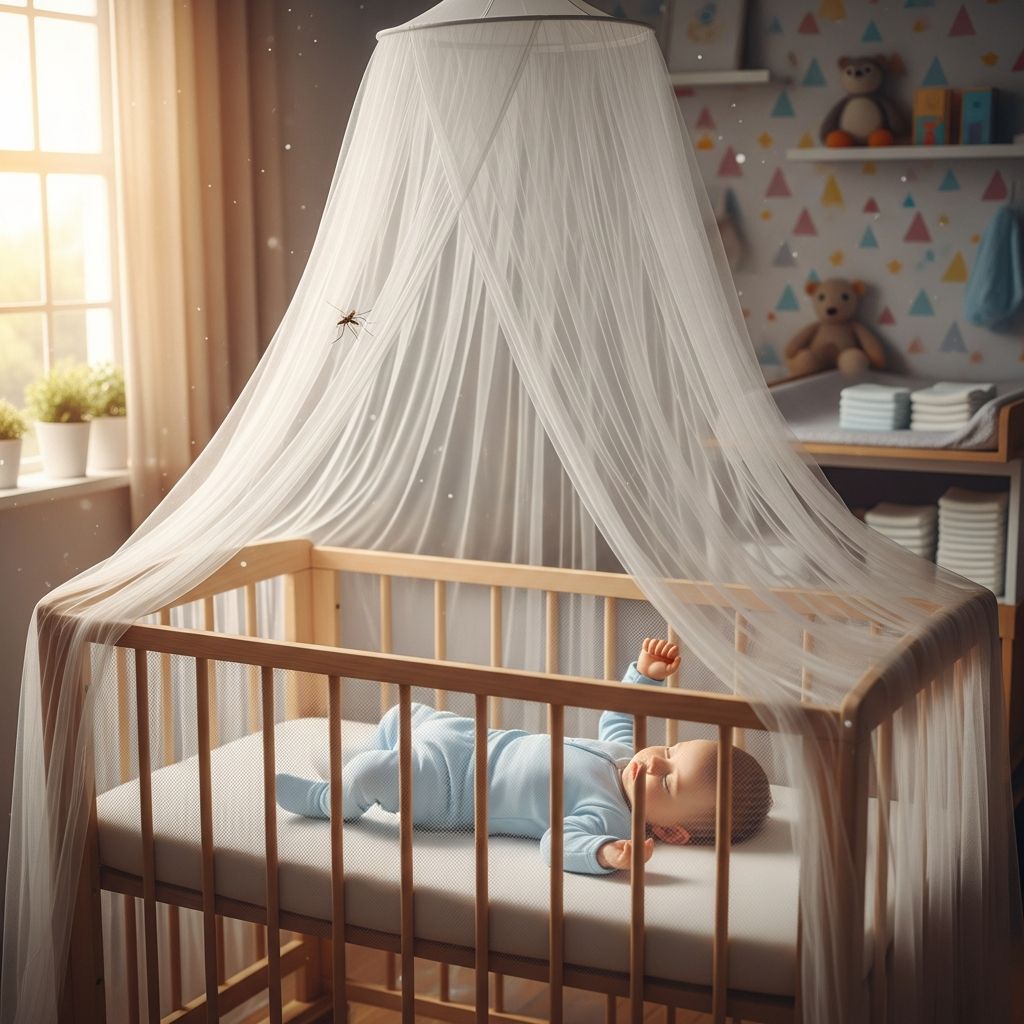
- Cribs and travel cots: In high-risk regions, bed nets treated with insecticide (per local health recommendations) can be lifesaving.
- Windows and doors: Make sure screens fit tightly and repair any tears to keep mosquitoes out of your home.
Safe Use Guidelines
- Keep the net away from your baby’s face to maintain clear airflow.
- Ensure there are no gaps where mosquitoes can enter, especially around stroller handles or crib edges.
- Check nets regularly for holes, loose threads, or entanglement risks.
Managing Your Home and Yard to Reduce Mosquitoes
Reducing mosquito populations around your home lowers the chance of bites for everyone in the family.
Eliminate Standing Water
Most mosquitoes need still water to breed. Public health agencies strongly recommend removing these sources wherever possible.
- Empty and scrub pet bowls, buckets, kiddie pools, and birdbaths at least once a week.
- Clear clogged gutters and drains.
- Store outdoor toys, gardening supplies, and containers upside-down or under cover.
- Fill or drain puddles and low spots that collect water, if practical.
Improve Indoor Protection
- Use window and door screens and close them before turning on indoor lights that may attract insects.
- Use fans in sleeping areas and on porches; mosquitoes are weak fliers and have trouble in moving air.
- Consider air conditioning if available, which allows you to keep windows closed and lowers humidity.
Choosing Safe Insect Repellents for Babies and Children
Repellent is a powerful tool but must be used correctly, especially on young skin. Guidance from the U.S. Centers for Disease Control and Prevention (CDC) and the American Academy of Pediatrics (AAP) focuses on products that have been well studied for safety and effectiveness.
Age Considerations
- Under 2 months old: Do not use chemical repellents such as DEET or picaridin. Rely on clothing, nets, and environmental control.
- Older babies and children: Products containing DEET (up to 30%), picaridin, or oil of lemon eucalyptus (OLE/PMD) can be used according to label directions and pediatric guidance.
Common Active Ingredients and Notes
| Ingredient | Key Points for Parents |
|---|---|
| DEET | Effective against many mosquito species; AAP supports use up to 30% DEET for children when needed; avoid in infants under 2 months. |
| Picaridin | Effective and often less odorous than DEET; considered safe for older infants and children when used as directed. |
| Oil of lemon eucalyptus (OLE/PMD) | Plant-derived active ingredient; CDC advises avoiding use on children under 3 years of age. |
| IR3535 & some other agents | Found in certain formulations; follow age and usage instructions on the product label and consult your pediatrician if unsure. |
Always check labels carefully and remember that “natural” does not automatically mean safer or better studied for babies.
How to Apply Repellent Safely
The AAP and CDC recommend the following practices when using repellent on children.
- Apply to your own hands first, then gently rub on your child’s exposed skin, avoiding the hands, eyes, and mouth.
- Use just enough to cover exposed skin and clothing—do not saturate.
- Do not spray directly on the face; instead, spray on your hands and then apply.
- Avoid broken or irritated skin, such as rashes or open cuts.
- Do not apply under clothing; this can increase absorption without added benefit.
- Wash treated skin with soap and water when your child returns indoors.
- Store repellents out of children’s reach to prevent accidental ingestion or eye exposure.
If your baby has a medical condition, sensitive skin, or allergies, talk with your pediatrician before trying a new product.
What About “Natural” and Alternative Repellents?
Some parents prefer botanical or essential-oil-based repellents, but these products can vary widely in effectiveness and safety.
- Many plant oils (such as citronella, lemongrass, or cedar) may offer short-lived protection and require very frequent reapplication.
- Essential oils can irritate sensitive baby skin or trigger allergies or breathing problems.
- These products are often less well studied than DEET or picaridin, especially in infants.
If you choose a botanical repellent, select one with clear labeling, follow age instructions, perform a small test patch, and discuss use with your pediatrician. When disease risk is high, health authorities typically recommend proven repellents like DEET or picaridin.
Soothing and Treating Mosquito Bites on Babies
Even with excellent prevention, a few bites may still occur. Most mosquito bites are uncomfortable but not dangerous and can be treated at home with guidance from your child’s healthcare provider.
First Steps When You Notice a Bite
- Gently wash the area with mild soap and water to reduce the risk of infection.
- Use a cool compress (clean, damp cloth or ice pack wrapped in fabric) for a few minutes at a time to control swelling and itching.
- Keep your baby’s nails trimmed and consider light mittens or long sleeves to limit scratching.
Medications and Creams
Always check with your pediatrician before using medicated products on a young baby.
- Topical creams: Calamine lotion or low-strength hydrocortisone cream may be recommended for older infants and children to ease itching.
- Oral antihistamines: For significant itching, your child’s doctor may suggest an age-appropriate antihistamine.
- Avoid strong steroids or combination products unless specifically prescribed.
Signs You Should Call a Doctor Urgently
- Widespread hives, swelling of the lips, eyes, or face, or difficulty breathing (possible severe allergic reaction).
- Redness and swelling spreading away from the bite, warmth, or pus (possible infection).
- Fever, unusual fussiness, vomiting, headache, or extreme sleepiness after multiple bites or travel to a high-risk area.
Trust your instincts—if your baby looks or acts very different from usual after mosquito exposure, seek medical care.
Traveling With a Baby to Mosquito-Heavy Areas
Travel to tropical or subtropical regions, or during outbreaks of mosquito-borne disease, requires careful planning.
- Consult your pediatrician or a travel medicine clinic well before your trip to discuss regional risks and vaccination or medication needs.
- Bring approved repellents for your child’s age, plus mosquito nets and breathable long clothing.
- Choose accommodations with screens, air conditioning, or treated bed nets where advised by local health authorities.
- Monitor for fever or unusual symptoms in the weeks after your trip and share your travel history with your child’s doctor if illness develops.
Balancing Outdoor Play and Mosquito Safety
Babies benefit from fresh air and outdoor exploration. Rather than avoiding the outdoors entirely, aim to manage risk thoughtfully.
- Plan walks or park visits for times outside peak mosquito activity when possible (often mid-morning or early afternoon).
- Use a stroller net and light, long-sleeve clothing for babies who cannot yet use repellent safely.
- For older infants, combine targeted repellent use with clothing, shade, and nets during higher-risk times or locations.
- Focus on comfort—stay alert for signs of overheating, and take breaks indoors if your baby becomes flushed or unusually fussy.
Frequently Asked Questions (FAQs)
Is it safe to use DEET on my baby?
Health organizations advise not using DEET on infants under 2 months. For older babies and children, products with up to 30% DEET can be used when needed, following label directions and avoiding hands, mouth, and eyes. Consult your pediatrician if you have concerns.
What is the safest way to protect a newborn from mosquitoes?
For newborns, rely on physical barriers—light, long clothing, stroller or crib nets, and window screens—along with removing standing water and keeping them indoors during peak mosquito times.
Can I use citronella or essential oils on my baby?
Many essential oils are not well studied in infants and may irritate skin or cause allergic reactions. Their protection is often brief compared with DEET or picaridin. Discuss any essential-oil-based product with your pediatrician before using it on a baby.
Are mosquito bites dangerous for babies?
In many places, bites are mainly an itchy nuisance, but babies can scratch them open and develop skin infections. In areas where mosquito-borne diseases are common, bites can pose more serious health risks, so strong prevention is especially important.
Should I put repellent on my baby every time we go outside?
The AAP encourages parents to reduce the need for repellent by using clothing and nets whenever possible. Consider the time of day, local mosquito activity, and disease risk. In high-risk settings or during peak hours, combining clothing, nets, and appropriately chosen repellent may be the best option.
References
- Preventing Mosquito Bites — Centers for Disease Control and Prevention (CDC). 2024-03-12. https://www.cdc.gov/mosquitoes/prevention/index.html
- Insect Repellents — American Academy of Pediatrics (AAP). 2023-06-01. https://www.aap.org/en/patient-care/environmental-health/promoting-healthy-environments-for-children/insect-repellents/
- How to Choose an Insect Repellent for Your Child — HealthyChildren.org (American Academy of Pediatrics). 2022-05-20. https://www.healthychildren.org/English/safety-prevention/at-play/Pages/Insect-Repellents.aspx
- How to Treat and Prevent Mosquito Bites on Babies and Older Kids — Pampers / Procter & Gamble, citing pediatric guidance. 2023-07-10. https://www.pampers.com/en-us/baby/health/article/mosquito-bites-on-babies
- Protect your baby or toddler from mosquito bites — SA Health, Government of South Australia. 2022-01-18. https://www.sahealth.sa.gov.au/wps/wcm/connect/public+content/sa+health+internet/healthy+living/protecting+your+health/yourself/fight+the+bite/protect+your+baby+or+toddler+from+mosquito+bites
- Protect your baby from insect bites: A quick guide — Summer Health, with pediatric expert review. 2023-06-15. https://www.summerhealth.com/blog/protect-your-baby-from-insect-bites