Winter brings unique opportunities for children to explore the world through hands-on, child-led experiences aligned with Montessori philosophy. This approach emphasizes independence, sensory engagement, and practical life skills, helping kids thrive even when outdoor play is limited by cold weather. From sensory bins mimicking snowscapes to real-world tasks like preparing warm drinks, these activities nurture curiosity, fine motor development, and cognitive growth while celebrating the season’s magic.
Embracing Sensory Exploration in Chilly Months
Sensory activities form the foundation of Montessori learning, allowing children to investigate textures, sounds, and visuals at their own pace. In winter, these can replicate outdoor elements indoors, keeping young minds active and bodies engaged.
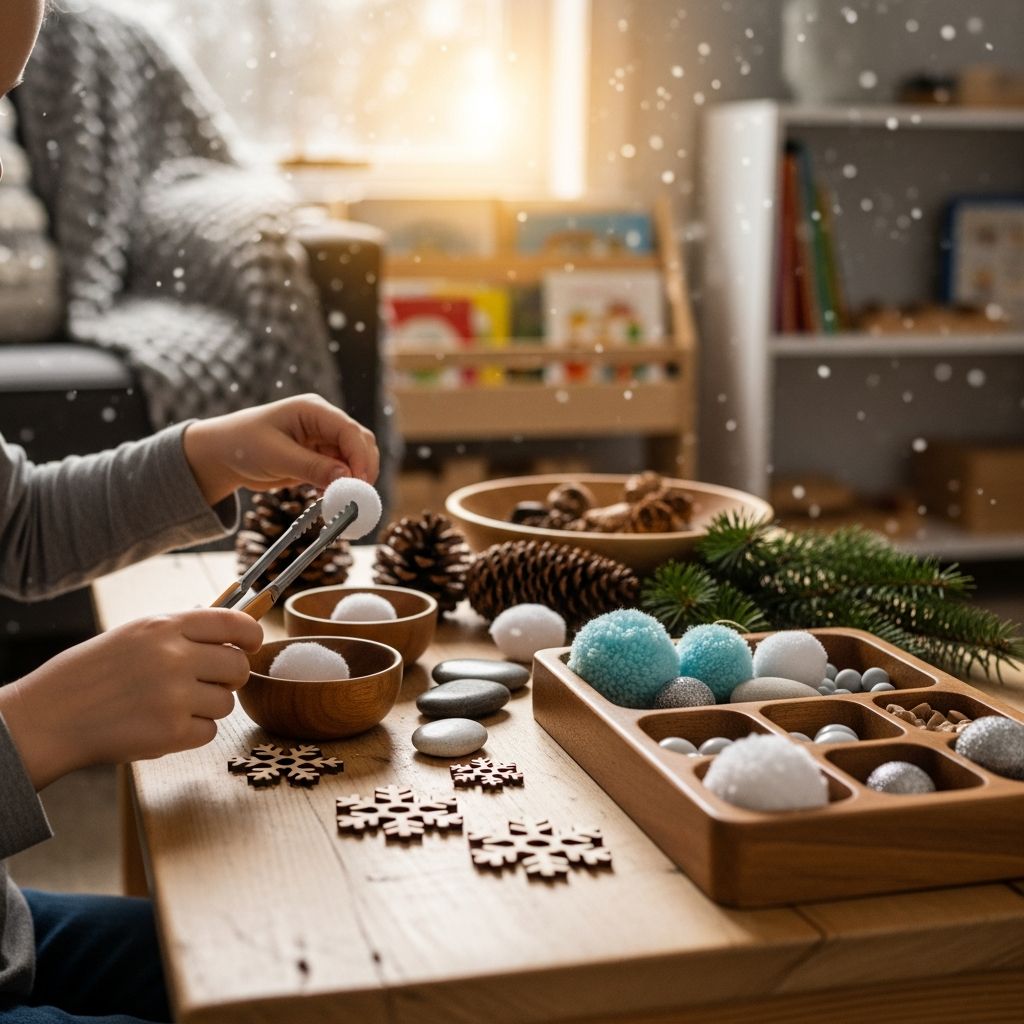
- DIY Snow Sensory Tray: Fill a large tray with white rice, cotton balls, or shaved ice substitutes like flour mixed with glitter. Hide small winter-themed objects such as mini pinecones, faux evergreen sprigs, or plastic animal figures. Children use tongs or scoops to dig, sort, and transfer items, honing hand-eye coordination and grip strength.
- Ice Block Discoveries: Freeze small toys or natural items like leaves in ice blocks. Provide child-safe tools like wooden mallets or warm water in droppers for melting and extraction. This introduces concepts of states of matter while encouraging problem-solving.
- Fabric Frost Textures: Gather soft fabrics in whites and blues—think fleece, velvet, and tulle—to create a touch board. Kids describe sensations verbally, building descriptive language skills alongside tactile awareness.
These setups require minimal preparation but yield hours of focused play, as children naturally extend the activity by inventing stories or classifying finds.
Building Independence Through Practical Tasks
Montessori practical life exercises teach self-reliance and order, using everyday routines. Winter amplifies these with seasonal necessities, turning chores into purposeful adventures.
| Activity | Skills Developed | Materials Needed |
|---|---|---|
| Layering Winter Gear | Sequencing, fine motor, self-care | Hats, scarves, mittens, coat |
| Boot Cleaning Station | Coordination, responsibility | Brush, water basin, towel |
| Spice Warming Drink Prep | Measuring, pouring, safety awareness | Cocoa mix, mugs, hot water (supervised) |
For layering gear, lay out clothing in sequence from underwear to outer layers. Children dress a doll or themselves, practicing zippers and buttons. Boot cleaning involves scrubbing mud with brushes, then drying—a real-world task that instills pride in maintenance. Preparing a warming drink lets kids measure powders, stir, and serve, introducing volume and following steps safely under guidance.
Observing Nature’s Winter Secrets
Even in dormancy, nature offers rich lessons. Montessori encourages direct observation to foster respect for the environment and scientific thinking.
- Backyard Track Hunting: Bundle up for short outings to spot animal prints in snow or mud. Use a journal for sketching and noting conditions like weather or time, promoting record-keeping habits.
- Bird Feeding Crafts: Spread peanut butter on pinecones, roll in seeds, and hang outside a window. Observe visitors with binoculars, discussing adaptations like feathers for warmth.
- Seasonal Animal Research: Create matching cards showing behaviors—hibernation, migration, adaptation. Pair images with labels, expanding vocabulary on survival strategies.
These activities connect children to the ecosystem, sparking questions that lead to deeper inquiries about life cycles and weather patterns.
Artistic Expressions with Seasonal Flair
Creativity flourishes in Montessori through open-ended art, prioritizing process over product. Winter themes provide endless inspiration without rigid templates.
Experiment with color-mixing snow paint by combining watercolors with baking soda and vinegar for fizzy effects on dark paper or actual snow. Paper folding symmetries evolve into unique flakes, teaching geometry through folds and cuts. For sculpture, offer salt dough in cool tones to mold igloos or trees, baked for lasting keepsakes.
- Encourage free-form collage with magazine clippings of frosty scenes.
- Incorporate natural dyes from berries for fabric stamping.
Such projects build bilateral coordination and spatial reasoning, with displays reinforcing achievement.
Mathematical Concepts in Frosty Fun
Math in Montessori is concrete and manipulative-based. Winter motifs make abstract ideas tangible.
- One-to-One Snowflake Counting: Draw numbers on cards; match corresponding pom-pom ‘snowflakes’ using tweezers into trays.
- Pattern Paths: String beads in repeating winter sequences—blue-white-blue, pinecone-seed-pinecone.
- Measurement Melt: Time ice cubes melting under lamps, comparing sizes with rulers.
These integrate sorting, seriation, and quantification seamlessly into play.
Language and Literacy in the Cold Season
Winter vocabulary expands through visuals and movement. Print simple cards for three-part matching: picture, label, object (e.g., mitten image, word, real mitten). Story sequencing uses photo series of building a snow figure or sledding, arranged in order. Tracing sandpaper letters in ‘snow’ salt trays reinforces phonics tactilely.
Cozy reading nooks with seasonal books invite narration, enhancing comprehension and expression.
Frequently Asked Questions (FAQs)
What age group are these activities best for?
Primarily ages 2-6, but adaptable for older kids by adding complexity like writing observations or advanced math.
Do I need special Montessori materials?
No—household items and nature finds work perfectly, emphasizing accessibility and real-world relevance.
How to adapt for no-snow climates?
Use alternatives like cotton for snow, blue cellophane for ice, focusing on concepts over literal replication.
Can these be done in groups?
Yes, mixed-age settings mirror Montessori classrooms, with older kids modeling for peers.
How long should sessions last?
Follow the child’s lead—typically 20-45 minutes of deep concentration before natural transitions.
Adapting for Indoor-Only Days
When blizzards keep everyone inside, amplify indoor variations. Transform a table into a ‘winter village’ with blocks and figures for imaginative geography. Play ‘sound safaris’ identifying household noises akin to wind or cracking ice. These maintain momentum without screens.
Throughout, observe your child’s interests to rotate materials, preventing boredom and sustaining engagement. Rotate weekly to align with attention spans.
Winter Montessori play transforms potential cabin fever into growth opportunities. By providing prepared environments, parents and educators empower kids to lead their learning, emerging from the season with sharpened skills and fond memories.
References
- Preschool Winter Activities — Trillium Montessori. 2023-12-15. https://www.trilliummontessori.org/preschool-winter-activities/
- Montessori-Inspired Winter Activities — North American Montessori. 2023-11-20. https://www.namontessori.com/montessori-inspired-winter-activities/
- Winter Montessori Activities: Indoor Fun — Creative World of Montessori. 2024-01-10. https://creativeworldofmontessori.com/winter-montessori-activities-indoor-fun-to-foster-creativity-and-learning/
- Montessori-Inspired Winter Break Ideas — Apple Montessori Schools. 2023-12-05. https://applemontessorischools.com/blog/montessori-inspired-winter-break-ideas-for-children
- Free Montessori Winter Activity Bundle — The Montessori Room. 2023-11-28. https://themontessoriroom.com/blogs/montessori-tips/free-montessori-winter-activity-bundle