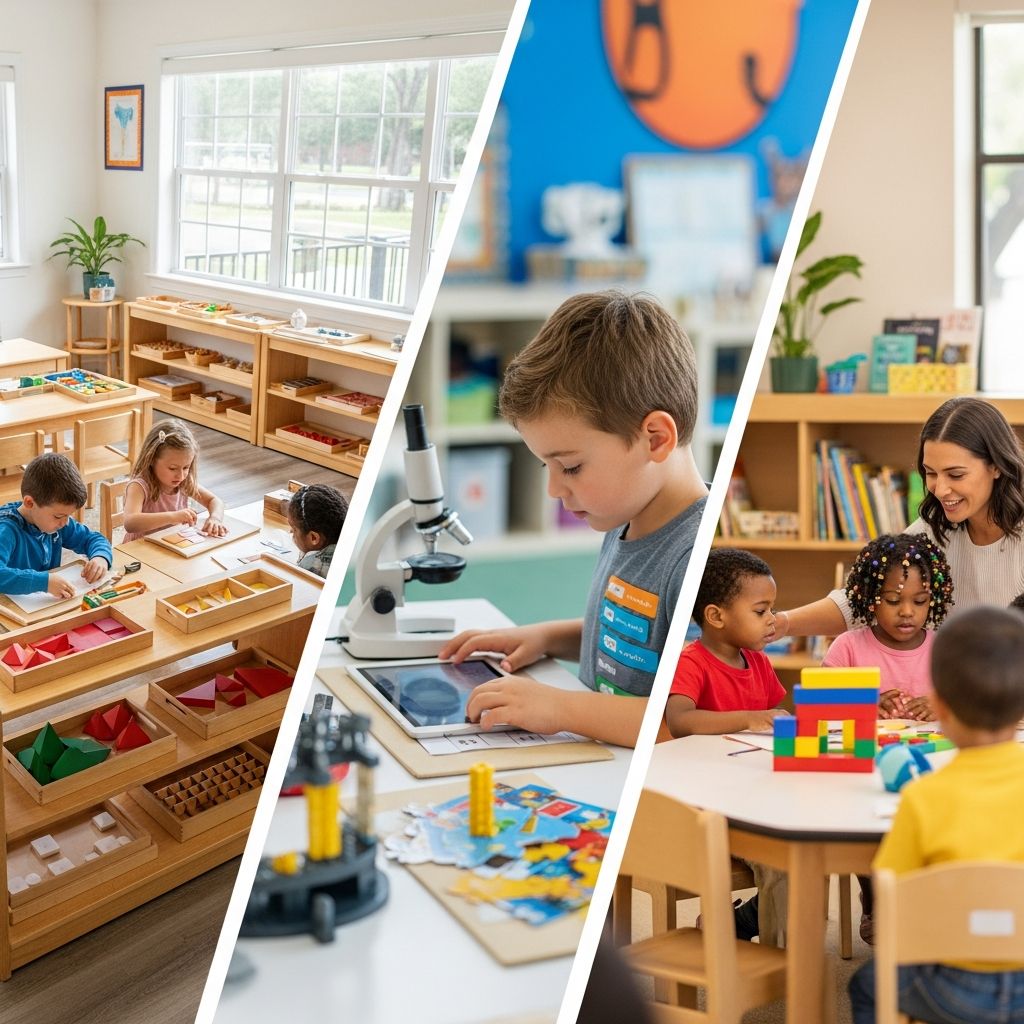
Understanding Early Childhood Education Approaches
When selecting a preschool, parents often face a critical decision: should they choose a Montessori school, a gifted program, or a traditional play-based environment? Each approach has its own philosophy, strengths, and potential drawbacks. Understanding these differences is essential for making an informed choice that aligns with your child’s personality, learning style, and developmental needs.
Montessori: Fostering Independence and Exploration
Montessori education is rooted in the belief that children learn best through hands-on, self-directed activities. The classroom is designed as a “prepared environment,” where children are free to choose their activities within a structured framework. This method emphasizes independence, practical life skills, and respect for each child’s unique pace of development.
- Children work with specialized manipulatives that encourage sensory learning and problem-solving.
- Teachers act as guides, observing and supporting rather than directing.
- Multi-age classrooms promote peer learning and leadership.
- There is a strong focus on intrinsic motivation and lifelong curiosity.
Montessori schools are particularly effective for children who thrive in environments that allow for deep exploration and self-paced learning. However, some critics note that the approach can be rigid and may not always encourage creativity or play-based learning as much as other models.
Gifted Programs: Accelerated Learning and Academic Focus
Gifted preschools are designed for children who demonstrate advanced abilities or a high potential for learning. These programs often emphasize academic rigor, early mastery of skills, and structured curricula. The goal is to challenge children intellectually and prepare them for advanced academic tracks.
- Curricula are typically accelerated, with children working at or above grade level.
- Teachers may use standardized assessments to track progress.
- Classroom activities are often teacher-led and focused on specific academic outcomes.
- There is less emphasis on free play and more on structured learning.
While gifted programs can be beneficial for children who need more intellectual stimulation, research suggests that overly academic environments may not foster the same level of curiosity, social responsibility, or emotional well-being as play-based or child-led approaches.
Play-Based Learning: The Foundation of Early Development
Play-based preschools prioritize learning through play, exploration, and social interaction. This approach is grounded in research showing that children develop best when they are allowed to follow their interests, engage in imaginative activities, and interact with peers in a supportive environment.
- Children learn through hands-on activities, storytelling, and creative play.
- Teachers facilitate learning by providing materials and guidance, but do not direct every activity.
- Emphasis is placed on emotional development, social skills, and problem-solving.
- Curricula are flexible and responsive to children’s interests.
Studies have shown that children who attend play-based preschools often perform better academically and socially in later years compared to those in highly structured, academic-focused programs.
Comparing Montessori, Gifted, and Play-Based Preschools
| Approach | Focus | Learning Style | Teacher Role | Best For |
|---|---|---|---|---|
| Montessori | Independence, practical skills, self-paced learning | Hands-on, child-led | Guide, observer | Children who thrive with structure and exploration |
| Gifted | Academic acceleration, early mastery | Structured, teacher-led | Instructor, assessor | Children with advanced abilities or high potential |
| Play-Based | Social-emotional, creative, exploratory | Child-led, imaginative | Facilitator, supporter | All children, especially those who learn through play |
How to Choose the Right Preschool for Your Child
Selecting a preschool involves considering your child’s temperament, learning style, and developmental needs. Here are some key questions to ask:
- Does your child prefer structured activities or free exploration?
- Is your child academically advanced, or do they benefit from a slower, more playful approach?
- How important is social interaction and emotional development to you?
- Do you value creativity and imagination as much as academic achievement?
Visiting classrooms and observing how children interact with teachers and materials can provide valuable insights. Look for environments that encourage curiosity, independence, and joy in learning.
Frequently Asked Questions
Is Montessori suitable for gifted children?
Yes, Montessori can be an excellent fit for gifted children because it allows them to work at their own pace and explore their interests deeply. However, not all Montessori schools are equally flexible, so it’s important to observe the classroom and talk to teachers about their approach.
Do gifted preschools guarantee better academic outcomes?
Research shows that while gifted programs can accelerate academic skills, they may not always foster the same level of curiosity, social responsibility, or emotional well-being as play-based or child-led approaches. Long-term success depends on a balanced development of intellectual, social, and emotional skills.
Can a child benefit from both Montessori and gifted education?
Some families choose to combine elements of both approaches, such as enrolling in a Montessori school and supplementing with enrichment activities. The key is to ensure that the child’s overall experience supports their unique needs and interests.
What should I look for in a preschool classroom?
Look for classrooms that encourage exploration, independence, and social interaction. Observe how teachers interact with children and whether the environment feels supportive and engaging. Ask about the curriculum and how it adapts to individual children’s needs.
Conclusion
Choosing the right preschool is a deeply personal decision that depends on your child’s unique strengths and needs. Whether you opt for Montessori, a gifted program, or a play-based approach, the most important factor is finding an environment that nurtures curiosity, independence, and a lifelong love of learning.