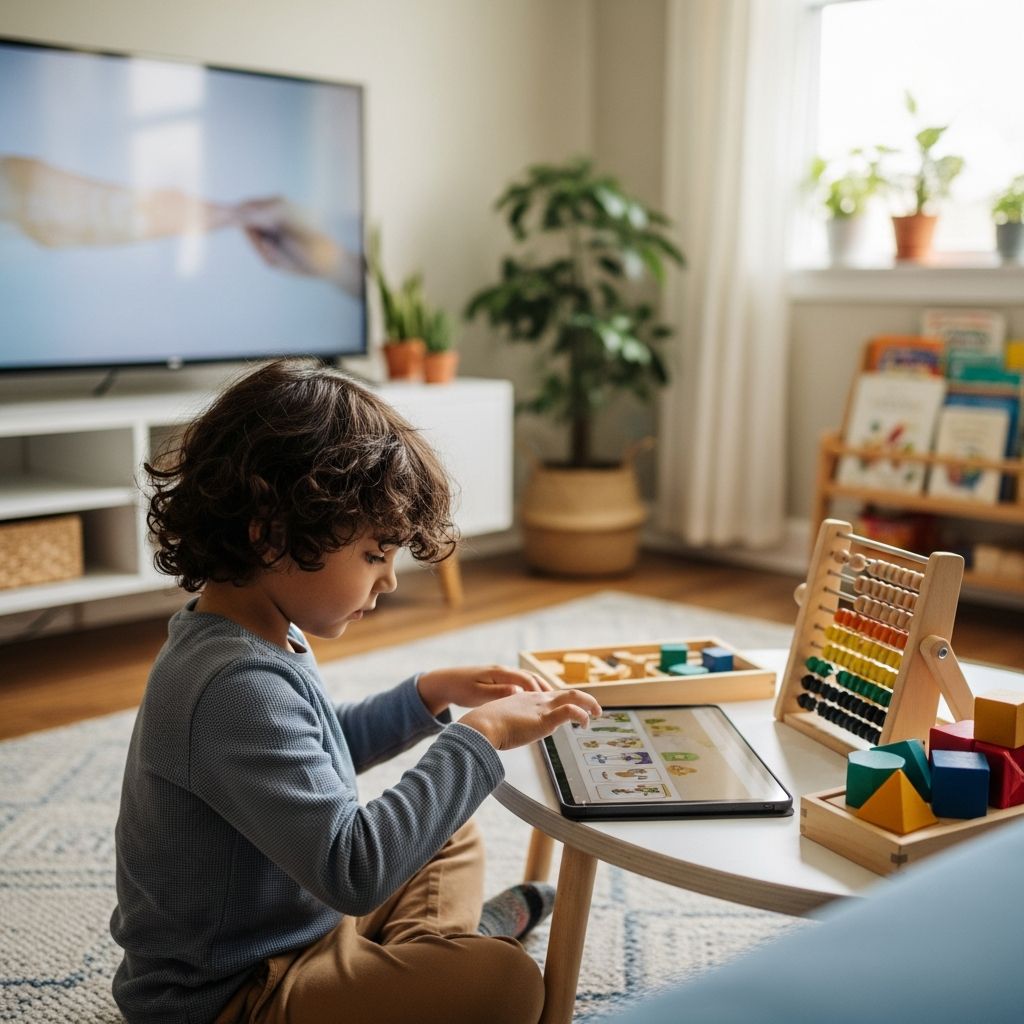
Balancing TV, tablets, and real-world play has become one of the biggest challenges of early childhood parenting. Many families love the Montessori approach for its emphasis on independence, hands-on learning, and respect for the child, yet feel unsure how screens fit into that philosophy in everyday life.
Why Screen Time Feels So Hard to Manage
Most parents already know that too much screen time is not ideal, but daily realities like long workdays, siblings with homework online, and the need to cook dinner can quickly turn the TV into a default babysitter. The goal is not perfection or zero screens; it is to make media use intentional rather than automatic.
Montessori-inspired families often ask a deeper question: not just “how much” TV, but “what does screen time do to my child’s sense of curiosity, concentration, and independence?” When framed this way, screen time becomes part of the larger picture of how a child spends waking hours—moving, exploring, talking, solving problems, and resting.
Montessori Principles and What They Mean for Screens
The Montessori method was created long before streaming platforms and tablets, yet its core ideas offer a clear lens for deciding how and when to use screens. Instead of centering rules around fear, it invites parents to ask whether an activity supports the child’s natural drive to learn and develop.
- Respect for the child: Screens should not just keep a child quiet; they should, when used, align with the child’s developmental needs and interests.
- Hands-on experience first: Real objects, real people, and real tasks come before two-dimensional images. Screens may supplement life, but should not replace real exploration.
- Concentration and deep focus: Repetitive, fast-paced, or highly stimulating programs can make it harder for children to settle into calm, focused play afterward.
- Independence and choice: Children can gradually learn to understand media limits and participate in simple decisions within boundaries set by adults.
How Much Screen Time Is Reasonable for Young Children?
Health and child-development organizations generally recommend keeping screen exposure low in the first years, especially before age two, and focusing mostly on high-quality, slow-paced, age-appropriate content. These recommendations are designed to protect sleep, language growth, attention, and physical activity.
Think of screen time as a small side dish, not the main course of the day. If screens begin to crowd out outdoor play, conversation, reading, or unstructured play, it is a sign that limits need tightening or routines need adjusting.
Typical Daily Balance for Ages 2–6 (Example)
| Activity Type | Approximate Time | Purpose |
|---|---|---|
| Outdoor play and movement | 2–3 hours | Gross motor skills, sensory input, health |
| Hands-on work and play (indoors) | 2–3 hours | Fine motor skills, problem-solving, independence |
| Reading and storytelling | 30–60 minutes | Language, imagination, connection |
| Social time with family/peers | Ongoing throughout day | Emotional security, communication |
| Screen time (TV, tablet, etc.) | Up to about 1 hour | Carefully chosen content, co-viewed when possible |
This table is not a rigid schedule but a visual reminder that screens should remain a small portion of a rich and varied daily rhythm.
What Makes Screen Time “Montessori Friendly”?
Montessori environments focus on reality-based, respectful, and purposeful experiences. When translated into media choices, this means selecting content that mirrors real life, moves at a human pace, and invites thinking rather than passive consumption.
- Look for calm voices, simple stories, and limited background noise.
- Prefer shows rooted in real-world situations (cooking, nature, problem-solving) over frantic or purely fantastical plots.
- Avoid frequent scene cuts, flashing effects, and loud soundtracks that can overstimulate young nervous systems.
- Co-view when possible and connect what is on screen to hands-on experiences afterward.
Aligning Home Screen Habits with Montessori School Expectations
Many Montessori schools either minimize or completely avoid screens in the classroom, focusing instead on concrete materials, time outdoors, and collaboration. When home life includes heavy screen use, the contrast can be jarring for children, making it harder for them to adjust to the expectations at school.
Parents can support their child’s school experience by crafting home routines that echo classroom values. This does not require eliminating TV entirely, but it does involve being thoughtful about timing, duration, and type of content.
Practical Ways to Stay in Sync
- Ask the teacher how screens are (or are not) used at school so home habits can complement, not conflict with, that approach.
- Shift most or all screen exposure to outside of school hours and away from bedtime.
- Emphasize hands-on play, practical life skills, and outdoor time on school days to reinforce what the child is used to in the classroom.
Building a Realistic Daily Screen Routine
Rigid bans can backfire, especially in households where adults themselves rely on screens for work and relaxation. A more sustainable option is to design a predictable daily rhythm where screens occupy specific, limited windows so they do not “leak” into every free moment.
Children respond well to consistency. When they know when screen time usually happens, they are less likely to beg throughout the day or melt down when the TV goes off.
Sample Weekday Routine for a Preschooler
- Morning: No screens before school. Time for breakfast, dressing, and simple play to keep the nervous system calm.
- After school: Free play and snack, then outdoor time. Short, planned TV block only after some movement and connection.
- Evening: Screen-free window before bed, focused on baths, stories, and quiet play.
Sample Weekend Approach
- Offer one or two clearly defined viewing blocks (for example, mid-morning and late afternoon), instead of scattered shows all day.
- Pair TV time with an activity afterward inspired by what they watched, such as drawing, pretend play, or helping in the kitchen.
- Keep mealtimes and bedrooms as screen-free zones as much as possible.
When TV Helps More Than It Hurts
Families are not laboratories, and real life sometimes demands flexibility. There are moments when using a carefully chosen show is the least stressful option for everyone, including the child. When used thoughtfully, short, intentional viewing can help preserve parental energy and avoid bigger conflicts.
- Transition times: A brief show while a caregiver cooks dinner or sets up an activity may be more peaceful than constant interruptions or arguments.
- Illness or recovery days: When a child is unwell and physically limited, gentle, calm programming can offer comfort while the adult supervises from nearby.
- Travel or waiting rooms: Portable screens may be the most practical way to keep a tired child occupied during long waits or journeys.
The key is to return to normal routines once the exceptional situation passes and to avoid letting emergency solutions turn into default habits.
Warning Signs of Problematic Screen Use
Not all screen time is created equal. Some children tolerate short daily viewing with no obvious issues, while others become agitated even after a single show. Paying close attention to a child’s behavior before, during, and after screen exposure helps parents adjust limits proactively.
- Frequent tantrums when screens are turned off.
- Loss of interest in toys, outdoor play, or hands-on activities they once enjoyed.
- Struggles falling asleep or waking more often at night when screens are used late in the day.
- Increased irritability, restlessness, or difficulty focusing on simple tasks.
If several of these patterns emerge, it may help to reduce screen time significantly for a few weeks and observe any changes in mood, play, and sleep.
Simple, Screen-Free Alternatives Kids Actually Enjoy
One reason screens become so dominant is that parents underestimate how long a child can stay engaged with simple, low-cost activities. Montessori-inspired alternatives do not need to be elaborate or expensive; they just need to be real, accessible, and at the child’s level.
- Pouring, scooping, or transferring activities with dry beans, rice, or water (with close supervision).
- Helping set the table, water plants, wipe spills, or feed pets.
- Drawing, cutting, gluing, and early sewing or lacing work.
- Building with blocks, magnetic tiles, or wooden trains.
- Simple matching games, puzzles, and sorting objects by color, size, or type.
- Nature walks to collect leaves, rocks, or flowers to examine and arrange at home.
Placing a few of these choices on low shelves where children can see and reach them makes it easier for them to start playing independently instead of turning to screens by default.
Creating Family Media Rules that Actually Stick
Rules work best when they are clear, consistent, and shared by all adults in the household. Children quickly notice when one caregiver enforces limits and another gives in, which can increase whining and bargaining.
- Agree as adults first: decide when screens are allowed, for how long, and what types of content are acceptable.
- State rules in simple, positive language, such as “We watch one show after snack” rather than listing many “no” statements.
- Use visual timers or countdowns so children can see when screen time will end.
- Plan a next activity before turning screens off to ease transitions.
Just as important as rules for children are quiet commitments adults make for themselves: putting phones away during meals, turning off background TV, and modeling boredom without instantly reaching for a device.
Frequently Asked Questions
Is any TV acceptable for toddlers?
For very young toddlers, short, occasional viewing of gentle, age-appropriate content can be manageable, especially when an adult watches along and talks about what is happening on screen. The younger the child, the more important it is that screens do not interfere with sleep, language-rich interaction, and physical play.
My child’s Montessori school discourages screens, but we watch TV daily. Is that a problem?
Daily viewing is not automatically harmful, but it can clash with the school’s efforts to nurture deep focus and independence if it becomes excessive or chaotic. Aligning home habits with school values—by limiting screens to set times and choosing calmer, reality-based content—helps your child move smoothly between environments.
What if TV is the only way I get a break?
Needing a break is valid, and occasional reliance on a show for breathing room does not make anyone a bad parent. The goal is to gradually build up a toolkit of alternative activities and predictable routines so that screens become one tool among many rather than the only coping strategy.
How can I reduce screen time without constant battles?
Start by changing the environment, not just the rules: remove background TV, keep devices out of bedrooms, and prepare enticing, accessible activities. Then introduce small, steady adjustments—like shortening viewing time by ten minutes or moving it away from bedtime—rather than sudden, absolute bans.
Are educational apps better than TV?
Some apps offer interactive elements that can support learning, but they still involve screen exposure and should be limited for young children. Hands-on experiences—such as pouring, building, drawing, and real-world problem-solving—remain far more powerful for early development than any digital program.
Final Thoughts: Leading with Connection, Not Perfection
Montessori-inspired screen use is less about strict numbers and more about honoring a child’s need for movement, touch, conversation, and purposeful work. When adults lead with connection, predictable rhythms, and a rich physical environment, screens naturally fall into the background instead of dominating daily life.
Change does not have to be dramatic. Even small shifts—one more trip outside, one fewer background show, one new tray of materials on a low shelf—can create the space children need to grow into curious, capable, and grounded humans in a digital age.