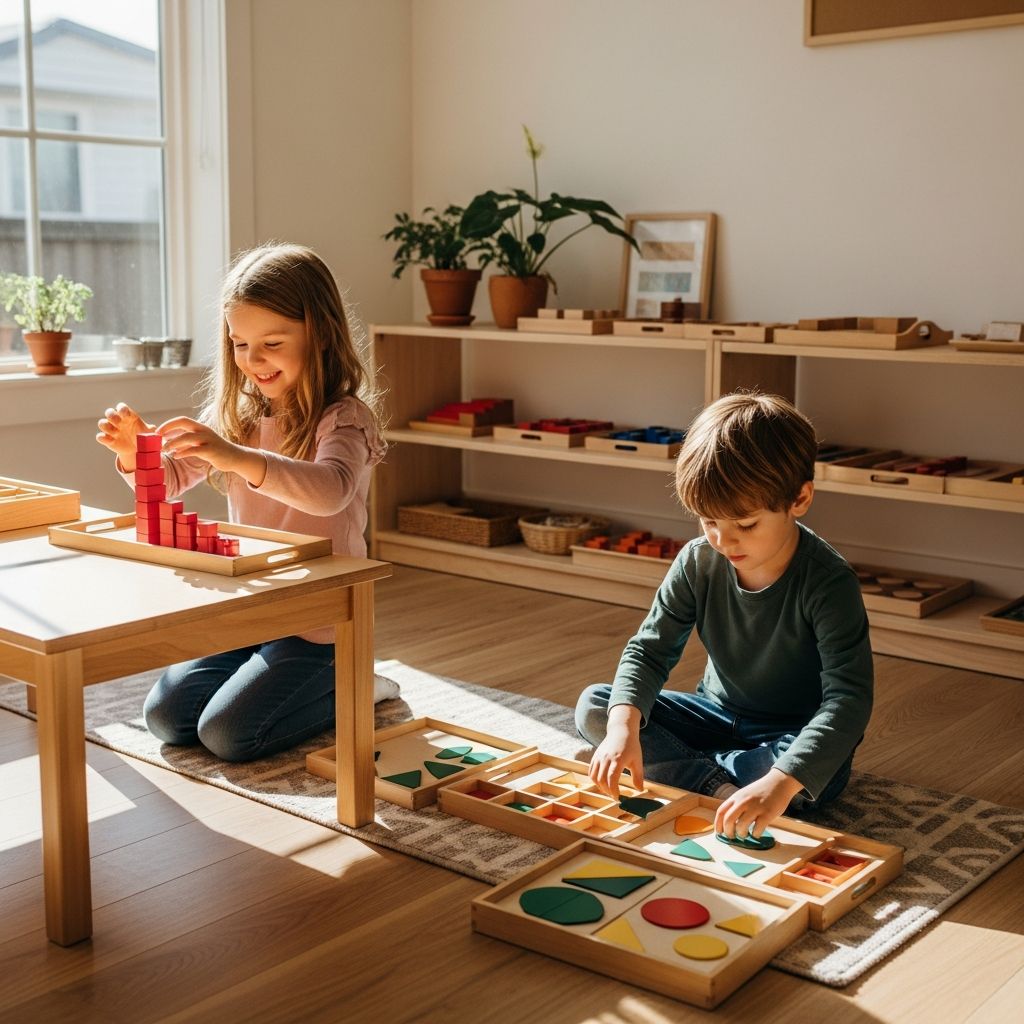
Every parent seeks to raise happy, confident children who thrive emotionally and intellectually. While parenting philosophies vary widely, the Montessori approach offers a scientifically-grounded framework that has transformed countless families. Developed by Dr. Maria Montessori through careful observation of children across developmental stages, this methodology recognizes that happiness emerges when children experience autonomy, purposeful engagement, and respect for their individual developmental pace. By adopting key Montessori principles at home, parents can cultivate environments where children flourish naturally, developing resilience, self-motivation, and genuine joy in learning and discovery.
Understanding the Foundation of Montessori Philosophy
The Montessori method rests on a fundamental belief that differs markedly from traditional parenting approaches: children are not empty vessels waiting to be filled with adult knowledge, but rather capable individuals with innate drives toward exploration and learning. Dr. Montessori observed that when given appropriate freedom within thoughtfully structured environments, children naturally gravitate toward work that challenges and engages them. This distinction between restriction and guidance proves crucial. Rather than imposing learning through rigid schedules and punishments, Montessori philosophy empowers children to become architects of their own educational journeys.
The method emphasizes holistic development, addressing cognitive growth alongside emotional, social, and physical development. This comprehensive approach acknowledges that true well-being cannot be achieved through academic achievement alone. A child who excels academically but struggles emotionally, socially, or physically has not achieved genuine success. Montessori education seeks to cultivate well-rounded individuals equipped with both knowledge and the emotional intelligence necessary to navigate life’s complexities with confidence and empathy.
Designing Spaces That Inspire and Support Growth
One cornerstone of Montessori philosophy involves creating intentionally designed environments that function as educators themselves. The physical space surrounding a child communicates expectations, fosters independence, and invites exploration. In Montessori classrooms and homes, every element serves a purpose.
An effective Montessori space exhibits these characteristics:
- Calm and orderly organization — Clutter creates mental confusion and overwhelms developing brains. Thoughtfully arranged materials on child-accessible shelving help children locate what they need independently while maintaining visual clarity
- Child-scaled proportions — Furniture, shelves, and materials sized appropriately for small bodies empower children to navigate their environment without constant adult assistance
- Aesthetic appeal — Beautiful, well-maintained spaces inspire focus and respect. Natural materials, soft colors, and artistic elements create environments children want to care for
- Purposeful material selection — Every item available serves developmental purposes rather than decorative functions. Toys and materials encourage exploration, problem-solving, and skill-building
- Freedom of movement — Open floor space allows children to transition between activities, work on the ground, and engage their bodies in learning experiences
When families translate these principles to home environments, children experience tangible benefits. They develop organizational habits naturally, become more responsible for their belongings, and experience greater autonomy in selecting activities that align with their current interests and developmental needs.
The Power of Purposeful Work and Meaningful Engagement
A critical distinction between Montessori approaches and conventional parenting involves how adults conceptualize children’s activities. Rather than viewing play primarily as entertainment or downtime, Montessori recognizes play as the essential work through which children develop crucial cognitive, emotional, and physical capabilities. Research validates this perspective, demonstrating that children engage in critical brain development processes during play.
The Montessori method encourages children to select work that genuinely interests them—activities that present appropriate challenges without overwhelming frustration or inducing boredom. This sweet spot between difficulty and capability, termed “flow,” generates intrinsic motivation. When children pursue self-selected work, they develop concentration, persistence, and the confidence that comes from mastering genuine challenges.
Practical work holds particular significance in Montessori environments. Activities like preparing snacks, washing dishes, folding textiles, caring for plants, or arranging materials teach essential life skills while building self-efficacy. Children who regularly engage in real, purposeful work develop independence, competence, and the understanding that their contributions matter. They internalize that they are capable individuals whose actions produce meaningful results.
Cultivating Independence Through Supportive Guidance
Perhaps counterintuitively, raising independent children requires less direct intervention, not more. Montessori parenting involves stepping back strategically while remaining present and observant. This represents a significant departure from hovering, directing, or constantly correcting children.
The Montessori approach to fostering independence includes:
- Observing before intervening — Parents watch to understand what children are attempting to accomplish rather than immediately solving problems or redirecting behavior
- Allowing natural consequences — When safe, children experience the outcomes of their choices, building decision-making capabilities and responsibility
- Providing space for struggle — Rather than rushing to help, parents allow children to persist through challenges, developing resilience and problem-solving approaches
- Offering guidance over correction — When intervention becomes necessary, parents guide children toward solutions rather than imposing adult-determined answers
- Respecting developmental timelines — Children master skills at different paces; comparison and pressure undermine intrinsic motivation
This approach generates remarkable outcomes. Children develop greater confidence and self-esteem because they accumulate genuine evidence of their capabilities. They experience fewer behavioral issues and tantrums because they retain agency over their choices and experiences. Most importantly, they develop the internal resilience necessary to handle life’s inevitable challenges, knowing from lived experience that they possess the capacity to overcome obstacles.
Building Community Through Respect and Kindness
The Montessori method recognizes children as members of learning communities deserving the same respect afforded adults. This foundational respect transforms how children relate to peers, authority figures, and themselves. Rather than enforcing behavioral compliance through punishment or reward systems, Montessori environments cultivate intrinsic values like compassion, honesty, and consideration for others.
In Montessori classrooms and homes, children learn that their actions affect community members. They develop awareness of how their behavior influences the learning environment and peers’ experiences. This awareness naturally motivates more thoughtful, kind conduct. Children who understand they are part of a community take responsibility for maintaining it collaboratively rather than behaving correctly only to avoid punishment.
Mixed-age classroom environments particularly strengthen these social and emotional capacities. Older children naturally mentor younger peers, reinforcing their own understanding while developing leadership and empathy. Younger children observe and learn from older models, absorbing social behaviors and academic concepts through observation and interaction. This creates a dynamic, multigenerational community where learning flows naturally.
Engaging Multiple Senses for Deeper Learning
Traditional education often emphasizes visual and auditory learning modalities, leaving kinesthetic learners underserved. The Montessori method deliberately incorporates tactile, sensory-rich materials that allow children to literally manipulate concepts into understanding. When children use colorful beads to explore mathematical relationships, their bodies internalize multiplication and division principles in ways that transcend memorization.
This multisensory approach serves crucial developmental purposes. Information encountered through varied sensory channels creates richer neural networks, improving retention and enabling creative application of knowledge. Children who learn through hands-on exploration develop deeper understanding compared to those receiving primarily abstract instruction. This sensory engagement also proves particularly effective for children with diverse learning styles and those with attention or processing challenges.
Establishing Routines That Foster Self-Discipline
Self-discipline develops through consistent practice within predictable structures, not through harsh enforcement. The Montessori method weaves simple, practical rituals throughout the day that naturally cultivate self-regulation. These routines might include preparing a workspace before beginning an activity, completing work cycles independently, and cleaning up materials afterward.
When children repeatedly practice these sequences—selecting a task, engaging with focus, completing the cycle, and restoring order—they internalize organizational and follow-through habits. This procedural learning proves far more effective than verbal reminders or punishments. Children develop genuine self-discipline rooted in understanding and routine rather than external pressure.
The Role of Observation in Responsive Parenting
Montessori educators spend considerable time observing children to understand their developmental stages, interests, capabilities, and challenges. Responsive parenting similarly requires deliberate observation before action. By watching children carefully, parents gain insight into what engages them, what frustrates them, what skills are emerging, and what developmental support would prove most beneficial.
This observational stance prevents common parenting pitfalls. Parents might assume a child is being defiant when actually the task exceeds their current capability. They might perceive behavior problems when a child is simply expressing legitimate developmental needs. Through careful observation, parents gain the understanding necessary to respond appropriately rather than react defensively.
Balancing Freedom with Appropriate Boundaries
An important misconception about Montessori parenting characterizes it as permissive. Actually, Montessori environments maintain clear expectations and boundaries—the distinction lies in how these are established and maintained. Children require structure; the question involves whether that structure serves adult convenience or child development.
Montessori boundaries reflect genuine safety needs and community well-being rather than arbitrary restrictions. A child cannot hit peers not because an adult mandates obedience, but because community members deserve respect and physical safety. Materials are organized in specific locations not to frustrate children, but to enable independence and maintain shared resources. Limits exist, but they arise from reasonable principles children can internalize and eventually apply independently.
Supporting Intrinsic Motivation Over External Rewards
Traditional parenting often relies on reward and punishment systems to motivate behavior. While these produce short-term compliance, they undermine the development of internal motivation. When children behave primarily to earn rewards or avoid punishment, they fail to develop genuine values or intrinsic drive.
Montessori environments foster intrinsic motivation by allowing children to experience natural consequences and authentic satisfaction. A child who completes challenging work experiences genuine pride and accomplishment—no external reward needed. A child who helps genuinely serve others experiences the intrinsic satisfaction of contribution. These authentic motivations prove far more powerful and durable than artificial reward systems.
Addressing Common Implementation Challenges
| Common Challenge | Montessori-Aligned Approach |
|---|---|
| Child seems unproductive or directionless | Allow exploration and observation; children often appear to wander before settling into focused engagement. Trust the process and provide varied opportunities |
| Sibling conflicts and disputes | Guide children toward conflict resolution rather than imposing solutions; teach problem-solving and communication skills for long-term capability |
| Resistance to completing necessary tasks | Involve children in decision-making about task timing; offer choices within necessary boundaries; make tasks purposeful rather than arbitrary |
| Difficulty maintaining organized spaces | Gradually develop organizational habits through consistent practice; ensure spaces remain child-accessible and materials remain manageable in quantity |
| Balancing screen time and modern life | Prioritize hands-on, purposeful activities; use screens intentionally rather than as default; model balanced technology use |
Frequently Asked Questions
Can Montessori principles be applied in traditional schools or non-Montessori environments?
Absolutely. While Montessori schools provide comprehensive implementation, parents can apply individual principles at home regardless of school setting. Starting with environmental design, respecting child autonomy, and limiting unnecessary restrictions yields measurable benefits.
At what age should parents begin implementing Montessori approaches?
Montessori principles apply across development from infancy through adolescence. Very young children benefit from safe exploration spaces and purposeful activities. The approach scales appropriately for each developmental stage.
How does Montessori parenting address screen time and technology?
Montessori philosophy prioritizes hands-on, sensory-rich, purposeful activities over passive screen consumption. Technology can serve specific purposes when used intentionally, but should not replace active engagement with physical materials and real-world exploration.
What if children resist Montessori approaches or seem to need more structure?
Transitions from highly structured approaches to Montessori-style freedom sometimes require patience. Children adapt gradually as they experience autonomy’s benefits. Maintaining clear, reasonable boundaries while expanding choices typically resolves resistance.
How do Montessori principles support children with developmental or learning differences?
The individualized, child-paced approach accommodates diverse learning styles and developmental timelines naturally. Multisensory materials particularly benefit children with learning differences. Professional guidance remains valuable for specific challenges.
Can Montessori approaches coexist with traditional parenting methods?
Parents need not adopt Montessori methodology entirely to benefit from specific principles. Selective integration—such as creating prepared environments or emphasizing observation—can enhance traditional approaches without requiring complete philosophical overhaul.
References
- How Montessori Can Unlock ANY Child’s True Potential — Montessori Rocks. 2024. https://montessorirocks.org/how-montessori-can-unlock-any-childs-true-potential/
- Understanding the Montessori Method: What Is the Montessori Method and How It Benefits Children — Poinciana Montessori. 2024. https://www.poincianamontessori.org/post/understanding-the-montessori-method-what-is-the-montessori-method-and-how-it-benefits-children
- 5 Core Components of Montessori Education — American Montessori Society (AMS). 2025. https://amshq.org/the-ams-difference/core-components-of-montessori/
- Raising Independent Kids with the Montessori Method — The Parenting Guide. 2024. https://theparentingguide.substack.com/p/raising-independent-kids-with-the
- Raising A Well-Rounded Kid: 9 Ways to Montessori Parenting — Montessori Academy. 2024. https://montessori-academy.com/blog/ways-to-montessori-parenting/
- The Method — Countryside Montessori School. 2025. https://www.countrysidemontessorischool.org/the-method
- How Montessori Education Fosters Self-Regulation in Children — Association Montessori Internationale (AMI). 2024. https://montessori-ami.org/trainingvoices/montessori-fosters-self-regulation