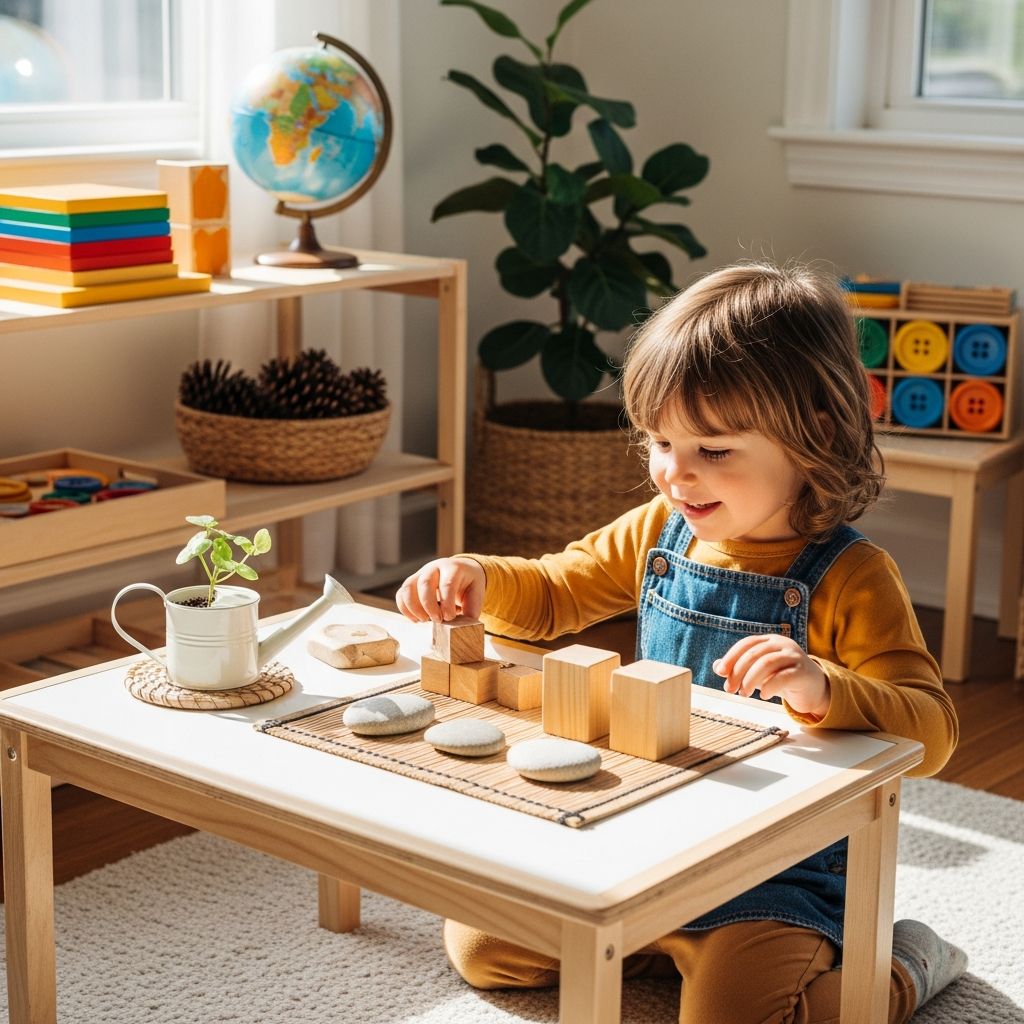
Creating a Montessori Learning Space Within Your Home
The Montessori approach to education emphasizes child-led exploration, independence, and learning through hands-on engagement with purposeful activities. While traditional Montessori schools offer specialized environments and trained guides, parents can successfully implement these principles at home by establishing dedicated learning spaces and providing age-appropriate materials. The foundation of a home-based Montessori environment begins with thoughtful organization and accessibility. By placing low shelves within reach, rotating activities to maintain novelty, and allowing children to select their own work, you create an atmosphere that respects their natural curiosity and desire for independence.
Setting up a Montessori-inspired home doesn’t require expensive equipment or extensive renovations. Instead, focus on organizing existing household items in accessible ways that invite exploration. Use trays, baskets, and low shelves to present materials clearly. Rotate activities regularly to sustain interest and prevent the environment from becoming overwhelming. This rotation system allows children to fully engage with fewer options rather than feeling distracted by too many choices. The key is making learning materials visible and inviting, so children naturally gravitate toward purposeful activities rather than passive entertainment.
Practical Life Skills Development Through Everyday Tasks
Practical life activities form the cornerstone of Montessori education, as they teach children real-world skills while building confidence and independence. These activities mirror daily responsibilities that adults perform, allowing children to participate meaningfully in household life. By engaging in genuine work rather than make-believe play, children develop a sense of purpose and competence that extends beyond the activity itself.
Some foundational practical life activities include:
- Fragrant Object Creation: Making scented items like clove-studded citrus fruits teaches children fine motor control, patience, and sensory appreciation. This activity also introduces basic food science concepts.
- Sorting and Classification: Organizing objects by size, color, texture, or category (like buttons or beads) develops cognitive categorization skills and fine motor precision.
- Vegetable Preparation: Using child-safe knives to cut soft vegetables teaches knife skills, hand strength, and builds confidence in the kitchen.
- Doll Care Activities: Washing dolls or dressing them in different outfits encourages nurturing behaviors and sequencing of steps in a multi-part task.
- Plant Maintenance: Dusting plant leaves with small sponges or watering indoor plants teaches responsibility and gentle care for living things.
These activities serve dual purposes: they accomplish genuine household tasks while simultaneously developing the child’s motor skills, sequencing abilities, and sense of contribution to family life.
Engaging the Senses: Sensorial Exploration Activities
Sensorial activities refine a child’s ability to discriminate between different sensory experiences and categorize the world around them. These activities intentionally focus on one sense at a time, allowing for concentrated exploration. Sensorial work strengthens neural pathways related to perception and lays the foundation for later academic concepts like measurement, comparison, and classification.
Effective sensorial activities include:
- Tactile Mystery Exploration: Placing various textured objects in an opaque bag and having children identify items by touch alone develops sensory discrimination and vocabulary as they describe what they feel.
- Olfactory Identification Games: Filling small containers with different safe scents—such as herbs, spices, or child-safe essential oils—allows children to explore and match aromas. This activity can progress from simple identification to matching pairs of identical scents.
- Color Recognition and Matching: Using colored objects or papers to sort household items by hue strengthens visual discrimination and introduces color relationships.
- Texture Sorting Collections: Gathering natural materials like leaves, bark, stones, and pinecones to organize by texture teaches tactile discrimination and classification skills.
Sensorial activities naturally progress in complexity as children develop. Younger children benefit from simple discrimination tasks (choosing between two obviously different textures), while older children can manage more nuanced comparisons or matching activities requiring finer perceptual distinctions.
Building Physical Capabilities: Gross Motor Activities
Gross motor development—the ability to control large muscle movements—is essential for overall physical health, coordination, and confidence. Indoor gross motor activities accommodate children’s need for physical movement while respecting space limitations. These activities should be offered regularly, as children require substantial daily physical activity regardless of weather conditions.
Valuable indoor gross motor activities include:
- Yoga and Stretching: Providing yoga cards with simple poses allows children to explore body awareness and flexibility at their own pace. This activity also introduces calming techniques.
- Balance Challenges: Walking on painter’s tape lines, balancing on one foot, or using balance boards develops proprioceptive awareness and stability.
- Jumping and Hopping: Using floor markings or stepping stones creates structured jumping opportunities that strengthen leg muscles and improve coordination.
- Rope Activities: Jump ropes in designated areas allow for vigorous cardio activity within confined spaces.
- Movement-Based Games: Creating puzzle assembly tasks that require walking between rooms combines problem-solving with physical activity, as children transport puzzle pieces back and forth.
These activities maintain children’s physical fitness while keeping movement purposeful and contained within a home environment. Regular engagement with gross motor activities supports healthy development and provides valuable outlets for natural energy.
Creative Expression and Artistic Development
Artistic activities in the Montessori method focus on exploration rather than predetermined outcomes. Children engage with materials to discover color relationships, textures, and creative possibilities. This approach builds confidence in self-expression without the pressure of achieving specific results.
Engaging art and creative activities include:
- Color Experimentation: Using dropper bottles with primary colored water to mix in palettes teaches color theory while developing fine motor control with the droppers.
- Art Analysis and Matching: Collecting postcards from museums or galleries to sort, match, or categorize by style, subject matter, or period develops visual literacy and aesthetic appreciation.
- Building and Construction: Designating a “makerspace” with recycled materials (boxes, tubes, buttons, string) encourages three-dimensional thinking and innovation.
- Pattern Creation: Using buttons, pasta, or other small objects to create mandalas or patterns reinforces color sorting while producing beautiful finished products.
Creative activities need not produce “finished” artwork. The process of exploration, decision-making, and material manipulation provides the developmental benefit, while the end product serves as a record of the child’s thinking and effort.
Developing Fine Motor Skills Through Sewing Projects
Sewing activities represent a progression of fine motor skill development and hand-eye coordination. Beginning with simple threading and advancing to actual needle work, sewing offers tangible, purposeful outcomes that build a child’s sense of accomplishment. Each step requires focus, precision, and persistence—qualities central to the Montessori philosophy.
A progressive sequence of sewing activities includes:
- Bead and Pasta Threading: Starting with larger items and thicker strings develops the basic pinching and threading motion without requiring needle skills.
- Lacing Cards: Punched cards with thick laces introduce the up-down pattern of sewing in preparation for actual needlework. Homemade versions using cardstock and shoelaces serve the same purpose as commercial products.
- Button Attachment: With appropriate supervision, children around 3.5 to 4 years old can learn to thread needles, tie knots, and sew buttons onto fabric. This practical skill builds both dexterity and self-sufficiency.
- Pillow Construction: Once button sewing is mastered, children can progress to joining two fabric pieces with running stitches and filling with batting. Scent-filled sachets offer a fragrant variation.
Each sewing activity builds upon previous skills, creating a natural progression that maintains challenge at the appropriate developmental level. The satisfaction of creating a functional item through personal effort provides powerful motivation for continued engagement.
Scientific Inquiry and Discovery Activities
Science activities in a Montessori framework emphasize hands-on exploration and hypothesis testing rather than passive observation. Children become scientists themselves, making predictions and testing their theories through direct experimentation. These activities build scientific thinking skills and curiosity about how the world works.
Key science exploration activities include:
- Buoyancy Investigation: Using a bathtub or basin of water, children predict which household items will sink and which will float, then test their hypotheses. This activity introduces concepts of density and mass through direct experience.
- Magnetic Property Exploration: Providing a collection of magnetic and non-magnetic objects along with a magnet allows children to sort items and develop understanding of magnetic properties through experimentation.
- Classification by Habitat: Sorting pictures or objects representing items found in air, land, and water teaches ecosystem awareness and taxonomic thinking.
- Wildlife Observation: Setting up a window bird-watching station with field guides, binoculars, and outdoor bird feeders combines observation skills with environmental awareness and patience.
Science activities work best when children have genuine opportunity to experiment and reach their own conclusions. Avoiding the urge to directly tell answers preserves the child’s sense of discovery and strengthens their investigative thinking.
Designing Your Home Montessori Activity Schedule
| Activity Category | Duration (minutes) | Frequency | Age Recommendation |
|---|---|---|---|
| Practical Life Tasks | 10-20 | Daily | 2 years and up |
| Sensorial Exploration | 10-15 | 3-4 times weekly | 2.5 years and up |
| Gross Motor Activities | 15-30 | Daily | 2 years and up |
| Fine Motor/Sewing | 15-20 | 2-3 times weekly | 3 years and up |
| Creative Arts | 15-25 | 3-4 times weekly | 2.5 years and up |
| Science Investigations | 10-20 | 2-3 times weekly | 3 years and up |
A balanced home Montessori program includes activities from multiple categories throughout the week, allowing children to develop diverse skills. The most effective approach combines daily practical life activities with rotating selections from other categories to maintain engagement and provide comprehensive development.
Adapting Montessori Principles for Different Ages and Stages
Children at different developmental stages benefit from modified versions of the same basic activity types. A toddler might simply explore the sensation of water in a sink, while an older preschooler predicts sink-or-float outcomes. Similarly, younger children thread large beads while older children sew buttons. By understanding these progressions, parents can adapt activities to meet their child’s current abilities while providing appropriate challenges.
For younger children (ages 2-3), focus on sensory exploration, gross motor movement, and very simple practical tasks with minimal steps. For preschoolers (ages 3-5), increase complexity with multi-step tasks, introduce basic academic concepts through hands-on exploration, and provide opportunities for increasing independence. For older elementary children (ages 5-7), integrate academic skills into practical applications, encourage longer-duration projects, and support increasingly sophisticated problem-solving.
Frequently Asked Questions
What materials do I need to start a home Montessori program?
You likely already have most needed materials at home. Basic supplies include kitchen items for practical life tasks, natural objects for sensorial activities, recycled materials for creative projects, and simple household items for science investigations. Minimal purchased materials—such as yoga cards or basic sewing supplies—may enhance the program but aren’t essential to begin.
How much time should children spend on Montessori activities daily?
Young children benefit from multiple activity sessions throughout the day, totaling 1-2 hours of structured exploration. Sessions should be relatively short (10-25 minutes), allowing for natural breaks and transitions. The focus should be on quality engagement rather than duration.
Can I combine Montessori activities with other educational approaches?
Yes. Montessori principles complement many educational philosophies. You can incorporate Montessori-style practical life activities and sensorial work into a homeschool program that also includes other teaching methods.
What should I do if my child loses interest in an activity?
Remove the activity and replace it with something different. Interest naturally fluctuates, and Montessori philosophy respects the child’s current interests and needs. Rotation helps maintain novelty and engagement.
How do I know if an activity is developmentally appropriate?
Appropriate activities should be challenging enough to maintain interest but achievable with reasonable effort. If your child becomes frustrated or bored quickly, the task is likely too difficult or too easy. Observing your child’s reactions guides adjustment.
References
- 49 Indoor Montessori Activities for Kids — Motherly. Retrieved from https://www.motherly.com/child/child-learn-play/indoor-montessori-activities/
- Exploring Montessori-Inspired Activities for Engaging Child Development at Home — Westcliffe Early Learning. Retrieved from https://www.westcliffearlylearning.com/blog/exploring-montessori-inspired-activities-for-engaging-child-development-at-home/
- 100 Montessori Indoor Activities for Preschoolers on Rainy Days — Alphabet Trains. Retrieved from https://alphabet-trains.com/blog/post/indoor-activities-preschoolers
- Best Indoor Children’s Activities: Keeping Kids Engaged and Cheerful — Garden Montessori Schools. Retrieved from https://www.gardenmontessorischools.com/blog/indoor-childrens-activities-guide
- 18 Educational Montessori Activities To Do at Home — Sapientia Montessori. Retrieved from https://sapientiamontessori.com/montessori-activities/montessori-activities-at-home/