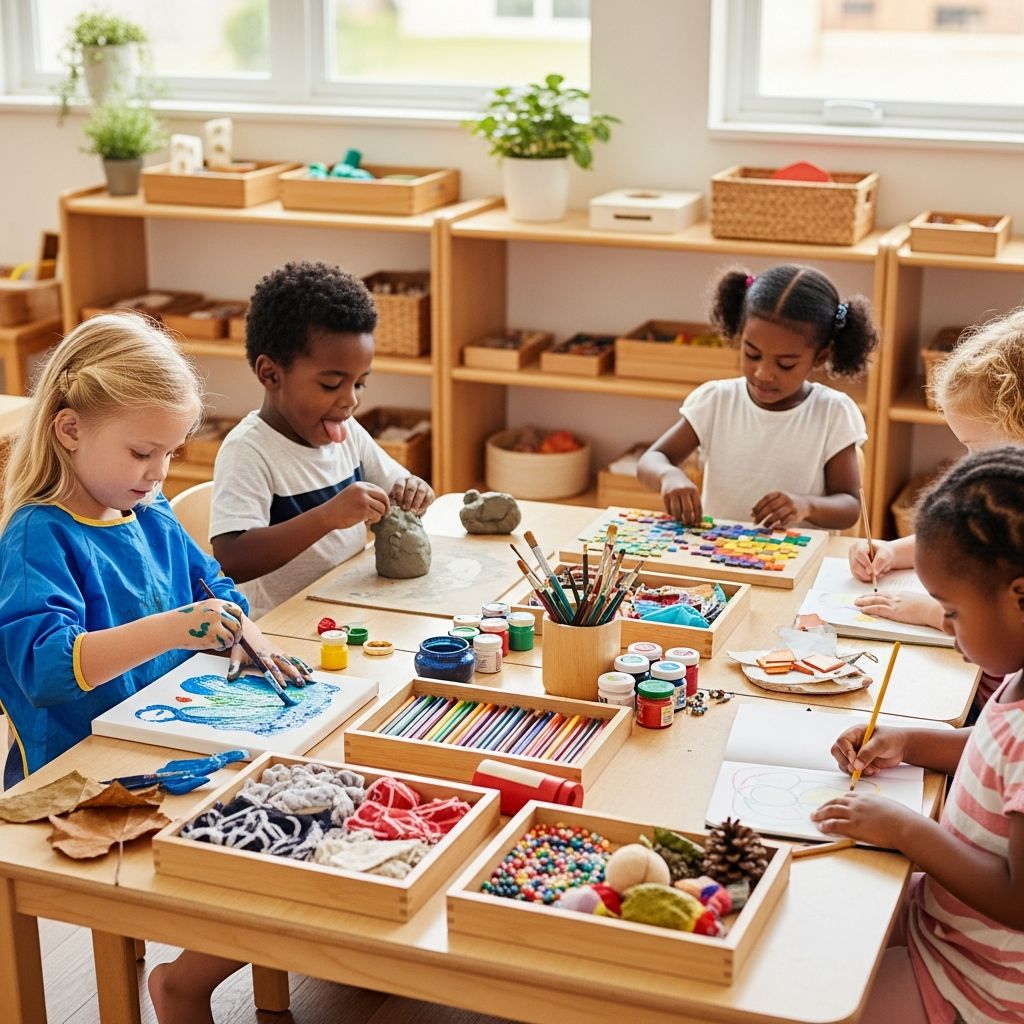
Embrace the Montessori approach to art by focusing on child-led exploration rather than rigid outcomes. This method cultivates lifelong creativity through sensory engagement and autonomy, benefiting cognitive and emotional growth.
Foundational Ideas in Montessori Artistic Learning
Montessori artistic learning revolves around key ideas that prioritize the child’s natural drive to create. Central to this is spontaneity, where children freely interact with materials without step-by-step directives, allowing unique styles to emerge. Independence follows closely, as kids select tools and decide on their creations, building confidence and decision-making skills.
Sensory exploration forms another pillar, using textures, colors, and forms to heighten awareness and link art to broader learning. Individual expression ensures every child’s work is celebrated uniquely, promoting personal development without comparison. These ideas shift focus from finished pieces to the joy of discovery.
Why Emphasize the Creative Process Over Results
In traditional settings, art often aims for a specific product, but Montessori flips this by valuing the process. This encourages experimentation, resilience, and deeper skill-building, as children try techniques freely without fear of ‘failure’.
- Builds fine motor control through repeated handling of materials like brushes or clay.
- Enhances problem-solving as kids adapt when experiments don’t go as planned.
- Fosters emotional regulation by providing a safe outlet for feelings.
- Supports cognitive links, connecting art to math (shapes) or language (describing works).
Research from Montessori-aligned programs shows process-focused art boosts sustained engagement and originality. Parents report children who persist longer in activities and show pride in their efforts, regardless of appearance.
Designing an Inviting Home Art Zone
A dedicated space signals art as accessible and respected. Keep it low to the ground for easy reach, with natural light and minimal clutter to inspire focus.
| Element | Purpose | Suggested Items |
|---|---|---|
| Accessible Shelves | Promotes independence | Low trays with paints, crayons, paper stacks |
| Washable Surfaces | Allows mess-free exploration | Easy-clean mats, smocks on hooks |
| Varied Materials | Sparks sensory interest | Clay, collage scraps, watercolor sets |
| Display Area | Validates efforts | String line or corkboard at child height |
Rotate items weekly to maintain novelty, introducing one new material at a time to avoid overwhelm. This setup mirrors classroom environments, where prepared spaces guide self-directed work.
Age-Appropriate Artistic Explorations
For Toddlers (Ages 1-3): Sensory Foundations
Young ones thrive on touch and basic manipulation. Offer finger painting with edible paints or tearing paper for texture play. These build grasp strength and color recognition without complex instructions.
- Edible Paint Mixing: Blend yogurt with food coloring; let them squish and taste safely.
- Texture Rubbings: Crayons over leaves or fabrics on paper.
- Sponge Stamping: Cut sponges into shapes for dipping in washable paint.
Supervise closely, praising efforts like ‘I see you mixing blue and yellow!’ to encourage language ties.
For Preschoolers (Ages 3-6): Building Techniques
At this stage, introduce isolated skills like cutting or blending, progressing to combinations. Freedom within limits—demonstrate once, then step back.
- Clay Sculpting: Roll, pinch, and flatten air-dry clay into free forms.
- Collage Creation: Glue scraps, buttons, and yarns onto cardstock themes like ‘ocean’.
- Watercolor Resist: Crayon drawings over with watery paints for magical reveals.
These activities refine hand-eye coordination while sparking storytelling around their pieces.
For Early Elementary (Ages 6-9): Complex Compositions
Older kids handle multi-step ideas, like weaving or printmaking, still emphasizing choice.
- Nature Prints: Arrange leaves and press with ink or paint.
- Recycled Sculptures: Assemble boxes and caps into abstract structures.
- Pattern Weaving: Use yarn on cardboard looms for rhythmic designs.
Discuss elements like line or balance post-creation to deepen understanding without directing.
Incorporating Natural and Recycled Elements
Montessori favors earth-connected materials for sensory richness and sustainability lessons. Collect leaves, stones, or seed pods for printing; use cardboard tubes for stamping. This ties art to nature appreciation, enhancing environmental awareness. Recyclables like jars or fabric scraps promote resourcefulness, turning ‘trash’ into treasures.
Parental Role: Guide, Don’t Direct
Act as facilitator—prepare materials, model respect for tools, and observe quietly. Avoid ‘That’s not how it goes’; instead, ask ‘What do you think will happen next?’ This nurtures intrinsic motivation. Joint sessions build bonds, but let child lead to honor their pace.
Overcoming Common Hurdles
Mess concerns? Use trays and smocks; view spills as learning. Reluctance? Offer choices: ‘Paint or clay today?’ Limited time? Short 15-minute invites suffice. Track progress via photos to show growth, boosting esteem.
Frequently Asked Questions
What makes Montessori art different from standard crafts?
Montessori art prioritizes open-ended process and child choice over templated products, fostering true creativity.
How often should kids engage in these activities?
Daily short sessions or as interest dictates; consistency builds habits without pressure.
Can this work in small homes?
Yes—a single tray on a table transforms any spot into an art zone.
What if my child gets frustrated?
Validate feelings, suggest breaks, or simpler materials; persistence grows with support.
Are special supplies needed?
Basics like paper, paints, and recyclables start strong; invest gradually.
Long-Term Benefits for Young Artists
Consistent Montessori art exposure yields innovators who think flexibly, express emotions healthily, and appreciate beauty. It integrates with academics, enriching math via geometry or science through mixing. Families often note calmer, more focused children with heightened self-worth.
Start small today: set out paper and markers, watch the magic unfold. Your home becomes a gallery of genuine expression.
References
- Montessori Art Education on Children’s Creative Development — Topponcino Company. 2023. https://topponcinocompany.com/blogs/montessori/impact-montessori-art-education
- Artistic Expression in Montessori Education: Nurturing Creativity Through the Arts — Butler Montessori School. 2024-05-28. https://www.butlerschool.org/blog/wip-artistic-expression-in-montessori-nurturing-creativity-through-the-arts
- Montessori Art Curriculum — Trillium Montessori. N/A. https://www.trilliummontessori.org/art-curriculum/
- How Do Montessori Schools Teach Art? — Montessori Art. N/A. https://montessori-art.com/how-do-montessori-schools-teach-art/
- Nurturing the Child’s Artistic Development — Association Montessori Internationale. N/A. https://montessori-ami.org/trainingvoices/nurturing-artistic-development
- Nurturing Creativity and Individuality in Art Education — St. Johns Montessori School. 2023-10-20. https://www.sjms.net/blog/2023/10/20/nurturing-creativity-and-individuality-in-art-education