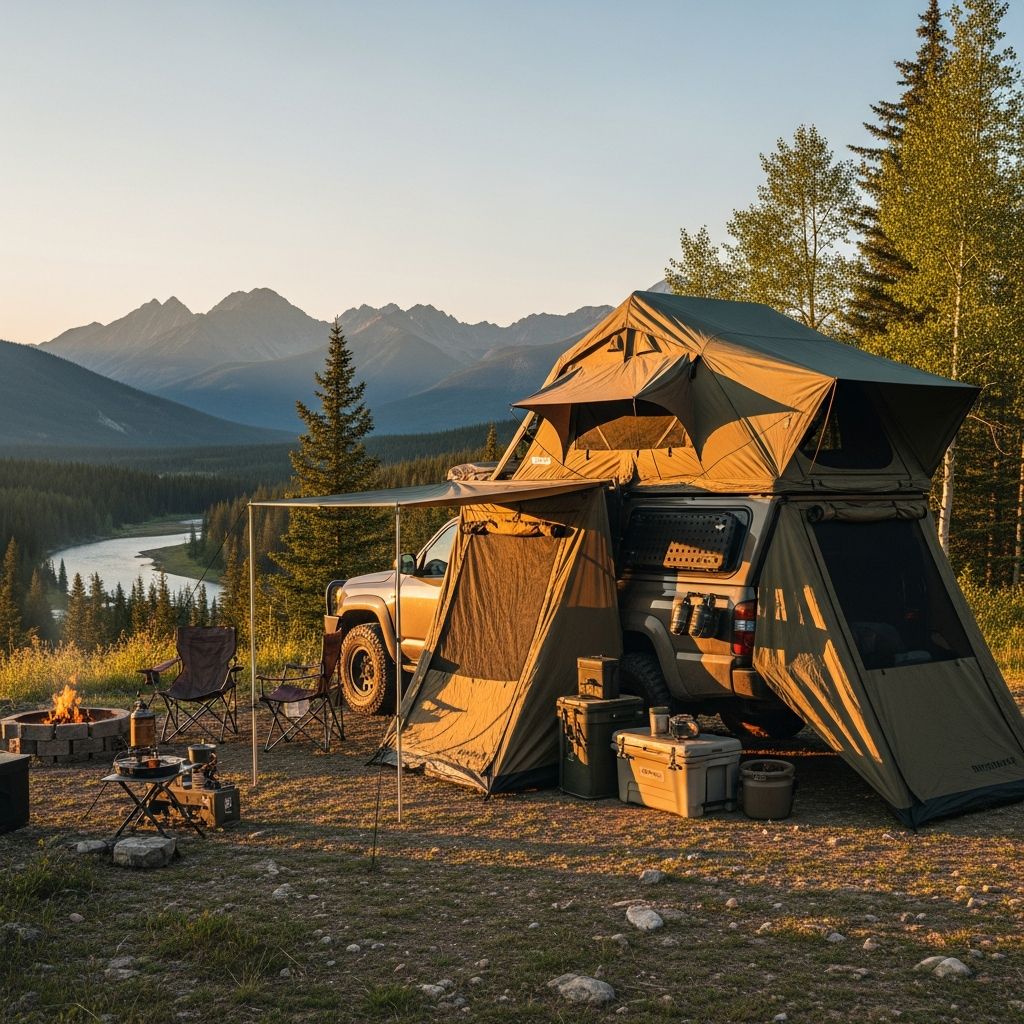
Transforming Vehicle Camping with Interconnected Tent Solutions
Modern vehicle camping has evolved significantly over the past decade, moving beyond simple ground tents toward sophisticated systems that integrate seamlessly with automobiles. The emergence of modular tent architectures represents a paradigm shift in how families and outdoor enthusiasts approach mobile camping. These interconnected systems allow campers to expand their shelter configurations, adapt to varying environmental conditions, and maximize comfort without sacrificing portability. Whether you’re planning weekend getaways or extended adventures, understanding how these systems function provides valuable insights into elevating your outdoor experiences.
Understanding Modular Tent Architecture
Modular tent systems operate on a foundation of interconnected components that users can configure according to specific needs and preferences. Unlike traditional tents that arrive in a fixed structure, modular designs employ a building-block approach where individual sections connect through standardized interfaces. This architectural philosophy enables campers to start with a basic tent footprint and progressively add components such as sleeping quarters, shade extensions, or auxiliary structures as requirements evolve.
The fundamental advantage of this approach lies in its adaptability. A family of four might use a single sleeping module during a compact weekend trip, while the same system accommodates extended family gatherings through additional connected sections. The modular framework eliminates the need to purchase entirely new tent systems for different camping scenarios, addressing both economic and practical concerns for serious outdoor enthusiasts.
Rapid Deployment and Time-Saving Features
One of the most compelling characteristics of interconnected modular tent systems is their exceptionally fast setup process. Traditional camping often demands 20 to 30 minutes of assembly work, involving multiple steps such as frame construction, fabric attachment, and stake placement. Modern modular systems, by contrast, typically reach full readiness in three minutes or less through the implementation of quick-connect fastening mechanisms.
This accelerated deployment becomes particularly valuable in several practical scenarios:
- Emergency response situations requiring rapid shelter establishment
- Multi-day travel schedules where setup time directly reduces exploration opportunities
- Weather-sensitive trips where quick shelter availability provides crucial protection
- Family camping where setup time management affects children’s engagement and experience quality
- Vehicle-based travel where frequent relocation necessitates efficient assembly and disassembly
The engineering behind rapid deployment involves lightweight aluminum alloy frames combined with pre-configured fabric panels. These components arrive at the campsite ready for immediate assembly, eliminating complex construction sequences that characterize traditional tent pitching. Parents particularly appreciate this efficiency, as faster setup translates to additional time for family activities and exploration.
Flexible Configuration Systems
The versatility inherent in modular tent design addresses the reality that camping needs vary considerably across different situations and seasons. Interconnected systems accommodate this variability through customizable sidewall options, expandable sections, and specialized attachments that transform the basic shelter into purpose-built spaces.
Configuration flexibility manifests in several practical ways:
- Space Expansion: Additional sleeping modules attach to existing structures without requiring complete disassembly
- Specialized Sections: Integrated bathrooms, kitchens, or equipment storage areas connect via standardized interfaces
- Weather Adaptation: Interchangeable sidewalls transition between ventilation-optimized and weather-sealed configurations
- Multi-Purpose Spaces: Covered areas beneath elevated structures serve simultaneously as storage zones, cooking areas, and social gathering spaces
- Site-Specific Customization: Campers modify layouts based on terrain, sun exposure, and proximity to natural features
This configurability proves especially advantageous for vehicle-based camping, where space limitations typically constrain traditional camping approaches. A modular system initially deployed as a basic sleeping shelter transforms into an elaborate basecamp through progressive addition of interconnected components as the trip duration extends or group composition changes.
Material Quality and Environmental Performance
The durability equation in modular tent systems reflects engineering decisions about material selection and construction methodology. High-strength aluminum alloy frames provide structural integrity while maintaining minimal weight, a critical consideration for vehicle-mounted applications. The fabric construction typically incorporates PVC-coated materials that deliver comprehensive weather resistance without excessive mass.
Environmental performance characteristics include:
| Performance Aspect | Technical Features |
|---|---|
| Weather Resistance | PVC-coated fabrics with sealed seams prevent water infiltration during heavy precipitation |
| Temperature Management | Double-insulated roof panels and strategic ventilation systems regulate interior climate |
| Wind Stability | Reinforced connection points and guy-line systems withstand sustained winds during year-round camping |
| UV Protection | Specialized fabric treatments prevent degradation from extended sun exposure |
| Insulation Efficiency | Multi-layer construction reduces heat transfer, extending comfort throughout seasonal variations |
These material specifications translate into practical durability that withstands multiple camping seasons across diverse geographical regions. Families investing in modular systems benefit from equipment that maintains structural integrity and functionality through years of regular use, effectively distributing the initial investment across numerous adventures.
Integration with Vehicle-Based Camping
The synergy between modular tent systems and vehicle camping creates compelling advantages that neither approach independently provides. Vehicle-based camping already delivers notable benefits including built-in storage capacity, weather protection during non-camping hours, and sleeping arrangements that position campers above ground level. Interconnected tent systems extend these advantages by creating expandable outdoor living spaces that connect directly to vehicle platforms.
This integration manifests through several design innovations:
- Attachment points on vehicle roofs that serve as anchors for elevated tent sections
- Shade structures that extend from vehicle sides, creating protected transition zones
- Storage integration that distributes gear between vehicle interiors and modular tent compartments
- Electrical connections that supply power from vehicle systems to tent lighting and heating elements
- Ventilation coordination between vehicle cabins and tent spaces to optimize air circulation
For families utilizing SUVs or trucks with spacious interiors, modular tent additions transform vehicles into self-contained basecamp systems capable of supporting multi-week adventures. The combination of vehicle storage capacity with expandable tent living quarters addresses the fundamental challenge of mobile camping: maximizing comfort and functionality within transportation constraints.
Comfort Considerations and Sleep Quality
Modern modular tent systems incorporate numerous features specifically designed to enhance sleep quality and overall comfort during extended outdoor stays. Many systems include integrated mattresses that remain permanently attached to the tent structure, eliminating the need for separate bedding arrangements and reducing storage requirements within vehicles.
Sleep quality improvements extend beyond mattress design to encompass environmental controls:
- Ventilation systems that manage humidity while preventing condensation accumulation
- Insulation strategies that maintain comfortable interior temperatures during temperature extremes
- Darkening fabrics that enable natural sleep cycles despite extended daylight hours
- Sound dampening materials that reduce external noise disturbance
- Mesh panels that provide insect protection while facilitating air circulation
The elevation created by vehicle-mounted tent systems provides psychological benefits beyond physical comfort. Positioning sleeping quarters above ground level creates a sense of separation from the campground environment, reducing anxiety about ground-dwelling wildlife and enhancing overall security perception. This elevation combined with weather protection from integrated structures addresses the practical challenges that deter many families from traditional camping experiences.
Seasonal Versatility and Year-Round Deployment
Interconnected modular tent systems designed for vehicle camping demonstrate remarkable versatility across seasonal variations. The engineering approach accommodates winter camping through double-insulated roof panels and heating element integration, while summer configurations emphasize ventilation and shade provision. This seasonal adaptability eliminates the need for separate equipment investments as camping preferences shift throughout the year.
Winter camping considerations include:
- Enhanced insulation that preserves interior warmth while minimizing fuel consumption
- Moisture management systems that prevent ice accumulation from interior condensation
- Snow load capacity built into frame engineering to support accumulated precipitation
- Integration with vehicle heating systems to supplement tent warming during extreme conditions
Summer camping demands contrast sharply, emphasizing ventilation-optimized configurations with minimal insulation and maximum mesh panel deployment. The modularity of these systems enables seasonal transformation through simple component substitution, allowing the same base structure to serve optimally across temperature extremes.
Economic Considerations and Long-Term Value
The financial analysis of modular tent system investment compares favorably with traditional camping approaches when evaluated across multiple camping seasons. Initial purchase prices exceed basic tent options, yet the expanded functionality, durability, and adaptability create compelling long-term economic value.
Economic advantages accumulate through several mechanisms:
- Elimination of hotel accommodation expenses during extended vehicle trips
- Reduced equipment redundancy—a single modular system replaces multiple single-purpose tents
- Extended equipment lifespan through quality construction and modular component replacement
- Decreased labor costs associated with rapid setup and takedown processes
- Avoided expenses for rental accommodation when accommodating unexpected family members
For families planning regular camping activities spanning a decade or longer, modular tent systems often deliver superior value compared to accumulating various single-purpose shelter options. The ability to expand the system progressively as camping ambitions evolve prevents the common scenario where inadequate initial purchases lead to replacement equipment purchases within a few years.
Installation and Maintenance Protocols
Successful deployment of interconnected modular tent systems requires understanding proper installation procedures and ongoing maintenance requirements. Quick-connect fastening systems simplify assembly, yet correct usage remains essential for structural integrity and weather performance.
Installation best practices include:
- Verifying all connection points before occupying the tent during adverse weather
- Ensuring proper tension on guy-lines without over-tightening, which can stress connection points
- Confirming that fabric panels align correctly with frame channels to prevent water infiltration
- Testing all ventilation mechanisms to confirm proper air circulation before extended stays
Maintenance procedures remain straightforward for quality modular systems. Regular inspection of connection points for corrosion or loosening, fabric cleaning to remove environmental contaminants, and periodic lubrication of moving fasteners preserve performance. Most owners find that annual pre-season preparation procedures require less than one hour per system, a minimal time investment compared to the equipment’s cumulative usage.
Frequently Asked Questions
How much time does setup actually require for modular tent systems?
Most quality modular systems deploy in under three minutes using quick-connect fasteners, compared to 20-30 minutes for traditional tents. Takedown typically requires similar timeframes, making day-to-day camping logistics significantly more efficient.
Can modular systems work with any vehicle type?
While modular systems accommodate most SUVs and trucks, specific vehicle compatibility depends on roof dimensions and weight capacity. Manufacturers provide compatibility guides, and some systems work with ground-based deployment if roof mounting isn’t feasible.
What weather conditions do modular tents handle?
Quality modular systems withstand heavy rain, strong winds, and temperature extremes when properly constructed with PVC-coated fabrics and reinforced frames. Year-round camping from winter snow to summer heat becomes practical with appropriate insulation and ventilation configurations.
How do these systems compare in cost to traditional tent camping?
Initial costs exceed basic tents, but lower long-term expenses result from durability, reduced accommodation costs, and elimination of equipment redundancy across multiple camping seasons.
Do modular systems require special maintenance?
Maintenance remains minimal, involving periodic inspection of connection points, fabric cleaning, and fastener lubrication. Annual pre-season checks typically require less than one hour.
Can I expand a modular system after initial purchase?
Yes, one of the primary advantages involves progressive expansion. Additional sleeping modules, specialized sections, and accessories connect through standardized interfaces, allowing systems to grow as needs and budgets evolve.
References
- How Modular Tents Work for Flexible Outdoor Solutions — Ling Tong Structures. https://www.lingtong-structures.com/How-Modular-Tents-Work-for-Flexible-Outdoor-Solutions.html
- Advantages of Choosing a Roof Top Tent — Autohome Official. https://www.autohome-official.com/en/advantages-roof-top-tents-autohome/
- Why You Should Try Car Camping — Hele Outdoors. https://heleoutdoors.com/blogs/car-camping-guide/why-you-should-try-car-camping
- What Is a Car Roof Tent? The Complete Guide to Roof Tent Camping — Escapade 4×4. https://www.escapade4x4.co.uk/blogs/news/what-is-a-car-roof-tent-the-complete-guide-to-roof-tent-camping
- Roof Top Tent vs. Car Camping: Build Your Overland Setup Your Way — Cascadia Tents. https://cascadiatents.com/blogs/blog/roof-top-tent-vs-car-camping
- Why Car Camping in a Tesla or Rivian Beats Traditional Tent Camping — Fruble. https://fruble.co/blogs/adventures/why-car-camping-in-a-tesla-or-rivian-beats-traditional-tent-camping