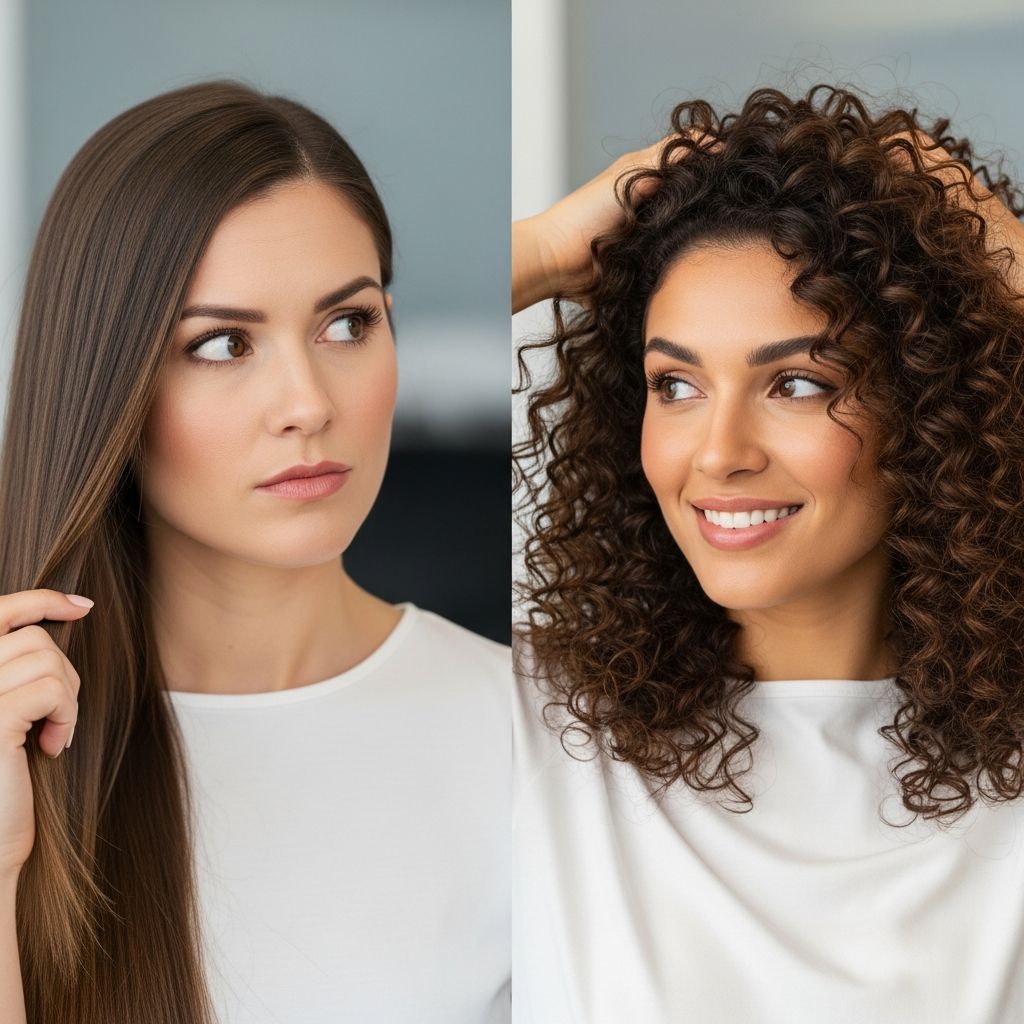
Perms have come a long way from the stiff, crunchy curls of decades past. Today’s chemical waves can be soft, wearable, and surprisingly low-maintenance—but they are still a serious chemical treatment with real risks and long-term consequences.
This guide walks you through how perms work, who they suit, when to avoid them, and how to care for permed hair so you can decide with confidence whether permanent curls are the right move for you.
What a Modern Perm Actually Does
A perm (short for “permanent wave”) uses a chemical solution to break the internal bonds that give your hair its natural shape, then reforms those bonds around rods or rollers so the hair takes on a new pattern—waves or curls.
The change is long-lasting along the length of the treated hair, but new growth will still appear in your natural texture over time, creating a line between curled and untreated roots.
Key Features of Today’s Perms
- Use of more targeted formulations aimed at reducing damage compared with older, harsher formulas.
- More natural-looking results, from loose beach waves to relaxed curls instead of uniformly tiny, tight coils.
- Customizable techniques (rod size, wrapping pattern, and solution strength) tailored to hair density, length, and health.
Pros: Why People Love Perms
If you have naturally straight or limp hair, a perm can feel like a shortcut to volume and texture you never had before. Many clients choose it to save time, skip hot tools, or create a specific aesthetic—like soft waves or full curls—that holds for months.
Benefits of Getting a Perm
- Long-lasting shape: Curls and waves can last several months and sometimes close to a year, depending on hair type, aftercare, and the style of perm.
- Extra volume and body: Fine, flat, or limp hair often looks fuller and more textured after a perm, making everyday styling easier.
- Less reliance on heat tools: Since the hair holds a curl on its own, many people use fewer curling irons or straighteners, which may reduce heat-related breakage.
- Time savings: With the right cut and product routine, you can often wash, scrunch, and air-dry instead of spending significant time with hot tools every morning.
- Texture options for all hair types: Modern methods can add texture to straight hair or refine bulky, coarse hair into more defined, manageable waves.
Cons: The Real Downsides You Need to Consider
Despite the “modern” branding, a perm is still a chemical process that changes the internal structure of your hair and can weaken it, especially if your hair is already compromised.
Going in with realistic expectations and a clear sense of risk can help you avoid damage, breakage, or a style you regret being stuck with for months.
Common Drawbacks of Perms
- Potential damage and dryness: Perm solutions can strip natural oils and weaken the hair shaft, leading to dryness, brittleness, and split ends if not carefully performed and maintained.
- Increased fragility: Over-processed or fine hair may become more prone to breakage and tangling, especially when combined with heat styling or other chemical services.
- Scalp and skin risks: If misused, perm chemicals can irritate the scalp and, in rare severe cases, contribute to scarring or long-term hair loss at affected follicles.
- Time-consuming initial appointment: The process can take a few hours depending on length, thickness, and technique, and may feel uncomfortable or tedious.
- Awkward grow-out phase: As your natural roots grow in, you may experience a contrast between straight roots and curled ends that requires creative styling or cutting to manage.
Who Is a Good Candidate for a Perm?
Not every head of hair can safely or successfully hold a perm. Your hair’s current condition, chemical history, and natural texture play a huge role in how it responds.
A professional stylist will typically perform a consultation, sometimes including a strand test, before agreeing to perm your hair.
Hair Types That Often Do Well
- Virgin or minimally processed hair: Hair without previous chemical color, relaxer, or bleach typically tolerates perm solutions better and shows more even results.
- Fine or flat hair needing volume: A perm can give thin hair a fuller, thicker appearance and help styles hold throughout the day.
- Healthy medium to thick hair: Strong, resilient strands can often handle the structural change better, especially when paired with proper at-home care.
When to Think Twice or Avoid
- Hair that is already dry, brittle, or breaking, especially if it has been bleached or heavily lightened recently.
- Hair with a long history of overlapping color services, relaxers, or other strong chemical treatments.
- Scalp conditions, open sores, or a history of reacting badly to hair chemicals.
- If you plan to drastically change your color soon, especially with bleach or high-lift dyes, as stacking intense treatments increases the risk of serious damage.
Types of Perm Looks You Can Request
When people say “perm,” they may mean anything from soft waves to dramatic curls. The end result depends on rod size, wrapping technique, solution strength, and your starting texture.
Discuss your goals clearly with your stylist and bring photos to show the level of curl, volume, and looseness you want.
| Style type | Typical result | Best suited for |
|---|---|---|
| Body wave perm | Loose, gentle waves with soft movement rather than tight curls. | Fine or straight hair wanting fullness and a relaxed, natural texture. |
| Textured or beach wave perm | Undone, tousled effect that mimics air-dried natural waves. | Anyone wanting an effortless, low-precision style with modern texture. |
| Classic curl perm | More defined curls that can range from medium to tighter ringlets. | Those wanting clear curl definition and a more dramatic transformation. |
| Partial or root perm | Volume or curl placed only at the roots or certain sections. | People who want lift on top or to blend specific flat areas without a full-head perm. |
Maintenance: What Life With a Perm Really Looks Like
The promise of “low maintenance” is appealing, but it does not mean “no maintenance.” You trade daily hot tools for a more specific wash routine, regular trims, and curl-safe products.
If you dislike any extra routine or product investment, that trade-off may not feel worth it over the months your perm lasts.
Core Care Rules for Permed Hair
- Delay the first wash: You will usually be asked not to wash your hair for at least 24–48 hours after the service so the new bonds can set properly.
- Use gentle, hydrating formulas: Sulfate-free shampoos and nourishing conditioners help maintain moisture and reduce frizz.
- Limit heat styling: Regular use of hot tools on permed hair can compound dryness and breakage; when you do use them, use lower temperatures and a heat protectant.
- Keep up with trims: Scheduled cuts remove dry or split ends and keep the curl pattern looking fresh instead of ragged.
Daily Styling Expectations
- Plan to apply a leave-in conditioner or curl cream to define and hydrate curls.
- Expect some trial and error with product amounts, drying methods (air-dry vs. diffuser), and scrunching techniques until you find a routine that works.
- On very humid or very dry days, you may need anti-frizz products or extra moisture to keep curls looking consistent.
Health & Safety: Minimizing Risk
A thoughtful, safety-first approach can significantly reduce the chances of major damage or scalp issues from a perm. That starts with choosing the right professional and being honest about your hair history.
Attempting a DIY perm at home, especially on previously treated hair, dramatically increases the risk of overprocessing and uneven results.
Checklist Before Booking
- Consult with an experienced stylist who regularly performs modern perms and can show recent examples of their work.
- Share your complete chemical history, including box dyes, professional colors, relaxers, keratin treatments, and bleach.
- Ask for a strand test if there is any concern about how your hair will respond, especially if it has been colored or lightened.
- Discuss realistic curl size, longevity, and how the style will look as it grows out.
Lifestyle Questions to Ask Yourself
Even if your hair can technically handle a perm, your lifestyle and personal preferences matter just as much. Curls are as much a daily habit as they are a look.
Asking a few honest questions beforehand can prevent regret halfway through the grow-out phase.
Personal Reflection Prompts
- How often do you currently style your hair, and are you willing to swap heat tools for a product-based curl routine?
- Do you enjoy structured, polished styles or are you comfortable with a more natural, occasionally unpredictable texture?
- Are you prepared to commit to trims and specific hair products for many months?
- Do you have any major events, job changes, or photos coming up where you want to feel especially like “yourself” in your usual hair texture?
FAQ: Common Questions About Perms
How long does a perm really last?
Depending on your hair type, length, and the specific technique, the curl pattern can be noticeable for several months, sometimes up to around a year on the lengths, but it will gradually loosen and grow out at the roots.
Will a perm ruin my hair?
A properly done perm on healthy hair does not automatically “ruin” it, but it can still cause dryness, rougher texture, and increased fragility, especially if combined with other strong chemical services or frequent heat styling.
Can I color and perm my hair?
Experts generally recommend spacing major chemical services apart and avoiding dramatic color changes and strong perms at the same time, since layering them increases the risk of breakage and long-term damage.
Are perms good for very thin hair?
Perms can add volume to fine hair, but if that hair is also weak, overprocessed, or prone to breakage, the treatment may do more harm than good, so a careful professional assessment is essential.
What if I hate my perm?
There is no instant, risk-free way to reverse a perm, and adding more strong chemicals to “fix” it can worsen damage, so solutions usually involve strategic cutting, gentle styling, and patience during grow-out.
Making Your Decision
Choosing to perm your hair is a blend of science, aesthetics, and personal lifestyle. Understanding how the process affects your hair structure, what upkeep it demands, and what risks you are taking allows you to decide from a place of knowledge, not impulse.
If you love the idea of waking up with texture, are ready to adjust your routine, and your hair is in good health, a modern perm can be a satisfying, transformative change; if not, exploring non-permanent options like heatless curls or styling products may be the better fit.