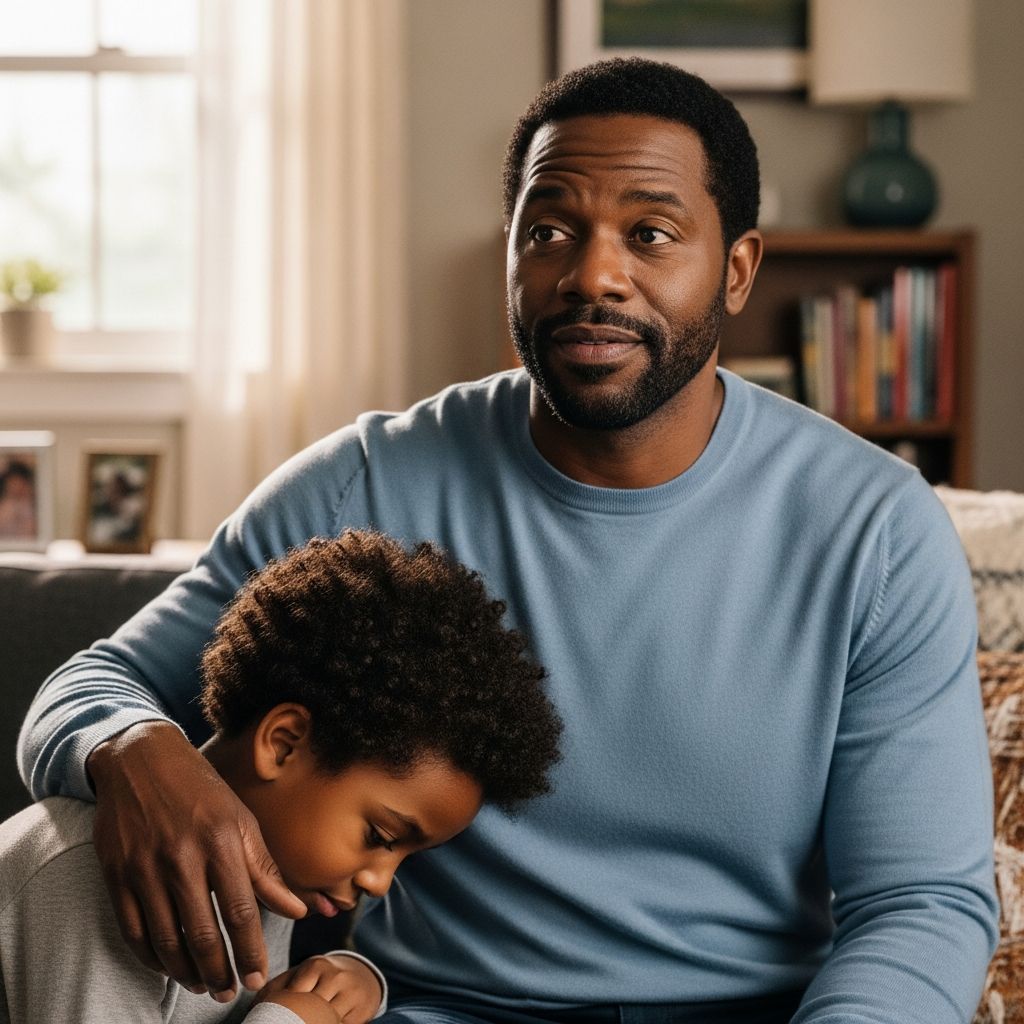
In recent years, actor Sterling K. Brown has become a powerful cultural example of what thoughtful, emotionally present fatherhood can look like both on and off screen, especially through roles like Randall on This Is Us and his candid reflections about being a dad in real life.
This article uses his approach as inspiration to explore how modern fathers can balance ambition, vulnerability, and everyday chaos while raising kids who feel deeply seen and loved.
The New Face of Fatherhood
For generations, fathers were often portrayed as providers first and nurturers second, but contemporary dads are increasingly expected to show emotional depth, participate equally at home, and model healthy relationships. Sterling K. Brown’s public comments on how central fatherhood is to his identity mirror this shift, showing that being a dad is not a side role but a defining part of a man’s life.
Instead of the distant, stoic archetype, today’s fathers are learning to be mentors, teammates, and safe spaces for their children, and Brown’s stories about learning from his own parents and honoring his late father highlight how powerful that role can be.
- Modern dads are more hands-on with daily care, school, and emotional check-ins.
- Representation of loving, present fathers in media helps normalize this evolution.
- Men are increasingly vocal about how deeply parenting shapes their sense of self.
Identity, Career, and the Role of Dad
Brown has described fatherhood as his most meaningful role, even while balancing award-winning work in high-profile film and television projects. This echoes a wider truth for many parents: professional success can feel incomplete if it is not aligned with the kind of legacy they want to leave at home.
Rather than treating work and fatherhood as competing identities, he frames being a dad as the lens through which he evaluates his choices, from the stories he tells on screen to the time he protects for his family.
| Area | Old Expectation | Modern, Dad-Centered Approach |
|---|---|---|
| Work | Career advancement overrides family time. | Projects are weighed against their impact on time, energy, and family values. |
| Home life | Dad joins in mainly for big moments. | Dad shows up for ordinary routines, talks, and rituals. |
| Legacy | Measured in titles and income. | Measured in character, presence, and what children remember about his love. |
Turning Childhood Lessons Into Parenting Wisdom
Brown has often spoken about losing his father at a young age and how that loss shaped his determination to be fully present for his own children. He also describes how mentors, teachers, and the parents of friends stepped in to provide guidance, showing how a community of caring adults can influence a child’s path.
These experiences underline a vital parenting principle: children watch how adults handle adversity, ambition, and relationships, and they internalize those patterns as their own. A father who is intentional about learning from his past—good and bad—can consciously choose which lessons to pass forward and which cycles to interrupt.
Practical ways to transform your story
- List three things your caregivers did well that you want to repeat with your kids.
- Identify two painful experiences you do not want to recreate and plan alternatives.
- Share age-appropriate stories about your childhood to help your children see you as human, not perfect.
The Power and Pressure of Expectations
In one of his film roles, Brown portrays a father who pushes his son intensely, reflecting real-world pressures many parents feel to make their children exceptional, especially in communities where opportunities are limited or inequality is visible. He has discussed how expectations in his own upbringing were partly shaped by a mother who wanted him to outgrow stereotypes and systemic barriers through education and discipline.
These stories highlight a delicate tension: the desire to protect children from a harsh world can sometimes turn into pressure that leaves them little room to fail, rest, or simply be kids. Healthy expectations challenge children to grow without tying their worth to constant achievement.
Healthy vs. harmful expectations
- Healthy: Encouraging effort, resilience, and curiosity more than outcomes.
- Healthy: Explaining why your standards exist and inviting your child’s perspective.
- Harmful: Treating mistakes as personal disappointments rather than learning moments.
- Harmful: Using fear, shame, or comparisons as the main motivators.
Emotional Openness: From Stoic to Vulnerable
Brown has praised approaches to parenting that emphasize mutual learning between parent and child, echoing ideas found in conscious parenting philosophies that see kids as teachers as well as students. He has also portrayed characters who discover that being emotionally guarded distances them from their children until they finally choose to show vulnerability.
This shift—from being a “rock” who never cracks to a human who admits fears and mistakes—creates room for genuine connection. Children who witness their fathers naming emotions and apologizing when necessary learn that strength and softness can coexist.
Simple ways to practice emotional courage
- Use specific feeling words around your kids: “I feel nervous,” “I feel proud,” or “I feel sad and need a moment.”
- Share age-appropriate stories about times you failed and what you learned from them.
- Let your kids see you repair conflicts: apologizing to a partner, sibling, or even to them when you overreact.
Listening So Your Kids Actually Talk
Some of Brown’s most memorable on-screen father moments revolve around listening—quiet scenes where a dad finally stops fixing and starts hearing what his child is really saying. He has indicated that communication is central to authentic relationships, echoing broader parenting advice that children need safe, nonjudgmental spaces to share what they are going through.
Emotionally safe listening is not passive; it is an active choice to pause your agenda, curiosity, and reactions long enough to understand your child’s inner world. Dads who build this habit early often find that their teens are more likely to turn to them later when the stakes are higher.
Questions that open doors
- “What was the hardest part of your day?”
- “When did you feel proud of yourself today?”
- “Is there anything you wish I understood better about what you’re going through?”
Everyday Rituals That Build Unshakable Bonds
In interviews, Brown has described how shared experiences—from watching movies with his kids to celebrating everyday milestones—become the glue of family connection. Research on family resilience echoes this, showing that consistent, predictable rituals foster a sense of safety and belonging for children.
These rituals do not need to be expensive or elaborate; in fact, children often remember the small, repeated moments more than isolated big events. When dads show up for these routines, they reinforce the message: “You are worth my time, attention, and presence.”
Ideas for simple dad–child traditions
- Weekly “walk and talk” around the block where your child chooses the topic.
- A monthly movie night where each person gets a turn picking the film.
- Short check-in at bedtime: one thing you’re grateful for and one thing you hope for tomorrow.
Raising Children With Strong Identities
Brown has spoken about how his own cultural background, education, and experiences inform the characters he chooses and the way he sees his responsibilities as a Black father on and off screen. He has portrayed roles that grapple with race, justice, and belonging, reflecting realities that many families of color navigate daily.
For children, identity is shaped by both what they are told about themselves and what they observe in the world around them. Fathers who engage openly with questions of culture, race, and values—whether through stories, media, or community involvement—equip their kids to understand where they come from and how they can show up in the world.
Supporting a strong, grounded identity
- Talk openly about your family’s history, including challenges and triumphs.
- Expose your kids to books, films, and role models that reflect their backgrounds and broaden their empathy.
- Encourage questions about fairness, justice, and difference, and be willing to say, “Let’s learn about that together.”
When Dads Get It Wrong
Many of Brown’s characters wrestle with the consequences of high expectations, miscommunication, or emotional distance before slowly rebuilding relationships through honesty and repair. These arcs mirror a hopeful truth: being a good father is not about perfection, but about how you respond when you inevitably fall short.
Children rarely need flawless parents; they need parents who are willing to listen, apologize, and grow. When a dad owns his missteps—whether snapping out of stress or missing an important moment—he teaches humility, accountability, and the possibility of change.
A simple repair script
- “I’m sorry for how I reacted earlier. You didn’t deserve that tone.”
- “Here’s what I wish I had done instead, and I’m going to work on it.”
- “Is there anything you want to tell me about how that felt for you?”
Frequently Asked Questions About Modern Fatherhood
How can a busy father stay emotionally present?
Emotional presence is less about the number of hours and more about the quality of attention during the time you do have. Even a predictable 15-minute window of undistracted connection each day—no phone, no multitasking—can significantly strengthen your bond.
What if I never had a good father figure myself?
Many loving fathers start parenting without a clear blueprint from their own childhoods. By seeking out positive role models in friends, mentors, community members, or even fictional characters, you can assemble a new vision of fatherhood and consciously choose the patterns you want to pass on.
How do I challenge my kids without overwhelming them?
Pair high expectations with high support: explain why your standards matter, break big goals into manageable steps, and stay emotionally available when your child stumbles. Watch for signs of chronic stress—sleep issues, irritability, or withdrawal—and adjust demands when necessary.
Can media portrayals of dads really influence how I parent?
Stories on television and in film can act as mirrors and guides, sparking reflection on what kind of parent you want to be. Characters played by actors like Sterling K. Brown often highlight both the beauty and the messiness of fatherhood, offering examples of growth, apology, and deeper connection that many viewers carry into their own lives.
What is the most important habit for a modern dad to build?
While every family is different, consistently showing up with curiosity—asking questions, listening closely, and staying willing to learn—creates a foundation for trust and long-term closeness. From that base, all other parenting tools become more effective.
Choosing the Dad You Want to Be
Public figures like Sterling K. Brown remind the world that fatherhood can be a profound, joyful, and demanding calling, worthy of as much intentionality as any career. By blending ambition with tenderness, and authority with humility, modern dads can write a different story about what it means to lead a family.
Whether you grew up with a loving father, an absent one, or something in between, you have the chance to redefine the role for the next generation. Each conversation, apology, shared laugh, and late-night talk becomes part of the legacy your children will carry long after they leave home.