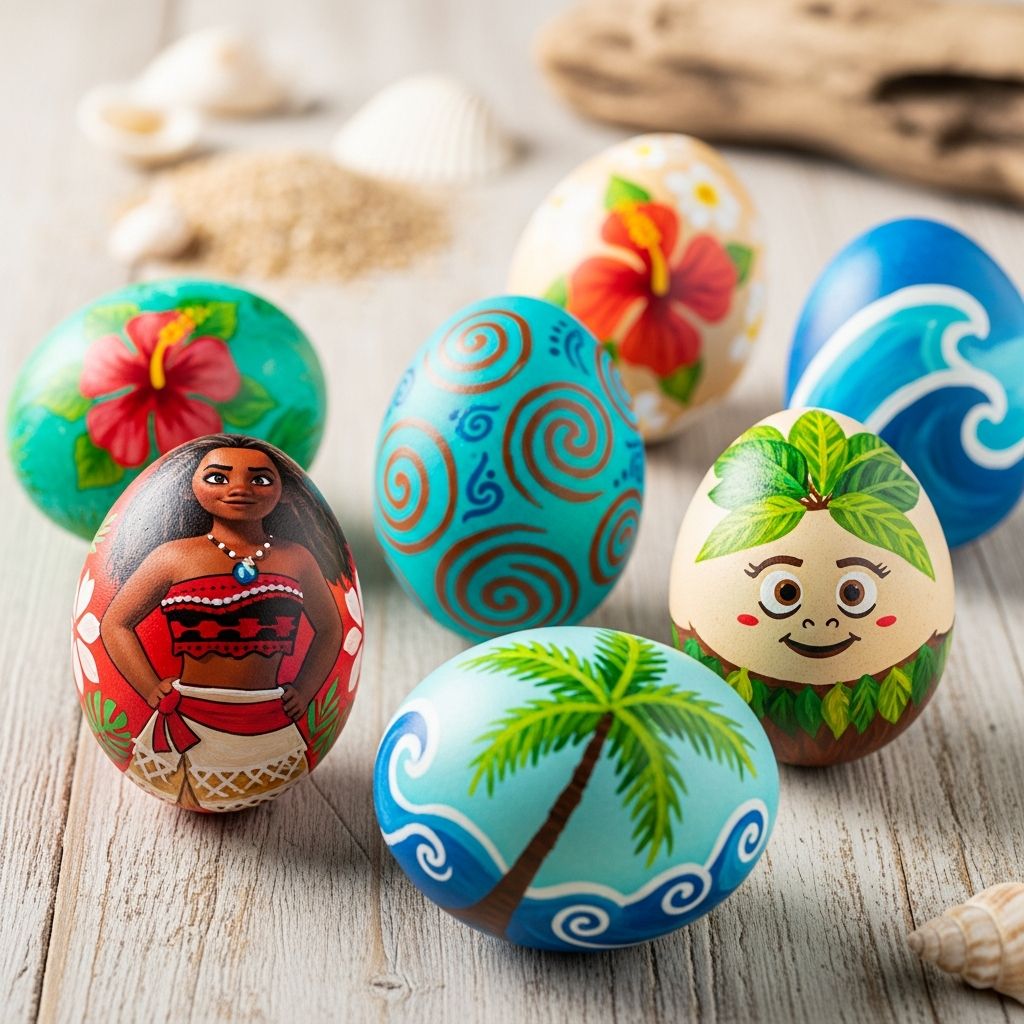
Decorating Easter eggs is a classic family tradition, and drawing inspiration from favorite movies makes it even more fun. This guide walks you through creating a full set of Moana-inspired Easter eggs using simple supplies, beginner-friendly paint techniques, and kid-approved shortcuts. You will not need advanced art skills—just patience, imagination, and a willingness to get a little messy.
Why Movie-Themed Easter Eggs Are a Hit With Kids
Pop-culture themed crafts help children connect familiar stories with hands-on creativity. Psychologists note that imaginative play and storytelling activities support cognitive and social development, especially when children can retell favorite narratives through art and role play. Turning characters into Easter eggs invites kids to:
- Retell the story in their own words while they craft.
- Practice fine motor skills through painting, drawing and gluing.
- Express emotions by choosing colors, faces and poses for characters.
- Collaborate with siblings and caregivers on shared designs.
Moana works especially well for this kind of project because its characters are bold, colorful, and easily recognizable from a few key features—curly hair, floral crowns, shiny shells, and of course, one very memorable chicken.
Gathering Your Craft Supplies
Before you start designing, assemble a small “egg decorating station” so everything is within reach. You can adapt the materials to your budget and the ages of your crafters.
Basic Materials
- Eggs: hard-boiled, blown-out shells, or plastic craft eggs
- Acrylic paint or kid-safe craft paint
- Fine-tip permanent markers (black and brown are essential)
- Soft brushes in small and medium sizes
- Paper cups or egg stands for drying
- Palette or disposable plate for mixing colors
- Water cup and paper towels for cleaning brushes
Optional Embellishments
- Craft foam or felt for hair, leaves, and accessories
- Glitter glue or metallic pens to create shiny, ocean-inspired details
- Mini faux flowers for floral crowns and tropical touches
- Glue gun or strong craft glue (adult use only)
- Googly eyes for silly sidekicks
For younger children, plastic eggs and washable paints are usually the safest choice. Acrylics work better on plastic than water-based dyes, because they adhere more consistently to smooth surfaces.
Color Palette & Character Planning
Choosing a unified color palette will make your Moana-inspired egg collection look cohesive. Think about the movie’s visual world and pick a handful of tones you’ll use across all designs.
| Theme Element | Suggested Colors | Use on Eggs |
|---|---|---|
| Ocean & waves | Turquoise, teal, navy, white | Backgrounds, spirals, water patterns |
| Island & sand | Beige, tan, warm browns | Skin tones, sand textures, tapa designs |
| Floral & foliage | Bright green, lime, pink, coral | Leaf crowns, flower garlands, borders |
| Shiny treasures | Gold, copper, silver | Shells, armor, jewelry, accents |
Decide which characters and motifs you want to include. A balanced “egg cast” might feature:
- Moana
- Maui
- Heihei
- Te Fiti or a heart-of-the-ocean design
- Ocean and island pattern eggs to fill out the basket
General Prep: Base Coats & Drying Tips
Before adding faces or details, always start with a smooth base coat of paint. This helps later layers stick and prevents marker lines from bleeding.
- Step 1: Wipe each egg gently with a dry cloth to remove dust.
- Step 2: Apply one thin layer of paint, let it dry completely, then add a second coat if needed.
- Step 3: Rest eggs in paper cups, bottle caps, or an empty egg carton to dry without smudges.
Keep in mind that acrylic paint can dry quickly to a water-resistant finish, which is useful for layering, but you still want good airflow to avoid tacky spots.
Moana Egg: Island Hero Design
Moana’s look is defined by her rich brown curls, warm skin tone, and tropical floral accents. You can suggest all of this with a few simple shapes rather than perfect realism.
Painting the Base
- Paint the lower two-thirds of the egg in a warm tan or light brown to represent skin.
- Leave the top of the egg blank for now, or paint it a darker brown if you prefer to paint the hair instead of gluing it on.
Adding Facial Features
- Use a fine black marker to draw large, gentle eyes, small brows, and a soft smile.
- Add a tiny highlight dot in each eye using white paint or gel pen to make them look lively.
Hair and Floral Details
- Glue small strands or curls of brown craft foam, yarn, or felt around the top and back of the egg.
- Create a mini flower crown with faux flowers or paper blossoms and glue them around the top front.
- Optional: Paint a red or coral band around the lower part of the egg to echo her clothing colors.
Invite kids to name their version of Moana—maybe it’s Moana preparing for a voyage, or Moana relaxing on the beach. Giving each egg a backstory helps keep them engaged.
Maui Egg: Demigod of Mischief
Maui’s egg relies on strong shapes: bold eyebrows, tattoos, and his famous fishhook. Focus on just a few of these elements so the design stays manageable.
Base & Face
- Paint the entire egg a medium brown and let it dry.
- With a marker, draw a confident grin and thick eyebrows. A tiny goatee or chin mark helps hint at Maui’s face shape.
Mini Tattoos
- Use dark green or black markers to add curving lines, spirals, and triangles around the sides and back of the egg.
- Keep patterns simple—repeating swirls and geometric bands will still suggest Polynesian-inspired tattoo art without copying any specific cultural design.
Crafting a Tiny Fishhook
- Cut a small hook shape from white craft foam or cardboard.
- Cover it with metallic marker or paint (silver or off-white) and draw spiral lines to add texture.
- Glue the hook to the side of the egg or lean it against Maui in the basket.
Children can compare their simplified Maui patterns to pictures in storybooks or official artwork and talk about how design elements can represent strength, bravery, or humor.
Heihei Egg: The Silliest Sidekick
Heihei is a perfect character for kids who prefer bold colors over careful detail. He’s all about exaggerated features and bright shades.
Layering Colors
- Paint the lower half of the egg a bright teal or green for his body.
- Paint the upper half a warm yellow or orange for his head.
Eyes and Beak
- Glue on oversized googly eyes slightly off-center for a confused expression.
- Create a small triangle beak from orange foam or paper and glue it beneath the eyes.
Feathers & Crest
- Cut out a few feather shapes from red and blue paper or foam.
- Glue them behind the top of the egg to form his wild crest.
- Optional: Add a little tail at the back using leftover feather shapes.
Because bright colors and funny faces draw children’s attention, this can be the ideal egg for younger kids to work on while older siblings handle more detailed characters.
Nature Eggs: The Ocean, Te Fiti, and Island Patterns
Not every egg needs a face. A few patterned eggs inspired by the film’s landscapes help fill your basket and tie the collection together.
Ocean Swirl Egg
- Paint the egg in shades of blue and turquoise, blending slightly for a gradient effect.
- Once dry, add white curves and spirals to suggest waves and foam.
- Add tiny dots of metallic paint to hint at light reflecting on water.
Heart-of-the-Island Egg
- Paint the egg a deep emerald green.
- Draw a glowing swirl shape in lighter green or turquoise at the center.
- Outline the swirl with tiny dots or short lines in gold or white to make it “glow.”
Tropical Leaf and Flower Egg
- Use a light background color like cream or pale yellow.
- Paint green leaf silhouettes and pink or coral flowers around the egg.
- For younger kids, provide pre-cut stickers or foam shapes instead of paint.
Safe Crafting With Kids
When children are involved, a few simple safety steps can make crafting more enjoyable for everyone. The American Academy of Pediatrics recommends close supervision when using small parts, hot tools, or products not specifically labeled for children.
- Choose non-toxic supplies and check labels before buying paints and glues.
- Separate tasks: adults handle glue guns and sharp scissors; kids take on painting and simple cutting.
- Protect clothes with old T-shirts or aprons.
- Set a drying area where eggs can sit undisturbed, out of reach of little hands and curious pets.
Displaying Your Moana-Themed Egg Collection
Once your characters are finished and fully dry, it’s time to show them off. Think of the display as part of the activity—kids can help arrange scenes and tell stories as they go.
Simple Display Ideas
- Island Basket: Line a shallow basket with shredded brown paper (for sand) and blue tissue (for water), then arrange your eggs like they’re on a tropical shore.
- Story Shelf: Place the eggs next to Moana storybooks or soundtrack CDs to create a mini themed corner.
- Table Centerpiece: Use a tray or cake stand, scattered with faux leaves and flowers, as a festive holiday centerpiece.
Frequently Asked Questions (FAQs)
Q: Can I do this project with toddlers?
Yes, but keep their tasks very simple. Offer plastic eggs, washable finger paints, and stickers instead of small embellishments or permanent markers, and always supervise closely.
Q: How long do painted eggs last?
Hard-boiled eggs are temporary and should not be kept for long-term display, especially if left unrefrigerated. For decorations you want to reuse each year, choose plastic or wooden eggs instead of real ones.
Q: Do I need special sealant on the eggs?
A clear acrylic sealer can protect designs on plastic or wooden eggs, but is not recommended for eggs that will be eaten. If you want edible eggs, stick to food-safe dyes and avoid acrylic paints or varnishes.
Q: What if I’m not good at drawing faces?
Simplify the designs. Use dots for eyes and a single curved line for a smile, or print small character faces on paper, cut them out, and glue them onto the eggs as decals.
Q: How can I turn this into a party activity?
Pre-paint base colors on eggs before guests arrive, then set up stations for eyes, accessories, and patterns. Offer inspiration cards with simple sketches of each character so kids can choose which egg to make.
References
- Pellegrini AD, Smith PK. Play and Development: Contribution of Play to Cognitive and Social Development. — Oxford Handbook of the Development of Play. 2011-01-01. https://doi.org/10.1093/oxfordhb/9780195393002.013.0003
- Ginsburg KR. The Importance of Play in Promoting Healthy Child Development and Maintaining Strong Parent-Child Bonds. — American Academy of Pediatrics. 2007-01-01. https://publications.aap.org/pediatrics/article/119/1/182/70790/The-Importance-of-Play-in-Promoting-Healthy-Child
- Consumer Product Safety Commission. Art and Craft Safety Guide. — U.S. CPSC. 2011-06-01. https://www.cpsc.gov/s3fs-public/5015.pdf
- HealthyChildren.org. Arts and Crafts Safety. — American Academy of Pediatrics. 2019-09-18. https://www.healthychildren.org/English/safety-prevention/all-around/Pages/Arts-and-Crafts-Safety.aspx