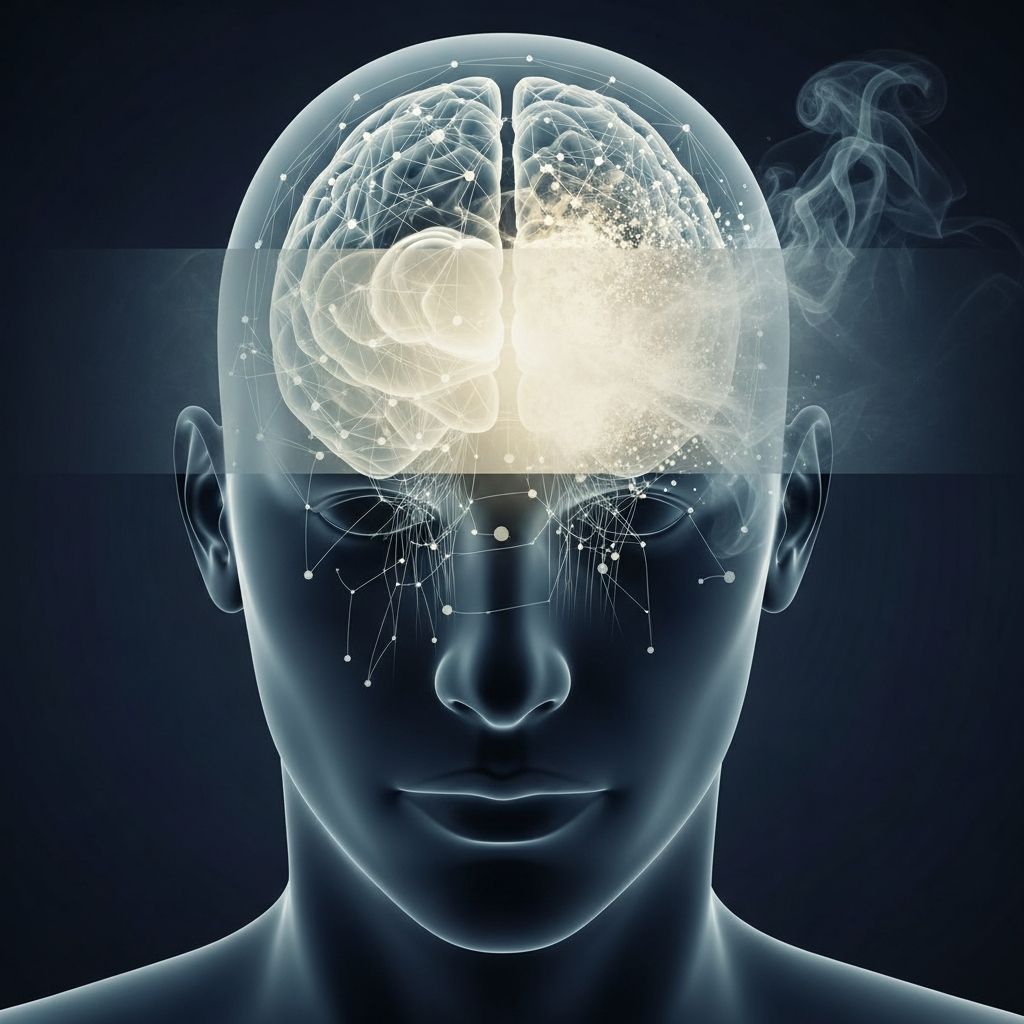
Mind-blindness describes the impaired ability to intuitively grasp others’ mental states, such as beliefs, intentions, and emotions. This cognitive challenge, closely tied to **theory of mind (ToM)** deficits, profoundly shapes social interactions, particularly in individuals on the autism spectrum.
Defining Mind-Blindness and Its Core Mechanisms
At its essence, mind-blindness refers to challenges in attributing mental states to oneself and others, making social prediction difficult. Coined in the 1990s and popularized by Simon Baron-Cohen in his 1995 book, the term highlights a ‘blindness’ to the inner worlds of people around us—not due to lack of care, but atypical brain processing.
Theory of mind, the cognitive foundation here, typically emerges in early childhood. By age 4-5, most children pass classic tests like the Sally-Anne task, where they predict behavior based on false beliefs. Those with mind-blindness often struggle, viewing actions literally without inferring hidden thoughts.
This isn’t absolute; degrees vary. Some glimpse mental states under structured conditions, while others face persistent hurdles. It’s a spectrum, reflecting neurodiversity rather than deficit alone.
Neurological Foundations of Mind-Blindness
Brain imaging reveals underactivation in key areas during social tasks. The medial prefrontal cortex and superior temporal sulcus, crucial for mentalizing, show reduced connectivity in autistic individuals. This disrupts cue interpretation, like facial expressions or tone.
Visual processing differences compound issues. Studies note atypical fixation patterns in social scenes, focusing less on eyes or faces. Unlike aphantasia—the inability to form mental images—mind-blindness targets social inference, though overlaps exist in neurodivergent profiles.
| Brain Region | Role in Social Cognition | Activity in Mind-Blindness |
|---|---|---|
| Medial Prefrontal Cortex | Self-other mental state attribution | Reduced activation |
| Superior Temporal Sulcus | Interpreting gestures, expressions | Atypical connectivity |
| Occipital Lobe (related to imagery) | Visual processing | Hyperactivity in some cases, blocking imagery |
Mind-Blindness in Autism Spectrum Disorder
Strongest links exist with autism spectrum disorder (ASD). Up to 80% of autistic individuals show ToM impairments, explaining social withdrawal, literal communication, and empathy gaps. They might misread sarcasm or intentions, leading to isolation.
- Social cues missed: Difficulty decoding body language or irony.
- Empathy variance: Affective empathy (feeling others’ pain) intact; cognitive empathy (understanding it) challenged.
- Moral reasoning: Struggles distinguishing intent from outcome in dilemmas.
The double empathy problem adds nuance: Autistic-neurotypical interactions falter mutually, as non-autistic people also misread autistic cues.
Distinguishing Mind-Blindness from Related Conditions
Mind-blindness differs from aphantasia, where mental visuals fail (affecting ~4% population). Aphantasia impacts memory vividness but not always social ToM; some aphantasics excel socially.
Other overlaps: Schizophrenia (hallucinations misattribute mental states), schizoid traits (social avoidance). Acquired forms may stem from trauma or stroke, damaging social brain networks.
Real-World Effects on Daily Functioning
In children, mind-blindness manifests as playground exclusion, bullying, or meltdowns from misunderstandings. Teens face friendship woes; adults, workplace conflicts or relationship strains.
Positive flipsides: Logical thinking strengths shine in rule-based fields like tech or math. Many compensate via explicit strategies, like scripting conversations.
Diagnostic Approaches and Early Identification
No single test diagnoses mind-blindness; it’s inferred via ToM batteries:
- Sally-Anne false belief task.
- Reading the Mind in the Eyes Test (emotions from eye photos).
- Unexpected contents tasks (e.g., crayon box holds pencils).
Early spotting via developmental screens aids intervention. Pediatricians note delayed pretend play or pronoun reversal.
Strategies and Interventions for Support
Evidence-based therapies build ToM skills:
- Social skills training: Role-playing scenarios to practice perspective-taking.
- ABA therapy: Breaks down cues into teachable parts.
- PEERS program: Teen-focused, teaching conversation turns, bullying handling.
- Cognitive behavioral approaches: Explicitly labels emotions/intentions.
Tech aids: VR simulations immerse users in social viewpoints. Parent coaching emphasizes clear language, avoiding idioms.
For families: Foster patience, model mental state talk (“He feels sad because…”), and celebrate strengths.
Broader Implications for Neurodiversity
Mind-blindness reframes autism as cognitive style variation, not brokenness. Advocacy pushes inclusive education, sensory-friendly spaces, and mutual empathy training.
Future research eyes genetics, biomarkers for targeted therapies. Meanwhile, understanding reduces stigma, enhancing life quality.
Frequently Asked Questions
Can mind-blindness improve over time?
Yes, many develop compensatory strategies through therapy and experience, though core ToM may persist.
Is mind-blindness only in autism?
Primarily, but seen in other neurodivergences like schizophrenia or brain injury.
How does it affect empathy?
Cognitive empathy lags; emotional empathy often strong.
What’s the link to aphantasia?
Separate: aphantasia blocks images; mind-blindness blocks social inference. Some overlap in autism.
How can parents help a child with mind-blindness?
Use direct language, teach cues explicitly, role-play social scenarios.
References
- What Is Mind Blindness? — Mental Floss. 2023. https://www.mentalfloss.com/science/neurology/what-is-mind-blindness
- What ‘Mind-Blindness’ Means — Total Care ABA. 2024. https://www.totalcareaba.com/autism/what-mind-blindness-means
- What ‘mind-blindness’ Means — The Treetop ABA. 2024. https://www.thetreetop.com/aba-therapy/what-mind-blindness-means
- Mind-blindness – Knowledge and References — Taylor & Francis. 2023. https://taylorandfrancis.com/knowledge/Medicine_and_healthcare/Neurology/Mind-blindness/
- Aphantasia: What It Is, Causes, Symptoms & Treatment — Cleveland Clinic. 2024-01-16. https://my.clevelandclinic.org/health/symptoms/25222-aphantasia