When Military Leadership Takes a Stand: Defending Service and Dignity
The relationship between media commentary and military policy has historically remained somewhat separate, but recent events have demonstrated that high-ranking defense officials will not hesitate to publicly defend the integrity of their personnel when questioned. When prominent television personalities make sweeping generalizations about service members, military leaders recognize the importance of responding with clarity about the actual capabilities and contributions of their troops. This intersection of media discourse and military defense raises important questions about respect, professional standards, and the evolving nature of modern armed forces.
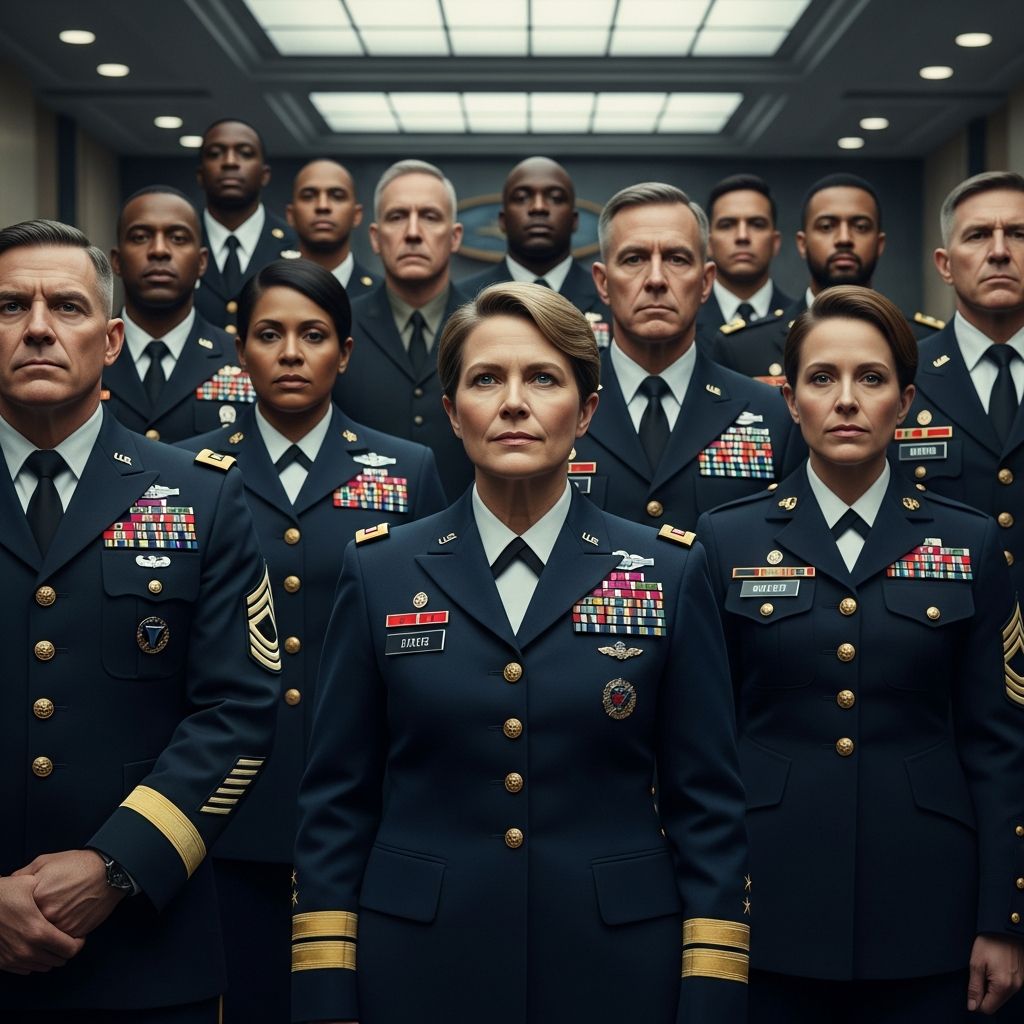
In March 2021, a significant moment occurred when members of the Pentagon and senior uniformed personnel collectively expressed their disagreement with public commentary that questioned the value of women serving in the military. The response was immediate, coordinated, and notably forceful—unusual characteristics of an organization typically focused on operational matters rather than media relations. This coordinated defense revealed something important about institutional values within the Department of Defense and demonstrated that military leadership takes seriously any suggestion that their personnel are somehow lesser due to gender.
The Catalyst: Understanding What Sparked the Response
The situation began when a Fox News personality broadcast critical remarks about recent policy initiatives designed to make military service more accessible and accommodating for women. Specifically, the commentary focused on updated uniform regulations, including flexible hair standards and maternity flight suits designed for pregnant service members. These practical accommodations were characterized as mockery rather than as the operational and logistical decisions they represent.
Pentagon Press Secretary John Kirby immediately characterized these remarks as problematic, noting that the statements did not reflect an understanding of how modern military operations actually function. Rather than allowing the commentary to pass without response, Kirby and other senior leaders recognized an opportunity to address misconceptions about women’s roles in defense and to reaffirm institutional commitment to professional standards regardless of gender.
The timing of these comments—during Women’s History Month—added another layer of significance that organizational leaders did not overlook. Several advocacy organizations pointed out that deliberately denigrating women’s contributions during a month dedicated to celebrating their achievements seemed particularly ill-conceived.
Responses from the Pentagon and Top Military Officials
The official reaction from the Pentagon leadership came swiftly and with unmistakable clarity. Press Secretary Kirby made several key points in his public statements:
- Diversity within military ranks represents one of the institution’s fundamental strengths rather than a weakness
- Personal military experience provides the most credible foundation for commentary about service-related matters
- The Pentagon would not accept unsolicited advice from media personalities on personnel matters
- The department’s commitment to supporting all service members remained unwavering
Kirby emphasized that he had witnessed firsthand the effectiveness of diverse military personnel during deployments at sea and in combat operations across Iraq and Afghanistan. His statements carried the weight of someone with direct experience in operational environments, lending credibility to his defense of inclusive military policies.
The response extended far beyond press office statements. The Army Chief of Staff, General James McConville, publicly expressed pride in the 185,000 women serving in the Army and emphasized their contributions to military readiness. The Sergeant Major of the Army, Michael Grinston, tweeted that women lead the military’s most lethal units with character and will dominate future battlefields. These statements from the highest enlisted and officer ranks sent an unmistakable message about institutional values.
From the Space Command, Master Gunnery Sergeant Scott H. Stalker provided perspective based on 28 years of military service, contrasting his extensive operational experience with the lack of military background of the media personality who had made the critical remarks. This particular response highlighted a credibility gap that became a recurring theme throughout the reactions.
Congressional Voices Join the Chorus of Support
Members of Congress also responded to the situation, with several legislators who had served in military capacities or had family connections to the armed forces offering their perspectives. These political figures emphasized their own experiences serving alongside capable women and referenced the sacrifices made by female service members in combat zones. Congressional responses helped elevate the conversation beyond military institutions to include the broader question of how public figures should discuss those who serve in defense capacities.
The congressional involvement underscored that the issue transcended typical partisan divides, with support for women in military service drawing support from across the political spectrum. This relatively rare consensus suggested that most elected officials recognized the importance of supporting military personnel and maintaining institutional integrity.
Organizational Advocacy and Broader Community Response
Beyond official military channels, civil rights and veterans organizations also weighed in on the situation. The League of United Latin American Citizens (LULAC), representing a significant community of military veterans spanning from World War II to contemporary service, issued formal statements condemning the commentary as disgraceful and contrary to journalistic standards.
LULAC leadership emphasized several important points in their response:
- Women in military service function as full participants in national defense
- Stereotypical characterizations undermine the progress society has made in recognizing women’s capabilities
- The actual challenges facing women in the military relate to discrimination and harassment rather than capability deficits
- Perpetuating outdated gender stereotypes serves no constructive purpose and causes measurable harm
These organizational responses helped contextualize the issue within broader conversations about discrimination, civil rights, and institutional progress. By connecting the media commentary to systemic challenges that women in the military actually face, advocacy organizations redirected the conversation from abstract debates to concrete realities affecting service members daily.
The Real Issues: What Military Policy Actually Addresses
To understand the context of the controversy, it becomes important to examine what military policies regarding women in service actually encompass. The Department of Defense had undertaken comprehensive surveys regarding reproductive health among female service members, the first such assessment in more than thirty years. These efforts represented a recognition that policy frameworks had not adequately addressed the biological realities of military service for women.
Practical accommodations like maternity flight suits and updated uniform standards emerged from operational necessity rather than political ideology. When women serve in combat-related roles, having equipment properly fitted to different body types and circumstances becomes a matter of operational effectiveness. Dismissing these practical considerations as mockery ignores the functional reality of how modern militaries actually operate.
Previous initiatives to address discrimination across the force had included comprehensive policy reviews designed to ensure that all service members could perform their duties without facing systemic obstacles related to gender identity, reproductive status, or other personal characteristics. These represented institutional self-reflection about how to maintain optimal readiness while ensuring fair treatment of personnel.
Understanding the Institutional Response
The coordinated and relatively uniform response from military leadership revealed something important about institutional priorities. Rather than viewing the commentary as a matter of free speech to ignore, senior officials recognized an obligation to defend both their personnel and the integrity of military operations. This response reflected broader institutional values about professionalism, inclusion, and mission effectiveness.
The emphasis by multiple leaders on their own military experience versus the lack thereof on the part of the media personality highlighted an implicit assertion about credibility. Those with decades of operational experience felt comfortable asserting that their perspective on military matters carried more weight than that of someone without such background. This framing subtly but effectively reframed the entire debate from opinion to expertise.
The military’s response also implicitly defended its institutional decision-making processes. By standing behind policies regarding uniforms, equipment, and personnel accommodations, military leadership asserted that these decisions emerged from careful analysis of operational requirements rather than ideological motivation. The profession’s pride in these policy decisions became evident through the vigor with which leaders defended them.
Broader Implications for Military Culture and Standards
The situation illuminated ongoing conversations within military institutions about inclusion, standards, and organizational effectiveness. The consistent assertion by multiple military leaders that diversity strengthens rather than weakens the military suggested a real institutional commitment to inclusive practices. Whether this represented transformation of military culture or simply articulation of values that had been developing gradually became an open question, but the public stance was unambiguous.
The response also suggested that military leadership felt confident enough in women’s proven capabilities to defend their participation vigorously. With women having served in combat roles for years by the time of these events, military officials could point to documented performance rather than theoretical arguments. This grounding in actual operational experience gave weight to their assertions about women’s essential contributions to national defense.
Frequently Asked Questions
Q: What specific policy changes prompted the initial commentary?
A: The commentary focused on updated uniform regulations including flexible hair standards and maternity flight suits designed to accommodate pregnant service members, characterizing these practical accommodations as inappropriate for military service.
Q: How did Pentagon officials characterize their response?
A: Pentagon Press Secretary John Kirby stated that the military would not accept unsolicited advice from media personalities on personnel matters and emphasized that diversity represents a fundamental military strength.
Q: What role did congressional representatives play in responding?
A: Members of Congress with military background or family connections to the armed forces publicly supported women in military service based on their own experiences serving alongside capable female personnel.
Q: How did civil rights organizations contribute to the response?
A: Organizations like LULAC issued formal statements condemning the commentary as contrary to journalistic standards and as perpetuating harmful stereotypes about women’s capabilities.
Q: What do military policies regarding women actually address?
A: Military policies address reproductive health support, equipment accommodation for different body types, discrimination prevention, and practical accommodations needed for women to perform operational duties effectively.
Conclusion: When Institutions Stand for Their Personnel
The coordinated response from military leadership to criticism of women’s service represented an important moment for institutional accountability and values affirmation. By responding promptly and forcefully, senior defense officials demonstrated that they take seriously their obligation to support their personnel and maintain public understanding of military operations. The breadth of response—from Pentagon press offices to the highest military ranks to congressional representatives to civil rights organizations—suggested that this represented a genuine institutional consensus rather than a isolated reaction.
The situation also revealed something about the nature of modern military institutions, which recognize that their effectiveness depends partly on maintaining public support and accurate public understanding of their operations. When misinformation or misleading characterizations circulate about military personnel or policies, military leadership feels empowered to respond with facts and professional judgment. This engagement with public discourse represents an evolution from historical military approaches that often maintained deliberate distance from media commentary.
References
- Pentagon Condemns Tucker Carlson for Mocking Women in the Military — Axios. 2021-03-11. https://www.axios.com/2021/03/11/pentagon-tucker-carlson-women-military
- Pentagon Officials, Uniformed Leaders Slam Fox’s Carlson Over Female-Troop Comments — Defense One. 2021-03-11. https://www.defenseone.com/policy/2021/03/pentagon-officials-uniformed-leaders-slam-foxs-carlson-over-female-troop-comments/172616/
- Fox News Commentator Tucker Carlson Belittles Women And Honor In Military Service — League of United Latin American Citizens (LULAC). 2021-03-11. https://lulac.org/news/pr/Fox_News_Commentator_Tucker_Carlson_Belittles_Women_And_Honor_In_Military_Service/
- Military & Vets Denounce Tucker Carlson’s Sexist Comments — NowThis Impact. 2021. https://www.youtube.com/watch?v=oMHJC-cSfOw
- Pentagon and Senior Members of Military Call Out Tucker Carlson for Mocking Women Serving in Armed Forces — WRAL. 2021-03-11. https://www.wral.com/story/senior-members-of-military-call-out-tucker-carlson-for-mocking-women-serving-in-armed-forces-his-words-dont-reflect-our-values/19569963/