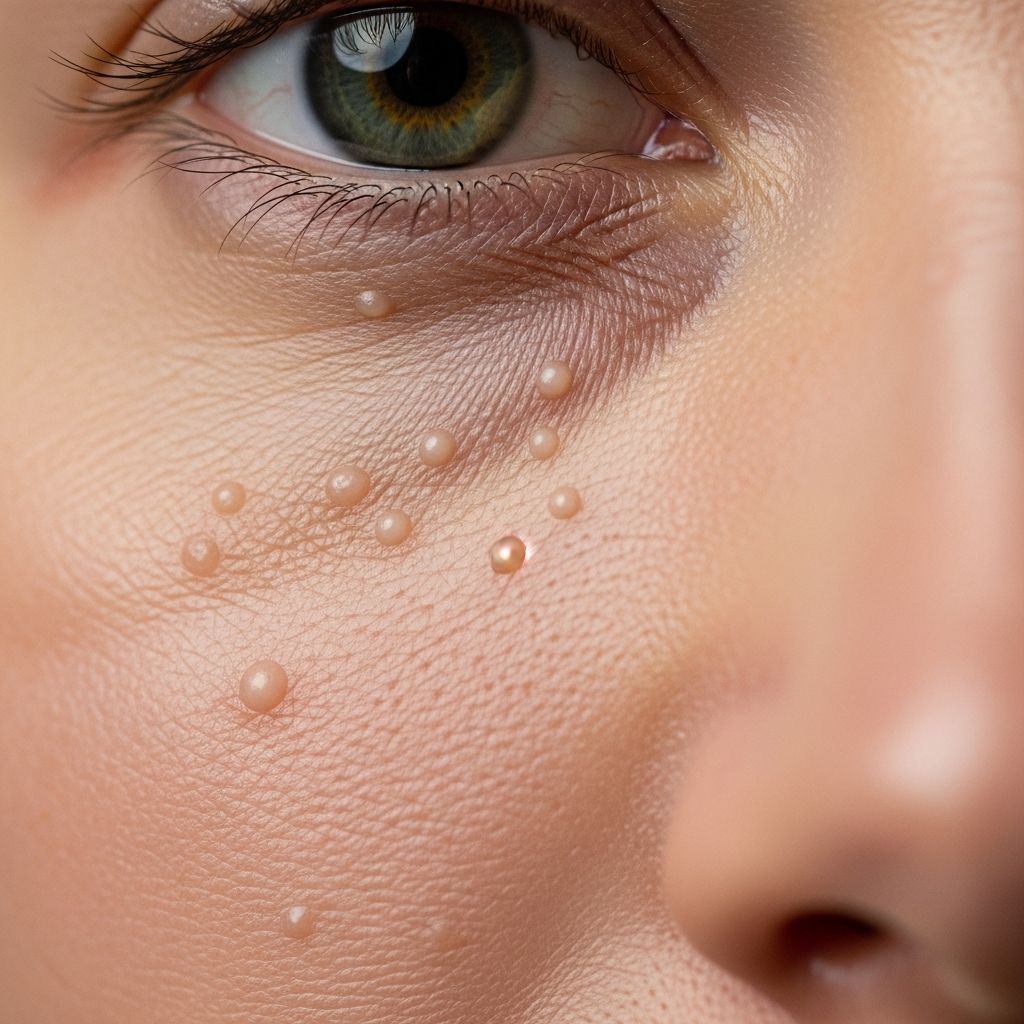
Milia are those stubborn, tiny white or yellowish bumps that often show up on the face and refuse to behave like normal pimples. They do not pop, they do not drain, and they often linger for months, which is why so many people find them confusing and frustrating. Understanding what they are and how they form is the safest path to treating them correctly.
What Exactly Are Milia?
Milia are small, benign cysts that sit just beneath the surface of the skin. They form when a protein called keratin (the same protein found in hair and nails) becomes trapped in a tiny pocket of skin instead of shedding normally. Because they are enclosed cysts rather than inflamed pores, they are usually firm, dome-shaped bumps rather than red, tender spots.
These bumps most commonly appear on the face, especially around the eyes, cheeks, nose, and temples, but they can technically occur anywhere on the body. Unlike acne, milia are not caused by bacteria or oil build-up, so traditional pimple-squeezing tactics simply do not work.
Common Signs That The Bumps Are Milia
- They look like tiny white or yellowish pearls just under the skin.
- They are firm to the touch and do not come to a soft, squeezable head like a pimple.
- They are usually not painful or itchy, though they can feel a bit rough.
- They often appear in clusters on the cheeks, eyelids, or around the nose.
If the bumps are red, inflamed, tender, or appear to be filled with pus, you may be dealing with acne, folliculitis, or another skin condition rather than classic milia. In those situations, getting a professional diagnosis is especially important.
Why Milia Form: Key Triggers And Types
It helps to think of milia as a problem of trapped skin cells rather than clogged oil. Anything that interferes with normal skin shedding, or that damages the upper layers of the skin, can set the stage for these keratin-filled cysts.
Primary vs. Secondary Milia
Dermatologists typically divide milia into two broad categories based on what triggered them:
- Primary milia: These arise on their own, often on the face, when dead skin cells fail to shed properly and get trapped under the surface.
- Secondary milia: These appear after the skin has been injured or irritated, such as after burns, rashes, aggressive resurfacing procedures, or long-term use of certain topical medications.
There are also specialized forms like neonatal milia in newborns (very common and temporary), and less common variants that show up in clusters on plaques of skin, but most adults notice straightforward primary or secondary milia on the face.
Typical Causes And Contributing Factors
- Natural skin turnover issues: As skin matures or in people with naturally slower cell turnover, dead cells can cling to the surface, increasing the risk that some will become trapped.
- Heavy or occlusive skincare products: Thick creams, ointments, or rich eye products that sit on the skin can make it harder for dead cells to shed and can contribute to the formation of tiny cysts.
- Sun damage and skin injury: Chronic sun exposure or previous burns, rashes, and abrasions can alter the texture of the outer skin layers, making them more prone to developing milia as the skin heals.
- Procedures and topical medications: Some chemical peels, dermabrasion, or prolonged use of potent topical steroids can disturb normal keratinization and lead to secondary milia in treated areas.
- Genetic and medical factors: In a minority of cases, milia can occur alongside certain inherited skin conditions or autoimmune disorders, which is one reason persistent or unusual patterns should be evaluated by a dermatologist.
Where Milia Tend To Show Up
Milia are most often seen on the face, but the exact location can shape the best way to manage them:
- Around the eyes: Especially on the upper cheeks, under the eyes, and on the eyelids. The thin, delicate skin in these areas makes do-it-yourself removal particularly risky.
- On the cheeks and temples: These areas are common in adults, especially when using rich creams or wearing heavy makeup daily.
- On the nose and forehead: More frequent in babies and young children but can appear in adults as well.
- On previously injured skin: Areas that have healed from burns, rashes, or procedures may develop small groups of secondary milia as the skin remodels.
Are Milia Dangerous?
For the vast majority of people, milia are completely harmless. They are benign, non-contagious, and do not develop into skin cancer. The main concern they cause is cosmetic: the bumps can make the skin look uneven, especially in bright light or close-up photographs.
That said, milia are a clue that something is off with surface skin turnover or barrier function in a given area. While they are not a medical emergency, they can signal that your skincare routine, sun protection habits, or past treatments may need tweaking to better support your skin.
Home Skincare Strategies To Reduce Milia
Because milia are not traditional pimples, harsh spot treatments and squeezing are more likely to injure your skin than to help. A better approach is to gently normalize cell turnover and clean up the surrounding skincare routine.
1. Refine Your Cleansing Routine
- Use a gentle, non-drying cleanser twice a day to remove sunscreen, makeup, and excess oil without stripping the skin.
- Avoid harsh scrubs that rely on scratchy particles; they can cause micro-injuries and may contribute to secondary milia over time.
- For heavy makeup wearers, consider double cleansing at night: an oil or balm cleanser followed by a mild water-based cleanser.
2. Introduce Chemical Exfoliation (Slowly)
Instead of physically scrubbing the skin, chemical exfoliants can help loosen the bonds between dead cells and encourage a smoother surface. This does not usually make existing milia vanish overnight, but it can reduce the conditions that lead to new ones.
- Alpha hydroxy acids (AHAs) like glycolic or lactic acid can gently exfoliate the top layers of the skin.
- Beta hydroxy acid (BHA) such as salicylic acid is oil-soluble and can help in oilier areas, though milia themselves are keratin-based rather than oil-based.
- Start slowly (for example, once or twice a week at night) and increase only if your skin tolerates it without stinging, excessive peeling, or redness.
3. Consider A Gentle Retinoid (If Appropriate)
Topical retinoids and cosmetic retinol products promote cell turnover and can, over time, make the skin less prone to forming keratin plugs. These are often used under the guidance of a dermatologist, especially around the delicate eye area.
- Begin with a low-strength retinol or over-the-counter retinoid applied at night a few times per week.
- Use a simple moisturizer to buffer potential irritation, and always pair retinoids with daily sunscreen because they can increase sun sensitivity.
- Avoid applying strong retinoids directly on the eyelids unless advised by a dermatologist.
4. Rethink Heavy Creams And Eye Products
Areas prone to milia often respond better to lightweight formulas than to very rich balms. Around the eyes, in particular, it is easy to over-apply thick products in the hope of softening fine lines, only to see more bumps form.
- Swap heavy, occlusive creams for lighter gels, lotions, or serums that still hydrate but do not sit in a thick layer on the skin.
- Apply only a rice-grain amount of eye product and gently pat it along the orbital bone rather than rubbing it directly onto the lash line.
Professional Treatments For Stubborn Milia
Some milia, particularly those lodged deeper in the skin or located in very delicate areas, do not respond well to home care alone. In these cases, a dermatologist or trained skincare professional can perform precise procedures to remove them safely.
| Method | How It Works | Best For | Key Considerations |
|---|---|---|---|
| Manual extraction | A sterile needle or blade makes a tiny opening in the skin so the keratin plug can be gently expressed. | Single or small clusters of surface-level milia. | Quick results; should only be done by a professional to avoid scarring and infection. |
| Cautery or electrodesiccation | Controlled heat is applied to destroy the milia and seal small blood vessels. | Stubborn or recurrent milia that do not respond to extraction. | May leave temporary redness or small scabs; usually requires numbing. |
| Cryotherapy | Liquid nitrogen or other freezing methods are used to target the cysts. | Multiple milia or milia in slightly thicker skin. | Can cause temporary light or dark spots; not ideal for very dark or very sensitive skin. |
| Laser or resurfacing treatments | Energy-based devices or resurfacing procedures smooth the upper skin layers and reduce trapped keratin. | Wide areas of uneven texture that include milia and other sun damage. | More expensive; downtime and aftercare vary depending on intensity. |
In some cases, dermatologists also prescribe topical medications such as prescription-strength retinoids or other agents to help normalize keratinization, especially in people who develop frequent or widespread milia.
What Never To Do With Milia
- Do not dig or squeeze with fingernails or tools: Milia are enclosed cysts, so forcing them usually leads to bruising, broken capillaries, or scars.
- Do not burn or freeze them at home: Over-the-counter freeze warts and unregulated devices can cause permanent pigment changes or deeper burns.
- Avoid untested home acids or peels: Strong, unbuffered acids used without guidance can create secondary milia as the skin heals from chemical burns.
Prevention: Daily Habits That Make A Difference
Because milia are partly a reflection of how well your skin sheds and renews itself, prevention focuses on consistent, gentle support for that process. While it is not always possible to prevent every milium, a smart routine can reduce how often they appear.
Skin-Friendly Daily Routine
- Cleanse twice daily with a mild cleanser, adjusting to once at night only if your skin is very dry or sensitive.
- Prioritize sun protection with a broad-spectrum sunscreen and sun-safe habits like shade and hats. Less sun damage generally means a smoother, more even outer skin layer.
- Use targeted exfoliation once or twice per week, increasing only if your skin tolerates it without irritation.
- Choose non-comedogenic, lightweight products, especially in areas where milia tend to cluster.
Lifestyle And Environmental Factors
- Protect skin from burns and harsh irritants at home and work by using gloves, sun protection, and appropriate gear.
- Be cautious with strong topical steroids on the face and eyelids; use them only under medical supervision and for the shortest duration needed.
- After any procedure (peels, lasers, dermabrasion), follow the aftercare plan carefully to minimize complications such as secondary milia.
When To See A Dermatologist
Not every case of milia needs professional treatment, but there are several situations in which medical input is wise. A dermatologist can confirm the diagnosis and rule out other conditions that may mimic milia, such as certain benign growths or, much more rarely, early skin cancers.
- The bumps are new and changing quickly, or some look different from the others.
- Milia are spreading, numerous, or very persistent despite gentle home care and routine adjustments.
- The bumps are located very close to the eyes, on the eyelid margin, or in areas where scarring would be particularly distressing.
- You have a history of skin cancer or complex skin conditions and want to be sure nothing more serious is going on.
Frequently Asked Questions About Milia
Do milia ever go away on their own?
Yes. Many milia, particularly in infants and in people with only a few lesions, gradually resolve without intervention as the skin naturally sheds and renews itself. This process can take weeks to months, and in adults some bumps can be surprisingly long-lived if underlying factors like heavy creams or sun damage are not addressed.
Are milia a form of acne?
No. Although milia and whiteheads can look similar at a glance, milia are keratin-filled cysts without the inflammation and bacterial component that characterize acne. This is why acne spot treatments and squeezing are not usually effective and may only irritate the surrounding skin.
Can diet cause milia?
There is no strong evidence that a specific food or dietary pattern directly causes milia. However, an overall skin-supportive lifestyle that includes a balanced diet, adequate hydration, and avoidance of smoking can help your skin repair and renew itself more effectively in general.
Is it safe to remove milia at home with a needle?
Using needles at home is not recommended. Even a small puncture can introduce bacteria, cause scarring, or damage delicate blood vessels, especially around the eyes. A trained professional uses sterile tools, proper lighting, and magnification to minimize these risks.
Will using more moisturizer help milia disappear?
Extra moisturizer does not dissolve milia and, if the product is heavy or occlusive, can actually create the conditions that favor new bumps. Focusing on gentle exfoliation, sun protection, and lighter, well-formulated products is typically more helpful than adding more richness to your routine.
Key Takeaways For Managing Milia
- Milia are harmless but stubborn keratin cysts that form when dead skin cells get trapped just under the surface.
- A gentle routine that supports normal cell turnover—cleansing, mild exfoliation, sun protection, and lighter textures—can reduce new bumps over time.
- Stubborn, numerous, or delicate-area milia often respond best to professional removal methods such as manual extraction, cautery, or cryotherapy.
- Painful squeezing, picking, or do-it-yourself surgery greatly increases the risk of scarring and should be avoided.
With patience, good skincare habits, and professional help when needed, milia can be managed effectively without sacrificing the health of your skin barrier or the safety of sensitive areas like the eyelids.