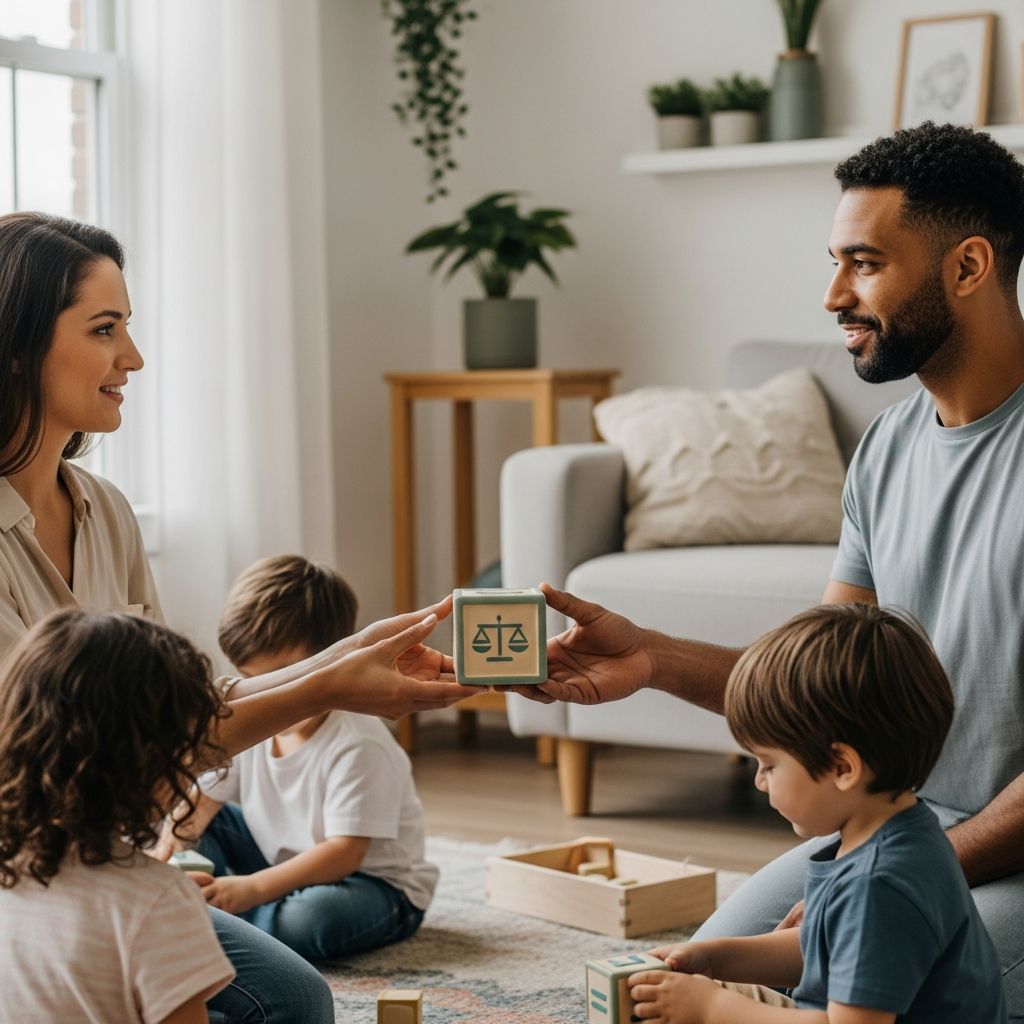
Modern co-parenting after separation often reveals persistent gender imbalances, where one parent—typically the mother—bears disproportionate emotional and logistical burdens. Microfeminism offers a powerful, subtle approach to address this through everyday actions that promote true partnership and equity.
Understanding Microfeminism’s Roots and Relevance
Microfeminism refers to intentional, low-key behaviors that counteract subtle sexism in daily life. Emerging prominently on social platforms, it empowers individuals to challenge ingrained norms without confrontation. In family contexts, especially co-parenting, it shifts dynamics by redistributing invisible labor like scheduling and emotional support.
This trend resonates because traditional roles linger even post-divorce. Studies from family psychology highlight how women often manage 70-80% of child-related admin, perpetuating exhaustion and resentment. By applying microfeminism, co-parents can realign responsibilities, benefiting everyone involved.
Why Co-Parenting Needs a Microfeminist Lens
Separation doesn’t erase habitual patterns. Ex-partners may unconsciously default to the mother for school runs, medical bookings, or activity coordination. This ‘mental load’ drains energy and models inequality for children, who internalize that caregiving is women’s work.
- Reduces resentment: Equal sharing prevents burnout.
- Models healthy dynamics: Kids witness mutual respect.
- Enhances efficiency: Both parents contribute expertise.
Implementing microfeminism breaks these cycles gently, fostering collaboration over conflict.
Practical Strategies for Balanced Task Division
Start by auditing current responsibilities. Track a week’s tasks to quantify imbalances objectively.
| Task Category | Current Handler | Proposed Split |
|---|---|---|
| Medical Appointments | Mother (100%) | Alternate by child |
| School Communications | Mother (90%) | Shared email access |
| Extracurricular Logistics | Mixed | Rotate sign-ups |
| Emotional Check-Ins | Mother (80%) | Joint weekly calls |
Present findings calmly: ‘I’ve noticed I’m handling most scheduling—let’s divide it evenly.’ Encourage your co-parent to list their commitments too, creating buy-in.
Setting Firm Boundaries in Conversations
Discussions about equity can falter if interrupted or dismissed. Microfeminism advocates pausing to assert: ‘I’d like to finish my thought.’ This simple phrase reclaims space respectfully.
Address work-life prioritization. If children’s events cluster around one parent’s schedule, propose: ‘My availability matters equally—let’s find mutual times.’ Frame it as partnership enhancement, not accusation.
Redirecting External Communications
Schools and activities often contact the mother by default. Politely request: ‘Please include both parents in updates.’ Update contact lists jointly. This microfeminist move signals equality to institutions and children alike.
Benefits include:
- Shared awareness of child needs.
- Breaks institutional biases.
- Teaches kids collaborative parenting.
Challenging Gender Norms in Everyday Parenting
Beyond logistics, microfeminism extends to child-rearing. Provide toys defying stereotypes—trucks for girls, dolls for boys. Praise effort over appearance: ‘You’re so clever solving that!’ instead of just ‘cute.’
In bilingual homes, use gender-neutral or varied pronouns in stories. Stock libraries with diverse role models, emphasizing strength across genders and ethnicities.
Household Equity as a Teaching Tool
Even in separate homes, consistency matters. Ensure chores like dishwashing or cleaning are shared visibly. Small habits, like always lowering the toilet seat, reinforce consideration without words.
For co-parents, align on rules: equal bedtime routines, meal prep rotations during visits. This uniformity strengthens child security and equity lessons.
Self-Care: The Ultimate Microfeminist Act
Mothers often deprioritize themselves, absorbing all family demands. Counter this by scheduling personal time unapologetically—gym sessions, hobbies, or solo outings. Communicate: ‘I’ll handle drop-off so you can attend your event.’
This models balance, showing children that parental well-being fuels better caregiving.
Potential Challenges and How to Overcome Them
Resistance may arise from entrenched habits. Respond with patience: revisit agreements monthly. If tensions escalate, involve neutral mediators like family counselors.
Track progress in a shared app for transparency. Celebrate wins, like ‘Great job on that dentist booking!’ to reinforce positivity.
Long-Term Impact on Children
Children in microfeminist co-parenting homes grow viewing equality as normal. They learn to negotiate fairly, value all contributions, and reject limiting stereotypes. This prepares them for equitable relationships.
Research from child development experts supports this: exposure to balanced models correlates with higher emotional intelligence and reduced gender bias in adulthood.
Frequently Asked Questions
What exactly is microfeminism in a family setting?
Microfeminism involves small, deliberate actions to challenge subtle gender biases, like equally sharing parenting tasks or redirecting school emails to both parents.
Will pushing for equality cause more conflict in co-parenting?
When done calmly and collaboratively, it reduces long-term resentment. Start small to build mutual understanding.
How do I introduce microfeminism without seeming confrontational?
Use ‘I’ statements: ‘I feel overloaded with scheduling—can we split it?’ Focus on shared benefits for the kids.
Can microfeminism apply to same-sex co-parenting?
Yes, it addresses any unequal labor dynamics, promoting equity regardless of gender.
What if my ex refuses to participate?
Document efforts and consult legal or mediation support to enforce fair arrangements.
Building Sustainable Co-Parenting Habits
Sustainability comes from consistency. Monthly check-ins refine the system. Apps like OurFamilyWizard streamline shared calendars and messaging, minimizing friction.
Integrate gratitude: acknowledge efforts publicly to kids, like ‘Dad handled uniforms perfectly!’ This amplifies positive change.
Evolving Microfeminism Across Life Stages
As children age, adapt: teens need input on both parents’ schedules. Microfeminism evolves, perhaps advocating for equal college funding or career support discussions.
In blended families, extend principles to step-parenting, ensuring no one defaults to traditional roles.
Ultimately, microfeminism in co-parenting isn’t about perfection but progress. These small shifts create ripple effects, nurturing resilient, equitable families.
References
- Family Dynamics and Mental Load in Divorced Families — American Psychological Association. 2023-05-15. https://www.apa.org/topics/divorce-child-custody
- Gender Equity in Parenting Post-Separation — Pew Research Center. 2024-02-20. https://www.pewresearch.org/social-trends/2024/02/20/gender-parenting-equity/
- Microaggressions and Family Roles — Journal of Family Psychology (APA). 2023-11-10. https://psycnet.apa.org/doi/10.1037/fam0001123
- Co-Parenting Best Practices — CDC National Center for Health Statistics. 2024-08-05. https://www.cdc.gov/nchs/data/series/sr_10/sr10_188.pdf
- Child Development and Parental Equality — Harvard Graduate School of Education. 2025-01-12. https://www.gse.harvard.edu/ideas/usable-knowledge/25/01/parental-equality-child-outcomes