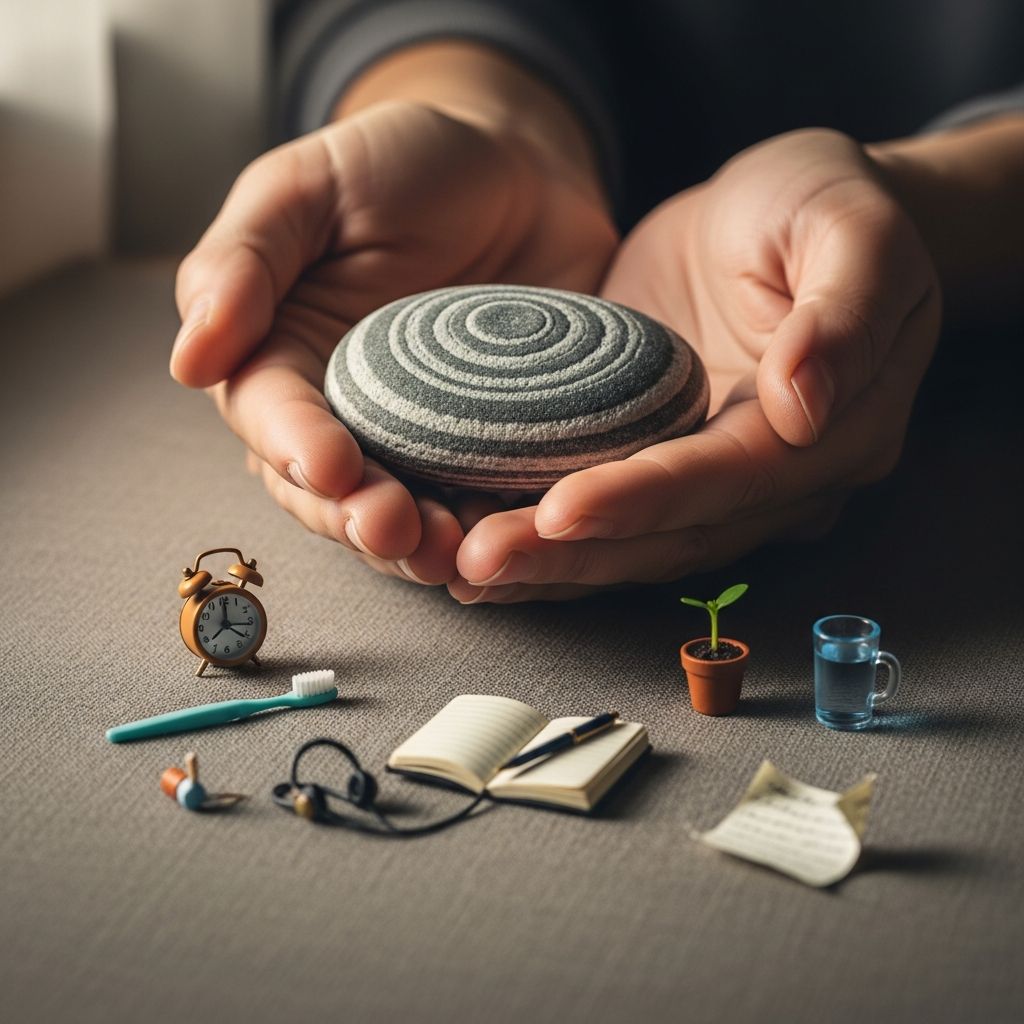
You do not need a complete life overhaul to feel better, get more done, or show up as the parent or partner you want to be. Often, the most powerful changes start with micro-habits: tiny, repeatable actions that take only a few seconds or minutes but add up to meaningful change over time.
This guide explains how micro-habits work, why they are easier to keep than big resolutions, and how to weave them into your day to improve your health, mindset, relationships, and productivity.
What Are Micro-Habits?
Micro-habits are small, specific behaviors that are easy to perform and repeat, like drinking a glass of water after you wake up or writing one sentence in a journal before bed. They require minimal willpower yet move you closer to bigger goals.
Instead of starting with a 60-minute workout, a micro-habit might be doing 5 push-ups. Instead of promising to meditate for 30 minutes, you begin with 3 calming breaths before opening your email.
| Big Change | Typical Goal | Micro-Habit Version |
|---|---|---|
| Better fitness | “Go to the gym 5 times a week” | 10 squats while coffee brews |
| More calm | “Meditate for 30 minutes daily” | 3 slow breaths before meetings |
| Improved focus | “Never check social media at work” | Silence phone for first 10 minutes of work |
| Stronger relationships | “Be more present with family” | Ask one thoughtful question at dinner |
Why Tiny Habits Work So Well
Psychologists who study habits have found that behavior change sticks best when actions are small, consistent, and tied to cues in your environment. The goal is not to rely on motivation but to let repetition and context do the heavy lifting.
- Less willpower needed: A 30-second habit feels too small to resist, lowering the mental friction that usually stops change.
- Consistency builds identity: Repeating a tiny behavior (“I moved my body today”) helps you start to see yourself as the kind of person who exercises or plans ahead, which makes further action easier.
- Compounding effect over time: Research on small performance improvements (such as 1% gains per day) shows how modest progress can lead to large changes when compounded over months and years.
- Better for busy parents: For caregivers whose days are packed and unpredictable, micro-habits slip into small gaps of time instead of demanding a rigid schedule.
Principles for Designing Effective Micro-Habits
Before looking at specific ideas, it helps to follow a few simple design rules borrowed from habit research and behavioral science.
- Make it specific: Decide exactly what you will do and when (for example, “drink a glass of water after I brush my teeth”). Vague goals rarely become habits.
- Attach it to an existing routine: Use an anchor that already happens every day—like waking up, making coffee, or buckling a child into a car seat.
- Keep it tiny at first: Start with the smallest version that feels almost laughably easy. You can always expand later once it is automatic.
- Use visible cues: Place objects where they nudge you into action: a water bottle on your desk, a book on your pillow, shoes by the door.
- Reward the action, not the result: Give yourself a small positive feeling—like checking a box, a mental “nice job,” or a quick stretch—right after you complete the habit. This helps your brain link the behavior with satisfaction.
Micro-Habits for Physical Health
Small actions can meaningfully support long-term heart health, weight management, and energy levels, especially when combined over time with other healthy behaviors.
1. One Glass of Water, Three Times a Day
Many people fall short of recommended fluid intake, which can affect energy, cognition, and mood. Instead of obsessing over an exact number of ounces, aim for three reliable water moments.
- Drink one glass after waking.
- Drink one glass before lunch.
- Drink one glass during the mid-afternoon slump.
Place a filled bottle where you cannot miss it—by your bed or on your desk—to make this nearly effortless.
2. Mini Movement Snacks Throughout the Day
Guidelines from health authorities recommend at least 150 minutes of moderate-intensity activity per week, but even small bouts of movement can improve blood sugar, mood, and stiffness.
- Stand up and stretch every hour when you are at a screen.
- Do 10 calf raises while brushing your teeth.
- Walk around the room during phone calls instead of sitting.
These movement “snacks” do not replace full workouts, but they interrupt long sitting periods, which research links to higher risk of chronic disease.
3. A Two-Minute Bedtime Reset
Sleep experts emphasize having a simple, consistent nighttime routine to cue your brain that it is time to rest. If your evenings are chaotic, build a micro-habit around one tiny action.
- Dim one light and put your phone on charge outside the bedroom.
- Take three slow breaths while lying in bed.
- Think of one good thing from the day before you close your eyes.
These gentle signals can support better sleep quality, which in turn improves mood, focus, and immune function.
Micro-Habits for Mental Health and Mood
Stress, worry, and low mood accumulate from small moments too. The good news: brief practices can also restore balance. Evidence-based approaches like mindfulness and gratitude have been linked to better psychological wellbeing.
4. A One-Minute Breathing Pause
Taking even 60 seconds to slow your breathing can calm your body’s stress response by activating the parasympathetic nervous system.
- Inhale through your nose for a count of four.
- Pause for a count of four.
- Exhale slowly through your mouth for a count of six.
- Repeat three to five times.
Use this micro-habit when your child is melting down, before an important call, or any time your shoulders creep toward your ears.
5. One Line of Gratitude at Night
Studies on gratitude journaling show that regularly noticing good things, even small ones, is associated with improved mood and life satisfaction.
Instead of a full journal entry, try:
- Writing one sentence about something that went well today.
- Typing a quick note in your phone’s memo app.
- Saying your “one good thing” out loud to your partner or child.
Over time, this trains your attention to scan for positives rather than only problems.
6. A 30-Second Mindful Check-In
Mindfulness does not require a cushion or long sessions. Research shows that brief moments of present-moment awareness can reduce stress and improve emotional regulation when practiced regularly.
- Choose a daily anchor such as washing your hands or boiling water.
- For 30 seconds, notice sensations: temperature, sounds, smells, breath.
- When your mind wanders, gently bring it back to what you feel right now.
This is especially helpful for parents who often bounce between tasks without pausing.
Micro-Habits for Relationships and Family Life
Strong connections are built from frequent, small moments of attention and kindness rather than rare grand gestures. Social relationships are consistently linked to better long-term health and longevity.
7. One Genuine Question Per Day
Pick one person—your partner, your child, a friend—and ask a question that invites more than a yes or no answer.
- “What was your favorite part of today?”
- “What are you excited about this week?”
- “What felt hard today?”
Listen fully to the answer, even if it is only a 60-second exchange while buckling a seatbelt.
8. A Small Daily Appreciation
Research on relationships suggests that expressing appreciation strengthens bonds and increases satisfaction for both giver and receiver.
- Send a quick text: “Thanks for handling bedtime tonight.”
- Say, “I noticed you…” followed by a specific positive behavior.
- Leave a short note in a lunchbox or on a desk.
The key is consistency, not poetry. A few heartfelt words every day matter more than rare elaborate gestures.
9. A No-Phone First and Last Five Minutes Rule
Putting away devices during transitions can create natural pockets for connection and calm. Excessive evening screen time is also associated with poorer sleep quality in both adults and children.
- Avoid phones for the first five minutes after you wake up—greet your family, stretch, or look out a window instead.
- Avoid phones for the last five minutes before bed—talk, read, or practice your gratitude sentence.
These tiny boundaries help you reclaim attention for yourself and the people who matter most.
Micro-Habits for Focus and Productivity
Attention is a finite resource. Micro-habits can protect it from constant digital demands and everyday chaos.
10. The Two-Minute Start
Getting started is often the hardest part of any task. A simple rule—“Just work on it for two minutes”—can bypass procrastination. Behavioral researchers refer to this as reducing the “activation energy” of a task.
- Open the document and write one sentence.
- Sort one small stack of mail.
- Put one item away from a messy room.
Once you start, you often keep going. But even if you do not, you still strengthen the habit of showing up.
11. One Distraction Check Before Deep Work
Before starting focused work, take one minute to remove a single obvious distraction.
- Silence or move your phone out of reach.
- Close one extra browser tab.
- Clear just enough space on your desk to place your notebook.
These micro-habits lower the chance that your attention will be hijacked mid-task.
12. A Three-Item Daily Priority List
Instead of long overwhelming to-do lists, try a micro-planning habit.
- At the start of the day, write down the three most important tasks.
- Keep the list visible near your workspace.
- When you get pulled off-course, glance at the list and return to the next item.
Limiting yourself to three priorities encourages realistic planning and clearer decisions throughout the day.
How to Grow Micro-Habits Over Time
Once a micro-habit feels automatic, you can gently expand it. Habit researchers suggest gradual scaling rather than big jumps to keep actions sustainable.
- Step 1: Repeat the tiny version until it feels easy.
- Step 2: Increase by a small amount (for example, 10 squats become 15, one-minute walk becomes three minutes).
- Step 3: Adjust when life changes—dial habits down during hectic seasons rather than dropping them entirely.
Think of micro-habits as a flexible foundation: they can expand when you have more capacity and shrink during demanding periods while still keeping you connected to your values.
Frequently Asked Questions (FAQs)
How long does it take for a micro-habit to stick?
Studies suggest that forming a new habit can take anywhere from a few weeks to several months, depending on the complexity of the behavior and how consistently you repeat it. Simpler, smaller habits tend to become automatic faster when tied to a clear cue.
Can tiny habits really make a difference to my health?
Yes. Although micro-habits alone are not a cure-all, small actions such as walking more, drinking water regularly, and improving sleep routines contribute to better long-term cardiovascular health, weight management, and mental wellbeing when sustained over time.
What if I forget to do my micro-habit?
Forgetfulness is normal. Instead of seeing it as failure, treat it as feedback. Strengthen your cue (move the object, add a reminder, or tie it to a more reliable routine) and restart the next time the cue happens.
How many micro-habits should I start with?
Begin with one to three small habits so you do not overwhelm yourself. Once those feel natural, you can add more or expand them gradually.
Are micro-habits enough if my goals are big?
Micro-habits are not a shortcut for effort, but they are an effective way to create momentum toward big goals. They help you become the type of person who consistently takes action, which is often more important than dramatic one-time pushes.
References
- Duhigg C. The Power of Habit: Why We Do What We Do in Life and Business. — Random House. 2012-02-28. https://doi.org/10.1080/2158379X.2012.701367
- Lally P, van Jaarsveld CHM, Potts HWW, Wardle J. How are habits formed: Modelling habit formation in the real world. — European Journal of Social Psychology. 2010-07-16. https://doi.org/10.1002/ejsp.674
- U.S. Department of Health and Human Services. Physical Activity Guidelines for Americans, 2nd edition. — HHS. 2018-11-01. https://health.gov/sites/default/files/2019-09/Physical_Activity_Guidelines_2nd_edition.pdf
- Dunstan DW, Howard B, Healy GN, Owen N. Too much sitting – A health hazard. — Diabetes Research and Clinical Practice. 2012-09-01. https://doi.org/10.1016/j.diabres.2012.05.020
- National Institutes of Health. Healthy Sleep. — NIH. 2013-08-13. https://www.nhlbi.nih.gov/files/docs/public/sleep/healthy_sleep.pdf
- Emmons RA, McCullough ME. Counting blessings versus burdens: An experimental investigation of gratitude and subjective well-being in daily life. — Journal of Personality and Social Psychology. 2003-02-01. https://doi.org/10.1037/0022-3514.84.2.377
- World Health Organization. WHO guidelines on physical activity and sedentary behaviour. — WHO. 2020-11-25. https://www.who.int/publications/i/item/9789240015128