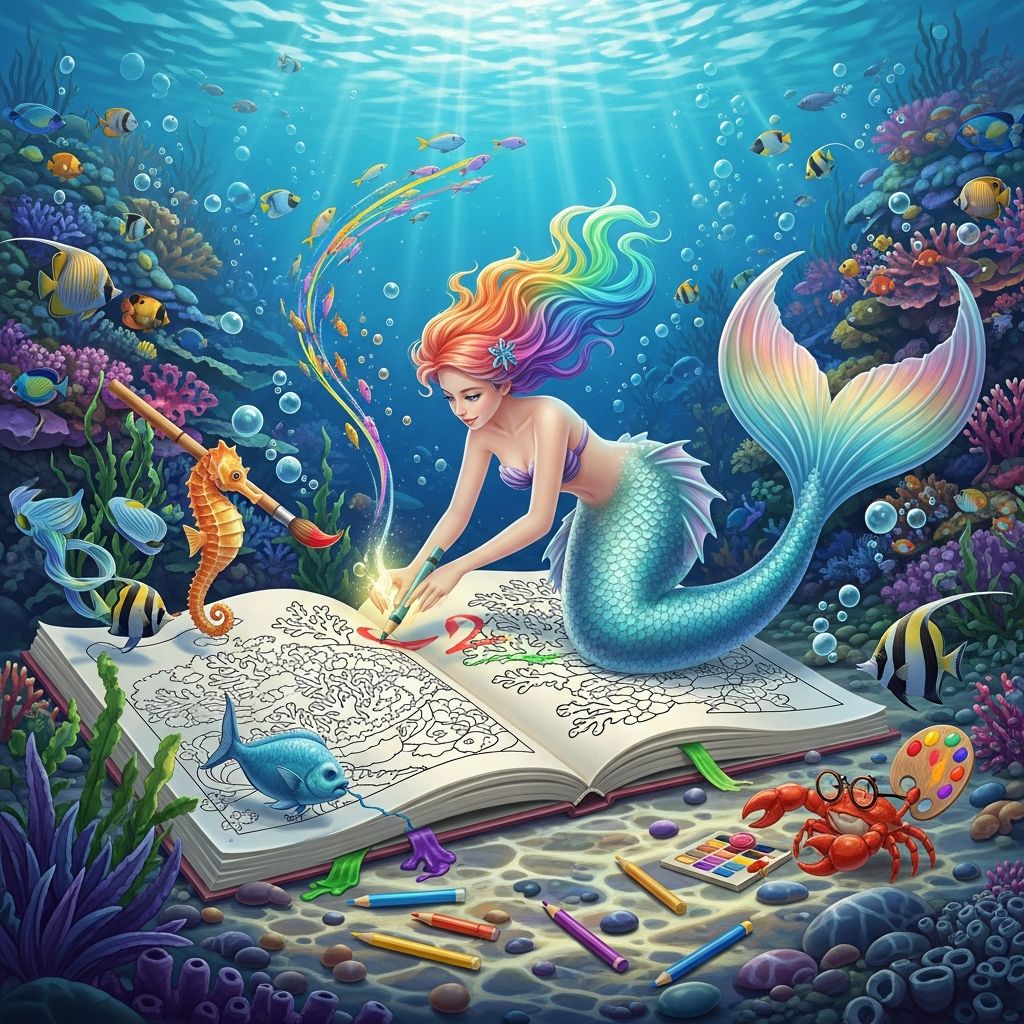
Unlocking Creative Potential Through Oceanic Artistry
Coloring activities have long been recognized as more than simple entertainment for children. When combined with themes that capture young imaginations—such as the enchanting world of mermaids—these activities become powerful tools for development and emotional growth. Mermaid-themed coloring pages offer a unique gateway into an underwater realm where children can explore their creativity while building essential skills that will benefit them throughout their lives.
The appeal of mermaid coloring pages lies in their ability to blend imagination with purposeful creative work. Unlike generic coloring sheets, mermaid-themed designs tap into children’s natural fascination with fantasy, adventure, and the mysteries of the ocean. This combination makes the activity inherently engaging, encouraging children to spend extended periods focused on their artwork without feeling like they’re participating in structured learning.
Developing Fine Motor Control and Hand-Eye Coordination
One of the most significant yet often overlooked benefits of coloring activities is the development of fine motor skills. When children hold coloring instruments and work to stay within defined lines on a mermaid illustration, they’re engaging in precise movements that strengthen the small muscles in their hands and fingers. This muscular development is crucial during early childhood when coordination is still developing.
The act of coloring requires children to coordinate what they see with the movements of their hands—a skill known as hand-eye coordination. As they navigate around the curves of a mermaid’s tail or color intricate scales, children practice this coordination repeatedly. Over time, this practice translates into improved dexterity that supports writing, drawing, and other fine motor tasks essential for academic success.
- Strengthens grip and control of writing instruments
- Enhances precision in hand movements
- Improves ability to work within defined boundaries
- Builds the foundation for handwriting skills
- Develops patience and attention to detail
Fostering Imagination and Fantasy Exploration
The underwater setting of mermaid coloring pages creates a natural invitation for imaginative thinking. Rather than simply filling in spaces with color, children often begin to construct narratives around their creations. They might imagine what their mermaid character is doing, where she lives, what her personality is like, or what adventures await her in the depths of the ocean.
This narrative construction is vital for cognitive development. When children engage in imaginative play and storytelling, they’re exercising their ability to think abstractly, solve problems creatively, and develop their unique perspectives. The open-ended nature of coloring—where there are no “right” color choices—encourages children to make their own decisions and trust their creative instincts.
Fantasy exploration through mermaid themes also allows children to escape the constraints of everyday life temporarily. This mental departure can be refreshing and restorative, providing a healthy outlet for stress and emotional processing. The underwater world, with its sense of mystery and wonder, offers a sanctuary where children can be entirely themselves without judgment or pressure to perform.
Building Educational Connections Through Visual Learning
Mermaid coloring pages serve as effective educational tools when parents and educators integrate learning opportunities. The marine setting naturally lends itself to discussions about ocean ecosystems, marine animals, and water conservation. Children can learn about actual fish species, coral formations, and the characteristics of real underwater environments while coloring fantastical mermaid illustrations.
Color recognition and development are strengthened through coloring activities. As children select and apply different colors, they’re reinforcing their understanding of the color spectrum, color names, and how colors interact with one another. They learn that mixing or layering certain colors creates new shades and discover personal preferences for color combinations.
Shape recognition is another educational benefit embedded within the coloring process. Mermaid illustrations typically include varied geometric shapes—circles for eyes, triangles for fins, diamonds for scales—allowing children to identify and work with basic shapes in a practical, enjoyable context.
Emotional Regulation and Stress Relief for Young Minds
In an increasingly overstimulating world, children benefit greatly from calming activities that allow them to decompress. Coloring has been shown to have meditative qualities, slowing down racing thoughts and promoting a state of focused relaxation. The repetitive nature of the activity, combined with the gentle creative engagement, creates a soothing experience that helps regulate emotions and reduces anxiety.
The structured yet flexible environment of coloring provides comfort for children who may feel overwhelmed by completely open-ended creative tasks. There’s a framework—the outline of the mermaid—but complete freedom in execution. This balance appeals to children with different temperaments and comfort levels with creative expression.
When children complete a coloring page, they experience a tangible sense of accomplishment. This achievement, however modest it might seem to adults, builds confidence and self-esteem. The child has created something finished and beautiful, providing evidence of their capability and worth. This positive reinforcement encourages continued engagement with creative activities and builds a growth mindset around learning and skill development.
Exploring Color Theory and Artistic Expression
Mermaid coloring pages provide an accessible entry point into art education and color theory. Without requiring formal instruction or advanced skills, children begin to experiment with color relationships, contrast, and visual harmony. They discover which color combinations please their eye and which ones clash, developing an intuitive understanding of color principles.
The activity encourages artistic expression without judgment or performance pressure. Unlike formal art classes where children might feel self-conscious about their abilities, coloring pages offer a judgment-free zone where experimentation is natural and welcome. A child might color a mermaid’s tail in shades of purple and green that would never occur in nature, and this creative choice is perfectly valid and encouraged.
Different coloring mediums—markers, colored pencils, crayons, watercolors, or even tissue paper—offer varied experiences and develop different skills. Markers provide bold coverage quickly, colored pencils allow for detailed blending, and watercolors introduce concepts of transparency and layering. Experimenting with different materials keeps the activity fresh and engaging while building diverse artistic skills.
Creating Opportunities for Quality Time and Connection
Mermaid coloring pages can become vehicles for meaningful interaction between children and caregivers. Parents can sit alongside their children, coloring their own pages or offering encouragement and conversation about the creative process. These moments of shared activity, without the pressure of a specific outcome or performance metric, create valuable bonding opportunities.
The non-competitive nature of coloring activities makes them ideal for families with multiple children. Siblings can work together without comparison or rivalry, each creating their own unique interpretation of the same mermaid illustration. This shared experience builds connection while respecting individual creativity and style.
Educators can use mermaid coloring pages as transition activities in classroom settings, helping children shift between different types of tasks or settle into a learning environment. The calm, focused energy that coloring creates can also serve as a bridge activity that allows students to process new information or take a mental break without leaving the learning space.
Accessibility and Inclusivity in Creative Play
One significant advantage of mermaid coloring pages is their accessibility to children with varying abilities. Unlike activities that require specific athletic skills or advanced cognitive abilities, coloring can be enjoyed by children across a wide spectrum of abilities and developmental stages. Children with fine motor challenges can still participate and benefit from the activity, even if their coloring technique differs from peers.
The fantasy nature of mermaid themes has universal appeal that transcends cultural boundaries and gender stereotypes. While mermaids have traditionally been portrayed in particular ways, modern mermaid coloring pages often feature diverse representations, allowing all children to see themselves reflected in the images they’re creating. This inclusivity sends an important message about belonging and creative expression.
Practical Implementation and Getting Started
Introducing mermaid coloring pages to children is straightforward and requires minimal materials. Basic supplies include coloring pages, coloring instruments, and a flat surface to work on. Creating a dedicated coloring space, even a small corner with good lighting, can help children focus and take their artistic work seriously.
Establishing a routine around coloring activities can increase their benefits. Whether it’s a quiet time after school, a weekend creative session, or a calming activity before bedtime, regular coloring practice builds skills and creates positive associations with creative expression. The predictability of routine also contributes to the calming effects of the activity.
- Set aside 15-30 minutes of dedicated coloring time
- Provide a variety of coloring mediums to experiment with
- Display finished pages to build pride in creative work
- Keep a collection of varied mermaid designs for ongoing engagement
- Create a comfortable, well-lit workspace free from distractions
- Encourage creative choices without directing specific color selections
Beyond the Crayon: Extended Creative Possibilities
While traditional coloring is valuable, mermaid pages can be enhanced with additional creative elements. Collage materials like sequins, glitter, or textured papers can be added to create dimensional artwork. Children might use markers to add details beyond the original outline, creating entirely new designs. Some children enjoy cutting out completed pages and using them for storytelling or diorama construction.
Photography can extend the value of coloring activities. Capturing images of finished pages creates a visual record of creative growth over time. Children can review their earlier work and see their developing skills, further building confidence and motivation. Digital sharing with family members who live at a distance maintains connection and provides external validation for creative efforts.
Addressing Common Concerns and Misconceptions
Some adults worry that providing outlines for coloring restricts children’s creativity compared to blank-page drawing. In reality, both activities serve different purposes and offer distinct benefits. Coloring pages provide structure that allows children to focus on color and decision-making without the additional complexity of drawing itself. For children who feel anxious about creating from scratch, this structure is liberating rather than limiting.
Another concern involves screen time alternatives. Mermaid coloring pages offer a screen-free creative outlet in an increasingly digital world. While digital coloring applications have merit, physical coloring provides tactile engagement and a break from screen exposure—benefits that digital versions cannot replicate.
Frequently Asked Questions
What age group benefits most from mermaid coloring pages?
Mermaid coloring pages are beneficial across a wide age range. Toddlers and preschoolers develop basic coloring skills, elementary-age children refine fine motor control and creativity, and even older children and teens can find the activity relaxing and enjoyable.
Are there specific benefits for children with special needs?
Yes, coloring activities are therapeutic and beneficial for children with various needs. For children with autism, ADHD, or anxiety, the structured yet creative nature of coloring provides calming input and a healthy outlet for self-regulation.
How often should children engage in coloring activities?
There’s no strict requirement, but regular engagement yields better results. Many experts recommend at least 15-30 minutes of coloring several times per week as part of a balanced activity mix.
Can coloring pages be reused or should they be done only once?
Photocopying or printing multiple copies of the same design allows children to color the same mermaid repeatedly with different color schemes, encouraging experimentation and repeated practice of skills.
What’s the best type of coloring medium for young children?
Crayons are often ideal for young children due to their easy grip and low pressure requirements. As fine motor skills develop, colored pencils and markers become appropriate for older children seeking greater control and detail.
How do I encourage my child to stay focused during coloring?
Creating a calm environment, limiting distractions, offering appropriate time frames, and avoiding pressure about “staying in the lines” all help maintain engagement and enjoyment of the activity.
References
- The Benefits of Coloring for Children’s Development — American Academy of Pediatrics. 2024. Accessible through pediatric developmental guidelines.
- Fine Motor Skill Development Through Art Activities — National Association for the Education of Young Children (NAEYC). 2023-2024. www.naeyc.org
- Art Therapy and Emotional Regulation in Children — American Art Therapy Association. 2024. www.aata.org
- Creative Play and Cognitive Development — Society for Research in Child Development. 2023. www.srcd.org
- Inclusive Art Education Practices for Diverse Learners — National Art Education Association. 2024. www.naea.org