If you want to have kids someday – or simply be a more informed partner – understanding how menstruation, ovulation, and conception work is essential. This guide translates the science into plain language, aimed specifically at men who want clear, practical answers.
1. The Menstrual Cycle in Plain English
The menstrual cycle is a repeating process that prepares the body for pregnancy. It is driven by hormones and usually lasts about 21–35 days, with 28 days often used as a textbook example, though this varies widely between people and from month to month.
| Phase | Approx. Days (28-day example) | What’s Happening Inside |
|---|---|---|
| Menstrual phase | Day 1–5 | Uterine lining sheds and leaves the body as menstrual blood. |
| Follicular phase | Day 1–13 (overlaps with period at the start) | Eggs in the ovaries begin to mature; uterine lining starts to rebuild under the influence of oestrogen. |
| Ovulation | Around Day 14 (but highly variable) | One mature egg is released from an ovary and enters a fallopian tube. |
| Luteal phase | Day 15–28 | Progesterone rises to prepare the uterus for a possible pregnancy; if no pregnancy occurs, hormone levels fall and the next period begins. |
Key hormones you should know
- Oestrogen: Helps an egg mature and thickens the uterine lining.
- Luteinising hormone (LH): Surges and triggers the release of the egg (ovulation).
- Progesterone: Stabilises the uterine lining after ovulation so an embryo can implant.
From a male partner’s perspective, what matters most is that there is only a limited window each cycle when pregnancy is likely, and that window is tied to ovulation.
2. Understanding Ovulation: The Fertility “Event”
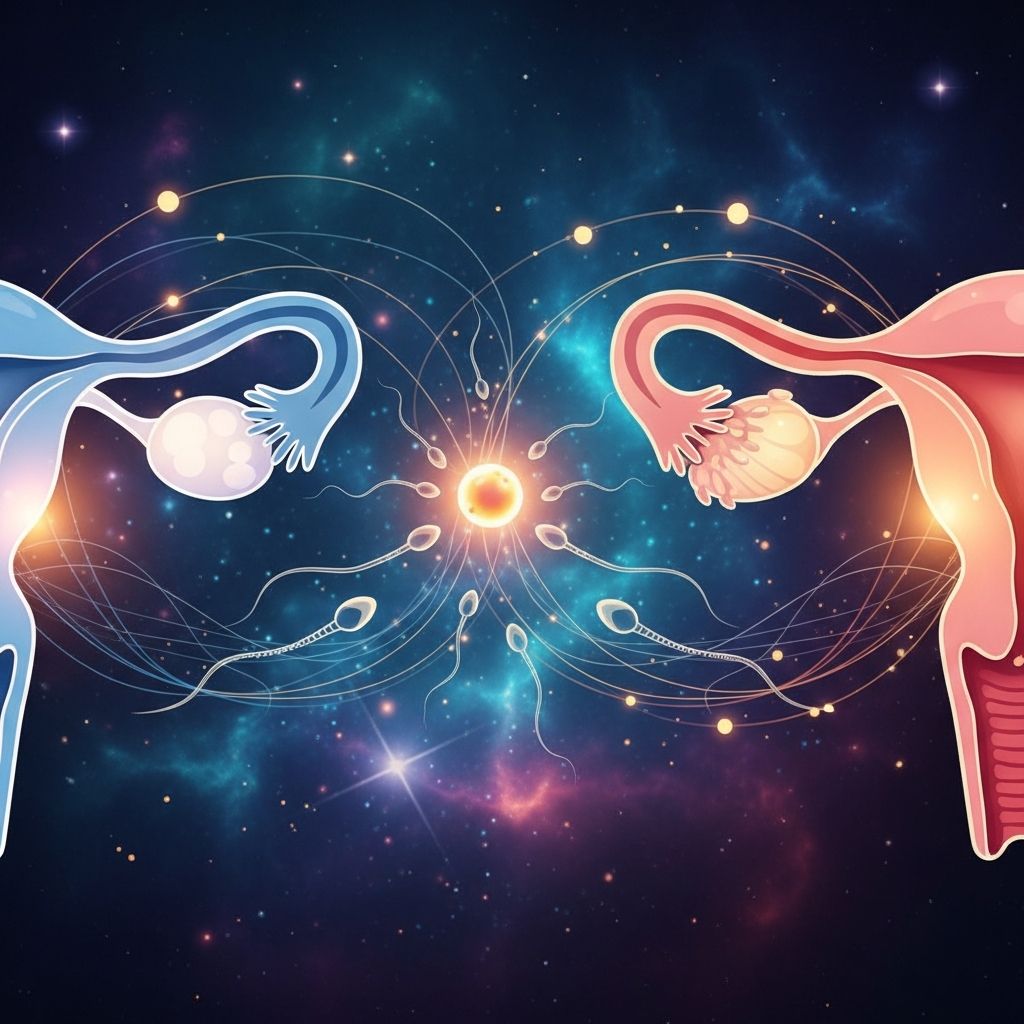
Ovulation is the moment an ovary releases a mature egg. A woman is born with all her eggs, and typically one egg is released per cycle once periods start. The egg travels into a fallopian tube, where it can meet sperm and be fertilised.
How long is the egg available?
The released egg stays viable for a relatively short time – commonly cited as up to 24 hours – so timing intercourse around this period is important for conception.
When does ovulation usually happen?
- In many cycles, ovulation occurs about 10–16 days before the next period begins.
- For a regular 28-day cycle, this often falls around day 14, but that is only an average; shorter or longer cycles have different timing.
- The first half of the cycle (before ovulation) varies more than the second half (after ovulation), which is why predicting ovulation can be tricky from counting alone.
Because of this variability, apps and calendars are estimates, not guarantees. More precise methods include tracking body temperature, cervical fluid, or using ovulation predictor kits, but even these typically confirm ovulation after it happens rather than before.
3. The Fertile Window: When Pregnancy Is Most Likely
Contrary to a lot of myths, a person is not equally fertile every day of the month. There is a specific fertile window each cycle when conception is possible.
How long is the fertile window?
- Sperm can survive in the female reproductive tract for up to 5–7 days under favourable conditions.
- The egg is available for about one day after ovulation.
- Putting these together, the fertile window is usually described as about 6–7 days: the five days before ovulation plus the day of ovulation (and possibly the day after).
Chances of conception by timing
Clinical data show that pregnancy is most likely when sex happens in the days just before ovulation:
- Sex about 2 days before ovulation can carry roughly a 26% chance of pregnancy in a given cycle.
- Sex about 1 day after ovulation has a much lower chance, around 1%.
The takeaway: the most fertile time is usually the 2–3 days before ovulation, not after. Your sperm need to be waiting in the fallopian tube when the egg arrives.
4. What Different Cycle Phases Mean for Pregnancy Risk
From a male perspective, one of the most common questions is, “Can she get pregnant now?” The honest answer is that it depends on which part of the cycle she is in and how regular her cycles are.
During her period
- For many people with average-length cycles, the chance of pregnancy from sex during menstrual bleeding is low but not zero.
- Pregnancy is more possible if cycles are short (for example, less than 25 days) or highly irregular, because ovulation can fall earlier and sperm can survive several days.
Before ovulation (follicular phase)
- This is where most of the fertile window sits, especially the 5 days leading up to ovulation.
- Because sperm can live for days, sex in this time can absolutely lead to pregnancy, even if ovulation is still several days away.
Around ovulation
- The day of ovulation is considered one of the highest fertility days.
- For couples trying to conceive, timing intercourse in the 2–3 days before and on the day of ovulation maximises chances.
After ovulation (luteal phase)
- Once the egg’s short fertile lifespan has passed, the odds of pregnancy drop sharply.
- The remaining days before the next period are generally considered low fertility, assuming ovulation has already occurred.
However, without tracking, it is easy to misjudge where in the cycle someone actually is. That is why counting days alone is not a reliable method of avoiding pregnancy.
5. Trying to Conceive: What Men Can Practically Do
If you and your partner are actively trying to conceive, your role is more than just “showing up.” Understanding timing and making some lifestyle adjustments can make a real difference.
Timing intercourse
- Health authorities and fertility organisations often recommend regular intercourse – for example, 2–3 times per week – throughout the cycle if you are trying to conceive, so you do not miss the fertile window.
- Targeting the 5–6 days before expected ovulation and the day of ovulation can further increase the chances of pregnancy.
Supporting your own fertility
Your sperm quality matters. Research and clinical guidance suggest that the following support better male fertility:
- Healthy weight and diet with plenty of fruits, vegetables, and whole foods.
- Limiting tobacco and heavy alcohol, which are linked to poorer sperm parameters.
- Avoiding excessive heat to the testicles (for example, prolonged hot tubs or saunas) when trying to conceive.
- Managing stress, which can interfere with sexual function and overall health.
When to consider medical advice
- If you have had regular, unprotected intercourse for 12 months without conception (or 6 months if your partner is over 35), many guidelines recommend talking to a healthcare professional or fertility specialist.
- Concerns about very irregular cycles, extremely painful periods, or past reproductive health issues are also reasons to seek advice sooner.
6. How Menstruation and Hormones Affect Mood and Comfort
The menstrual cycle is not just about fertility; hormonal shifts can affect how your partner feels physically and emotionally. Being aware of this helps you respond with empathy rather than confusion.
Common physical experiences around the cycle
- Before and during the period: cramps, fatigue, headaches, bloating, breast tenderness, and changes in bowel habits are common.
- Mid-cycle: some people notice mild pelvic pain or spotting around ovulation, while others feel more energetic or social.
- Late luteal phase: premenstrual symptoms can include mood changes, irritability, low mood, or anxiety, alongside physical discomfort.
What you can do as a partner
- Ask, don’t guess: Everyone’s cycle experience is different. Ask what helps – rest, heat packs, space, or company.
- Be flexible with sex: Some people are comfortable having sex during a period; others are not. Respect their preference.
- Avoid minimising pain: Severe pain or heavy bleeding can signal medical issues; encourage professional help rather than dismissing it.
7. Sex, Periods, and Pregnancy Myths Men Commonly Hold
Misconceptions about periods and fertility are everywhere. Clearing them up can prevent both unplanned pregnancies and unnecessary worry.
- Myth: You cannot get pregnant during a period.
Reality: Pregnancy is less likely but still possible, especially with short or irregular cycles and because sperm can live several days in the body. - Myth: Ovulation always happens on day 14.
Reality: Ovulation timing varies widely between people and even from cycle to cycle; 10–16 days before the next period is a more accurate description. - Myth: You can reliably avoid pregnancy by counting cycle days.
Reality: Because the fertile window can shift by several days, counting alone is considered an unreliable form of contraception. - Myth: Fertility problems are usually the woman’s issue.
Reality: Male factors contribute significantly to infertility; both partners’ health and reproductive systems matter.
8. Communication and Emotional Support
Beyond biology, how you talk about menstruation and fertility can either build trust or create tension. Being open and informed goes a long way.
Practical ways to be supportive
- Learn the basics: Read about the menstrual cycle together so you are not relying on guesswork or outdated myths.
- Share responsibility for timing: If you are trying to conceive, don’t leave all the mental load of tracking cycles and fertile days to your partner.
- Normalise the topic: Talk about periods and fertility as everyday health topics, not something shameful or embarrassing.
Sex and pressure during conception attempts
- Repeatedly timing sex around ovulation can make intimacy feel like a chore. Be aware of this and prioritise emotional connection, not just baby-making.
- If sex starts to feel pressured or stressful, discuss it openly and consider guidance from a healthcare professional or counsellor.
Frequently Asked Questions (FAQs)
Q1: Can my partner get pregnant if we have sex right after her period ends?
Yes, it is possible, especially if she has a shorter cycle or ovulates earlier than average. Sperm can survive up to 5–7 days in the reproductive tract, so sex soon after bleeding stops can sometimes fall within the fertile window.
Q2: How can we roughly estimate her most fertile days?
If her cycles are fairly regular, ovulation often happens 10–16 days before the next period. Counting backwards from the expected start of her next period can give a rough idea, but tracking signs like cervical fluid or using ovulation kits will give more information.
Q3: How often should we have sex if we are trying for a baby?
Many fertility specialists and health bodies suggest having sex every 2–3 days throughout the cycle, and especially during the 5–6 days before expected ovulation and on ovulation day, to maximise the chance of sperm meeting the egg.
Q4: Does it matter which day we have sex if my sperm live for several days?
Yes. While sperm may survive for multiple days, conception is most likely when intercourse happens in the 2–3 days before ovulation, with success rates dropping sharply after ovulation has already passed.
Q5: When should we see a doctor about fertility?
If you have had regular, unprotected sex for 12 months (or 6 months if your partner is over 35) without a pregnancy, guidelines recommend seeking medical advice. Very irregular periods, very painful periods, or known reproductive health issues are reasons to seek help sooner.
References
- Periods and fertility in the menstrual cycle — NHS. 2023-10-21. https://www.nhs.uk/conditions/periods/fertility-in-the-menstrual-cycle/
- The Manly Guide to Menstruation — Clue. 2019-06-01. https://helloclue.com/articles/sex/manly-guide-to-menstruation
- When in the month are women and men most fertile? — British Fertility Society. 2021-05-15. https://www.britishfertilitysociety.org.uk/fei/when-are-women-men-most-fertile/
- Charting and Counting: A Man’s Guide to Ovulation — babyMed. 2022-04-10. https://www.babymed.com/mens-health/charting-and-counting-man-s-guide-ovulation
- Menstrual Cycle 101: Men’s Special — Mme L’Ovary. 2021-03-01. https://us.mmelovary.com/blogs/table-rouge/cycle-menstruel-101-special-homme