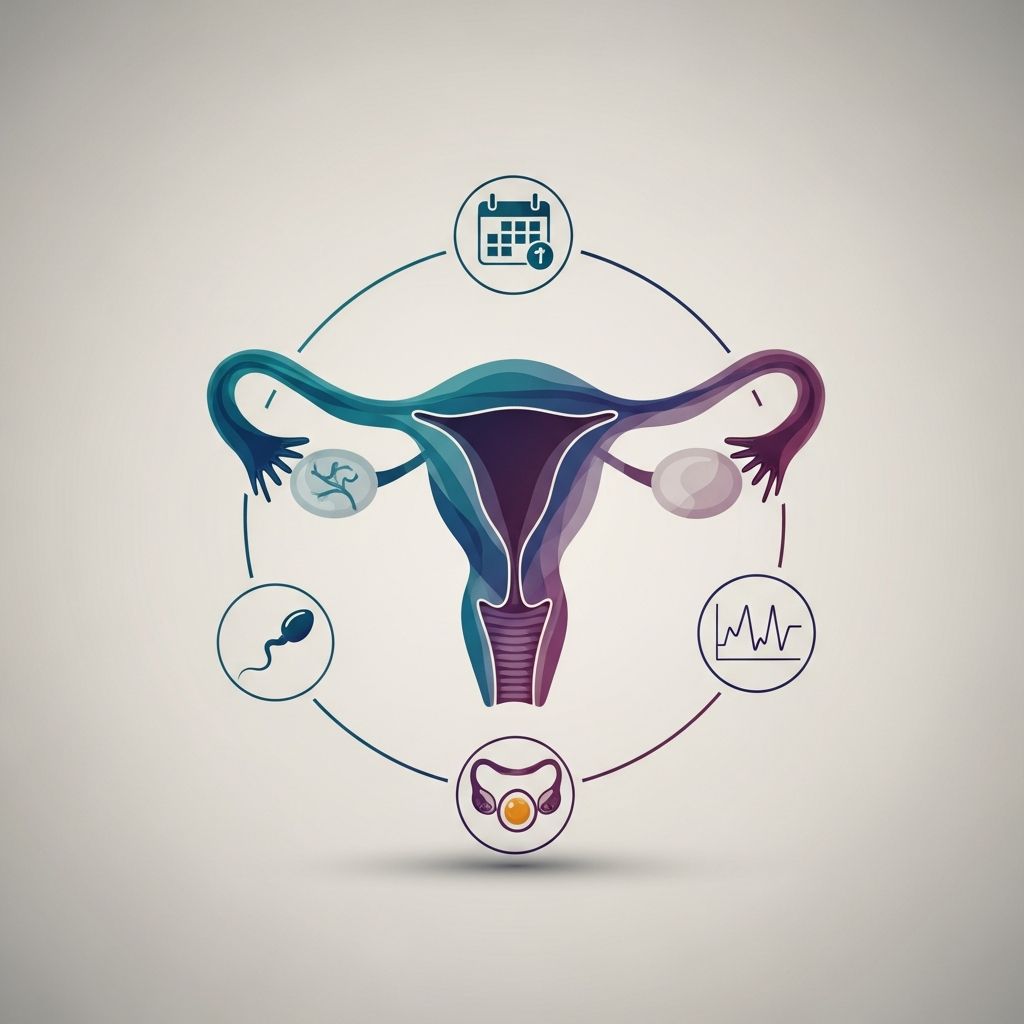
The female reproductive system operates on a monthly rhythm that influences everything from mood to fertility. For partners aiming to conceive or simply seeking to offer better support, grasping these cycles demystifies what often feels opaque. This guide breaks down the biology, timelines, and practical tips using clear, actionable insights.
Understanding the Core Components of the Female Reproductive System
At the heart of the menstrual cycle are the ovaries, paired organs akin to male testicles in function but distinct in operation. Ovaries house a finite supply of eggs, established before birth, with roughly 400 maturing over a lifetime—far fewer than the continuous sperm production in males. Each cycle, hormones orchestrate the maturation and release of one primary egg.
The uterus plays a supportive role, building a nutrient-rich lining each month in anticipation of pregnancy. If fertilization fails, this lining sheds as menstrual blood. Fallopian tubes serve as the meeting ground for egg and sperm, a critical 24-hour window post-ovulation.
Breaking Down the Four Phases of the Menstrual Cycle
The average cycle spans 28 days, though 21-35 days is normal, starting on the first day of bleeding. Hormones like estrogen and progesterone drive four distinct phases.
Follicular Phase: Building Momentum
Days 1-13 mark the follicular phase, where follicles in the ovaries develop under rising estrogen. This thickens the uterine lining and boosts energy levels. Cervical mucus becomes fertile-friendly, slippery like egg whites, aiding sperm survival up to five days.
Ovulation Phase: The Fertile Peak
Around day 14, a surge in luteinizing hormone triggers ovulation. The mature egg bursts from its follicle, entering the fallopian tube. This phase lasts 12-24 hours, with peak fertility. Women may notice heightened libido, mild pain, or increased discharge.
Luteal Phase: Preparation and Waiting
Post-ovulation (days 15-28), the empty follicle forms the corpus luteum, producing progesterone to maintain the uterine lining. If no implantation occurs, hormone levels drop, initiating menstruation. Premenstrual symptoms like bloating or mood shifts arise here.
Menstrual Phase: Renewal
Lasting 3-7 days, this sheds the unneeded lining—up to 80ml of blood. Cramps result from uterine contractions, eased by heat or NSAIDs.
Mapping the Fertile Window for Conception
Conception hinges on timing. Sperm can survive 3-5 days in the tract, while eggs viable for 12-24 hours create a six-day fertile window ending on ovulation day. Highest odds (26-30%) occur 1-2 days before ovulation.
| Cycle Day | Phase | Conception Probability | Key Factors |
|---|---|---|---|
| 1-5 | Menstrual | <1% | No egg present |
| 6-13 | Follicular | 10-20% | Sperm longevity aids |
| 14 | Ovulation | 25-30% | Egg release peak |
| 15-28 | Luteal | <5% | Egg viability ends |
Regular intercourse every 2-3 days maximizes chances without exhaustion.
Signs and Symptoms Across the Cycle
- Menstruation: Bleeding, cramps, fatigue, cravings.
- Follicular: Rising energy, clearer skin, fertile mucus.
- Ovulation: Libido spike, ovulation pain (mittelschmerz), basal body temperature rise.
- Luteal: Breast tenderness, mood swings, constipation.
Tracking apps monitor these via inputs like temperature or mucus, predicting ovulation with 80-90% accuracy when consistent.
Practical Strategies for Men to Track and Support
Participate actively: Sync calendars for ovulation alerts, note patterns over 3+ cycles. Offer heating pads during periods or plan energetic dates at ovulation. Lifestyle boosts fertility—maintain BMI 18.5-24.9, limit alcohol, quit smoking.
For conception, aim for intercourse around predicted ovulation. Post-sex, suggest 10-15 minute rest lying down to aid sperm travel.
Common Myths and Facts on Fertility
- Myth: Periods are safe from pregnancy—Fact: Rare for short cycles.
- Myth: Ovulation always day 14—Fact: Varies ±8 days.
- Myth: Frequent sex lowers sperm count—Fact: Daily optimal near window.
How Hormones Drive the Entire Process
Estrogen peaks pre-ovulation, promoting lining growth. Progesterone dominates luteal phase. Disruptors like stress or PCOS alter timings, affecting 10% of women.
Supporting Your Partner Emotionally
Cycles influence mood via serotonin-hormone links. Listen without fixing; validate cramps as real pain. Normalize discussions to reduce stigma.
Frequently Asked Questions
What if cycles are irregular?
Track 3-6 months; consult doctors for underlying issues like thyroid problems. Apps adjust predictions dynamically.
Can men affect fertility timing?
Yes—avoid hot tubs pre-conception (heat harms sperm), eat zinc-rich foods like nuts.
How accurate are ovulation kits?
97% for detecting LH surge, but confirm with BBT for ovulation confirmation.
Is conception possible during periods?
Unlikely (<1%), but possible in short cycles (≤24 days) if ovulation follows quickly.
What lifestyle changes boost chances?
Exercise moderately, sleep 7-9 hours, folate for her, antioxidants for him.
Advanced Tracking Methods
Basal Body Temperature (BBT): Daily morning temp rises 0.5°F post-ovulation.
Cervical Mucus: Shift to clear, stretchy at peak fertility.
Wearables: Devices like Oura ring monitor via skin temp, HRV.
Ultrasound: Clinical follicle monitoring.
Combine methods for 95%+ reliability.
Understanding these dynamics fosters partnership. Whether building a family or empathizing daily, knowledge bridges gaps.
References
- Your Fertility – Fertile Window Information — European Society of Human Reproduction and Embryology. 2023-05-15. https://www.eshre.eu/Guidelines-and-Legal/Guidelines/Female-Infertility
- Menstrual Cycle Regulation — National Institute of Child Health and Human Development (NICHD). 2024-01-10. https://www.nichd.nih.gov/health/topics/menstruation
- Conception Probabilities by Cycle Day — British Fertility Society. 2023-11-20. https://www.britishfertilitysociety.org.uk/fei/when-are-women-men-most-fertile/
- Ovulation Detection Methods — World Health Organization (WHO). 2022-09-05. https://www.who.int/publications/i/item/9789240051274
- Hormonal Phases of Menstrual Cycle — American College of Obstetricians and Gynecologists (ACOG). 2025-02-01. https://www.acog.org/womens-health/faqs/menstruation