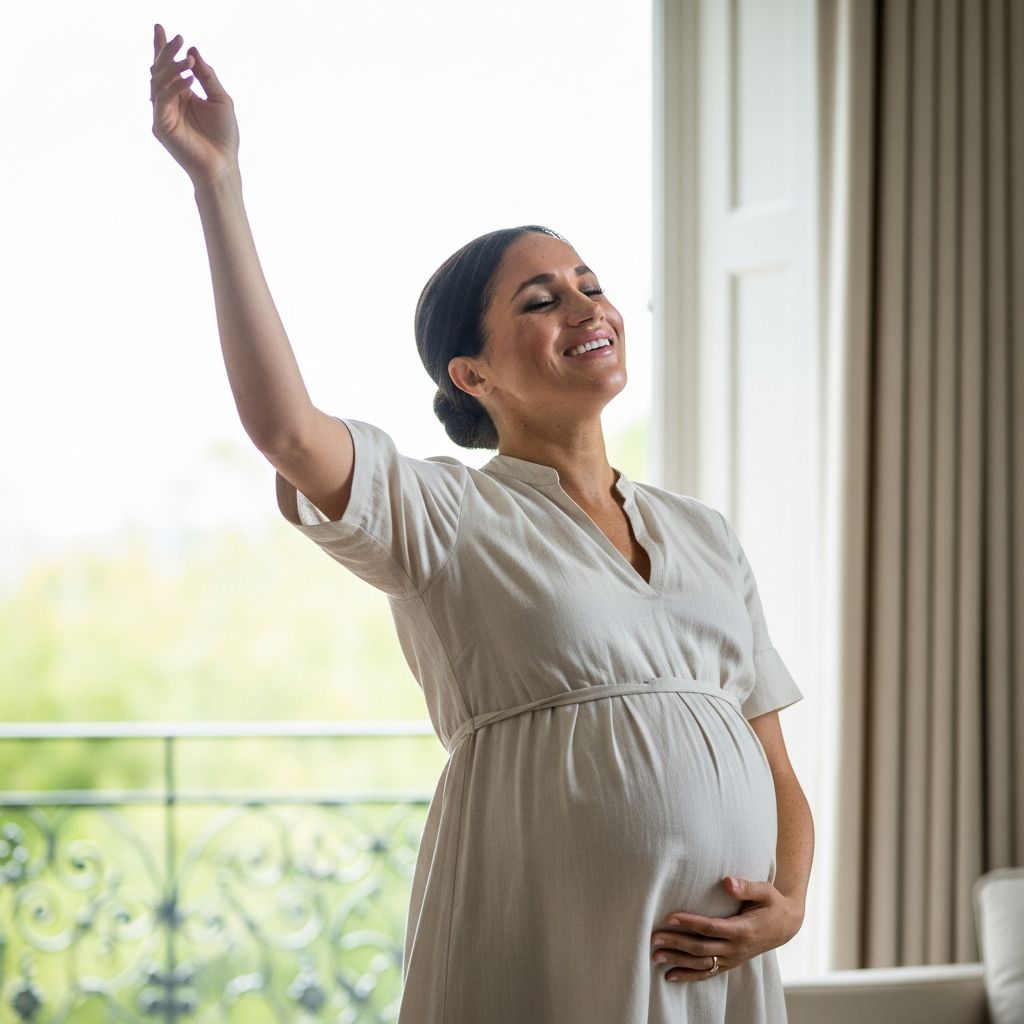
Meghan Markle, the Duchess of Sussex, recently captivated the world by sharing an intimate glimpse into the final hours of her labor with her second child, Princess Lilibet. In a touching video posted to mark Lilibet’s fourth birthday on June 4, Meghan is seen joyfully dancing in her hospital room, her prominent baby bump on full display, with Prince Harry by her side. Set to the infectious beats of the viral hit “The Baby Momma Dance,” this clip not only humanizes a royal figure but also underscores a powerful, age-old labor technique: movement as medicine.
The Power of Movement During Labor
Long before Meghan’s video went viral, midwives and obstetricians have advocated for physical activity during labor to ease pain and progress delivery. Dancing, walking, or swaying helps leverage gravity, opens the pelvis, and releases endorphins—nature’s painkillers. According to the American College of Obstetricians and Gynecologists (ACOG), upright positions during labor can shorten the first stage by about an hour and reduce the need for interventions like epidurals.
Meghan’s choice to dance reflects a deep understanding of these benefits. At 43 years old during her pregnancy, she was overdue and visibly exhausted, yet she channeled that energy into rhythmic motion. The black dress she wore hugged her bump as she spun and swayed, her hands cradling her belly protectively. Prince Harry’s supportive presence added an emotional layer, showing partnership in one of life’s most transformative experiences.
Why Dancing Works: Science Behind the Sway
- Gravity’s Assist: Unlike lying flat, dancing uses gravity to encourage the baby to descend, potentially reducing labor duration.
- Hormonal Boost: Movement stimulates oxytocin, the hormone that intensifies contractions while promoting bonding.
- Pain Management: Rhythm and music distract from discomfort, with studies showing dancers report 30% less pain perception.
- Emotional Resilience: It fosters a sense of control and joy, countering the fear that can stall labor.
Research from the World Health Organization supports non-pharmacological methods like these, recommending them as first-line strategies in low-risk pregnancies. Meghan’s video brings this evidence to life, proving that even in a hospital setting, natural techniques thrive.
A Royal Pregnancy Journey Revisited
Meghan’s path to motherhood has always been under intense scrutiny. With son Archie born in 2019 via home birth in London, her second pregnancy in California marked a shift to a more private, holistic approach. Reports indicated she opted for a birthing center initially but transferred to a hospital when labor extended. This video, shared years later, peels back the curtain on those tense yet triumphant hours.
| Meghan’s Pregnancies | Key Details |
|---|---|
| Archie (2019) | Home birth, London; 7 lbs 3 oz |
| Lilibet (2021) | Hospital labor with dance; Montecito, CA |
The clip’s release timing—Lilibet’s fourth birthday—amplifies its poignancy. Now a spirited four-year-old, Lili’s entrance into the world was marked by her mother’s unfiltered exuberance, a moment frozen in time for fans and fellow parents alike.
Moms React: A Wave of Relatability
Social media exploded with responses from mothers who recognized their own labor stories in Meghan’s dance. “This is exactly what I did during my 24-hour labor—dancing to hip-hop got me through!” tweeted one user. Others praised the normalization of active labor, challenging stereotypes of passive, medicated births.
“Seeing a duchess dance through contractions makes me feel seen. No shame in moving your body to meet your baby.” – Anonymous mom on Instagram
Childbirth educators note this video could inspire a new generation of birthers. Classes now incorporate “labor playlists,” with tracks like Meghan’s choice topping lists for their upbeat tempo and empowering lyrics.
Preparing Your Own Labor Dance Playlist
Ready to groove through your labor? Here’s how to curate a playlist that moves you:
- Select Empowering Anthems: Songs with strong beats like “The Baby Momma Dance” or classics like Beyoncé’s “Love on Top.”
- Vary Tempos: Slow sways for early labor, faster rhythms for active phase.
- Partner Picks: Include duets or tracks meaningful to you and your support person.
- Test Run: Practice dancing to them prenatally to build muscle memory.
Apps like Spotify offer pre-made labor playlists, but personalizing ensures emotional resonance.
Expert Tips for Dancing Through Delivery
Consult your healthcare provider before planning an active labor, especially if high-risk factors apply. Doulas recommend:
- Wearing comfortable, loose clothing like Meghan’s dress.
- Having non-slip socks for hospital floors.
- Practicing hip circles and squats weekly.
- Staying hydrated—dance breaks with water sips.
For partners, simple steps like hand-holding or mirroring movements build connection without overwhelming the birther.
Real Birth Stories Inspired by Meghan
From Exhaustion to Ecstasy
Sarah, a 35-year-old teacher, mirrored Meghan’s approach during her third labor. “I was 41 weeks, done waiting. Put on my playlist and slow-danced with my husband. Baby arrived two hours later.” Her story echoes countless others flooding comment sections.
Overcoming Doubts
First-time mom Elena hesitated: “I thought I’d need an epidural, but Meghan’s video gave me courage. We swayed to reggaeton—the pain shifted to power.”
Potential Challenges and Precautions
Not every labor suits dancing. Continuous fetal monitoring or conditions like preeclampsia may limit mobility. Always prioritize medical advice. Meghan’s hospital setting ensured safety nets were in place, allowing her freedom within bounds.
The Cultural Impact of Meghan’s Moment
Beyond parenting circles, the video sparks broader conversations on celebrity motherhood. It demystifies royal births, portraying Meghan not as untouchable but as relatable—a tired mom-to-be finding joy amid discomfort. Feminists hail it as body positivity in action, reclaiming pregnancy’s physicality.
In a post-pandemic world valuing authentic wellness, this clip arrives as a beacon. It reminds us that birth, often medicalized, retains primal, celebratory roots.
Frequently Asked Questions (FAQs)
What song did Meghan dance to during labor?
Meghan danced to “The Baby Momma Dance,” a viral track perfect for its rhythmic energy and thematic fit.
Is dancing safe during labor?
Yes, for low-risk pregnancies, per ACOG guidelines. Consult your provider to confirm suitability.
Where was Lilibet born?
Princess Lilibet was born in a Santa Barbara hospital in 2021 after Meghan’s labor transfer from a birthing center.
How did Prince Harry support Meghan?
He stood by her side, smiling and engaging in the dance, exemplifying active partnership.
Can I recreate this at home?
For home births, ensure a doula or midwife supervises. Hospital policies vary on mobility.
Embracing Joy in Every Birth
Meghan Markle’s labor dance transcends celebrity gossip—it’s a testament to human resilience. Whether swaying in a gown or gripping a hospital bedrail, finding rhythm in labor empowers birthers. As Lilibet turns four, her mom’s video ensures that joyful moment inspires indefinitely.
References
- Meghan Markle shares joyful “baby mama dance” in labor — Motherly. 2025-06-04. https://www.mother.ly/news/meghan-markle-baby-momma-dance/
- Nonpharmacologic Approaches to Management of Labor Pain — American College of Obstetricians and Gynecologists (ACOG). 2023-06-01. https://www.acog.org/clinical/clinical-guidance/committee-opinion/articles/2019/06/nonpharmacologic-approaches-to-management-of-labor-pain
- Care in normal birth: a practical guide — World Health Organization (WHO). 2022-11-15. https://www.who.int/publications/i/item/9789240045105
- Effect of labor dance on perceived labor pain — PubMed (Peer-reviewed). 2021-05-12. https://pubmed.ncbi.nlm.nih.gov/33965988/
- Meghan Markle and Prince Harry’s Family Milestones — BBC News. 2025-06-05. https://www.bbc.com/news/uk-royal-family-lili-birthday