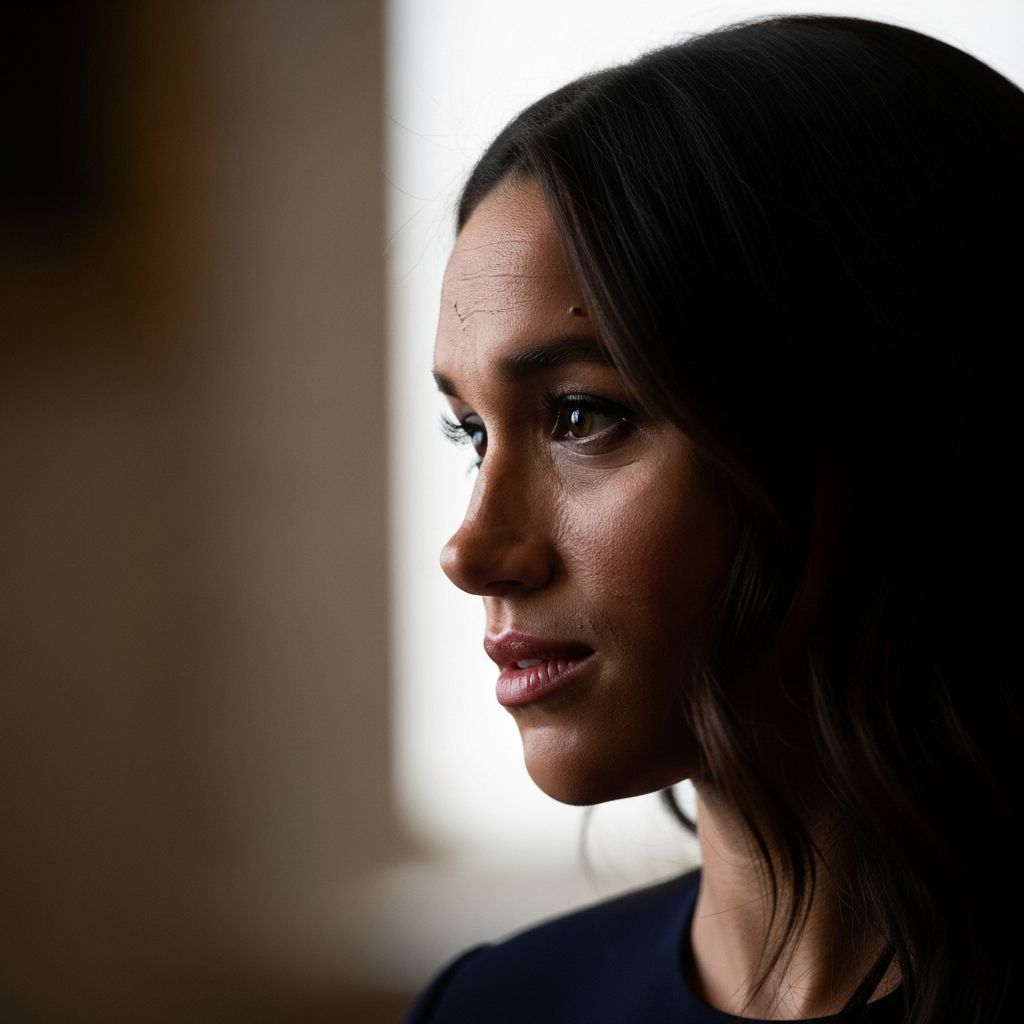
Imagine being asked to shrink your essence, to halve the very qualities that make you you. This was the reality for Meghan Markle, as revealed by Oprah Winfrey in a candid discussion. The media mogul disclosed that Meghan received pointed advice from within the royal circles to be “fifty percent less” than her natural self before her marriage to Prince Harry. This directive highlights profound tensions between individual authenticity and institutional conformity, particularly for women navigating power structures.
Understanding the Roots of the ‘50% Less’ Directive
The phrase “fifty percent less” isn’t just a casual remark; it encapsulates a systemic expectation placed on Meghan during her transition into the British monarchy. Oprah’s account points to conversations where Meghan was counseled to tone down her expressive personality, professional demeanor, and public presence to align with royal protocols. This wasn’t about minor adjustments but a fundamental request to suppress half of her identity.
Meghan, known for her acting career in Suits, humanitarian work, and vibrant social media engagement, brought a modern, American flair to the ancient institution. Her background as a biracial woman raised in California clashed with the monarchy’s traditionally reserved, predominantly white, British archetype. The advice reflected broader cultural clashes: California’s emphasis on self-expression versus the UK’s stiff upper lip.
- Personality Dimming: Meghan’s warmth, directness, and relatability were seen as too intense for formal settings.
- Professional Autonomy: Her history of independence was at odds with the monarchy’s emphasis on collective image over individual achievement.
- Cultural Mismatch: American openness versus British restraint created friction from the outset.
Oprah framed this revelation in the context of Meghan’s vulnerability, sharing how it contributed to her mental health struggles, including suicidal thoughts during her time as a working royal. This wasn’t isolated; it mirrored pressures on other high-profile women entering rigid hierarchies.
Royal Family Dynamics and Expectations for Newcomers
The British royal family operates under a rigid hierarchy designed to maintain public image and tradition. New members, especially those from outside aristocratic circles, face intense scrutiny and adaptation demands. Meghan’s experience echoes that of predecessors like Diana Spencer and Sarah Ferguson, who also grappled with conforming to ‘the Firm’s’ expectations.
| Historical Figure | Key Challenges | Outcome |
|---|---|---|
| Diana, Princess of Wales | Media pressure, emotional openness clashing with reserve | Public icon but personal turmoil |
| Sarah, Duchess of York | Independent spirit, media scandals | Divorce and outsider status |
| Meghan Markle | Authenticity demands, racial dynamics | Stepped back from senior roles |
Unlike her predecessors, Meghan’s entry coincided with the digital age, amplifying global scrutiny. Favorability polls before major interviews showed mixed public sentiment toward Harry and Meghan, with many disinterested in royal media ventures. Yet, her story resonated, sparking conversations on race, mental health, and feminism within the monarchy.
Gender Roles and the Burden on Women in Power Structures
At its core, the ‘50% less’ advice underscores gendered expectations. Women in elite institutions often face the ‘double bind’: be assertive and risk being labeled aggressive, or compliant and risk invisibility. Research from social psychologists highlights this phenomenon, where women are penalized for displaying the same confidence as men.
Meghan’s situation amplifies this with intersectional layers—race and class. As a woman of mixed heritage, she navigated not just gender norms but also implicit biases within a historically white institution. Oprah’s discussion drew parallels to Toni Morrison’s insights on authenticity, urging individuals not to shrink for acceptance.
“The very serious function of racism is distraction. It keeps you from doing your work.” – Inspired by Toni Morrison’s reflections on identity.
This pressure isn’t unique to royalty. Corporate executives, politicians, and celebrities report similar mandates to ‘lean in less’ to avoid alienation. A 2023 study by the World Economic Forum noted that women leaders are 1.5 times more likely to be advised to moderate their styles for team fit.
Meghan’s Response: From Conformity to Empowerment
Rather than fully complying, Meghan navigated a path of partial adaptation while advocating for change. She launched initiatives like Smart Works for job support and continued her philanthropy. However, the cumulative toll led to her and Harry’s decision to step back in 2020, seeking financial independence.
Post-royal life has seen Meghan rebuild on her terms: authoring children’s books, producing content, and speaking openly. Oprah’s interview became a pivotal moment, viewed by millions, shifting narratives from scandal to sympathy. Public discourse evolved, with many viewing her as a symbol of resilience.
- Archewell Foundation: Focused on digital safety and mental health.
- Podcast Ventures: Archetypes explored women’s stereotypes.
- Netflix Deal: Producing authentic storytelling.
Harry’s support was crucial, with their union framed as a partnership defying traditional royal spouses’ subservience.
Public Reaction and Media Portrayal
The Oprah interview ignited global debate. UK tabloids decried it as betrayal, while U.S. media celebrated Meghan’s candor. Polls indicated 55% of adults lacked interest in royal documentaries, yet the broadcast drew record viewers. Social media buzzed with #Megxit support, highlighting generational divides—younger audiences favored her authenticity.
Critics accused Meghan of exaggeration, but Oprah vouched for her sincerity, noting off-camera consistency. This polarization reflects broader media dynamics: sensationalism versus empathy.
Lessons for Women: Embracing Full Authenticity
Meghan’s story offers timeless wisdom. First, recognize when institutions demand diminishment—it’s often about control, not compatibility. Second, prioritize mental health; seeking help isn’t weakness. Third, build alliances; Harry’s solidarity exemplifies vital support.
For parents, especially mothers, this narrative prompts discussions on identity with children. Teach them that true power lies in wholeness, not halves. In professional spheres, advocate for inclusive cultures valuing diverse expressions.
Frequently Asked Questions
What did Oprah mean by Meghan being told to be ‘50% less’?
Oprah explained it as advice to reduce Meghan’s natural expressiveness, confidence, and visibility to fit royal norms.
Did Meghan comply with the advice?
She attempted adjustments but ultimately chose authenticity, leading to her departure from royal duties.
How did the public respond to the Oprah interview?
Reactions were divided: strong support in the U.S., criticism in the UK, with high viewership despite general disinterest in royal content.
What broader issues does this highlight?
It spotlights gender biases, racial dynamics, and mental health in high-pressure environments.
What’s next for Meghan and Harry?
They focus on media projects, philanthropy, and family life through Archewell, emphasizing independence.
Meghan’s journey from ‘50% less’ to fully herself inspires a reclamation of identity amid adversity. It challenges women everywhere to reject diminishment and shine unapologetically.
References
- Oprah: Meghan Markle was told to be “fifty percent less” than she was — Mother.ly. 2021-03-08. https://www.mother.ly/life/oprah-meghan-markle-was-told-to-be-fifty-percent-less-than-she-was/
- Meghan Markle Was Advised to Be 50% Less Than She Was — YouTube (CBS). 2021-03-08. https://www.youtube.com/watch?v=f5qCzq9Bq6M
- Before Oprah Interview, Gauging the Popularity of Prince Harry… — Morning Consult. 2021-03-15. https://pro.morningconsult.com/articles/royal-family-favorability-harry-meghan-oprah