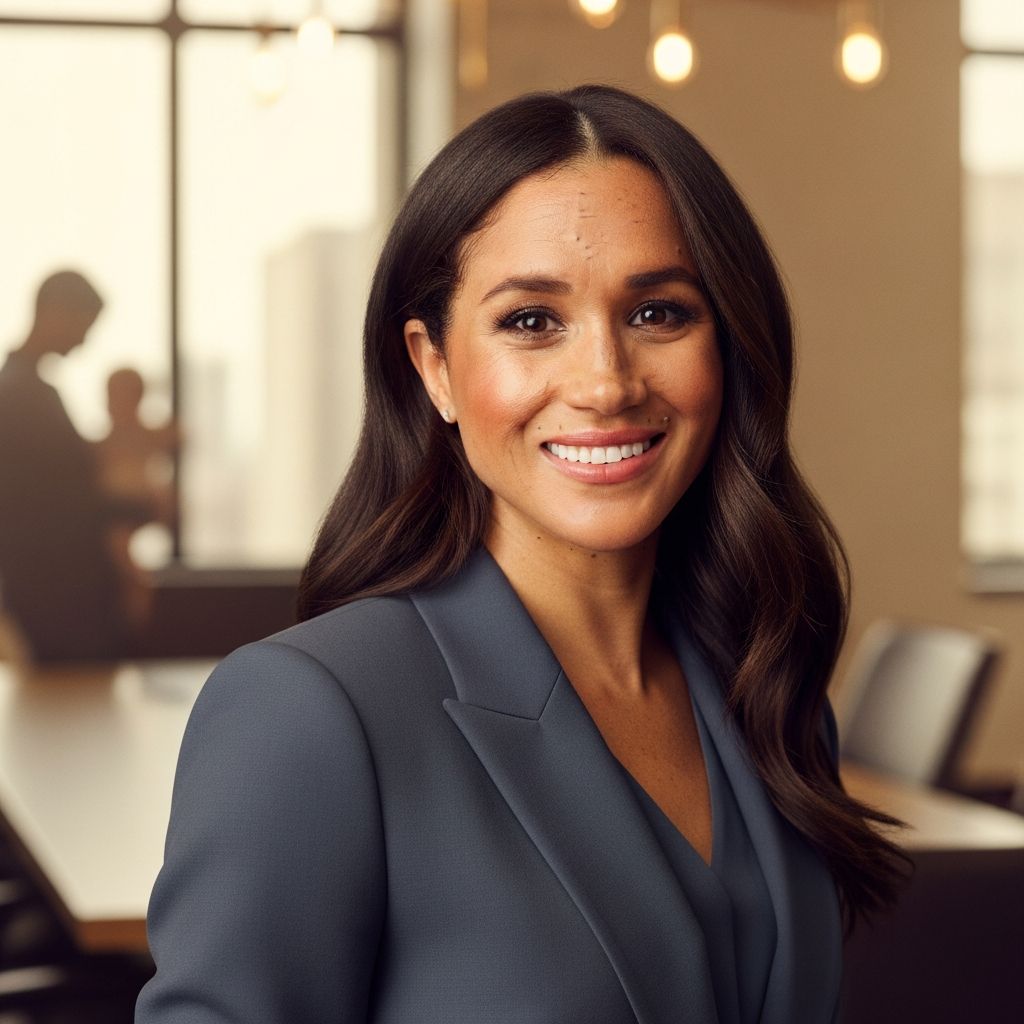
Meghan Markle, the Duchess of Sussex, has emerged as a vocal advocate for **paid family leave** in the United States, using her platform to call on lawmakers for systemic change. In a compelling open letter addressed to key congressional leaders, she emphasizes the critical need for a national policy that supports families during life’s most transformative moments.
The Personal Drive Behind the Advocacy
Markle’s passion stems directly from her experiences as a mother. After welcoming her son Archie and later her daughter Lilibet, she reflected on the privileges she and Prince Harry enjoyed, including the ability to bond without financial strain. However, she contrasts this with the reality for most American families, where such support is absent.
“I’m not an elected official, and I’m not a politician. I am, like many, an engaged citizen and a parent,” Markle wrote, positioning her voice as that of everyday people rather than political elite. This personal touch underscores her message: family well-being should transcend partisanship.
Exposing the U.S. Gap in Family Support
The United States stands alone among wealthy nations without a federal paid family leave program. According to reports, fewer than one in four workers have access to dedicated paid leave through their employers. This patchwork system leaves millions vulnerable, particularly low-income and working-class families.
| Country | Paid Leave Duration | Paid by |
|---|---|---|
| United States (Federal) | 0 days guaranteed | N/A |
| Canada | Up to 18 months | Government/Employer |
| Sweden | 480 days | Government |
| United Kingdom | Up to 52 weeks | Government/Statutory |
This table illustrates the stark disparity. While countries like Sweden offer nearly 16 months of paid leave, U.S. parents often return to work within weeks, risking health and family stability.
Key Arguments from Markle’s Letter
- Universal Access: Paid leave must be a national right, not limited to certain states or employers. Only a few states have implemented programs, creating inequality.
- Both Parents Included: Programs should cover birth, adoptive, and all caregiving parents, fostering shared responsibility.
- No Stigma: Leave should be encouraged without penalty, ensuring workers feel secure in prioritizing family.
Markle closes her letter with a plea: “On behalf of my family, Archie and Lili and Harry, I thank you for considering this letter, and on behalf of all families, I ask you to ensure this consequential moment is not lost.”
Broader Impacts on Working Families
Without paid leave, families face tough choices: forgo income, dip into savings, or cut bonding time short. This disproportionately affects women, who often bear the brunt of unpaid caregiving. Research from the Center on Budget and Policy Priorities confirms the U.S. lags behind, exacerbating gender and economic inequalities.
Economically, paid leave boosts workforce participation. Parents who can afford time off return healthier and more productive, benefiting employers and the economy at large.
Addressing Criticisms and Royal Protocol
Markle’s involvement has sparked debate, given the British royal family’s tradition of political neutrality. She counters this by framing the issue as humanitarian, not partisan: “I don’t see this as a political issue, frankly.”
Critics question her role as a non-U.S. citizen, but Markle, now a California resident, speaks as a parent affected by American policies. Her advocacy aligns with growing public support for family-friendly reforms.
Recognizing Unpaid Labor of Stay-at-Home Parents
Markle extends her vision to stay-at-home parents, whose contributions are often invisible. “There is a sense of purpose, especially for women at home. They are working, but it’s unpaid labor and it needs to be recognized,” she stated during a New York Times panel.
This holistic view acknowledges that family support extends beyond wage earners, valuing all forms of parenting labor.
Current Landscape of Paid Leave in the U.S.
A few states like California, New York, and Washington have state-level programs, but coverage remains inconsistent. Federally, the Family and Medical Leave Act (FMLA) offers unpaid leave to eligible workers, but it excludes millions due to size or tenure requirements.
- California: Up to 8 weeks at 60-70% pay
- New York: Up to 12 weeks at 67% pay
- Federal FMLA: 12 weeks unpaid
Markle’s letter targets leaders like Senate Majority Leader Charles Schumer and then-Speaker Nancy Pelosi, urging a comprehensive federal solution.
Global Benchmarks for U.S. Reform
Other nations provide models. Estonia offers over 18 months fully paid; Japan mandates one year for both parents. These policies correlate with higher birth rates, better child outcomes, and stronger economies.
The U.S. could adopt a hybrid model: government-funded insurance pooled from payroll contributions, ensuring accessibility without burdening small businesses.
Steps Forward: What Congress Can Do
To enact change:
- Pass the FAMILY Act, proposing 12 weeks at partial pay.
- Expand FMLA to include paid benefits.
- Invest in childcare infrastructure alongside leave.
Bipartisan support exists, with polls showing 80% of Americans favoring paid leave.
Voices from the Advocacy Community
Groups like Paid Leave for All amplify Markle’s message, publishing her letter and mobilizing support. Their efforts highlight stories of families forced to choose between jobs and newborns.
Frequently Asked Questions (FAQs)
What is paid family leave?
Paid family leave provides wage replacement for employees taking time off for family or medical reasons, such as bonding with a new child or caring for ill relatives.
Why doesn’t the U.S. have national paid family leave?
Unlike other developed nations, U.S. policy prioritizes unpaid leave under FMLA, leaving paid options to states or employers.
How has Meghan Markle advocated for this?
Through an open letter to Congress and public panels, emphasizing it as a humanitarian priority.
Which countries offer the best paid leave?
Nations like Sweden and Norway provide 40+ weeks fully paid, shared between parents.
Can paid leave help stay-at-home parents?
Indirectly, by recognizing unpaid labor and supporting family stability overall.
Why This Matters Now More Than Ever
In a post-pandemic world, family resilience is paramount. Markle’s advocacy spotlights how policy can bridge gaps, ensuring no family sacrifices health for paycheck. Her letter, penned in 2021, remains relevant as debates continue.
By prioritizing families over politics, the U.S. can lead once more—not as the exception, but the example.
References
- Meghan Markle advocates for paid family leave in open letter to Congress — ABC News. 2021-10-20. https://abcnews.go.com/Politics/meghan-markle-advocates-paid-family-leave-open-letter/story?id=80697625
- Letter from Meghan, The Duchess of Sussex — Paid Leave for All. 2021-10-20. https://paidleaveforall.org/theduchessofsussex/
- Meghan Markle Says Stay-at-Home Moms Need to Be ‘Recognized’ — Mom.com. N/A. https://mom.com/entertainment/meghan-markle-paid-family-leave
- Meghan Markle Gets Political With an Open Letter Advocating for Paid Family Leave — IWPR.org (via The Root). N/A. https://iwpr.org/meghan-markle-gets-political-with-an-open-letter-advocating-for-paid-family-leave/
- Meghan Markle Advocates For Paid Family Leave In Letter To Congress — Mother.ly. N/A. https://www.mother.ly/life/meghan-markle-family-leave/