Thanksgiving can be more than a crowded table and a long to-do list. When parents slow down and create intentional rituals, this holiday becomes a powerful yearly reset that strengthens family bonds, teaches gratitude, and offers children memories they will carry into their own adult lives.
Instead of aiming for the picture-perfect dinner, this guide focuses on small, repeatable Thanksgiving rituals that matter emotionally: how you gather, how you listen, and how you help children feel seen, safe, and connected.
Why Thanksgiving Rituals Matter for Kids
Children remember how holidays feel far more than how they look. Thoughtful rituals give the day a predictable rhythm that reduces anxiety, especially for sensitive or easily overwhelmed kids. When children know what to expect each year, they feel secure and part of something bigger than themselves.
Rituals also provide a natural way to practice gratitude and emotional skills. Instead of lecturing kids to “be thankful,” you embed appreciation into simple, shared actions—lighting a candle together, passing a gratitude object, or preparing a small dish side by side.
Principles for Creating Meaningful Traditions
Before choosing specific activities, it helps to define what kind of Thanksgiving you want to shape. Clarity prevents you from defaulting to stressful, joyless routines that no one actually enjoys. A few guiding principles can keep you grounded when relatives, social media, and expectations start pulling you in every direction.
The goal is not to copy someone else’s holiday, but to build rituals that reflect your values, your kids’ temperaments, and your family’s reality—budget, time, energy, and all.
Core Values to Center Your Rituals
- Connection over performance: Choose activities that foster conversation, eye contact, and shared laughter rather than tasks that only look impressive.
- Presence over perfection: Let go of flawless timing and spotless rooms so that you can actually participate instead of only managing.
- Simplicity over excess: A few beloved rituals, repeated yearly, carry more emotional weight than a packed schedule everyone is too tired to enjoy.
- Inclusion over comparison: Design traditions that work whether your family is large or small, together in person or connecting from afar.
Designing a Calm, Connected Thanksgiving Day Flow
Thinking in terms of a gentle “flow” for the day helps you place rituals in windows when kids are most likely to enjoy them. Rather than squeezing everything into the dinner hour, you can sprinkle connection throughout the day—morning, midday, and evening.
The following sample structure is flexible. Adapt it to nap schedules, teen sleep-ins, multiple houses, or work shifts. The power lies in repeating a pattern that your children can anticipate year after year.
| Time of Day | Focus | Simple Ritual Ideas |
|---|---|---|
| Morning | Grounding & gratitude | Gratitude circle at breakfast, lighting a candle, reading a short story about thankfulness. |
| Midday | Participation & play | Kids help with one task in the kitchen, create place cards, or lead a short game. |
| Dinner time | Sharing & listening | Passing a gratitude object, telling family stories, including a moment of quiet before eating. |
| Evening | Reflection & winding down | Family walk, cozy debrief, or starting a yearly keepsake like a gratitude journal. |
Morning Rituals: Starting the Day with Gratitude
The tone of Thanksgiving is often set before anyone sits down to the main meal. When parents wake up already rushing, kids quickly absorb that stress. A short, dependable morning ritual anchors the day in calm.
You do not need elaborate ceremonies to make an impact; even five intentional minutes can turn a hectic morning into a shared exhale.
Gentle Gratitude Circle at Breakfast
While everyone eats breakfast—whether it is a full meal or simple toast—invite each person to share one thing they are grateful for from the past year and one thing they are looking forward to that day. For younger children, prompt them with specific categories like a person, a place, or a small joy.
To make this more engaging, you can pass a small object (a leaf, a small pumpkin, or a handmade token). Only the person holding the object speaks, which slows the conversation down and teaches children to listen without interrupting.
Quiet Moment to Breathe Together
Before the day speeds up, invite your children to join you for a 60-second breathing pause. You might stand by a window, hold hands, and take three slow breaths while you silently set an intention for the day, like “We choose kindness” or “We enjoy being together, even when it is messy.”
This mini ritual is especially helpful for anxious children. It gives them a predictable, soothing anchor they can return to mentally when the house gets louder or plans change unexpectedly.
Midday Rituals: Including Children in the Heart of the Day
Many kids remember Thanksgiving as a day when adults cook and talk while children are shooed out of the kitchen. Inviting kids into the heart of the day—not just the edges—helps them feel needed, responsible, and proud of their contribution.
Involvement does not have to slow you down dramatically. With a bit of planning, you can match tasks to each child’s age and temperament.
Age-Appropriate Participation in the Meal
- Toddlers: Wash vegetables in a bowl of water, sprinkle pre-measured spices, or help carry napkins to the table.
- Preschoolers: Stir batter, tear lettuce by hand, or place safe items like rolls in a basket.
- School-age kids: Read simple recipe steps aloud, measure ingredients, or choose and arrange a side dish.
- Teens: Take responsibility for one dish, manage music for the day, or coordinate a game for younger cousins.
To turn these tasks into rituals, give them names your kids will remember. “Ava’s Apple Stir,” “Grandpa’s Secret Mashed Potatoes Assistant,” or “Liam’s Roll Patrol” can become part of the family vocabulary each year.
Creative Table-Making Rituals
Setting the table is an ideal place for kids to express themselves. Offer simple art supplies—colored paper, crayons, stickers, or natural items like leaves and pinecones—and let children design place cards or small decorations for each plate.
Encourage them to write (or dictate) one kind word or silly nickname about each guest. Over time, these become little snapshots of how children see the important people in their lives, and saveable keepsakes for grandparents or friends.
Dinner Rituals: Turning the Meal into a Circle of Stories
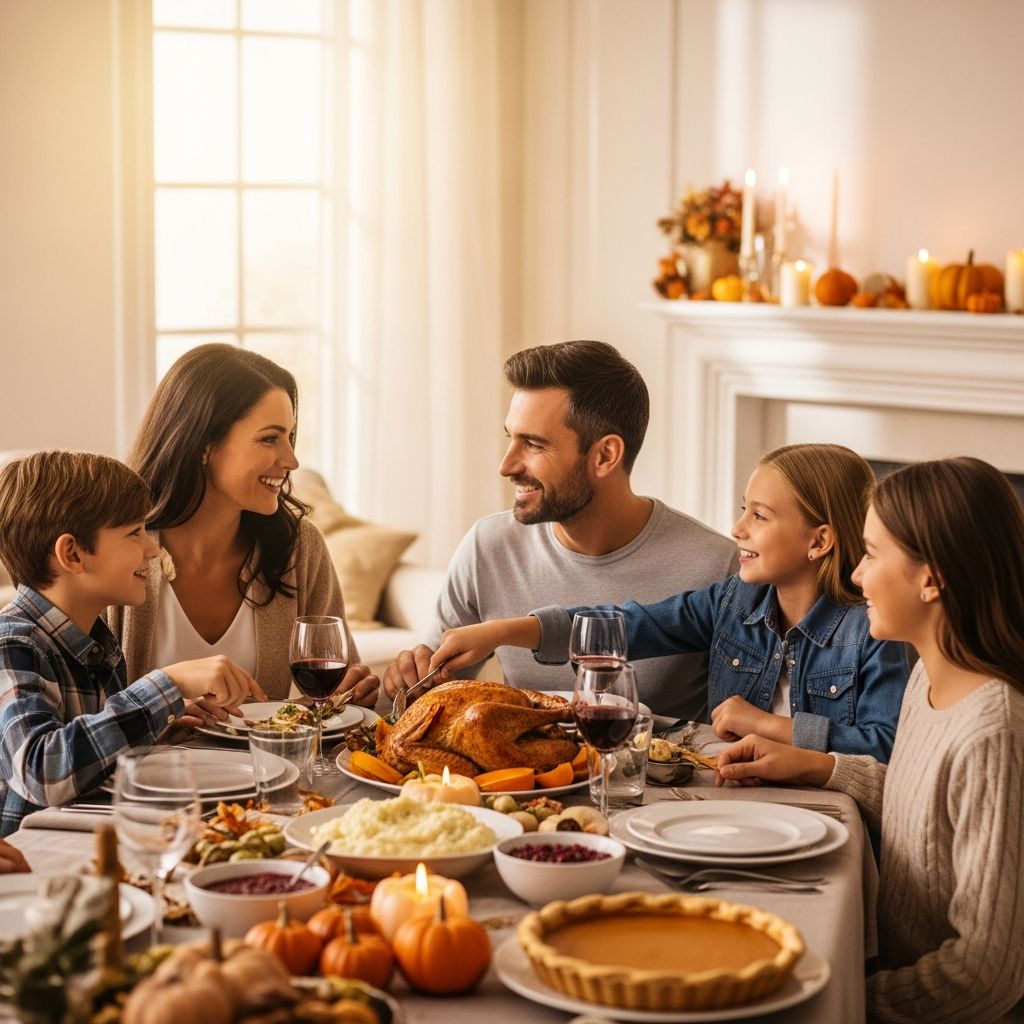
Thanksgiving dinner is often imagined as the emotional center of the day, yet it can easily turn into a chaotic rush of serving, shushing, and negotiating vegetable bites. Intentional rituals help transform the meal from “everyone eat quickly” into “we are gathered, we are listening, and everyone belongs.”
Instead of long, formal speeches that bore kids, create structures that invite short, sincere contributions from each person around the table.
The Gratitude Object
Choose a small object—perhaps a smooth stone, a leaf, or a tiny handmade token—that stays in the center of the table each year. As you begin the meal, explain that the object will travel around the table, and whoever holds it shares one thing they are thankful for.
To support children who freeze when put on the spot, offer prompts they can answer easily, such as “Someone who helped me this year,” “Something that made me laugh recently,” or “A place where I feel cozy.” Adults can model vulnerability and authenticity without pressuring kids to be profound.
Family Story Spotlight
Make space at the table for one short family story each year. You might choose a theme—like “Mom’s favorite childhood Thanksgiving,” “The time something went wrong but turned out okay,” or “The most surprising guest we ever had.”
This ritual quietly strengthens children’s sense of identity. Hearing stories about relatives, challenges, and resilience helps them feel part of a longer story that began before them and will continue after them.
Evening Rituals: Ending the Day with Warmth and Reflection
What happens after the plates are cleared often shapes how children remember the holiday. When evenings end in exhaustion, arguments over screens, or frantic cleaning, kids associate Thanksgiving with tension. A brief closing ritual softens the edges of the day.
Think of evening as the “stitching” that pulls all the day’s moments together into a memory your children can hold.
Cozy Debrief: “Roses, Thorns, and Buds”
After guests leave, or once everyone is in pajamas, gather in one room—on the floor, the couch, or even lying in a pile of blankets. Invite each family member to share:
- Rose: A favorite moment from the day.
- Thorn: Something that was hard, frustrating, or disappointing.
- Bud: Something they are looking forward to in the coming days or weeks.
This simple structure normalizes the idea that a good day can include hard moments. Children learn that it is safe to name their disappointments, and parents gain insight into how the day felt from a child’s perspective.
Starting a Yearly Gratitude Keepsake
Consider creating a single object that grows with your family over time—such as a large notebook, a fabric wall banner, or a decorative box with small note cards for each year. After your debrief, invite everyone to contribute a word, sentence, or drawing from that Thanksgiving.
Each year, revisit older entries together. Children love seeing past versions of their handwriting and artwork, and it reinforces the idea that gratitude is not a one-time performance, but an evolving record of your family’s shared life.
Helping Siblings Get Along During Thanksgiving
Holiday excitement amplifies sibling dynamics. Tired, overstimulated kids are more likely to argue over toys, seats, and attention. Instead of expecting perfect harmony, plan rituals that channel energy into cooperation and give each child structured ways to feel important.
When children know they have predictable roles and positive attention built into the day, they are less likely to seek it through conflict.
Shared Responsibilities and Special Roles
- Assign siblings joint tasks, such as arranging a snack tray or welcoming guests at the door with a simple greeting.
- Create rotating Thanksgiving roles like “Gratitude Object Keeper,” “Guest Guide,” or “Game Captain” so each child has a moment to shine.
- Pair older kids with younger cousins for a brief activity—like reading a book together or leading a short craft—to reinforce leadership and empathy.
When fights happen—and they will—treat them as normal bumps in a big day. Offer calm boundaries and short breaks instead of shaming children for “ruining” the holiday.
Managing Expectations and Holiday Stress as a Parent
Even the most heartfelt rituals cannot survive if parents are running on fumes. Much of Thanksgiving stress comes from invisible scripts about what a “good” holiday must include. Letting go of some of those scripts opens space for a calmer, more authentic day.
Intentional rituals should support you, not exhaust you. If a tradition leaves you resentful, it is a sign to edit or release it—even if it has been around for years.
Questions to Ask Before Saying Yes
- Does this activity align with our core values of connection, presence, and simplicity?
- Will adding this leave us more energized or more depleted?
- Is there a smaller, easier version of this idea that would still feel meaningful?
- Am I doing this out of joy or out of fear of judgment?
Your children would rather have a relaxed parent, a simple meal, and one or two solid rituals than a feast that required you to sacrifice your well-being. When they look back, they will remember your face and your tone of voice more than any centerpiece.
Including Distant Relatives and Blended Families
Many families celebrate Thanksgiving across multiple homes, time zones, or cultures. Rituals can be adapted to honor these realities instead of pretending they do not exist. When children feel torn between two households or miss far-away relatives, inclusive traditions help soothe those feelings.
The key is flexibility: hold on to the emotional purpose of a ritual while changing the form to fit your circumstances.
Flexible Ritual Ideas for Complex Families
- Schedule a brief video call where each household shares one thing they are thankful for, or shows one small piece of their meal.
- Invite each side of the family to contribute a favorite dish or story so children feel connected to all the branches of their family tree.
- Create a small portable ritual—a tiny gratitude notebook or a special token—that travels with the child between homes each year.
Emphasize to children that there is no single “correct” way to celebrate. What matters is that they are loved in every space they inhabit.
Examples of Simple, Sustainable Rituals
Every family is different, but a few categories of rituals tend to work especially well across ages and stages. Use these ideas as a menu, not a checklist, and adapt them freely to your culture, faith, budget, and time constraints.
Select one or two to begin with this year. You can always add more later; rituals often deepen as children grow and start contributing their own ideas.
- Movement rituals: A family walk after dessert, a silly living-room dance to one chosen song, or stretching together before bed.
- Art rituals: Drawing one picture that represents the year, decorating a paper table runner with handprints, or creating an annual photo collage.
- Service rituals: Setting aside food for a neighbor, writing a thank-you note to a teacher or community helper, or choosing toys or clothes to donate together earlier in the week.
- Comfort rituals: Reading the same short story every year, using a particular blanket during the evening debrief, or making a simple drink like hot cocoa that appears only on Thanksgiving night.
Frequently Asked Questions About Thanksgiving Family Rituals
1. How many rituals should our family have?
Start small. One morning ritual, one during the meal, and one at the end of the day are plenty. It is better to repeat a few meaningful actions consistently than to overload the day and drop everything from exhaustion.
2. What if my kids resist our new traditions?
Children often resist change at first, especially if they feel unsure or self-conscious. Keep rituals brief, playful, and low-pressure. Invite rather than force participation, and model enthusiasm yourself. Over time, familiarity usually turns resistance into anticipation.
3. How do I handle relatives who do not value these rituals?
Extended family may not understand why you are slowing down for a gratitude circle or a breathing pause. You can briefly explain that these rituals help your kids regulate and enjoy the day more, and then let your actions speak for themselves. Protecting a few minutes of connection is a reasonable boundary.
4. Can we still have meaningful rituals if we are celebrating in a small apartment or on a tight budget?
Absolutely. The most powerful rituals cost almost nothing: listening, telling stories, lighting a candle, walking outside, drawing, or writing a few words in a shared notebook. Connection is not measured in square footage or menu size.
5. What if Thanksgiving is emotionally complicated for our family?
For many people, this holiday can surface grief, family conflict, or complicated feelings about history and culture. Rituals can hold both gratitude and discomfort at the same time. You might explicitly name this to older children and choose low-key practices that emphasize gentleness, honesty, and care for one another.
Creating a Thanksgiving Your Children Will Treasure
At its best, Thanksgiving is not a performance but a pause: a yearly opportunity to notice what is good, admit what is hard, and sit together in the middle of it all with full plates and even fuller hearts. Your children are not measuring your success by the flakiness of the pie crust or the shine of the floors.
They will remember that you looked them in the eyes, listened to their stories, and invited them into rituals that made them feel important. Start where you are, with what you have, and let this year’s Thanksgiving become the first chapter of a new, more connected family tradition.