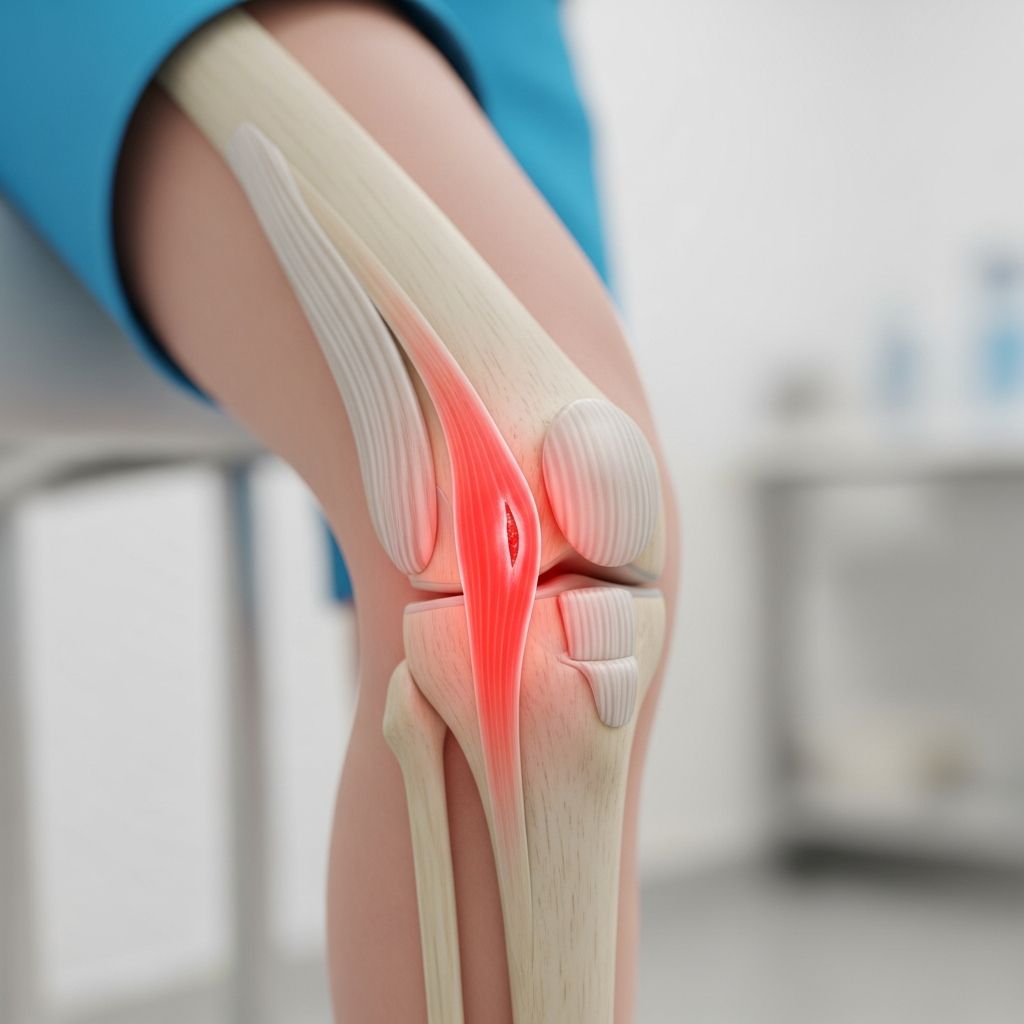
The medial collateral ligament (MCL) is a vital band of tissue on the inner side of the knee that provides stability and prevents excessive sideways movement. In children, who are often involved in sports like soccer, basketball, or skiing, MCL injuries are common due to their active lifestyles and developing bodies. These injuries occur when force is applied to the outer knee, pushing it inward, or from sudden twists. Understanding this injury helps parents support their child’s recovery effectively.
Understanding the Anatomy of a Child’s Knee
A child’s knee joint is more flexible than an adult’s because their bones are still growing, with growth plates that are softer and more prone to associated damage. The MCL connects the femur (thigh bone) to the tibia (shin bone) and works with other ligaments like the ACL and LCL to maintain knee integrity. In kids, injuries here can affect mobility and play, but their healing potential is often better due to robust blood supply and regenerative capacity.
How MCL Injuries Happen in Young Athletes
MCL sprains or tears in children typically result from direct impacts in contact sports, such as football tackles, or non-contact pivots in gymnastics and tennis. A valgus force—pressure forcing the knee inward—is the primary mechanism. Other causes include falls during biking or rough play. Unlike adults, children’s injuries may involve bone bruises near growth plates, requiring careful monitoring to avoid long-term issues.
Spotting the Signs: Symptoms Parents Should Watch For
Immediate signs include sharp pain on the knee’s inner side, often with a popping sensation. Swelling appears quickly, sometimes with bruising that tracks down the leg. Children may limp, avoid weight-bearing, or report knee instability, feeling like it might “give out” during turns. In severe cases, the knee buckles, making walking difficult. Mild injuries allow some activity, but pain worsens with side-to-side moves.
- Pain: Localized to inner knee, intensifies with pressure or movement.
- Swelling: Rapid onset, may limit knee bending.
- Instability: Knee feels loose, especially laterally.
- Tenderness: Pain when pressing MCL area.
- Stiffness: Reduced range of motion post-injury.
Grading the Severity of MCL Damage
MCL injuries are classified into three grades based on damage extent, guiding treatment.
| Grade | Description | Symptoms | Recovery Time |
|---|---|---|---|
| I (Mild) | Minor stretching, few fibers torn | Mild pain, minimal swelling, stable knee | 1-3 weeks |
| II (Moderate) | Partial tear | Moderate pain/swelling, some instability | 4-6 weeks |
| III (Severe) | Complete tear | Severe pain, major swelling/instability | 6-12 weeks, possible surgery |
Grade I often heals without intervention, while Grade III may need bracing or surgery if other structures are damaged.
Getting a Proper Diagnosis
Parents should seek medical evaluation promptly. Doctors perform physical tests like the valgus stress test, applying outward pressure to assess laxity. Imaging includes X-rays to rule out fractures (critical in kids), MRI for ligament visualization, or ultrasound. Early diagnosis prevents complications like chronic instability.
First Aid: What to Do Immediately After Injury
Use the POLICE protocol: Protect, OLoad, ICE, Compress, Elevate. Avoid HARM (Heat, Alcohol, Running, Massage). Ice for 15-20 minutes every 2-3 hours, elevate above heart level, and use crutches if needed. Over-the-counter NSAIDs like ibuprofen reduce pain and inflammation, but consult a pediatrician first.
Treatment Options Tailored for Children
Most pediatric MCL injuries (Grades I-II) respond to conservative care. Bracing stabilizes the knee, allowing protected movement. Crutches offload weight initially. Severe cases may require surgical reconstruction, especially with multi-ligament damage, though rare in isolated MCL tears.
- R.I.C.E./POLICE for acute phase.
- Knee brace or taping.
- NSAIDs for pain/swelling control.
- Physical therapy progression.
- Surgery for Grade III with instability.
Rehabilitation Roadmap: From Rest to Return to Play
Rehab phases build progressively. Phase 1 (0-2 weeks): Pain/swelling control, gentle range-of-motion. Phase 2 (2-4 weeks): Strengthening quads, hamstrings, glutes. Phase 3 (4+ weeks): Sport-specific agility, balance training. Full return takes 4-12 weeks, monitored by a therapist.
Key Strengthening and Stretching Exercises for Kids
Start exercises once pain subsides, under guidance. Aim for 2-3 sets of 10-15 reps daily.
- Quad Sets: Sit, tighten thigh muscle, hold 5 seconds. Builds quad strength without movement.
- Straight Leg Raises: Lie down, lift straight leg 12 inches, hold 5 seconds. Targets quads/hip flexors.
- Heel Slides: Slide heel toward buttocks to bend knee gently, improving flexion.
- Standing Quad Stretch: Pull heel to buttock, hold 30 seconds per side for flexibility.
- Calf Stretch: Wall push with back leg straight, hold 30 seconds.
- Single-Leg Balance: Stand on injured leg 30 seconds, progresses to eyes closed.
- Side-Lying Hip Abduction: Lift top leg sideways, strengthens outer hip stabilizers.
Progress to biking, elliptical, then jogging. Incorporate balance board for proprioception.
Expected Recovery Timelines by Injury Grade
Healing varies by age, health, and compliance. Younger kids recover faster due to better circulation.
- Grade I: 1-3 weeks to normal activity.
- Grade II: 4-6 weeks, with bracing.
- Grade III: 6-12 weeks; surgery adds 3-6 months.
Monitor for setbacks like increased swelling.
Preventing MCL Injuries in Active Children
Prevention focuses on preparation and technique. Ensure proper warm-ups, strength training for legs/core, and sport-specific drills. Use fitted protective gear, teach safe landing/pivoting, and limit overuse. Annual physicals screen for risks like muscle imbalances.
- Balanced fitness: Strengthen inner/outer thighs, core.
- Neuromuscular training: Plyometrics, agility ladders.
- Proper footwear and bracing for high-risk sports.
- Rest days to avoid fatigue-related injuries.
When to Worry: Complications and Red Flags
Most heal fully, but watch for persistent instability, locking, or giving way, signaling possible ACL involvement or growth plate issues. Chronic pain may indicate incomplete healing. Seek re-evaluation if no improvement in 2 weeks.
Frequently Asked Questions (FAQs)
Can children return to sports after an MCL injury?
Yes, with proper rehab, most kids return fully functional in 4-12 weeks, often stronger.
Is surgery common for MCL tears in kids?
No, conservative treatment suffices for 90%+ cases; surgery is for severe, combined injuries.
How can I help my child manage pain at home?
Ice, elevation, NSAIDs, and distraction activities; avoid heat initially.
What role does bracing play in recovery?
Braces provide stability, protect healing tissue, and allow early motion.
Are MCL injuries more common in boys or girls?
Slightly more in boys due to contact sports, but girls have higher ACL rates.
References
- Medial Collateral Ligament (MCL) Knee Exercises and Rehab — AskDoctorJo (YouTube). 2023. https://www.youtube.com/watch?v=q7_F6w6reOc
- MCL/LCL Sprain Symptoms, Diagnosis, and Treatment — UPMC. 2024-10-15. https://www.upmc.com/services/orthopaedics/conditions/mcl-lcl
- Medial collateral ligament injury (MCL): Symptoms and causes — Bupa UK. 2025-01-10. https://www.bupa.co.uk/health-information/knee-pain/medial-collateral-ligament-mcl-injury
- Medial Collateral Ligament (MCL) Injuries — Southern California Orthopedic Institute (SCOI). 2024. https://scoi.com/specialties/knee/mcl-injury/
- MCL Sprain: Pain Relief and Treatment Options — OrthoExperts. 2024-05-20. https://orthoexperts.com/mcl-sprain-pain-relief-and-treatment-options/
- MCL Tears, Sprains, & Other Injuries: Symptoms & Treatment — WebMD. 2025-02-14. https://www.webmd.com/pain-management/knee-pain/mcl-injury-what-to-know
- Medial Collateral Ligament Tear Ventura CA — Orthopedic Surgeons Ventura. 2024. https://www.orthopedicsurgeonsventura.com/medical-collateral-ligament-tears-mcl/