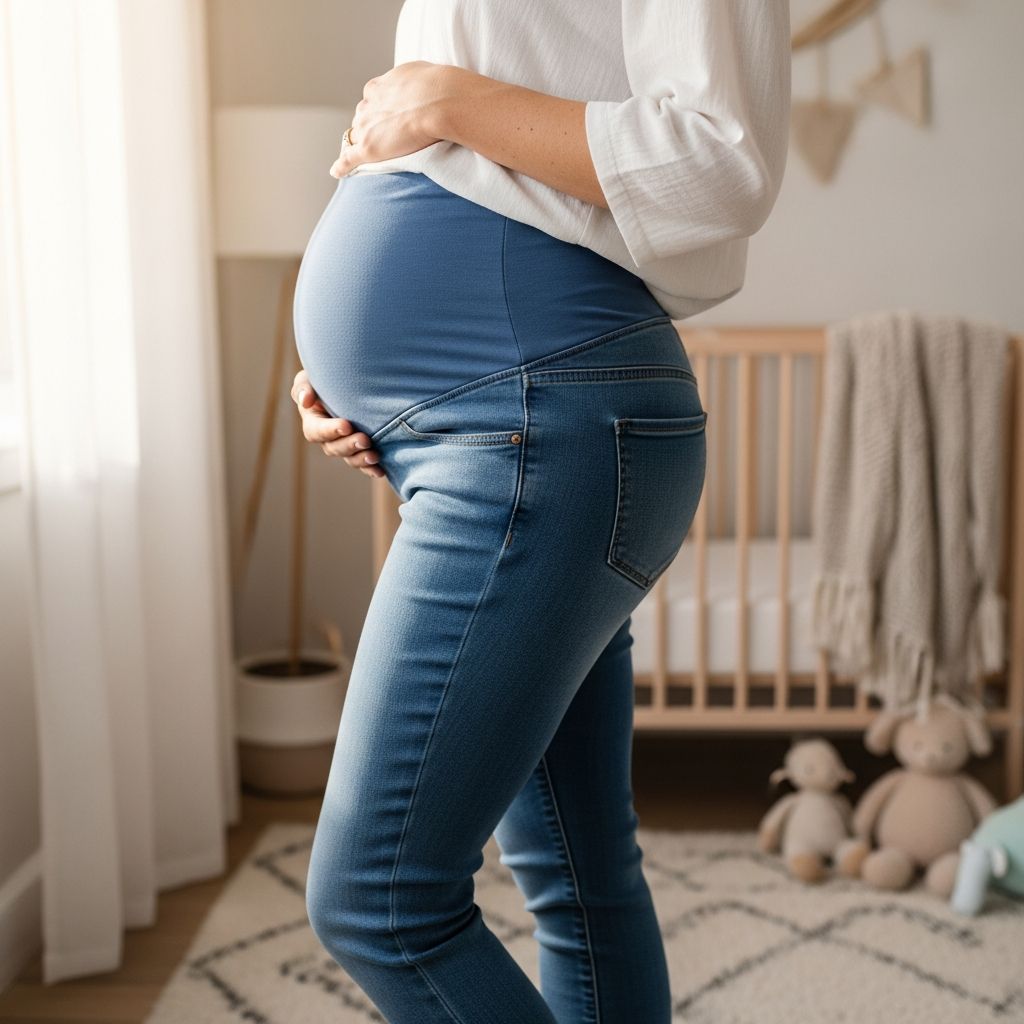
Maternity jeans have evolved from stiff, awkward basics into thoughtfully designed pieces that can carry a pregnant person from early bloating to the last trimester and beyond while still looking like their usual style.
This guide explains how maternity jeans work, which cuts and waistbands are available, and how to choose pairs that feel good, look polished, and fit your changing body at every stage.
Why Maternity Jeans Are Worth It
Many expectant parents try to stay in regular jeans as long as possible, but dedicated maternity denim is engineered with extra stretch, strategic seams, and bump-friendly waistbands that standard jeans simply do not offer.
A well-chosen pair can reduce pressure on the abdomen, help prevent waistband digging, and provide better mobility as ligaments soften and body shape changes during pregnancy.
- Gentle support around the belly without compression.
- More room through hips and seat to match pregnancy weight distribution.
- Stretch recovery to avoid sagging knees and baggy backs after a few hours of wear.
Understanding Maternity Waistband Styles
The waistband is the key feature that separates maternity jeans from regular denim, and different designs suit different body types and comfort preferences.
Knowing the main waistband options helps you narrow down what to try first instead of buying pairs that slide down or feel restrictive.
Over-the-Bump Panels
Over-the-bump jeans use a soft, stretchy knit panel that rises above the belly button and hugs the torso, creating a smooth line under clothing.
This style is popular in the second and third trimesters for people who like feeling securely covered and gently supported around the whole bump.
- Feels secure and reduces the risk of jeans slipping down.
- Can provide light back and belly support without feeling like shapewear.
- Often works well under longer tops and fitted T-shirts.
Under-the-Bump Bands
Under-the-bump jeans sit lower on the hips or just under the belly, using a contoured waistband or low elastic panel instead of a full fabric extension.
These styles suit those who dislike fabric over the stomach or tend to run warm and want more airflow around the midsection.
- Feels closer to traditional low-rise jeans while accommodating the bump.
- Good in early pregnancy and postpartum when the belly size fluctuates.
- Works nicely with shorter tops or half-tucked shirts.
Side-Panel and Hybrid Waistbands
Some maternity jeans retain a regular-looking waistband in front and back but hide stretchy panels at the sides to expand with the belly, giving a more classic denim appearance.
Hybrid designs sometimes combine a partially elastic waistband with small knit inserts for a subtle look that transitions easily from pregnancy into everyday wear after birth.
- Ideal for office settings or dressier outfits when you want jeans that look non-maternity.
- Can be easier to keep in rotation after pregnancy when the belly is shrinking.
- Often chosen by people who dislike high panels but still want stretch.
Common Fits and Cuts in Maternity Jeans
Maternity jeans now mirror the same variety of cuts offered in standard denim, from skinny to wide leg, making it easier to stick to a personal style while pregnant.
The main difference is the added stretch content and shaped panels that let these jeans flex and recover as your body changes week by week.
| Fit | Key Features | Best For |
|---|---|---|
| Skinny | Close fit from hip to ankle, high stretch denim, easy to tuck into boots. | Streamlined outfits, layering with long sweaters and tunics, petite frames. |
| Slim or Straight | Skims the leg without clinging, versatile for casual or smart-casual looks. | Everyday wear, office-friendly outfits, those who dislike very tight legs. |
| Bootcut | Slight flare from knee downward, balances hips and bump visually. | Wearing with heeled boots, creating a long leg line, curvier body types. |
| Wide or Relaxed | Roomy through thigh and hem, soft drape, often with higher rise. | Maximum comfort, modern silhouettes, later trimesters with swelling. |
| Cropped or Ankle Length | Shorter inseam that hits above ankle, works well with flats or sandals. | Warm weather, showcasing shoes, people who find full-length jeans hot. |
Fabric, Stretch, and Support
Most maternity jeans blend cotton with elastane, spandex, or similar fibers to allow the denim to flex and return to shape rather than bagging out after a day of wear.
Look for jeans that feel soft against the skin yet have enough structure to hold their shape, especially around the knees, seat, and waistband.
- Higher stretch content usually feels more comfortable as the bump grows, but very thin fabrics may show lines from undergarments.
- Thicker denim with moderate stretch can offer a more polished look and better durability.
- Some winter-ready jeans incorporate brushed linings or fleece for extra warmth without needing bulky layers.
How to Choose the Right Size
Most brands design maternity jeans so that your pre-pregnancy size is the starting point, adjusting the waist and hip area to accommodate growth rather than forcing you to size up blindly.
Because sizing can still vary, checking brand-specific charts and reading notes on fit can save time on returns and exchanges.
- Use your current hip and thigh measurements rather than only relying on old jean tags.
- Check inseam lengths, especially if you plan to wear jeans with different shoe heights.
- Consider sizing up if you are carrying multiples or if your weight tends to fluctuate significantly during pregnancy.
- Pay attention to user feedback on whether a style runs small, large, or true to size.
Matching Maternity Jeans to Body Shape
Maternity jeans should follow the same principles as regular denim when it comes to body shape, with pocket placement, leg width, and rise all affecting how balanced the silhouette appears.
The goal is not to disguise the bump but to create comfortable proportions that make outfits feel intentional rather than thrown together.
- Curvier hips often pair well with bootcut or wide-leg jeans to visually balance the upper and lower body.
- Those with straighter figures may like skinny or slim jeans with back pockets placed slightly higher for shape.
- If you dislike low rises, seek over-bump styles that keep the waistband above sensitive areas and avoid cutting into the belly.
Styling Ideas for Everyday Wear
Maternity jeans can anchor a pregnancy wardrobe when paired with tops and layers you already own, making it possible to buy only a few dedicated pieces rather than a full closet of special items.
Playing with proportions, color, and texture keeps outfits interesting even when you feel like wearing the same comfortable pair repeatedly.
- Pair dark-wash skinny maternity jeans with a long cardigan and ankle boots for a streamlined, office-friendly look.
- Try wide-leg or straight maternity jeans with a fitted maternity tank and an open button-down for a relaxed weekend outfit.
- Use an over-the-bump panel as a smooth base for fitted T-shirts or ribbed knits that highlight the bump.
- Roll cropped jeans slightly at the hem to show off sneakers or sandals in warmer months.
Transitioning from Early to Late Pregnancy
People often underestimate how much their comfort needs change between trimesters, so it can be helpful to think of maternity denim in stages rather than expecting one pair to do everything.
Having at least two silhouettes and possibly two waistband types allows you to adapt as your bump grows and your energy levels shift.
- Early months: Side-panel or under-the-bump jeans feel closest to regular denim and accommodate initial bloating.
- Mid-pregnancy: Over-the-bump panels begin to shine as the belly becomes more pronounced and needs extra support.
- Late third trimester: Relaxed or wide-leg cuts with high panels can feel best when joints are more sensitive and movement is slower.
- Postpartum: Under-the-bump or side-panel styles often transition well as your body gradually changes again.
Caring for Maternity Denim
Proper care extends the life of maternity jeans so they stay comfortable through the entire pregnancy and possibly for future pregnancies or hand-me-downs.
Because panels and stretch fibers can be more delicate than traditional rigid denim, gentle washing habits make a noticeable difference.
- Wash jeans inside out in cool or lukewarm water to help preserve color and elasticity.
- Avoid high-heat drying; air-dry or tumble dry low to prevent shrinking of panels and waistband.
- Limit washing to when the jeans are actually dirty, spot-cleaning small marks if possible.
- Store folded instead of hanging by the panel to avoid stretching the knit section.
Smart Shopping Tips for Maternity Jeans
Because pregnancy is temporary, it is understandable to want good value from any clothing purchase, and choosing the right maternity jeans can reduce the need for multiple impulse buys.
Thinking strategically about your lifestyle, climate, and personal style helps you build a small but effective rotation of denim that actually gets worn.
- Start with one everyday pair in a dark wash that can be dressed up or down for most situations.
- Add a second pair in a different cut—such as skinny plus straight, or straight plus wide leg—to keep outfits from feeling repetitive.
- Consider seasonal needs, like fleece-lined jeans if you are heavily pregnant in winter or cropped styles for hot climates.
- Check return policies before ordering, as fit can vary widely between brands.
Frequently Asked Questions About Maternity Jeans
When should maternity jeans be purchased?
Many people switch to maternity jeans between the late first trimester and mid-second trimester when regular waistbands begin to feel tight or dig into the abdomen, especially when sitting.
However, timing is personal, and some prefer to buy early for comfort during bloating, while others wait until their usual jeans no longer zip or fasten comfortably.
How many pairs are actually necessary?
For most, two to three pairs are enough: one versatile daily pair, plus one or two alternatives in different washes or cuts to adapt to work, weekends, and special occasions.
Those who wear jeans almost every day may appreciate one additional backup pair so there is always a clean option while others are in the wash.
Are maternity jeans safe for the baby?
Maternity jeans are designed to avoid excessive pressure on the abdomen by distributing support across soft, stretchy panels rather than tight waistbands, which helps maintain comfort and movement.
As long as a pair does not feel restrictive, cut into the belly, or cause pain when sitting or bending, it is generally considered a comfortable clothing option during pregnancy.
Can maternity jeans be worn after birth?
Many people continue wearing maternity jeans for weeks or months after delivery while their bodies recover, especially styles with under-the-bump or side panels that resemble regular denim.
Over-the-bump designs can also feel gentle around a healing midsection, particularly after a cesarean birth, before transitioning back to traditional waistbands.
Is it better to buy maternity jeans in person or online?
Trying on jeans in person can be useful to understand which waistbands and cuts feel comfortable, but online shopping often provides a wider range of inseams, washes, and sizes.
Whichever route you choose, checking size charts, reading feedback about fit, and confirming return options can make the process smoother.
Final Thoughts on Finding Your Perfect Pair
The best maternity jeans are not defined by a particular brand or trend but by how well they fit your body, lifestyle, and personal taste over the course of pregnancy and beyond.
By learning the differences in waistband styles, cuts, and fabrics, and by focusing on comfort and flexibility, you can build a small set of denim pieces that help you feel like yourself while your body does the hard work of growing a baby.