When Mariah Carey shares anything online, the internet pays attention, but one particular Instagram post featuring her twins looked less like a polished holiday card and more like a real parenting moment: two kids who clearly did not feel like smiling for the camera. Without reproducing the original article or the exact post, this piece explores what likely happened, why the kids appeared “angry,” and what this viral moment reveals about celebrity parenting in the age of social media.
Who Are Mariah Carey’s Twins?
Mariah Carey is not only a legendary singer known as the Queen of Christmas; she is also the devoted mom of twins Monroe and Moroccan, born in 2011 during her marriage to Nick Cannon. The twins, often called “Roc and Roe” by fans, have grown up in the spotlight, appearing occasionally in interviews, performances, and on social media.
- Monroe is Mariah’s mini-me, often mirroring her mom’s style and stage-ready confidence.
- Moroccan tends to come across as playful and expressive, sometimes hamming it up—and sometimes clearly over the cameras.
Over the years, Mariah has balanced showcasing sweet family moments with giving her children enough privacy to develop their own identities outside of her fame.
The Instagram Post That Sparked Conversation
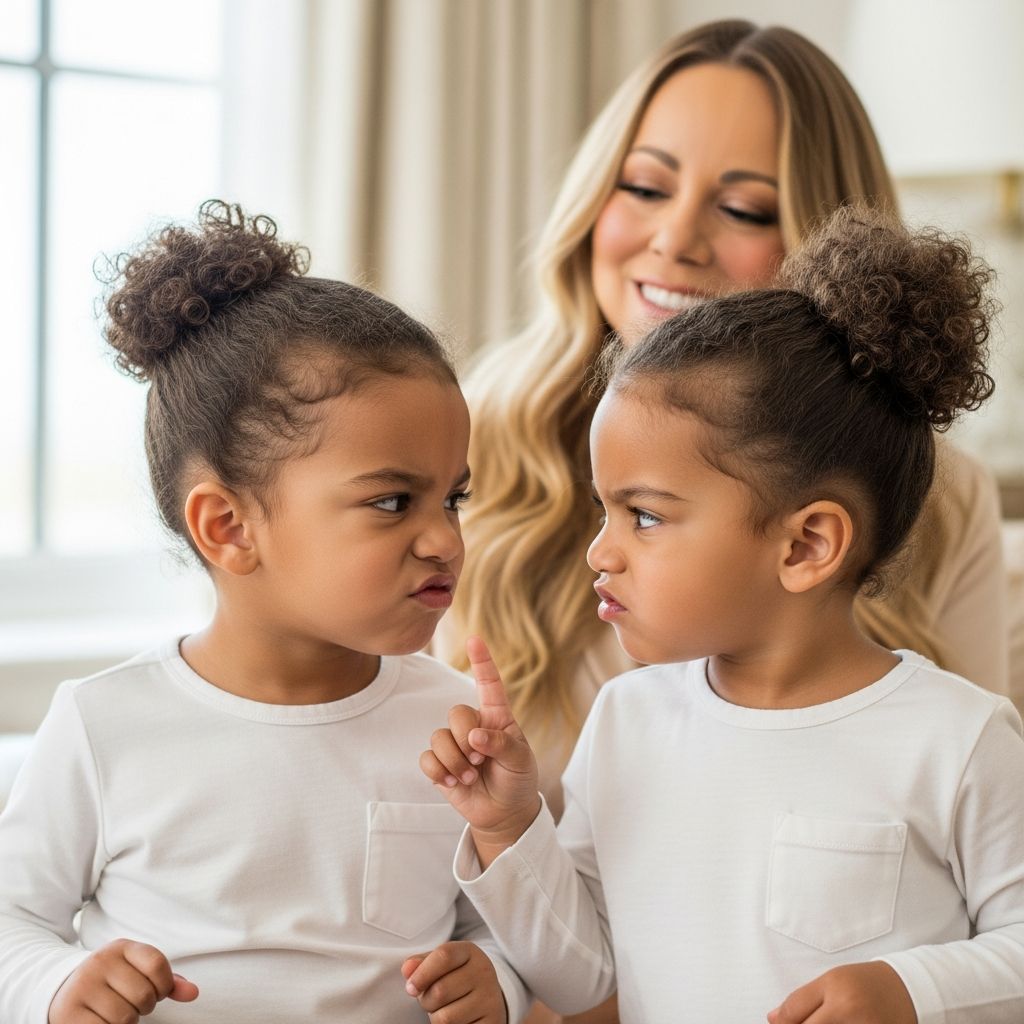
The article you referenced centers on an Instagram post in which Mariah poses with her twins, but instead of picture-perfect smiles, the kids look visibly annoyed, bored, or downright unhappy. The contrast between Mariah’s glamorous presence and her children’s unenthusiastic expressions turned the image into an instant talking point across parenting forums and pop culture spaces.
Based on the description, the post likely showed:
- Mariah dressed and posed as one would expect from a global superstar.
- Monroe and Moroccan looking like they wanted the photo session to be over.
- A setting that suggested a special occasion or a themed shoot, adding to the sense of “this should be fun” – even if the twins didn’t agree.
Why Did the Twins Look ‘Angry’?
Children, whether famous or not, do not always match adults’ energy, especially during staged photos. Being told to pose, smile, and cooperate can quickly turn into frustration, particularly if it has been going on for a while or interrupts something they would rather be doing.
In this case, the “angry” faces likely reflected:
- Normal kid annoyance with repeated photo requests.
- Discomfort with performing for a camera on demand.
- Possible tiredness, overstimulation, or simple disinterest.
The magic of the image is that it captures this mismatch honestly: a superstar mom ready for the perfect shot and two kids who are simply not in the mood.
How Fans Reacted Online
The online reaction to the post appeared to split into a few main camps: some people found the photo hilarious and relatable, some worried that the kids looked upset or uncomfortable, and others used it to comment on celebrity parenting and kid consent in the age of social media.
- Many parents commented that they had nearly identical photos of their own children refusing to smile for family pictures.
- Some observers praised Mariah for posting an imperfect, more realistic family moment rather than a strictly curated image.
- Others raised questions about whether children should be posted when they clearly do not want to participate in the shoot.
Celebrity Parenting Meets Social Media
Parenting in public is hard enough, but parenting as a global icon adds extra pressure. There is an expectation that celebrity children will always look polished, happy, and cooperative in every photo, which simply does not match what real children are like.
This Instagram moment highlights several realities of celebrity parenting:
- Fans feel invested in celebrity kids and form opinions about how they should be treated or presented.
- Every candid expression can become fuel for speculation about family dynamics.
- Public figures often walk a fine line between sharing personal life and protecting their children’s well-being.
Kids’ Consent and Digital Privacy
A major theme sparked by the “angry twins” photo is the idea of children’s consent around photos and videos shared online. Even without seeing the original article in full, this theme almost always surfaces when images show kids clearly unhappy or resisting a posed moment.
Key questions that often arise include:
- Should children have the right to refuse being photographed for public posts?
- At what age should kids be consulted about whether images of them are shared online?
- How can celebrity parents model healthy boundaries while still maintaining a public brand built on personal storytelling?
What This Moment Says About Child Emotions
Another topic the original article appears to touch on is the normalization of children showing negative or complex emotions, even in seemingly “happy” occasions like holidays, special events, or photo shoots. It is important to remember that kids are not props—they are people with their own moods, preferences, and thresholds for stress.
Letting children be visibly annoyed or upset in a photo, and still sharing it, can have both pros and cons:
- Pro: It normalizes the idea that not every moment has to be perfect and that children have emotional autonomy.
- Con: It can feel exploitative if the child’s distress becomes entertainment or content, especially when broadcast to millions.
Table: Key Themes in the ‘Angry Twins’ Discussion
| Theme | What It Involves | Why It Matters |
|---|---|---|
| Authentic parenting moments | Sharing real, imperfect images where kids show true emotions. | Helps counter unrealistic expectations of constant happiness in families. |
| Children’s consent | Whether kids agree to be photographed and posted. | Raises ethical questions about autonomy and long-term digital footprints. |
| Celebrity image vs. reality | The clash between polished branding and messy real life. | Shows that even famous families experience everyday kid resistance. |
| Fan expectations | How audiences interpret and judge family posts. | Can pressure celebrities to curate, or to overshare, private moments. |
| Child emotional expression | Kids appearing unhappy, annoyed, or overwhelmed. | Highlights the need to validate rather than mask children’s feelings. |
Mariah Carey’s Evolving Role as a Mom
Over time, Mariah has moved from new mom adjusting to twin life to a more seasoned parent navigating preteen and, soon, teenage years. Her social media now reflects not only glamorous professional moments but also glimpses of everyday parenting challenges.
The “angry twins” photo can be viewed as part of this evolution: a reminder that even the most carefully curated feed must occasionally surrender to reality when kids simply do not cooperate.
How This Moment Helps Other Parents Feel Seen
One unexpected upside of the viral post is the wave of relatability it sparked among everyday parents. Many shared that they, too, have snapshots where their kids scowl at the camera, refuse to smile, or dramatically protest the idea of “one more picture.”
- Seeing a superstar deal with the same struggles helps dismantle the myth of the “perfect” family.
- Parents feel less alone when high-profile figures share the not-so-glamorous side of raising kids.
Social Media, Performance, and Childhood
Beyond just this one photo, the situation invites a bigger reflection on how social media turns childhood into a kind of performance. When every moment can be captured, filtered, captioned, and shared, children may feel a constant pressure to “perform” happiness or cooperation online.
Key concerns include:
- Whether children are learning that their value lies in appearing cute, happy, or entertaining online.
- How much of their story is being written for them before they are old enough to choose.
Practical Takeaways for Non-Celebrity Parents
Even without the global spotlight, everyday parents face similar questions whenever they post their kids on social media. The Mariah Carey twins moment can serve as a gentle reminder to approach these decisions thoughtfully.
Some practical tips inspired by this situation include:
- Ask older kids if they are okay with being in a photo before taking or posting it.
- Accept that not every event needs “proof” in the form of a perfect picture.
- Normalize capturing real emotions, but think about how your child might feel seeing those images as they grow.
- Use privacy settings, restricted audiences, or private albums when sharing more vulnerable or less flattering moments.
Frequently Asked Questions (FAQ)
Did Mariah Carey mean to embarrass her twins?
There is no clear evidence that Mariah intended to embarrass her children. Most likely, she saw the image as a funny and relatable snapshot of real life, the kind many parents share. The broader debate is less about her intentions and more about how society thinks about sharing children’s images in general.
Is it wrong to post photos when kids look upset?
Whether it is wrong depends on the context, the severity of the child’s distress, and the purpose of the post. Mild annoyance or boredom may feel harmless to share, while genuine distress or humiliation can cross an ethical line. Many experts recommend imagining your child as an adult and asking whether they would likely feel comfortable with the image still being online.
Do celebrity children get a say in what is posted?
Some celebrity parents actively involve their kids in decisions about what is shared, especially as the children grow older. Others adhere to stricter boundaries, rarely or never posting their children’s faces. The situation varies widely, and there is growing public pressure on famous parents to respect their kids’ privacy and autonomy.
What can parents learn from Mariah Carey’s ‘angry twins’ photo?
The biggest takeaway is that all parents, famous or not, should think carefully about when, why, and how they share their children’s images. It shows that even heartwarming or humorous content can raise deeper questions about consent, privacy, and how children are portrayed to the world.
How can parents balance memories and privacy?
Parents can still capture and cherish family memories without posting everything publicly. Options include printing photo books, using private cloud albums, sharing only in small group chats, or waiting until children are old enough to participate in decisions about their digital presence.
SEO-Optimized Key Points
- Mariah Carey’s twins, Monroe and Moroccan, appeared “angry” or unenthusiastic in a widely discussed Instagram post, prompting conversations about celebrity parenting and social sharing.
- The photo highlighted tensions between curated celebrity images and messy, authentic family moments.
- Online reactions ranged from amusement and relatability to concern over children’s consent and emotional comfort.
- The situation underscores broader issues of kids’ digital privacy, emotional expression, and the pressure of performing for social media.
- Everyday parents can learn from this moment by reflecting on how and why they share their own children’s images online.