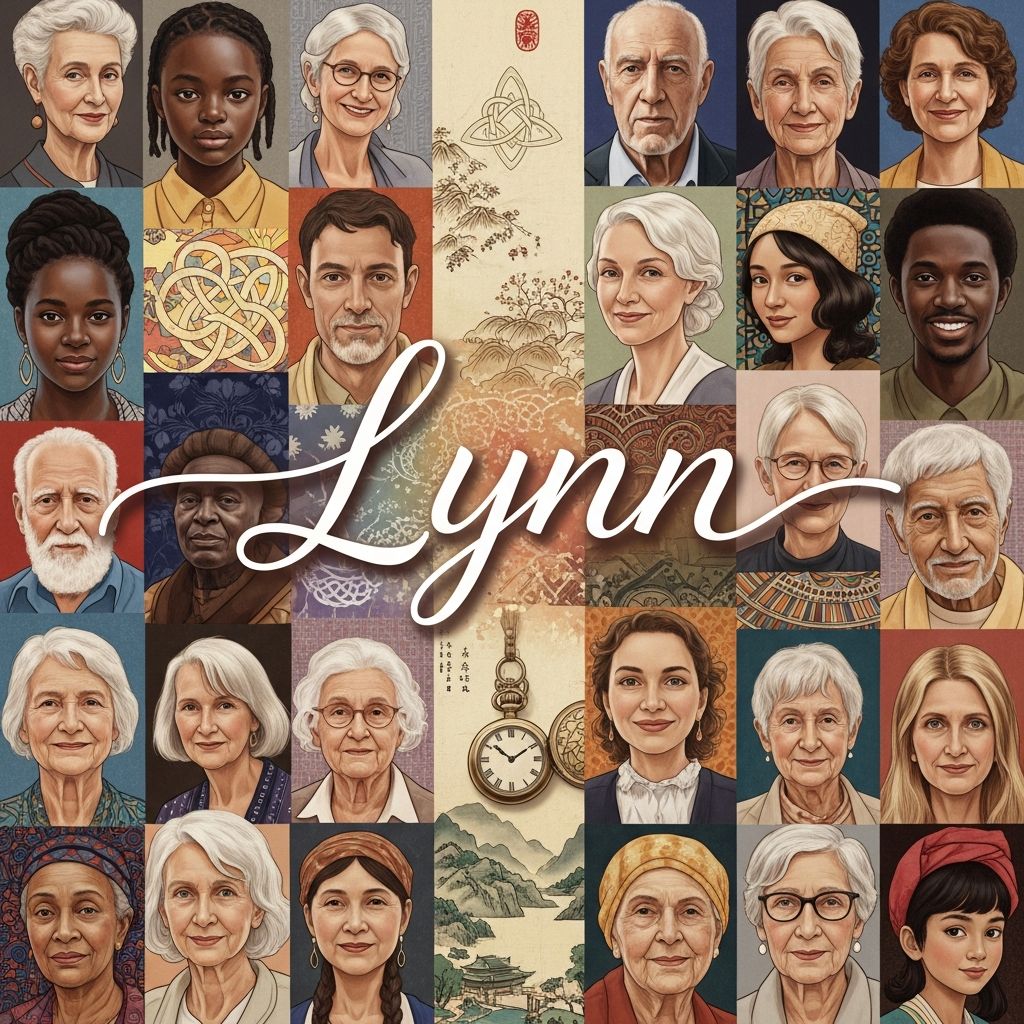
Understanding the Name Lynn: A Journey Through Time and Culture
The name Lynn carries a rich tapestry of cultural heritage, linguistic evolution, and geographical significance that spans continents and centuries. What began as a geographical descriptor rooted in natural features has transformed into a name embraced by millions worldwide. Whether encountered as a first name, middle name, or surname, Lynn represents a fascinating intersection of Celtic traditions, English language development, and modern naming conventions.
The Linguistic Foundations: Where Lynn Comes From
The etymology of Lynn branches into multiple linguistic traditions, each contributing unique layers of meaning and significance. The most prominent origin traces to Welsh heritage, where the word “llyn” directly translates to “lake” or “waterfall.” This connection to natural water features reflects the Celtic appreciation for landscape and geography in naming traditions. The Welsh roots emphasize the importance of geographical landmarks in early naming practices, where surnames and given names often described the environment surrounding a family’s residence or territory.
Beyond Welsh origins, Lynn connects to Old English linguistic traditions through the element “hlynn,” which similarly conveyed meanings related to water features such as lakes and pools. This parallel development across different Germanic and Celtic language families suggests that the concept of water-based names held universal appeal across multiple European cultures.
The Irish dimension adds another significant layer to Lynn’s linguistic heritage. In Gaelic traditions, the name emerged as “Ó Floinn,” derived from the word “flann,” which means “ruddy” or “red-complexioned.” This Irish iteration represents a distinctly different meaning, focusing on physical characteristics rather than geographical features. The Gaelic version reflects Irish naming conventions that often incorporated descriptive elements about appearance or temperament, creating surnames that functioned as historical records of family traits and lineages.
Historical Development: From Surname to Given Name
The transformation of Lynn from surname to given name represents a significant shift in naming conventions, particularly during the twentieth century. Originally, Lynn functioned primarily as a surname or place name, anchoring families to specific geographical regions and social standings. The transition to widespread use as a first name gained considerable momentum during the mid-twentieth century, when naming practices became more flexible and individualized.
A particularly influential factor in this evolution was the emergence of Lynn as a shortened or diminutive form of longer names. Linda, one of the most popular names of the 1940s and 1950s, spawned numerous variations, with Lynn serving as an elegant abbreviated form. This relationship between Lynn and Linda demonstrates how naming trends cascade through generations, with popular names creating offspring variations that eventually establish independent identities and popularity trajectories.
The development of Lynn as a standalone name reflected broader cultural shifts toward shorter, more modern nomenclature. As societies moved away from longer, more formally structured names, Lynn offered a concise yet distinguished option that retained connection to its historical roots while embracing contemporary preferences.
Geographic and Cultural Variations Across Regions
The name Lynn exhibits fascinating variations as it traveled across different cultures and geographical regions. Scandinavian countries embrace “Linn” as their preferred spelling variation, while Germanic traditions produced “Linde,” which carries associations with the linden tree and symbolizes concepts of peace and protection. Eastern European cultures developed “Linka” as their regional adaptation, demonstrating how naming conventions adapt to linguistic phonetics and cultural preferences.
French-speaking populations utilize “Linette,” adding a distinctly romantic and refined quality through diminutive suffixes common in Romance languages. The more elaborate “Lynette” represents another popular variation, particularly in English-speaking regions where it gained acceptance during the twentieth century. These variations highlight how a single name concept transforms across linguistic boundaries while maintaining recognition and connection to its root origins.
Masculine variants deserve particular attention, as they demonstrate Lynn’s gender-neutral potential. “Linus,” derived from Latin traditions, and “Flynn,” which has experienced significant growth as an independent masculine given name in recent decades, both share phonetic and etymological connections to Lynn. Flynn particularly merits discussion, as it has transitioned from being primarily recognized as an Irish surname to becoming an increasingly popular given name, especially in contemporary naming practices.
Irish Heritage and Family Roots
The Irish dimension of Lynn’s heritage deserves comprehensive exploration, as it represents one of the name’s most historically significant lineages. The surname arose independently in several regions throughout Ireland, with the oldest documented line claiming descent from a sept of Ó Floin located in Armagh, Ulster. This branch positioned itself as a senior component of Clanna Rury of Ulidia, with genealogical claims extending back to King Colla Uais, a legendary fourth-century Irish monarch.
The surname’s Irish origins trace further back through ancestral lines to an ancestor known simply as Flann, described as “the man with the red complexion,” whose son established the O’Flainn lineage. This genealogical structure exemplifies how Irish naming conventions preserved family history through successive generations, with surnames functioning as living records of ancestry and descent.
Early Irish documentation places the Lynn family in Tuitre, now known as Antrim, where they held territorial authority as Lords of Tuitre. The family maintained significant presence throughout Ireland’s four provinces, with particular strength in Ulster near Lough Neagh. This geographical distribution indicates the family’s social prominence and the widespread recognition of their lineage throughout Irish society.
Spelling Variations and Their Origins
The transformation of Lynn across historical records reveals important insights into medieval administrative practices and language evolution. During the Middle Ages, scribes and church officials recorded names based primarily on pronunciation rather than standardized spelling, a practice that generated numerous legitimate variations of the same surname. This phonetic approach to transcription meant that a single individual might appear under multiple different spellings throughout historical documents, depending on which clerk recorded their name and how they interpreted its pronunciation.
| Spelling Variation | Geographic Association | Historical Period |
|---|---|---|
| Flynn | Ireland, particularly Cork | Medieval to present |
| O’Flynn | Ireland | Medieval to 18th century |
| Flinn | Ireland, Ulster region | Medieval onward |
| Lynn | Northern Ireland, worldwide | Modern era |
| O’Lynn | Ireland | Medieval to 18th century |
| O’Linn | Ulster region | Medieval onward |
The “O” prefix in O’Flynn, O’Lynn, and O’Linn represents a characteristic feature of Irish surnames, signifying “descendant of.” Over time, as Irish families emigrated and names were anglicized, many dropped this prefix for simplicity and to facilitate integration into English-speaking societies. This linguistic transformation marked practical and sometimes political choices made by families navigating between Irish heritage and English-dominated administrative systems.
Migration and Global Expansion
The Lynn family’s journey beyond Ireland represents a significant chapter in the name’s history. During the nineteenth century, thousands of Irish families, impoverished and facing limited opportunities, undertook the arduous journey to North America, Canada, Australia, and New Zealand. The Great Potato Famine of the 1840s triggered the largest wave of Irish emigration, bringing families bearing the Lynn surname to new continents where they would establish communities and contribute to developing societies.
Immigration records document Lynn family members arriving in the United States during the seventeenth, eighteenth, and nineteenth centuries, with significant populations establishing themselves in various regions. Similarly, Canadian immigration records show Lynn family settlement during the nineteenth century, while Australian records indicate successful establishment of Lynn lineages in that region. New Zealand similarly received Lynn family members who undertook the six-month voyage following British settlement patterns established after the Treaty of Waitangi in 1840.
These migrations transformed Lynn from a primarily Irish surname into a genuinely cosmopolitan name, with established populations across English-speaking nations. The name maintained its identity while adapting to new cultural contexts, eventually contributing to its emergence as a contemporary given name rather than remaining exclusively a surname.
Gender Evolution and Modern Usage Patterns
The gender characteristics associated with Lynn have evolved significantly over time. Originally functioning as a surname with no inherent gender associations, Lynn eventually developed strong feminine associations in contemporary Western culture. This shift reflects broader trends in twentieth-century naming conventions, where certain names became coded as distinctly masculine or feminine through popular usage and cultural preferences.
Today, Lynn occupies an unusual position within naming traditions: while it maintains its gender-neutral potential and continues to appear in both masculine and feminine contexts, it has become predominantly associated with feminine usage in English-speaking countries. However, it remains more commonly employed as a middle name rather than a first name in contemporary practice, representing a subtle shift in how modern families incorporate this traditional name into their children’s nomenclature.
The name’s versatility across gender categories has contributed significantly to its enduring appeal and consistent usage across multiple generations. Parents seeking names that transcend traditional gender boundaries often select Lynn as either a standalone choice or as a complementary middle name to more distinctly gendered first names.
Popularity and Cultural Presence
The name Lynn maintains consistent presence across the United States and United Kingdom, demonstrating its lasting appeal in English-speaking regions. In the United States, Lynn achieves a ranking of 862 among all surnames, reflecting its widespread distribution among the American population. This ranking demonstrates the name’s significance as a family identifier, even as its usage as a given name has potentially overshadowed its original function as a surname.
The timing of Lynn’s popularity surge as a given name coincides with the broader cultural embrace of shorter, more modern names during the mid-twentieth century. The name peaked in recognition during the 1940s through 1960s, when it served as an attractive alternative to longer traditional names while maintaining connection to established naming traditions through its association with Linda and other popular contemporary names.
Family Crests and Heraldic Significance
The Lynn family developed formal heraldic representations through family crests and coats of arms, following traditions established as early as the eleventh century. These heraldic symbols functioned as visual identifiers of family identity, social status, and genealogical claims. The process of creating these distinctive crests began during the period of formalized heraldry development, allowing families and individual family members to establish unique visual representations of their lineage and accomplishments.
The existence of formal Lynn family crests indicates the family’s historical prominence and their participation in the feudal and noble systems that valued genealogical distinction and heraldic representation. These symbols carried legal weight in medieval society, serving as signatures on documents, representations on shields and armor, and visible markers of family authority and legitimacy.
Cultural Connections and Symbolic Meanings
The convergence of Lynn’s multiple etymologies creates rich symbolic associations. The Welsh “lake” and “waterfall” meanings connect the name to concepts of fluidity, clarity, and natural beauty. Water features in Celtic culture often carried spiritual significance, representing gateways between worlds and sources of renewal. This water symbolism adds depth to the name’s cultural meaning beyond its literal translation.
Conversely, the Irish meaning of “ruddy” or “red-complexioned” grounds the name in human physicality and tangible description. This characteristic-based meaning reflects how Irish families created surnames that functioned as identifying markers within communities, describing visible traits that distinguished individuals and family groups from one another.
Common Questions About the Name Lynn
What does Lynn mean in different cultures?
Lynn carries multiple meanings depending on cultural origin. In Welsh tradition, it means “lake” or “waterfall,” reflecting natural geographical features. In Irish Gaelic tradition, it derives from “flann,” meaning “ruddy” or “red-complexioned,” referring to physical characteristics. These different meanings coexist within the name’s contemporary usage.
Is Lynn traditionally a masculine or feminine name?
Lynn originated as a gender-neutral surname but has become predominantly associated with feminine usage in modern English-speaking cultures. However, it retains gender-neutral potential and continues to appear in both masculine and feminine contexts, particularly through masculine variants like Flynn and Linus.
How common is the name Lynn today?
Lynn maintains consistent presence across English-speaking regions, ranking as the 862nd most common surname in the United States. As a given name, it remains popular but more commonly appears as a middle name than as a first name in contemporary practice.
What are the most popular spelling variations of Lynn?
Common variations include Lynne (with additional ‘e’), Linn (Scandinavian), Lynette (more elaborate), and Flynn (increasingly popular as an independent masculine given name). Regional variations like Linka and Linette reflect cultural adaptation across different linguistic traditions.
Does Lynn have any famous historical figures associated with it?
Lynn connects to historical Irish nobility through King Colla Uais and the Clanna Rury lineage. The family held territorial authority in medieval Ireland and maintained prominence across multiple regions, contributing to documented historical records spanning centuries.
References
- Lynn History, Family Crest & Coats of Arms — House of Names. https://www.houseofnames.com/lynn-family-crest
- Lynn Baby Name Meaning, Origin, Popularity Insights — Momcozy. https://momcozy.com/blogs/baby-names/lynn
- Lynn Coat of Arms, Family Crest — Irish Surnames. https://www.irishsurnames.com/cgi-bin/gallery.pl?name=lynn&capname=Lynn&letter=l
- Lynn (given name) — Wikipedia. https://en.wikipedia.org/wiki/Lynn_(given_name)
- Lynn – Baby Name Meaning, Origin, and Popularity for a Girl — Nameberry. https://nameberry.com/b/girl-baby-name-lynn