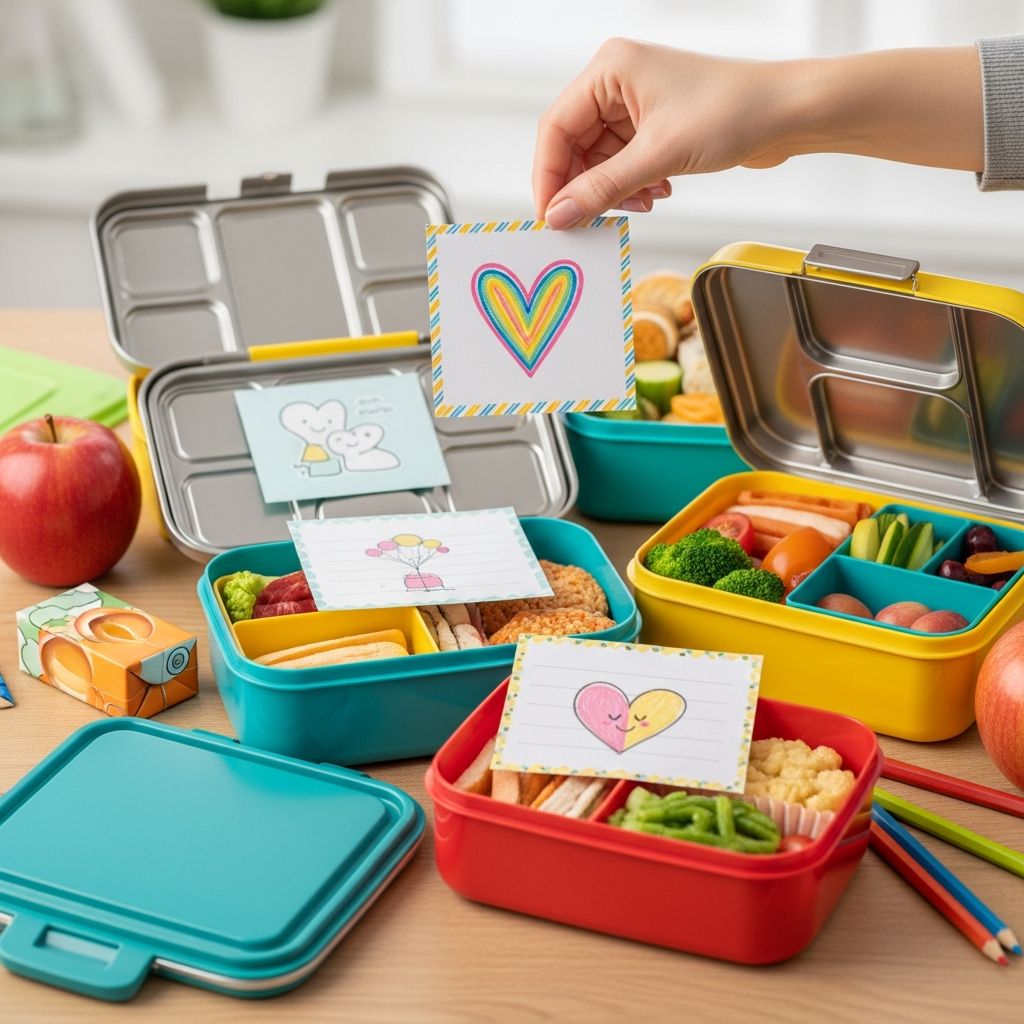
Adding a small note to your child’s lunchbox can transform an ordinary meal into a moment of connection and joy. These simple messages serve as daily reminders of your love, boosting their emotional well-being during busy school hours. Parents worldwide use this technique to send encouragement, humor, or motivation, helping kids face challenges with a smile.
Why Lunchbox Notes Matter for Your Child’s Happiness
Lunchtime offers a quiet pause in a child’s hectic day, making it the perfect opportunity for a positive touchpoint. Research from child psychologists highlights how parental affirmations enhance self-esteem and resilience. For instance, consistent positive messaging correlates with improved academic focus and reduced anxiety in school settings.
These notes aren’t just feel-good gestures; they build lasting emotional security. A study by the American Psychological Association notes that children receiving regular parental encouragement show higher levels of optimism and better social interactions. By slipping in a note, you’re reinforcing their sense of being valued, which can carry them through tough lessons or playground moments.
- Emotional Boost: Combats midday slumps with instant uplift.
- Connection Tool: Maintains your bond despite physical distance.
- Confidence Builder: Prepares them for tests, presentations, or social events.
Quick and Easy Note Ideas to Start Today
Begin with straightforward messages that fit any busy morning routine. No artistic skills required—just a scrap of paper and a pen. Tailor them to your child’s age, interests, or current events for maximum impact.
Classic Encouragement Phrases
These timeless lines work for any day, providing reliable positivity.
- “You’re my favorite reason to smile! Have an awesome day!”
- “Believe in yourself—you’ve got this! Love, Mom/Dad”
- “Today is full of possibilities. Shine bright!”
- “I’m so proud of how hard you try every day.”
- “You make the world better just by being you.”
Hilarious Jokes for Giggles
Humor lightens the mood and sparks laughter at the lunch table. Kids love sharing these with friends, turning your note into a social highlight.
- Why did the scarecrow win an award? Because he was outstanding in his field!
- What do you call a dinosaur that takes care of its teeth? A Flossiraptor!
- Why can’t basketball players go on vacation? Because they would get called for traveling.
- How does a penguin build its house? Igloos it together!
- Why did the math book look sad? It had too many problems.
Rotate jokes weekly to keep them fresh. Print a joke-of-the-day calendar for efficiency.
Personalized Notes Tied to Their World
Make notes relevant by referencing recent events, hobbies, or inside jokes. This shows attentiveness, deepening your emotional link.
| Child’s Interest | Sample Note Idea |
|---|---|
| Sports Fan | “Hit that goal today like your favorite player! Go team you!” |
| Animal Lover | “You’re as brave as a lion and as sweet as a puppy. Roar on!” |
| Artist | “Your creativity colors my world. Create something amazing today!” |
| Reader | “Adventure awaits in your books—and in your day! Happy reading.” |
| Gamer | “Level up your day with awesomeness. You’ve got all the power-ups!” |
Observe their passions during family time to craft authentic messages. For younger kids, draw a quick doodle like a heart or star alongside the words.
Seasonal and Holiday-Themed Messages
Align notes with calendar highlights for extra excitement. These tie into classroom themes, amplifying relevance.
- Back-to-School: “New year, new adventures. You’ve got the skills to conquer it all!”
- Halloween: “You’re the treat of my life! Boo-tiful day ahead.”
- Thanksgiving: “Grateful for you every day. Gobble up success!”
- Winter Holidays: “You’re the light in my holidays. Sparkle today!”
- Summer Break Tease: “Counting down to fun with you. Crush these last days!”
Prepare batches in advance for holidays. Use stickers or colored paper to match the theme visually.
Notes That Support Learning and Growth
Beyond fun, use notes to reinforce skills like perseverance or kindness. This subtle guidance aids development without feeling preachy.
- “Every mistake is a step to mastery. Keep learning!”
- “Kindness is your superpower. Use it today.”
- “Take deep breaths and tackle that math. You’re a problem-solving pro!”
- “Share your ideas—you have brilliant ones.”
- “Rest, refuel, and ready for afternoon wins.”
For test days: “Your brain is ready. Trust your prep and do your best.” This draws from growth mindset principles popularized by experts like Carol Dweck.
Creative Ways to Elevate Your Notes
Go beyond paper with interactive or visual twists to captivate attention.
- Doodles and Drawings: Sketch their favorite character saying the message.
- Pop-Up Notes: Fold paper into simple shapes like hearts or arrows pointing to the words.
- QR Code Fun: Link to a short voice recording of you reading the note (if school allows devices).
- Magnetic Notes: For reusable lunchboxes, use tiny magnets.
- Photo Strips: Glue a family pic with “Thinking of you!”
Experiment with washi tape or stamps for flair. Keep it simple to avoid morning stress.
Age-Appropriate Ideas for Every Stage
Toddlers and Preschoolers (Ages 2-5)
Focus on pictures over text. Draw smiley faces, hearts, or simple animals with one-word affirmations like “Super!” or “Love.”
Early Elementary (Ages 6-8)
Short sentences with jokes or praises. “Great job sharing yesterday—keep it up!”
Upper Elementary (Ages 9-11)
Add challenges or questions: “What’s one cool thing you’ll learn today?” Encourages reflection.
Tweens (Ages 12+)
Subtle support: Quotes from their heroes or “Proud of your growth.” Respect budding independence.
Practical Tips for Consistent Note-Writing
Sustainability is key. Batch-write 20 notes on Sunday evenings, folding and storing them. Use prompts like:
- Monday: Motivational
- Wednesday: Funny
- Friday: Fun weekend preview
Enlist siblings for group notes. Track responses—kids might reply in lunchboxes, creating a dialogue.
Potential Challenges and Solutions
| Challenge | Solution |
|---|---|
| Child feels embarrassed | Start private, then gauge readiness for friends to see. |
| Running out of ideas | Use apps with daily prompts or rotate themes. |
| Time crunch | Pre-print sticky notes. |
| No response | Persist—impact builds over time. |
Frequently Asked Questions (FAQs)
Do lunchbox notes really make a difference?
Yes, studies from child development experts confirm they enhance emotional security and motivation, leading to better school performance.
How often should I include notes?
Daily for maximum effect, but even 3-4 times weekly provides benefits. Consistency matters more than perfection.
What if my child loses interest?
Vary formats—add drawings, jokes, or questions to re-engage them.
Are notes suitable for all kids?
Most respond positively, but adapt for neurodiverse children, focusing on their preferences like visuals over text.
Can teachers help?
Many appreciate notes; inform them if needed for allergies or special handling.
Real Parent Stories and Testimonials
Parents report transformative effects. One mom shared, “My shy kindergartener now rushes to open his lunch for the note—it’s his highlight.” Another: “Test scores up, attitude improved—simple notes worked wonders.” These anecdotes align with research on parental involvement boosting child outcomes.
Integrate notes with healthy lunches like veggie wraps or fruit skewers for a complete positivity package, as suggested in family nutrition guides.
References
- Child Development Basics — American Psychological Association. 2023-05-15. https://www.apa.org/topics/children/positive-parenting
- Growth Mindset Research — Stanford University (Carol Dweck). 2024-01-10. https://www.growthmindsetworks.com
- Parental Encouragement and Child Resilience — Harvard Graduate School of Education. 2023-11-20. https://www.gse.harvard.edu/ideas/usable-knowledge/23/11/parental-encouragement
- Emotional Support in Schools — U.S. Department of Education. 2025-02-28. https://www.ed.gov/news/press-releases/new-resources-support-student-mental-health
- Positive Parenting Guide — Centers for Disease Control and Prevention (CDC). 2024-09-12. https://www.cdc.gov/parents/essentials/index.html