When Halloween arrives with a baby in the house, it is easy to feel pressure to create an elaborate costume, arrange a professional photo session, and document every second. Yet a baby does not care about themed family looks or social media-ready photos; comfort and connection matter far more. Keeping your baby’s Halloween costume low-key can save time, money, and stress while still giving you sweet memories and adorable pictures.
This guide offers original, practical ideas for simple baby costumes, ways to use clothing you already own, and gentle suggestions for enjoying Halloween at your own pace. It focuses on comfort, safety-minded choices, and realistic expectations so you can enjoy the day instead of treating it like a performance.
Why A Low-Key Baby Costume Is Often The Best Choice
Elaborate costumes may look impressive in photos, but they often come with itchy fabrics, tight accessories, and fussy babies who want nothing to do with them. A low-key costume built around your baby’s regular clothes respects your child’s comfort and your own limited energy. It also makes it easier to feed, change, and carry your baby throughout the day.
Keeping things simple does not mean giving up on creativity. It simply shifts the focus from perfection to practicality, making room for playful touches that can be pulled together in minutes instead of hours. This approach is especially helpful for new parents who are still adapting to unpredictable naps, feeding schedules, and varying moods.
Principles Of A Baby-Friendly Costume
Before diving into specific costume ideas, it helps to think about what makes a costume truly baby-friendly. Instead of starting with a character or theme, start with how the costume will feel, how easy it will be to manage, and whether it fits with the way you plan to spend Halloween.
- Comfort first: Prioritize soft, breathable fabrics and clothing your baby already wears without complaint.
- Minimal layers: A single base outfit plus one or two decorative touches is usually plenty for a baby.
- Quick changes: Choose an outfit that still allows diaper changes without removing everything.
- Flexible plans: Assume plans might change last minute based on naps, moods, or weather, and keep the costume adaptable.
Using What You Already Own
One of the easiest ways to keep Halloween low-key is to build a costume from clothes and accessories already in your baby’s drawer. A solid-colored onesie, cozy pajamas, or a neutral romper can become the base of many different looks with only minor additions.
Look for simple items that can hint at a character or theme without needing a full store-bought outfit. A hat, a headband, or a small felt accessory attached to a bodysuit can be enough to create an instantly recognizable idea without covering your baby from head to toe in unfamiliar material.
Simple Costume Ideas Built Around Everyday Outfits
Below are several low-effort, baby-friendly costume concepts that use everyday clothing as the starting point. Feel free to adjust colors, details, or props to match what you already own; the goal is inspiration, not perfection.
1. Cozy Animal-Inspired Outfits
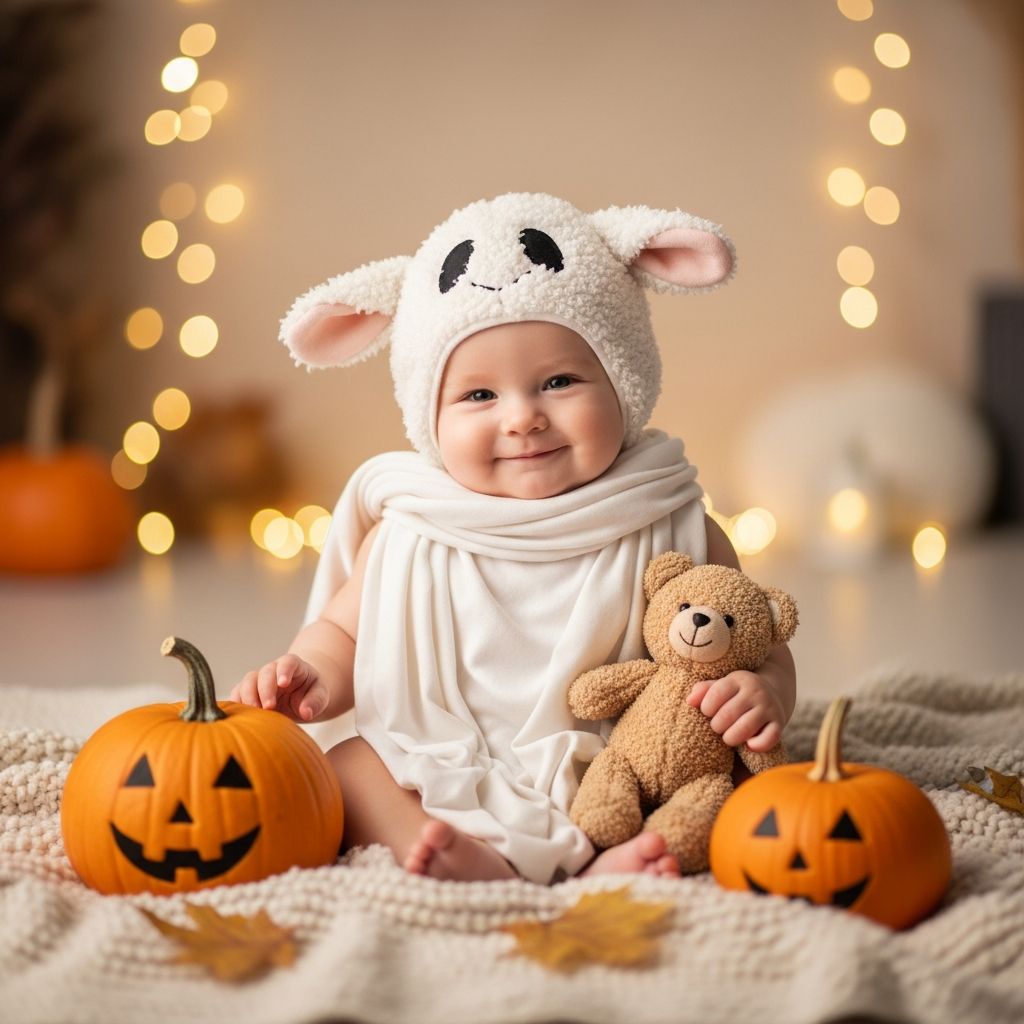
Animal themes work well for babies because they are instantly cute and easy to suggest with a few small details. A neutral romper or pajama set can become the body of the animal, while the headband, hat, or socks add personality.
- Use a brown or cream onesie with a soft hat that has ears for a bear or puppy vibe.
- Pair a striped sleeper with a matching hat to suggest a little tiger or bumblebee.
- Add a simple, flat felt “tail” attached securely to the back of pants for extra charm while keeping everything soft and comfortable.
2. Everyday Heroes And Helpers
Many baby costumes can be created with tiny versions of clothing adults wear at work. Instead of full uniforms, focus on one or two recognizable elements, leaving the base outfit simple and soft.
- Slip a plain white or blue onesie under a soft fabric “badge” or patch for a helper or hero theme.
- Use a bib or bandana in a striking color and call it a simple “super” look, skipping bulky capes.
- Pair solid pajamas with a lightweight hat relating to a profession or hobby, keeping any logos or decorations soft and flat.
3. Food-Inspired Baby Outfits
Food costumes can be playful, especially because babies already look like chubby little snacks. The trick is to hint at the idea with color and a small accessory instead of building a bulky, stiff outfit.
- Dress your baby in a green onesie and add a soft headband with felt “leaves” to suggest a little veggie or herb.
- Use a yellow sleeper and simple dot shapes attached with fabric-safe methods to evoke corn, cheese, or other golden goodies.
- Pair a plain white outfit with a colorful patterned bib to stand in for an ice cream topping or sauce.
4. Storybook And Fantasy Themes
Story-inspired looks allow you to match your baby’s outfit with a favorite board book at home. This lets you use the book itself as a prop for photos and keeps the costume grounded in items you already own.
- Choose a sleeper that loosely matches the colors of a favorite character and hold the book in photos.
- Use a simple crown-like headband made from soft fabric to transform any outfit into a tiny royal ensemble.
- Wrap your baby in a comfortable swaddle printed with stars, animals, or shapes, and describe the theme in your caption or storytelling.
Quick Reference: Low-Key Costume Ideas Table
The following table summarizes a few easy costume concepts along with suggested base clothing and a simple extra touch. This can help spark ideas based on what already sits in your baby’s dresser or closet.
| Costume Concept | Base Clothing | Simple Add-On | Effort Level |
|---|---|---|---|
| Soft Little Bear | Brown or cream romper or sleeper | Hat with small ears or flat felt ears sewn to a beanie | Very low |
| Tiny Garden Veggie | Green onesie or footed pajamas | Headband or hat with felt leaves | Low |
| Simple Super Baby | Solid-colored bodysuit | Soft fabric emblem on chest or a bright bandana bib | Very low |
| Sleepy Starry Dreamer | Star-patterned pajamas or swaddle | Soft hat in a matching or contrasting color | Very low |
| Storybook Sidekick | Onesie in colors that echo a favorite character | Hold the matching book during photos | Very low |
Keeping Baby Comfortable: Practical Tips
A costume that looks adorable but leaves your baby fussy or overheated is not worth the trouble. Paying attention to fabric, temperature, and fit can transform Halloween from a stressful event into a relaxed, cozy experience for everyone.
- Check the fabric: If your baby usually complains about certain materials, avoid them in costumes too.
- Mind the temperature: Layer lightly so you can add or remove a blanket or outer layer as the day cools or warms.
- Watch for tight spots: Make sure decorative elements do not dig into your baby’s skin when they lie down, sit in a car seat, or ride in a carrier.
- Test the outfit early: Put the costume on for a short time before Halloween to see how your baby reacts and adjust if needed.
Planning A Gentle Halloween Day
Keeping Halloween low-key goes beyond the costume. Babies are easily overstimulated by noise, crowds, and late nights. Choosing gentle activities and flexible plans can help prevent meltdowns and make the day feel special without turning it into a production.
- Keep outings short, such as a brief walk around the neighborhood or a visit to one friend or relative.
- Consider celebrating earlier in the day when your baby is more rested rather than waiting until dark.
- Take a few photos at the beginning of your plans, before your baby gets sleepy or hungry.
- Allow yourself to skip trick-or-treating if it feels like too much; an at-home costume moment still counts as a celebration.
Budget-Friendly And Eco-Conscious Approaches
New parents often feel surrounded by ads for themed outfits and matching sets, but Halloween does not need to be another expensive milestone. Reusing existing clothes, borrowing items from friends, or choosing pieces that will be worn again after the holiday are all simple ways to reduce waste and save money.
- Prioritize items that can return to your baby’s everyday wardrobe after Halloween.
- Consider swapping accessories or hats with other parents rather than buying new items for a single day.
- Use small, removable details like felt shapes or temporary patches that can be taken off once the holiday ends.
- If you do buy a themed piece, choose something sized to last through more than one season, such as a roomy hat or blanket.
Photo Ideas Without The Pressure
Photos are often the reason parents push for more elaborate costumes, but memorable images do not require complicated outfits. In many cases, a calm baby in a familiar setting creates better pictures than a perfect costume paired with tears.
- Take photos in natural light near a window or on a porch, using a simple blanket as a backdrop.
- Include seasonal items like a small pumpkin, a stuffed toy, or a board book instead of complex sets.
- Capture candid moments such as your baby chewing on a safe toy or snuggling in your arms instead of forcing staged poses.
- Limit the number of poses and sessions to keep the experience brief and pleasant.
Frequently Asked Questions About Low-Key Baby Costumes
Do babies need a costume at all for their first Halloween?
Babies do not need a costume to enjoy Halloween. If dressing up feels stressful or your baby seems uncomfortable, a simple seasonal sleeper or a regular outfit with a small themed accessory is more than enough.
What if my baby refuses to wear any accessory or hat?
Some babies dislike anything on their head or face, and forcing it often leads to tears and frustration. In that case, keep the costume entirely clothing-based, such as a patterned sleeper, or use a blanket, toy, or background to suggest a theme while leaving your baby’s body and head uncovered.
Can a low-key costume still look special in photos?
A simple outfit can look very special when paired with good light, a tidy background, and a relaxed baby. Focusing on your child’s expression, snuggles with caregivers, and small seasonal touches in the environment often creates more meaningful images than an ornate costume.
How many Halloween events should I plan with a baby?
Consider your baby’s age, temperament, and sleep patterns when scheduling activities. One small outing or at-home gathering is usually enough; it is better to enjoy a short, calm experience than to stack multiple events and end the day exhausted and overwhelmed.
Is it worth buying a matching family costume set?
Matching family costumes can be fun, but they are not necessary for a successful first Halloween. If coordinating outfits brings you joy and fits your budget, enjoy it, but do not feel obligated. A single themed element, such as a shared color or pattern, can still create a sense of unity without requiring full matching costumes.
Embracing An Imperfect, Happy First Halloween
Parents often remember their baby’s first Halloween less for the costume details and more for small, quiet moments: the weight of a sleepy baby in their arms, the way tiny fingers grabbed a pumpkin stem, or the shared laughter over a slightly crooked hat. A low-key costume leaves more room for those moments by stripping away expectations of perfection.
By focusing on comfort, practicality, and flexibility, you can create a Halloween that feels gentle and joyful instead of rushed and exhausting. Whether your baby spends the day in themed pajamas or a simple onesie with a hint of dress-up, the memories you make together will matter far more than any elaborate outfit.