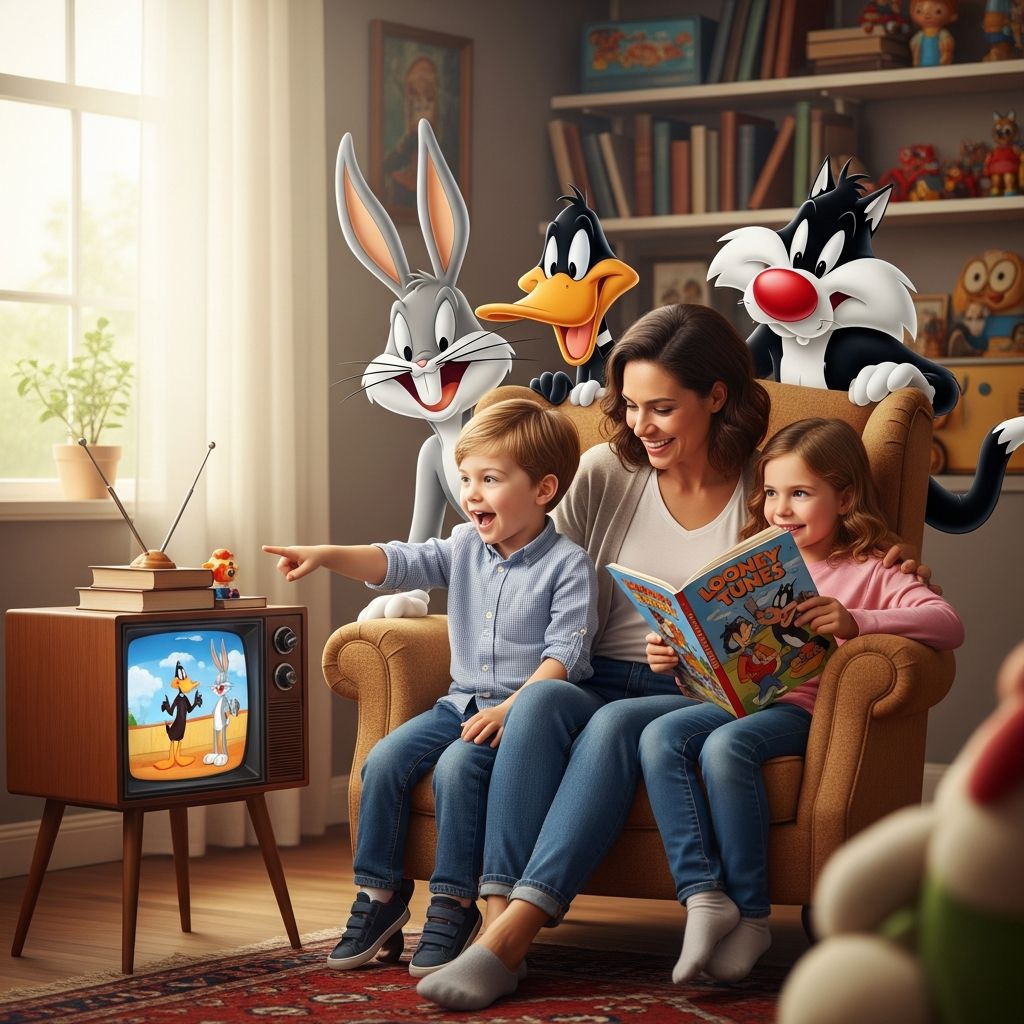
Few cartoon series have the staying power of Looney Tunes, a collection of animated shorts from the mid-20th century that still feels surprisingly sharp, silly, and energetic to modern kids. [web:1]
Parents recognize Bugs Bunny and Daffy Duck from their own childhood, and now many are rediscovering these characters as a fun bridge between generations. [web:2]
Why Looney Tunes Still Clicks With Modern Kids
Even though these cartoons were created decades ago, their fast timing, physical comedy, and exaggerated characters feel instantly familiar to kids raised on today’s animated shows. [web:1]
Because most shorts are self-contained and under ten minutes, they are easy to drop into a busy family schedule as a quick laugh before bed, on a weekend morning, or during a low-key movie night. [web:2]
- Strong, simple goals (catch the rabbit, protect the bird, outsmart the hunter) are easy for children to follow.
- Visual humor often lands even when kids miss historical or pop-culture references.
- Repetition of gags and catchphrases makes the cartoons feel cozy and familiar over time.
Core Characters Kids Instantly Recognize
While the Looney Tunes universe is huge, a few characters form the backbone of what many families watch first, and they tend to represent distinct comedic styles and personalities. [web:2]
Introducing these characters gradually can make it easier for younger children to latch onto favorites and understand recurring dynamics.
| Character | Typical Role | What Kids Might Take Away |
|---|---|---|
| Bugs Bunny | Confident trickster who outsmarts bigger opponents. | Quick thinking can beat brute force; humor can defuse tension. |
| Daffy Duck | Overconfident, often selfish schemer whose plans backfire. | Jealousy and impatience usually make problems worse. |
| Elmer Fudd | Single-minded hunter forever outwitted by his prey. | Chasing goals without reflection can lead to endless frustration. |
| Tweety & Sylvester | Clever bird versus determined cat in ongoing chase routines. | Small, underestimated characters can be surprisingly resourceful. |
| Road Runner & Wile E. Coyote | Silent speedster and obsessive inventor locked in slapstick pursuit. | Resilience after failure and the comedy of overcomplicated solutions. |
Choosing Shorts That Work for Younger Viewers
The classic library includes hundreds of shorts, and not all are equally suited for very young children because of era-specific stereotypes, dated references, or intense scenes. [web:2]
Streaming services, curated compilations, and official channels often highlight well-known episodes featuring the main characters above, which tend to be more accessible and familiar to families. [web:1]
- Start with shorts that feature clear slapstick chases and minimal dialogue if your child is still very young.
- Look for collections labeled as family-friendly or classic favorites, which usually highlight the most enduring episodes.
- Preview a few minutes yourself to get a sense of tone and pacing before watching together.
What Makes the Comedy Timeless
Many Looney Tunes shorts rely on visual exaggeration, timing, and repetition instead of topical jokes, which helps them age better than some contemporary comedy. [web:1]
Elements like characters surviving wild falls, impossible stunts, and cartoon physics create a sense of safe danger that children quickly recognize as fantasy. [web:2]
- Cartoon logic: Characters bounce back from explosions, crashes, and falls, signaling clearly that the violence is unreal.
- Reversible consequences: No one stays hurt or sad for long, which reduces anxiety for sensitive viewers.
- Musical timing: Sound effects and orchestral cues hit precisely with gags, making the rhythm of the humor feel musical.
Using Looney Tunes as Conversation Starters
Though these cartoons are primarily absurdist comedy, they also create natural openings for quick family conversations about fairness, empathy, and behavior. [web:2]
Talking for just a minute or two after a short can transform a random laugh into a small, memorable teaching moment.
- Ask your child who they felt sympathy for in the cartoon and why.
- Point out when a character apologizes, backs down, or changes strategy.
- Discuss whether the trickster went too far and how someone could respond in real life.
Balancing Nostalgia With Modern Sensibilities
Because Looney Tunes shorts were produced across several decades, some episodes contain outdated stereotypes, caricatures, or references that do not align with current family values. [web:2]
Many official releases now include curated sets or warnings, and parents can use these cues, along with their own judgment, to skip or discuss questionable moments. [web:2]
- Treat surprising or uncomfortable scenes as chances to explain why certain portrayals are not acceptable today.
- Reassure kids that it is okay to enjoy the funny parts while also questioning ideas that feel unkind or unfair.
- Model how to critique media without needing to reject every older cartoon outright.
Making Looney Tunes Part of Family Rituals
The short length and self-contained nature of each cartoon make Looney Tunes easy to fold into family rituals without committing to a full movie each time. [web:1]
Repeating the same handful of shorts for younger kids can become a cozy tradition, much like re-reading a favorite picture book.
- Designate one evening a week as a “classic cartoon mini-marathon” with snacks and blankets.
- Let kids take turns picking which character they want to see next.
- Pause occasionally to let kids predict what scheme or gag will come next.
Tips for Age-Appropriate Viewing
Parents often wonder what age is right to introduce these older cartoons, especially given the slapstick intensity and occasional use of toy weapons or explosions. [web:2]
In many households, Looney Tunes works well for early elementary years and up, with sensitive preschoolers introduced gradually and always with a caregiver nearby to contextualize what they are seeing. [web:1]
- Watch closely the first few times to see whether your child imitates actions or becomes frightened.
- Clarify that characters cannot be hurt in the same way real people or animals can.
- Remind kids that jokes involving chasing, falling, and hitting are part of cartoon fantasy, not real-world behavior.
Fun Ways to Extend the Experience Offline
Because the characters are quirky and visually distinctive, they inspire all kinds of offline play, crafts, and imaginative games that continue after the screen is off. [web:1]
Using art, storytelling, and pretend play to revisit favorite gags can help kids process what they watched and reinforce the positive parts of the experience.
- Draw a new gadget for Wile E. Coyote and invent a silly way it might malfunction.
- Have kids design an Acme product catalog filled with ridiculous inventions.
- Invite children to act out a chase scene but replace collisions with dramatic slow-motion falls or exaggerated facial expressions.
Simple Content Ideas for Different Age Groups
Different ages react to the same episodes in distinct ways, so it helps to think about what your child is ready to understand and laugh at before choosing a batch of shorts. [web:2]
By adjusting your picks for age, you can keep Looney Tunes fun without overwhelming younger viewers or boring older siblings.
| Age Range | Focus | Suggested Approach |
|---|---|---|
| 4–6 years | Simple chases, clear heroes and antagonists. | Watch a single short at a time and talk briefly about who was kind or unkind. |
| 7–9 years | Running jokes, character flaws, repeated patterns. | Introduce more dialogue-heavy episodes and invite kids to explain what went wrong for the troublemaker. |
| 10+ years | Satire, meta-humor, complex schemes. | Explore episodes that play with storytelling, show-business jokes, or parody, and discuss how the cartoons poke fun at themselves. |
Frequently Asked Questions About Looney Tunes and Kids
Is Looney Tunes appropriate for very young children?
Many families wait until their kids are at least in early elementary school before showing a wide range of episodes, largely because of the intensity of slapstick and occasional outdated imagery. [web:2]
Parents who want to introduce the cartoons earlier often start with gentler, slower-paced shorts and stay nearby to answer questions and emphasize that the on-screen chaos is make-believe. [web:1]
How can parents handle outdated or offensive moments?
Because the cartoons span several decades, some shorts reflect attitudes that no longer fit modern standards, which can be confusing or hurtful without explanation. [web:2]
Parents can skip certain episodes entirely, use content warnings as guides, or treat problematic scenes as opportunities to explain why certain jokes are not acceptable anymore.
Are there educational benefits to watching Looney Tunes?
While the series is not academic in a formal sense, kids can learn about storytelling, cause and effect, emotional cues, and the basics of comic timing. [web:1]
Talking with children about character decisions, consequences, and emotions can turn each short into a small lesson in empathy and critical thinking.
Where can families legally watch classic episodes?
Classic Looney Tunes shorts appear on major streaming platforms, official studio channels, and curated collections that focus on restored prints and family-friendly selections. [web:1]
Choosing verified sources helps ensure higher video quality, proper episode order, and better content notes or age-appropriate recommendations. [web:2]
How often should kids watch these cartoons?
Because each short is brief, many families weave them into their weekly routine rather than using them for long binges, balancing them with books, outdoor play, and other forms of entertainment.
Setting clear time limits and co-viewing with kids keeps the focus on shared laughter and connection instead of passive screen time.
Bringing Classic Cartoon Energy Into Today’s Family Life
Looney Tunes remains a rare cultural touchpoint that grandparents, parents, and kids all recognize, making it a convenient starting point for multi-generational movie nights. [web:1]
By choosing episodes thoughtfully, watching together, and talking about what lands and what feels outdated, families can enjoy these cartoons as living, evolving stories rather than relics frozen in time. [web:2]