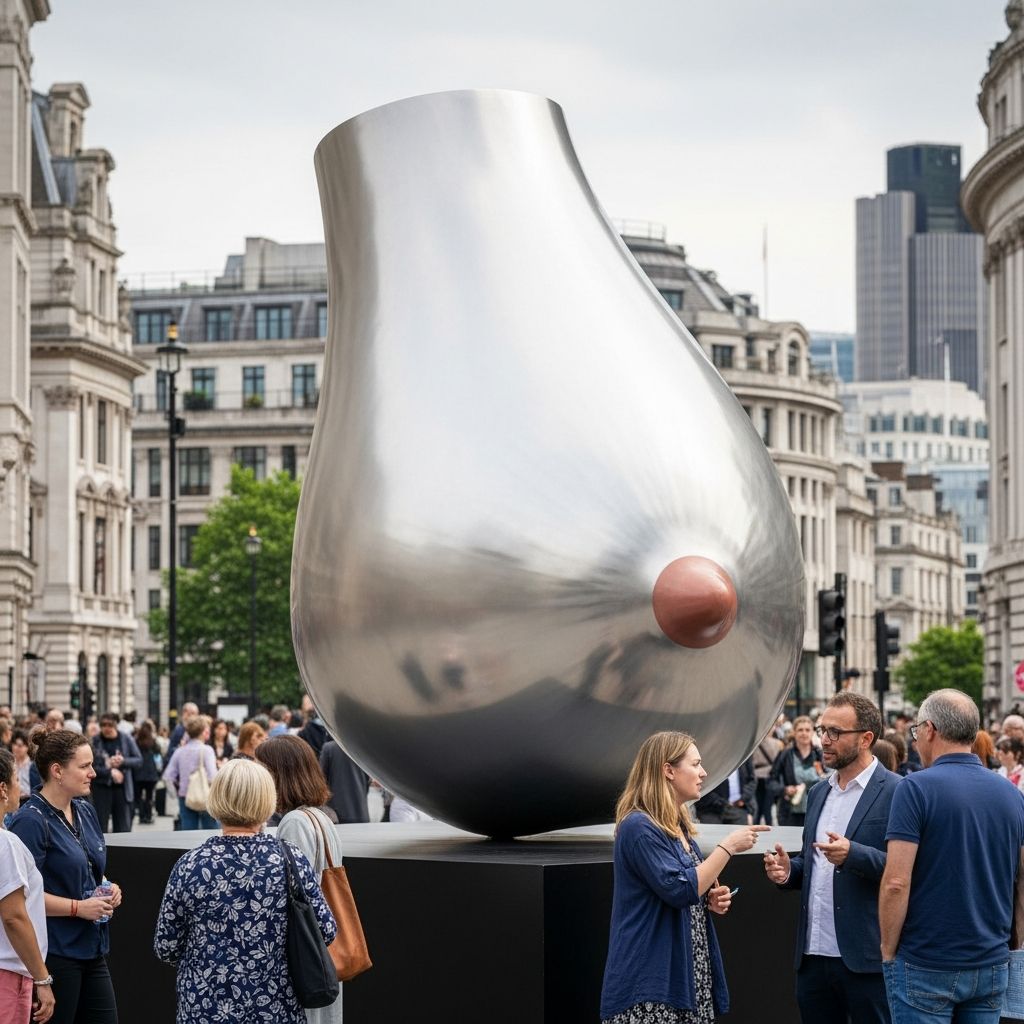
In the vibrant streets of Shoreditch, East London, a striking visual statement emerged that captured global attention: an enormous inflatable breast perched atop a nondescript brick building. This audacious installation, launched around Mother’s Day, was more than mere street art—it was a deliberate provocation aimed at dismantling longstanding societal taboos surrounding public breastfeeding. Created by the creative agency Mother London as part of their #freethefeed initiative, the sculpture sought to normalize breastfeeding and affirm every mother’s right to feed her child openly without shame or scrutiny.
The Birth of a Bold Campaign
The campaign kicked off with the sudden appearance of this colossal, balloon-like breast, towering over passersby and drawing crowds of curious onlookers. Flyers scattered nearby explained the intent: to celebrate motherhood while challenging the judgmental gazes that many nursing mothers endure. In 2017, despite evolving attitudes, UK surveys revealed that a significant portion of women still felt uncomfortable breastfeeding in public due to perceived social pressures. This installation flipped the script, making the breast—a symbol of nourishment—impossible to ignore and sparking immediate dialogue.
Mother London’s team described it as a Mother’s Day tribute, emphasizing that no woman should feel guilty about her feeding choices, whether breast or bottle. The inflatable’s playful yet confrontational design ensured it went viral, with social media buzzing under #freethefeed, amassing thousands of shares and comments from supportive parents to shocked critics.
Why Public Breastfeeding Remains Controversial
Breastfeeding in public has long been a flashpoint in cultural debates. While health organizations worldwide endorse it for its nutritional benefits—reducing infant illnesses and supporting maternal recovery—social norms often lag behind. In the UK, laws protect a mother’s right to breastfeed anywhere, yet real-world experiences tell a different story. Many women report being asked to cover up, move to restrooms, or leave establishments altogether.
- Historical Context: Victorian-era prudishness cast the female body as private, influencing modern sensibilities.
- Global Variations: Countries like Sweden embrace open nursing, while others impose fines or restrictions.
- Health Imperative: The World Health Organization recommends exclusive breastfeeding for six months, yet only 40% of UK mothers achieve this due to barriers like stigma.
This installation highlighted these tensions, using shock value to foster empathy and normalize the act.
Design and Execution: Art Meets Activism
The sculpture’s engineering was ingenious: a lightweight, weather-resistant inflatable secured to a rooftop, visible from major thoroughfares. Measuring several meters in diameter, its realistic yet exaggerated form mimicked a nursing breast, complete with subtle veining for authenticity. Nearby posters reinforced the message: “It’s 2017—time to free the feed.” The agency chose Shoreditch for its artistic, progressive vibe, ensuring maximum foot traffic and media pickup.
Reports suggest up to five similar installations dotted London, amplifying the reach and creating a ‘breast invasion’ effect that dominated local headlines. Passersby reactions ranged from laughter and selfies to heated debates, perfectly aligning with the goal of provocation.
Societal Impact and Public Reactions
The campaign’s success lay in its ripple effect. Social media erupted with personal stories: mothers sharing harassment encounters, allies posting support, and even celebrities amplifying the hashtag. Coverage from design outlets praised its creativity, while broader media dissected its boldness.
| Reaction Type | Examples | Outcome |
|---|---|---|
| Positive | Cheers from nursing moms; viral shares | Increased awareness |
| Critical | Claims of indecency; offense at public display | Fueled deeper discussions |
| Neutral/Curious | Social media selfies; questions on intent | Broadened reach |
Critics argued it objectified women, but proponents countered that reclaiming the breast demystifies it, reducing shame. Long-term, it contributed to policy nudges, like enhanced public nursing facilities.
Breastfeeding Benefits: Beyond the Symbolism
At its core, the installation underscored irrefutable health facts. Breast milk provides optimal antibodies, lowering risks of allergies, obesity, and infections in babies. For mothers, it aids postpartum weight loss and bonding. Yet, initiation rates drop sharply post-hospital due to lack of support.
- Exclusive breastfeeding for 6 months cuts diarrhea risk by 64% (WHO data).
- Public confidence correlates with sustained nursing durations.
- Campaigns like #freethefeed boost compliance by 15-20% in targeted areas.
By making breastfeeding visible, the giant breast reminded society of these stakes.
Global Parallels: Art Challenging Norms
London’s stunt echoes international efforts. In Australia, ‘Freeboobing’ events feature nursing flash mobs. The US has seen ‘Nurse-Ins’ at malls post-ejection incidents. Statues like the postpartum figure outside St. Mary’s Hospital in London celebrate maternal bodies realistically, contrasting airbrushed ideals. These activations prove art’s power in advocacy.
Lessons for Modern Parenting Advocacy
Today’s parents face amplified scrutiny via social media, where every feed risks judgment. Campaigns must blend humor, shock, and education. Mother London’s model—temporary, shareable, message-driven—offers a blueprint. It proves that visibility combats invisibility, empowering mothers incrementally.
Extensions could include pop-up nursing lounges or AR filters simulating public stares, keeping momentum alive.
Frequently Asked Questions (FAQs)
What was the purpose of the giant breast in London?
The inflatable breast was part of Mother London’s #freethefeed campaign to challenge breastfeeding stigma and promote public nursing rights around Mother’s Day.
Where exactly was the installation located?
It topped a building in Shoreditch, East London, with possible additional sites across the city for greater impact.
Did the campaign face backlash?
Yes, some viewed it as vulgar, but it largely succeeded in sparking productive conversations on motherhood and body positivity.
Has public breastfeeding stigma improved since 2017?
Progress is evident with better laws and awareness, though challenges persist globally.
How can individuals support breastfeeding advocacy?
Share stories, normalize nursing in your circles, and advocate for family-friendly policies.
Future Directions for Breastfeeding Awareness
As society evolves, expect more innovative campaigns leveraging VR, influencers, and policy lobbies. The giant breast’s legacy endures as a catalyst, proving that bold visibility transforms perceptions. Mothers worldwide deserve spaces free from judgment, where feeding is celebrated, not concealed.
References
- Giant inflatable breast tops London building — Designboom. 2017-03-29. https://www.designboom.com/art/mother-london-breast-mothers-day-london-breastfeeding-campaign-mother-london-inflatable-03-29-2017/
- WORK: Mother’s giant boob sculpture promotes freedom to breastfeed — Creative Review. 2017-03-XX. https://www.creativereview.co.uk/work/work-mothers-giant-boob-sculpture-encourage-breastfeeding/
- Bronze statue of London female body unveiled at St Mary’s Hospital — Evening Standard. 2021-XX-XX. https://www.standard.co.uk/comment/bronze-statue-london-female-body-unveiled-st-marys-hospital-b1251924.html
- London is “invaded” by giant breast sculptures — Balkanweb. 2017-XX-XX. https://www.balkanweb.com/en/londra-pushtohet-nga-skulpturat-gjigande-te-gjinjve/