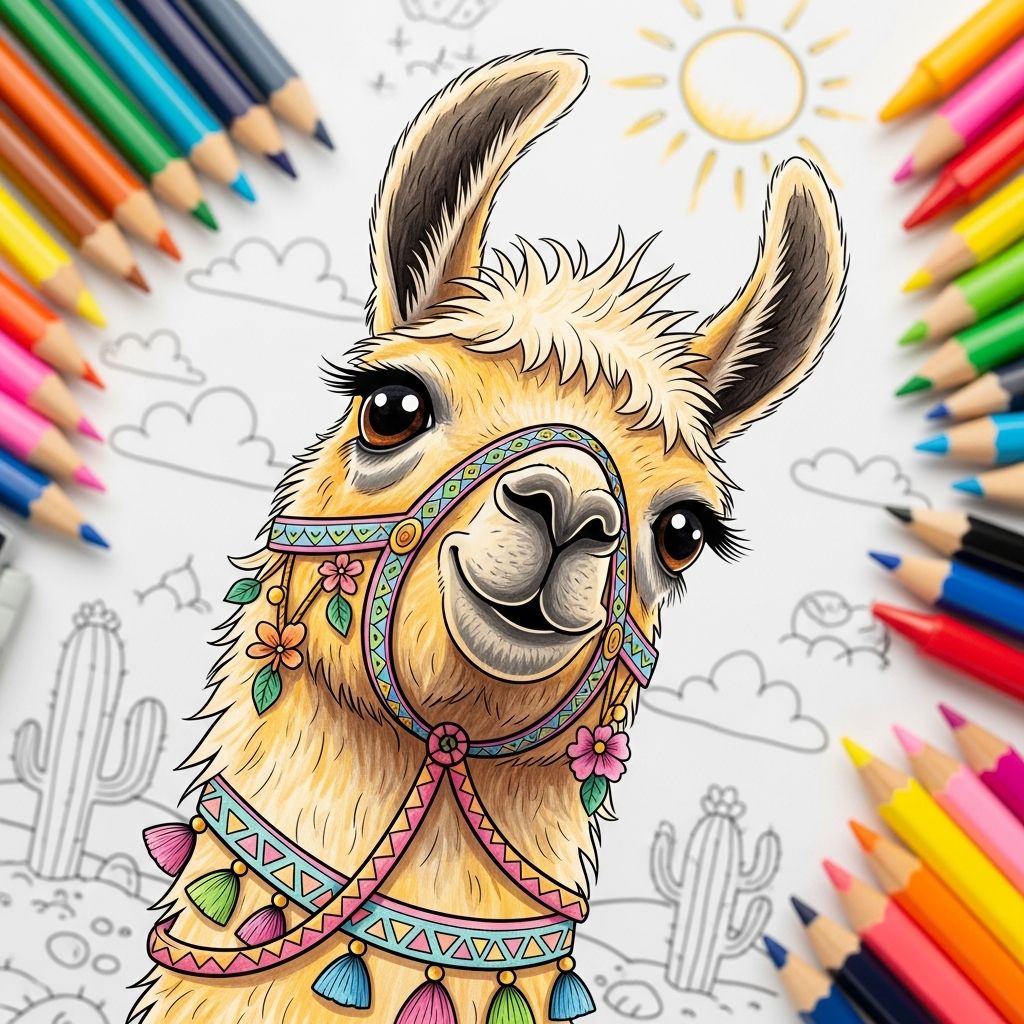
Llama coloring pages combine adorable characters with simple shapes, giving kids a relaxing, creative activity that also supports learning and development. Whether you are planning a rainy day at home, setting up a classroom center, or organizing a llama-themed party, these printables can easily become one of your go-to tools.
Why Llamas Are Perfect for Coloring Pages
Llamas are instantly appealing to children because they look friendly, fluffy, and a little bit silly, which invites playful creativity. Their soft shapes and distinct features—ears, long necks, and cozy blankets—translate beautifully into outline drawings that are fun and manageable for young artists.
Unlike more complex animals with tiny details, llamas can be drawn in big, bold lines that suit both toddlers learning to color and older kids who enjoy adding patterns. Their cultural associations with colorful textiles and mountain landscapes also open the door to imaginative backgrounds and bright color palettes.
Benefits of Coloring for Children
Coloring llamas is more than just entertainment; it offers real benefits for growing minds and bodies. By filling in shapes, children are rehearsing essential skills that support everyday tasks and academic readiness.
- Fine motor development: Holding crayons or colored pencils strengthens hand muscles needed for writing, cutting, and self-care routines like buttoning.
- Hand-eye coordination: Trying to stay within the lines or color specific details trains children to coordinate what they see with how they move.
- Focus and patience: Completing a llama picture from start to finish encourages kids to stay with a task, which supports attention span over time.
- Emotional regulation: The repetitive, gentle movements of coloring can be calming, providing a quiet moment after a busy or stressful day.
- Creativity and self-expression: Children can choose any colors, patterns, or accessories, giving them a safe outlet to express their tastes and moods.
Types of Llama Coloring Pages Kids Love
Offering a variety of llama-themed sheets keeps kids interested and encourages them to explore different styles and difficulty levels. Consider including some of the ideas below when building your own little collection.
Simple Llama Outlines for Toddlers
Very young children benefit from big, open shapes with thick borders and minimal detail. These easy llama outlines give them a chance to enjoy the activity without getting frustrated by tiny spaces or complicated designs.
- Large, single llama centered on the page.
- No background or only one or two large shapes like a sun or cloud.
- Minimal facial details so the focus stays on broad coloring.
Cute Llama Characters for Preschoolers
Preschool-age kids often enjoy pages where llamas act like characters in a story. Adding accessories and simple scenes makes the coloring experience more immersive and sparks imaginative play.
- Llama wearing a scarf, hat, or bow.
- Llama holding balloons, books, or a birthday present.
- Llama in front of mountains or standing near a cactus.
Detailed Llama Designs for Older Kids
School-age children and tweens usually like more intricate pages that challenge their precision and artistic sense. Llamas decorated with patterns and backgrounds are ideal for kids who want projects that take longer and allow for shading and blending.
- Llama blankets with repeating geometric shapes.
- Backgrounds filled with flowers, stars, or mandala-style patterns.
- Llamas in motion—jumping, dancing, or running—surrounded by small decorative elements.
Seasonal and Holiday Llama Themes
Seasonal llama pages let families and teachers tie coloring activities to special occasions, celebrations, or classroom topics. A festive llama can become a fun decoration or part of a party craft station.
- Winter llama with a sweater, snowflakes, or hot cocoa.
- Spring llama with flowers, rainbows, or butterflies.
- Summer llama at the beach with sunglasses or ice cream.
- Holiday llama with presents, ornaments, or themed accessories.
Ideas for Using Llama Coloring Pages at Home
Llama printables are flexible—use them for quick quiet time or turn them into longer, themed activities. With a little planning, a simple coloring sheet can become a full afternoon of play and learning.
Quiet Time and Calm-Down Corners
Coloring llamas can be part of a calming routine, especially for kids who get overstimulated or need help winding down. Create a small basket with llama pages, crayons, and a few cozy items so children have a predictable activity when they need a break.
- Keep pages pre-printed and cut to half-sheets for quick access.
- Pair coloring with soft music or an audiobook to create a peaceful atmosphere.
- Encourage slow, gentle coloring rather than rushing to finish.
Llama-Themed Family Activity Night
Turn coloring into a shared experience by planning a llama-themed evening. This helps siblings of different ages interact in a relaxed, low-pressure way while working side by side.
- Offer several difficulty levels at the same table so everyone finds a page that fits.
- Provide stickers, washi tape, and glue-on gems for decorating the finished llamas.
- Hang completed pages together as a “llama gallery” on a wall or door.
Decor and Keepsake Ideas
Finished llama artwork does not have to disappear into a stack of papers. With simple materials, families can transform colored pages into useful or decorative items that celebrate the child’s efforts.
- Laminate a favorite llama picture to make a placemat.
- Cut out llamas and string them together as a bedroom bunting.
- Use colored llamas on homemade greeting cards, bookmarks, or gift tags.
Classroom Uses for Llama Coloring Pages
Teachers can integrate llama coloring sheets into academic lessons, transitions, and behavior supports. Llamas are neutral, friendly characters that work well across a range of themes and subjects, making them easy to adapt for different age groups.
Morning Work and Early Finisher Activities
Llama pages can serve as a low-prep option for students who arrive early or finish tasks ahead of classmates. Because the activity is quiet and self-directed, it helps maintain a calm classroom environment.
- Place a few llama sheets in a tray labeled for early finishers.
- Encourage students to add patterns or labels (such as their names or vocabulary words) to their llamas.
- Rotate designs weekly to keep anticipation and interest high.
Integrating Llamas into Lessons
With a small amount of creativity, llama coloring can become a meaningful supplement to curriculum topics. Instead of being just a reward or filler, the activity can reinforce key ideas students are learning.
- Geography: Color llamas on maps or draw background scenes inspired by mountainous regions.
- Math: Ask students to follow color codes based on solving equations or counting tasks.
- Language arts: Have children write a short story or description about their llama after coloring.
Classroom Display and Community Building
Creating a bulletin board or hallway display featuring student llamas can encourage a sense of pride and belonging. When every child’s work is represented, it sends the message that each contribution matters.
- Invite students to give their llama a name and a short sentence about its personality.
- Group llamas into small “herds” to represent table groups or project teams.
- Change the background decor around the llamas to match seasons or current units.
Skill Levels and Recommended Page Styles
Selecting the right kind of llama page for a child’s age and skill level helps prevent frustration and supports growth. Use the guide below to match page features with developmental stages so that kids remain both challenged and successful.
| Age/Stage | Recommended Page Style | Main Benefits |
|---|---|---|
| Toddlers (1–3 years) | Very simple llama silhouettes with wide borders and no small details. | Exploring color, practicing whole-arm movement, sensory enjoyment. |
| Preschoolers (3–5 years) | Cute llamas with a few accessories and large background elements. | Improving control, starting to stay inside lines, building storytelling skills. |
| Early elementary (5–8 years) | Llamas with patterned blankets, simple scenery, and medium detail. | Strengthening fine motor skills, learning patterns, encouraging focus. |
| Older kids (8+ years) | Highly detailed llamas with lots of patterns, textures, and complex settings. | Practicing patience, shading techniques, creative design, and mindfulness. |
Creative Twists on Standard Llama Pages
Once kids are familiar with regular coloring sheets, adding small twists keeps the activity fresh and exciting. These variations invite children to think beyond the outline and experiment with different materials and approaches.
Mixed-Media Llama Art
Instead of using only crayons or pencils, encourage kids to layer materials for richer textures and effects. This turns a basic coloring page into a mini art project that can be proudly displayed.
- Glue on bits of yarn or cotton to create fluffy llama fur.
- Add tissue paper pieces for blankets or backgrounds.
- Use metallic gel pens or glitter glue to decorate harnesses or jewelry.
Make-Your-Own Llama Scene
Give children cut-out llamas and ask them to design the entire setting around the character. This allows more advanced students to explore composition, scale, and storytelling in a playful way.
- Provide blank paper for drawing mountains, markets, or celebrations.
- Encourage kids to add friends, such as other animals or people.
- Invite them to label elements in the picture for bonus writing practice.
Llama Coloring Challenges
Short, playful challenges add a game-like element to coloring time. These prompts can be used at home or in the classroom to encourage experimentation and flexible thinking.
- Color your llama using only two colors in as many creative ways as possible.
- Design the most unusual blanket pattern you can imagine.
- Create a “nighttime llama” using mostly dark shades and stars.
Tips for Printing and Presenting Llama Pages
A little preparation can make llama coloring smoother and more satisfying for both adults and kids. Paying attention to paper type, size, and storage helps pages last longer and look better.
- Paper choice: Thicker paper or light cardstock resists tearing and works better with markers or paint.
- Printing size: Younger children may find enlarged images easier to manage; older kids often appreciate more compact, detailed layouts.
- Organization: Store pages in labeled folders (easy, medium, detailed) so it is simple to match a child with the right challenge level.
- Display options: Use inexpensive frames, clipboards, or a rotating gallery line with clothespins to show off finished llamas.
Frequently Asked Questions About Llama Coloring Pages
Are llama coloring pages suitable for toddlers?
Yes, llama coloring pages can be toddler-friendly when you choose or design images with very simple shapes and minimal detail. Opt for thick outlines, a single large llama, and non-toxic, easy-to-grip crayons so younger children can participate safely and confidently.
How can I keep older kids interested in coloring?
Older kids often stay engaged when coloring becomes more complex and personalized. Offer detailed llama designs, introduce advanced materials like fine-tip markers or blending pencils, and encourage them to invent backstories, names, and settings for their llama characters.
Can llama coloring pages really help with learning?
Coloring supports skills that underpin classroom success, such as fine motor control, attention, and the ability to follow directions. When llama pages are used with simple academic prompts—like color-by-number math problems or writing a few sentences about the scene—they can directly reinforce curricular goals.
What if my child scribbles and does not stay in the lines?
Scribbling is a normal and important stage of early drawing and coloring. Instead of correcting every mark, celebrate the effort and gradually model how to slow down and aim for specific areas, allowing improvement to come with practice and maturity.
How many llama pages should I offer at once?
Too many choices can overwhelm some children, especially younger ones. A small selection of two to four llama pages at different difficulty levels usually works well, giving kids a sense of control without making decision-making stressful.
Turning Simple Llama Pages into Lasting Memories
Llama coloring pages may seem simple, yet they can anchor meaningful routines—quiet afternoons, creative family nights, or special classroom celebrations. When adults value and display the finished artwork, children see their effort and imagination reflected back to them in a powerful, positive way.
By choosing age-appropriate designs, inviting open-ended creativity, and using finished llamas in crafts and decor, families and educators can transform everyday coloring time into memorable, confidence-boosting experiences.