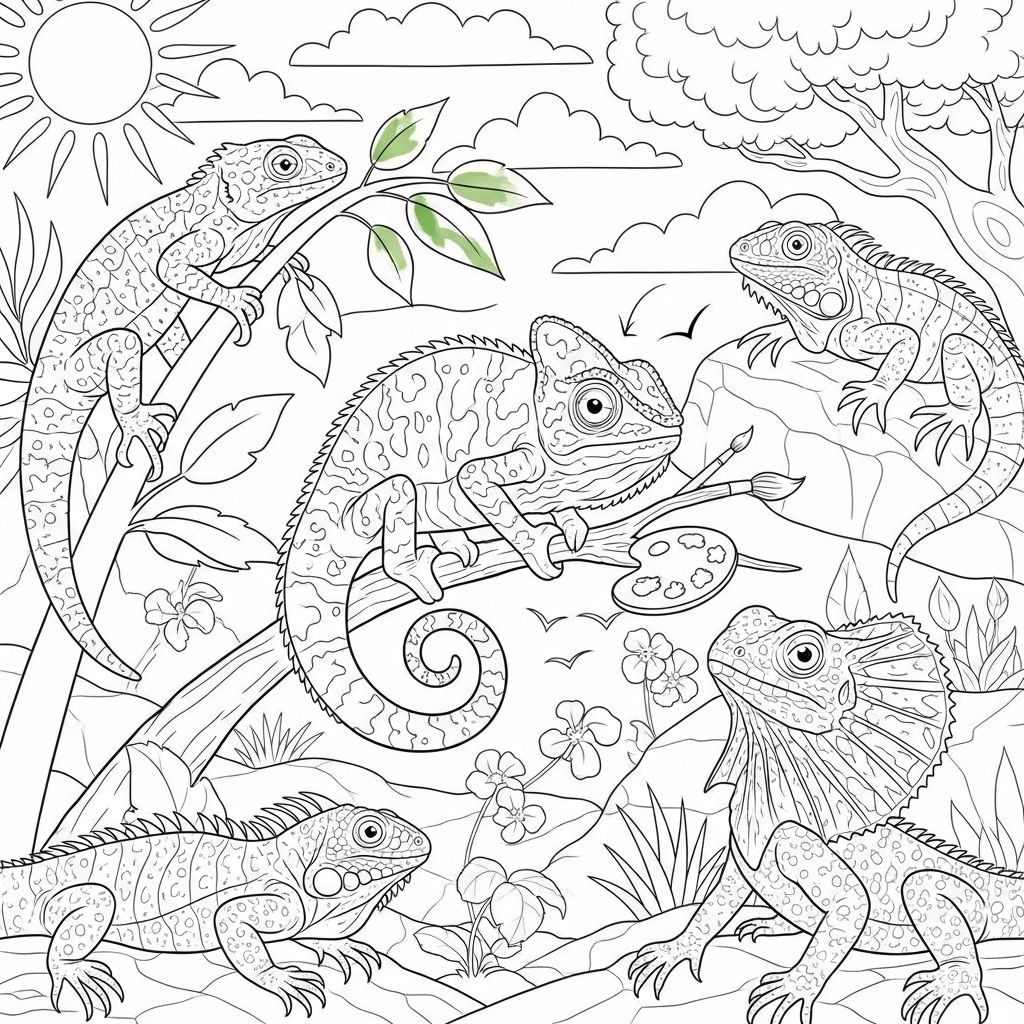
Lizard coloring pages offer a simple way to entertain children while quietly building early skills like pencil control, attention to detail, and color recognition. At the same time, they can spark curiosity about reptiles and the natural world, making them a useful tool for both parents and teachers.
Why Lizard Coloring Pages Are Great for Kids
Coloring might look like a basic pastime, but research shows that art activities can support multiple areas of child development when used regularly. Lizard-themed pages add an extra layer of interest because many children are naturally fascinated by reptiles.
- Fine motor practice: Holding and controlling crayons or colored pencils helps strengthen small muscles in the hands and fingers, which supports handwriting later on.
- Hand-eye coordination: Trying to stay within the lines, follow patterns, or trace shapes helps kids coordinate what they see with how they move their hands.
- Creativity and self-expression: Children can choose unusual colors, design patterns on lizard skin, or invent new species entirely.
- Relaxation and focus: Quiet coloring can have a calming effect and help kids practice sustained attention.
- Early science learning: Lizard pages can gently introduce basic ideas about reptiles, habitats, and biodiversity.
Types of Lizard Coloring Pages to Try
Different kinds of pages work better for different ages and situations. Mixing several types keeps kids interested and lets you adapt to varied skill levels.
1. Simple Outlines for Toddlers and Preschoolers
Young children benefit from large shapes and minimal detail. These pages should have:
- Big, bold outlines that are easy to see
- One main lizard figure per page
- Plenty of open space for free coloring or stickers
- Optional thick borders to help define the page area
These designs are ideal when children are still experimenting with how to hold crayons and are not yet concerned about staying inside the lines.
2. Realistic Lizards for Older Kids
As children grow, more detailed lizard images can challenge their observation skills and patience.
- Scales, patterns, and claws for careful coloring
- Background details like rocks, branches, or leaves
- Opportunities to talk about real species such as geckos, iguanas, or komodo dragons
These pages encourage kids to look at photos of real reptiles to match colors or invent imaginative variations.
3. Cartoon and Kawaii Lizards
Friendly, stylized lizards are perfect for children who love characters and stories. They might include:
- Smiling faces and big expressive eyes
- Accessories such as hats, backpacks, or musical instruments
- Simple backgrounds like parks, playgrounds, or imaginary worlds
Cartoon lizards are particularly useful for younger kids who might find realistic reptiles a bit intimidating, turning them into approachable and lovable characters.
4. Educational Label-and-Color Sheets
Some lizard pages add learning elements directly to the artwork. You can create or look for pages that:
- Include labels such as tail, scales, claws, and tongue
- Provide short facts in speech bubbles or small text boxes
- Ask children to color different parts in specific colors (for example, “Color the tail green.”)
These designs gently introduce vocabulary and reading without making the activity feel like a formal lesson.
5. Color-by-Number or Pattern Pages
Color-by-number pages introduce early math and number recognition in a playful way. They typically include:
- Sections of the lizard numbered according to a color key
- Simple number sets for preschoolers (1–3 or 1–5)
- More complex combinations (1–10, odd/even numbers, or simple sums) for older kids
These pages are especially helpful for children who enjoy following rules or solving small puzzles as they color.
Fun Facts to Share While Kids Color
Adding interesting facts during coloring time can make the experience more memorable and support informal science learning.
| Fun Lizard Fact | Kid-Friendly Talking Point |
|---|---|
| Most lizards are reptiles that lay eggs and have dry, scaly skin. | Ask children to draw extra scales or patterns on the lizard’s back. |
| Some lizards can detach their tails to escape predators, and the tail can slowly regrow. | Kids can color a “new tail” in a different shade and imagine how it grows. |
| Certain geckos have special toe pads that help them climb smooth surfaces. | Challenge kids to draw their lizard climbing a wall or ceiling. |
| Many lizards are diurnal, meaning they are active during the day and rest at night. | Invite children to create a daytime scene with a bright sky and warm rocks. |
Simple Supplies That Work Well With Coloring Pages
You do not need expensive materials to turn lizard coloring pages into a satisfying art activity. The key is choosing tools that match your child’s age and the level of detail in the design.
- Crayons: Great for toddlers and early preschoolers because they are sturdy and easy to grip.
- Washable markers: Offer bright colors and smooth coverage; look for broad tips for little hands and fine tips for detailed pages.
- Colored pencils: Ideal for older children who want to shade or blend colors on more detailed lizards.
- Watercolors: Work well on thicker paper and can create interesting backgrounds or gradient skies.
- Extras: Stickers, glitter glue, tissue paper, and googly eyes can turn a basic page into a mixed-media mini-project.
Creative Ways to Use Finished Lizard Pages
Instead of stacking completed pages in a drawer, turn them into simple crafts and keepsakes. This helps children feel that their artwork is valued and encourages them to keep creating.
1. Classroom or Bedroom Reptile Wall
Create a display area where children can hang their finished lizards.
- Arrange pages by color theme, such as a “green zone” or “rainbow lizards” row.
- Group them by type of lizard or style (cartoon vs. realistic).
- Add labels with the child’s name, age, or a short title they choose.
2. DIY Lizard Storybooks
Fold several completed pages in half and staple along the fold to create a homemade book.
- Invite kids to dictate or write a sentence about each lizard on the back or underneath.
- Use one page as a cover and help children design a title.
- Encourage them to “read” their lizard book to family members or classmates.
3. Simple Cut-Out Puppets
With adult help, children can turn pages into puppets for imaginative play.
- Color the page first, then cut around the lizard shape.
- Glue the cut-out to thick paper or cardboard for durability.
- Attach to craft sticks, straws, or chopsticks to create handheld puppets.
Kids can use their puppets to act out stories about lizards in different habitats.
4. Learning Games With Colored Lizards
Finished pages can double as simple learning tools:
- Color sorting: Ask children to sort lizard pages into groups by dominant color.
- Size comparison: Print and color lizards of different sizes and have kids arrange them from smallest to largest.
- Counting practice: Number a set of lizards and ask kids to place them in numerical order.
Using Lizard Coloring Pages in the Classroom
Teachers can easily integrate lizard pages into broader themes such as reptiles, rainforests, deserts, or biodiversity. Well-planned coloring activities can reinforce knowledge gained during science lessons, especially for younger learners.
Integrating With a Reptile Unit
- Use a simple lizard page as an opening activity before a short lesson about reptiles.
- After the lesson, give students a more detailed page and encourage them to color based on newly learned facts (e.g., habitat colors or patterns).
- Ask students to write or dictate one lizard fact on the page’s border.
Differentiating for Mixed-Ability Groups
To support diverse learners in one classroom, provide a variety of page types at the same time.
- Offer bold-outline pages for students who need more motor support.
- Provide intricate designs or label-and-color tasks for students ready for extra challenge.
- Allow students to choose the level that feels comfortable, promoting autonomy.
Building Vocabulary and Early Literacy
Coloring pages can support language goals when paired with reading, writing, or speaking tasks.
- Introduce key terms such as reptile, cold-blooded, habitat, and camouflage.
- Have children label parts of the lizard on the page.
- Encourage students to share a short description of their lizard aloud with the class.
Tips for Parents to Make Coloring Time Meaningful
At home, lizard coloring pages can become a regular, calming routine. Small adjustments can turn casual coloring into rich, interactive time between adults and children.
- Sit nearby and talk: Ask open questions like, “Where do you think this lizard lives?” or “What should we name your lizard?”
- Focus on effort, not perfection: Praise choices and persistence instead of neatness.
- Limit distractions: Turn off loud background media so children can relax and concentrate.
- Offer manageable choices: Set out a small selection of pencils or crayons so kids do not feel overwhelmed.
- Store pages in a folder: Keeping a simple portfolio helps children see how their skills improve over time.
Safety and Accessibility Considerations
Coloring is generally a low-risk activity, but a few precautions make it safer and more inclusive.
- Choose non-toxic, age-appropriate art supplies and supervise very young children who might put crayons or small items in their mouths.
- Use thicker crayons or pencil grips for kids who have difficulty holding narrow tools.
- Print pages at larger sizes for children with visual challenges so lines are easier to see.
- Offer multiple seating options (table, floor, easel) so children can find a comfortable posture.
Frequently Asked Questions (FAQs)
What age are lizard coloring pages best for?
Lizard coloring pages can be adapted for almost any age. Toddlers enjoy big, simple shapes, while older children can handle detailed designs, label parts of the lizard, or use color-by-number pages that involve early math.
How do lizard coloring pages support learning, not just play?
They strengthen fine motor skills, hand-eye coordination, and color recognition, and they can introduce basic science concepts about reptiles and habitats. When combined with simple facts or labeling tasks, they also contribute to vocabulary and early literacy.
What is the best way to store or display finished pages?
You can collect them in a three-ring binder or folder, hang them on a dedicated “art wall,” or bind several pages into a homemade storybook. Displaying artwork shows children that their creative effort matters and encourages continued practice.
Can I use lizard coloring pages with children who are not interested in reptiles?
Yes. You can frame them as fantasy creatures, let kids invent imaginary species, or integrate them into broader themes like rainbows, space, or superhero pets so the focus feels more playful than scientific.
How can I extend a single coloring page into a longer activity?
After the page is colored, you can cut out the lizard for a puppet, create a habitat background on a separate sheet, or ask children to tell or write a short story about their character. These extensions add language and storytelling to the original art activity.
References
- Lizards: Reptiles in the Classroom — First-School.ws. 2023-04-10. https://www.first-school.ws/theme/animals/cp_reptile/lizards-coloring-pages.htm
- Gecko, Newt and Lizard Coloring Pages — Coloring.ws (DLTK’s Sites). 2022-09-15. https://www.coloring.ws/lizards.htm
- Cartoon Lizard Color by Number – Reptile Activity Download — Monkey Pen Store. 2023-06-01. https://monkeypen.com/products/cartoon-lizard-color-by-number
- Reptile Lizard Coloring Book for Kids Ages 5–8 — Walmart Books. 2020-07-09. https://www.walmart.com/ip/Lizard-coloring-book-children-Reptile-Lizard-coloring-book-kids-ages-5-8-creative-engaging-activity-kids-Book-size-8×10-easy-carry-lightweight-Exciti-9798665082066/238011842
- Lizards Coloring Pages and Printable Activities — First-School.ws. 2023-04-10. https://www.first-school.ws/theme/animals/cp_reptile/lizards-coloring-pages.htm