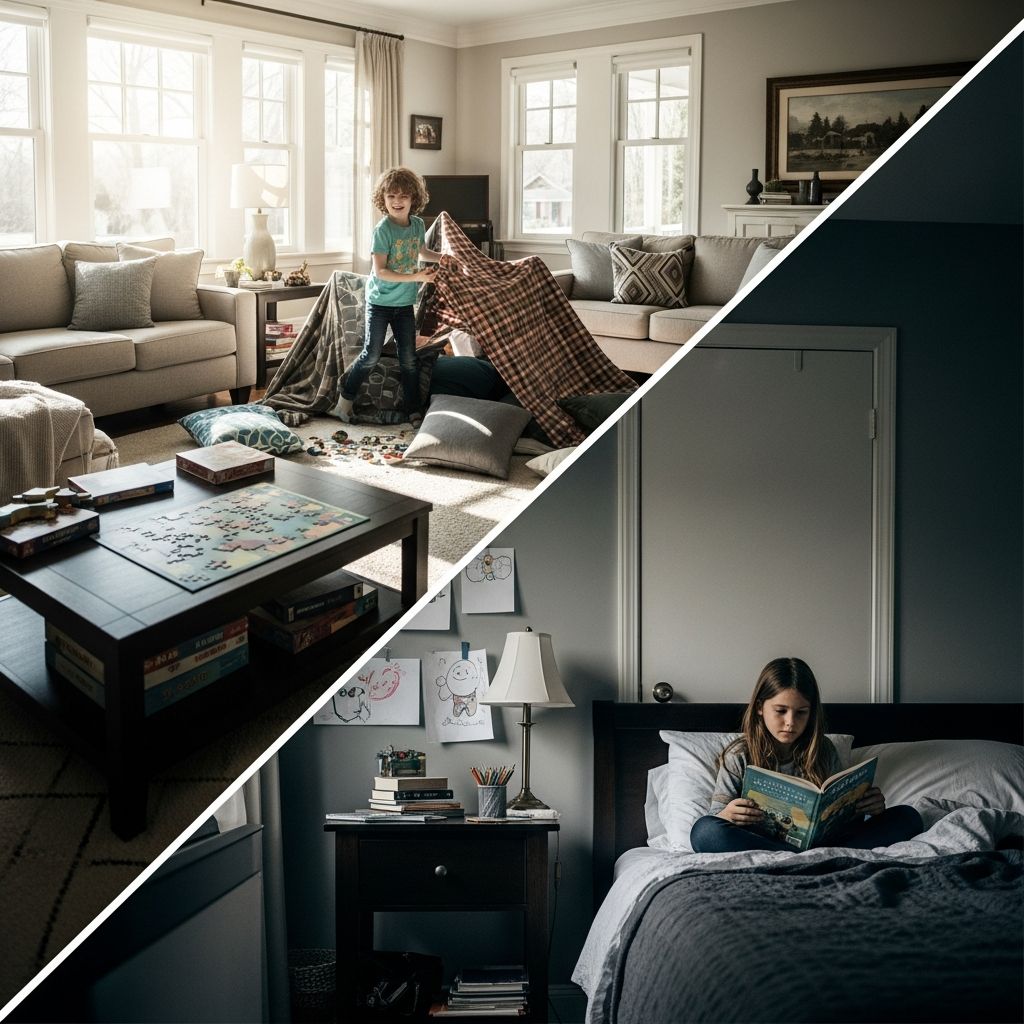
Parents often notice that their children seem to gravitate either toward the heart of the home or toward their own personal retreat. This simple pattern can quietly reveal a lot about comfort, connection, and boundaries in your family life.
What Is a “Living Room Kid”?
A “living room kid” is a child who naturally spends most of their time in shared family spaces like the living room, kitchen, or dining area. These kids seem to set up camp in the middle of everyday life, surrounded by siblings, parents, pets, and the general noise of the household.
Rather than playing alone behind a closed door, a living room kid often prefers to build block towers near the coffee table, color at the kitchen island, or do homework at the dining room table where they can hear conversations and feel part of the action.
- They regularly bring toys, books, and art supplies into common areas.
- They may ask for help, feedback, or simply attention while they play.
- They often seem energized by background noise and casual interaction.
What Is a “Bedroom Kid”?
A “bedroom kid” is a child who prefers the privacy and control of their own room or a quieter corner of the home. Their bedroom becomes their base: a cozy, familiar space where they can recharge, create, read, or simply be alone.
Bedroom kids may choose to spend long stretches of time behind a partially closed or fully closed door, emerging mainly for meals, specific family time, or when they need something. This does not automatically mean withdrawal or disconnection; for some kids, it simply reflects a strong need for personal space.
- They frequently keep their favorite toys, devices, and projects in their room.
- They may find busy, noisy spaces overwhelming or distracting.
- They often feel safest and most relaxed in spaces they can control and personalize.
Living Room vs Bedroom: A Quick Overview
Although every child is unique, certain patterns tend to show up in living room kids and bedroom kids. The table below offers a broad, generalized comparison to help parents notice tendencies without boxing children into rigid labels.
| Aspect | Living Room Kid | Bedroom Kid |
|---|---|---|
| Preferred Space | Shared areas (living room, kitchen, family room) | Private areas (bedroom, reading nook, quiet corner) |
| Social Style | Often more outwardly social at home | Often more inwardly focused or selective about interaction |
| Noise Tolerance | Generally comfortable with background noise and chatter | May find noise overstimulating and prefer calmer environments |
| Play Pattern | Brings toys and activities into common spaces | Keeps most activities in their own room or personal zone |
| Emotional Needs | Feels secure with visible closeness and frequent interaction | Feels secure with autonomy, control, and predictable privacy |
What These Patterns Might Say About Your Family
Whether your home feels like a constant gathering in the living room or a peaceful collection of mostly occupied bedrooms, your child’s preferred space often reflects the overall tone of your household. It can hint at how welcome children feel in shared spaces and how the family balances togetherness with independence.
In some homes, toys and kid items naturally spill into every room, signaling that children are visibly part of the household story. In others, there may be a stronger emphasis on tidiness, quiet, or clear boundaries between adult and kid spaces, which can influence where children feel most comfortable spending their time.
- Freely used common areas can communicate, “You belong here just as you are.”
- Well-defined private spaces can communicate, “Your need for privacy and autonomy is respected.”
- Having both options available can show that your family values flexibility and choice.
Temperament: Extrovert, Introvert, or Something In Between?
A child’s natural temperament plays a huge role in whether they become more of a living room kid or a bedroom kid. Extroverted children often draw energy from being near others, making shared spaces feel exciting, comforting, or simply more fun.
Introverted children, or those who are highly sensitive, may crave quieter, more predictable settings where they can think clearly and self-regulate. For them, a bedroom can be a sanctuary rather than a sign of withdrawal or rejection of family time.
- Extroverted children might prefer doing homework at the kitchen table to stay plugged into the family.
- Introverted or sensitive children may unwind best when they can close a door and control their environment.
- Many kids shift between both modes depending on mood, age, and daily stress.
Age and Developmental Stage Matter
The meaning of a living room kid or bedroom kid can change as children grow. Young children often seek physical closeness and frequent reassurance, which naturally pulls them into shared spaces. They may want eyes on them while they explore, play, or experiment.
As kids move into later childhood and adolescence, a stronger pull toward the bedroom can reflect a healthy need for identity, privacy, and independence. Teens, especially, may use their rooms as a base for self-expression, hobbies, and digital social lives, even when they feel securely attached to their parents.
- Toddlers and preschoolers are more likely to be living room kids simply because they still rely on constant supervision and closeness.
- School-age children may start to split their time, coming out for family activities but returning to their room for reading or gaming.
- Teenagers may appear to be almost exclusively bedroom kids, but still value rituals of connection such as shared meals and car rides.
How House Layout and Rules Shape Where Kids Hang Out
Beyond temperament and age, the literal design of your home can heavily influence whether you see more living room behavior or bedroom behavior. Open-plan homes naturally funnel people into the same few spaces, while homes with separate rooms or different floors make quiet retreat much easier.
Family rules around screens, food, noise, and mess also matter. If devices are only allowed in the living room, for example, a child who loves video games might become a living room kid by necessity, even if they would otherwise prefer more solitude.
- Open living spaces encourage shared activities, overlapping conversations, and visible togetherness.
- Smaller or more compartmentalized homes can lead to kids naturally claiming a room or corner as “theirs.”
- Rules about toys, noise, and screen time can nudge children either toward common areas or into private spaces.
Benefits of Raising Living Room Kids
Having a child who spends most of their time in shared spaces can strengthen everyday connection. Parents can easily observe moods, notice subtle shifts in behavior, and naturally engage in small talk or check-ins without needing a big, formal conversation.
Living room kids often feel woven into the fabric of family life. They see and overhear how the household runs, from casual jokes to minor disagreements, which can offer organic learning about communication, conflict resolution, and emotional expression.
- More frequent micro-moments of connection, such as quick hugs, eye contact, and shared laughter.
- Greater opportunity for parents to offer support in real time when kids seem frustrated or sad.
- Kids feel that their presence and activities are welcome in the main spaces of the home.
Benefits of Raising Bedroom Kids
Bedroom kids can develop a strong sense of self and independence, as they practice managing their own space, time, and interests. The privacy of a bedroom offers room to think, experiment, and decompress without constant oversight.
For children who are easily overwhelmed or overstimulated, the option to retreat to a quiet room can be protective and emotionally healthy. It allows them to reset before coming back into shared spaces feeling calmer and more grounded.
- Children learn to entertain themselves and build internal resources for boredom and stress.
- Private space can support hobbies that require focus, like reading, art, or writing.
- Respecting a child’s room teaches them that their boundaries and comfort levels matter.
Potential Challenges With Each Pattern
Both patterns come with potential challenges. A very strong living room dynamic can occasionally make it harder for anyone in the family to get quiet time, especially if kids resist playing independently or feel anxious when alone in their rooms.
On the other hand, a strong bedroom pattern may sometimes mask loneliness, withdrawal, or unspoken conflicts if parents rarely see what is happening behind a closed door. Balancing trust with gentle curiosity becomes especially important in these cases.
- Living room kids may struggle with transitions to independent play or sleep in their own room.
- Bedroom kids may become highly protective of their space and resist family routines or shared time.
- Parents may worry either about “too much dependence” or “too much distance,” depending on the pattern.
How to Support a Living Room Kid
If your child loves being where the action is, you can support that preference while still introducing healthy boundaries and downtime. Start by accepting that some clutter and noise may be part of this season of life, and view it as a visible reminder that your child feels safe and welcome.
At the same time, include subtle opportunities for autonomy so that a living room kid can slowly practice comfort with solitude and personal space, without feeling pushed away or rejected.
- Create a dedicated “kid zone” within the living room with small storage bins or baskets.
- Offer quiet activities in common areas, like puzzles or drawing, to balance high-energy play.
- Gently encourage short periods of play in their room, framing it as a fun experiment rather than a punishment.
How to Support a Bedroom Kid
For a bedroom kid, the main goal is to honor their need for personal space while also creating predictable, meaningful points of connection. Respect for closed doors, knocking, and asking permission to enter can go a long way toward building trust.
At the same time, regular rituals in common areas—like shared meals, game nights, or evening check-ins—help ensure that privacy does not turn into complete isolation or emotional distance.
- Agree on a few non-negotiable family touchpoints, such as dinner together most nights.
- Ask open-ended questions about their interests and projects rather than only checking on homework or chores.
- Occasionally invite them to bring a favorite activity (like drawing or a handheld game) into the living room while others are nearby.
Blended Families: When Siblings Are Different
In many homes, one child is unmistakably a living room kid while another is clearly a bedroom kid. This contrast can create tension if siblings tease each other or if parents unintentionally label one style as “better” or “easier.”
Recognizing that both patterns are valid helps frame differences as personality quirks rather than problems to solve. The goal becomes supporting each child’s style while still nurturing a shared sense of belonging and family identity.
- Avoid comparing siblings or using labels as fixed identities.
- Give each child a say in how and where they spend their free time at home.
- Plan occasional activities that appeal to both styles, such as a board game in the living room followed by quiet reading time.
Practical Tips to Balance Togetherness and Space
Regardless of your child’s preferences, most families benefit from intentionally balancing shared time with individual space. Clear expectations, gentle flexibility, and open communication make that balance easier to maintain over time.
You do not need to redesign your entire home to support this; small adjustments in routine and attitude can be enough to help both living room kids and bedroom kids feel understood and valued.
- Set a few daily or weekly family rituals in shared spaces, like weekend breakfasts or movie nights.
- Allow children to personalize at least part of the living room or their bedroom to reflect their interests.
- Check in regularly about how your child feels in different parts of the home and be open to small changes.
Frequently Asked Questions (FAQs)
1. Is it bad if my child never wants to leave their room?
Spending a lot of time in a bedroom is not automatically a problem, especially for older children and teens who value privacy. Concern is more warranted if your child seems consistently sad, withdrawn, or uninterested in activities they used to enjoy, in which case a gentle conversation or professional support may be helpful.
2. Should I force my bedroom kid to hang out in the living room?
Forcing a resistant child into common spaces can backfire and increase tension. Instead, focus on building a few reliable family rituals and inviting them to join in ways that respect their personality, while continuing to show genuine interest in their inner world.
3. How do I encourage my living room kid to be more independent?
You can gradually introduce small moments of independent play or quiet time, starting with very short intervals and positive framing. Emphasize that they always have the option to come back and that they are safe and loved even when not physically close.
4. Can a child switch from a living room kid to a bedroom kid over time?
Yes, many children move along this spectrum as they grow, develop new interests, or go through changes at school and at home. It is more helpful to stay curious about what a shift might mean emotionally than to worry about the label itself.
5. What if our home is very small and there is no clear separation between spaces?
In smaller homes, even minor distinctions—like a special reading corner, a desk area, or a particular chair—can help kids feel a sense of ownership and choice. The emotional message you send about belonging and respect matters more than the physical square footage.