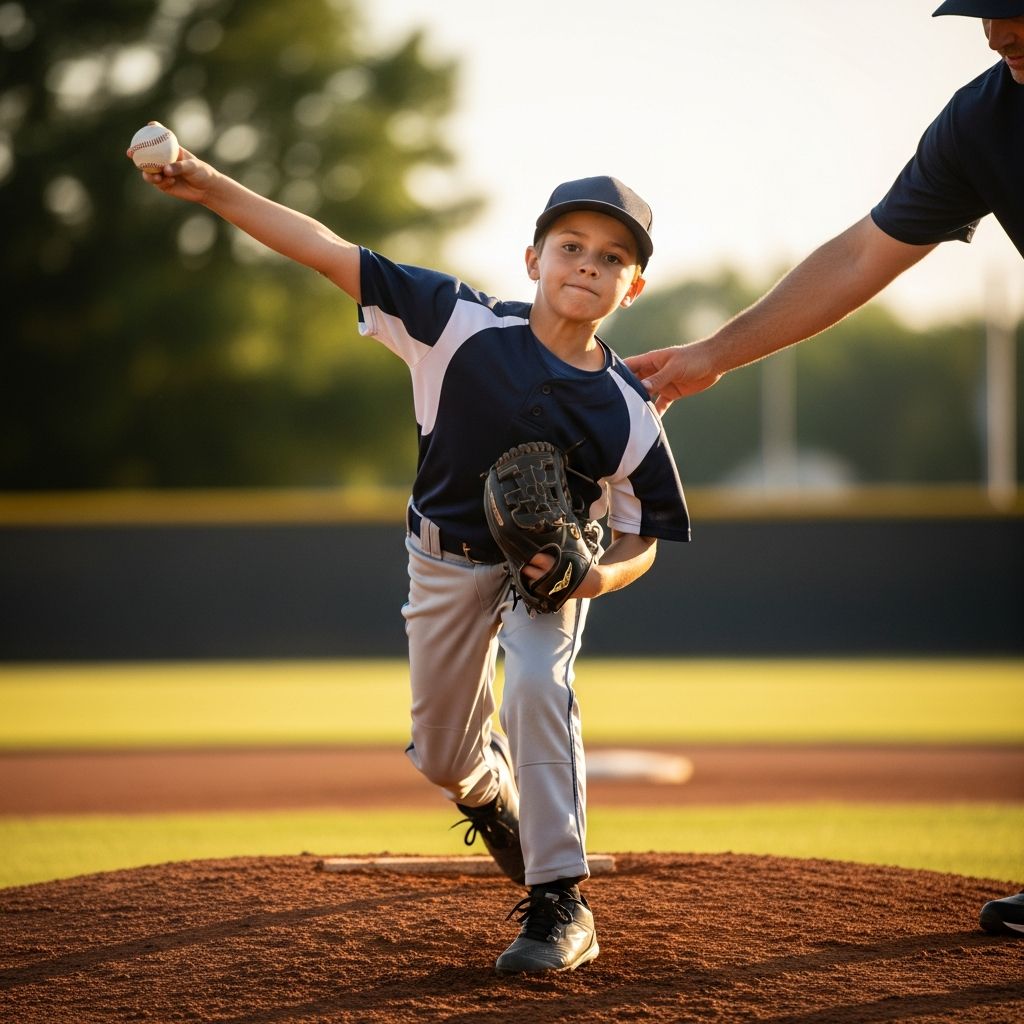
Young baseball and softball players often love to throw, but too many pitches or hard throws can strain a growing elbow and lead to a condition commonly known as Little League elbow. This overuse injury affects the inside of the elbow where growing bones, tendons, and ligaments are especially vulnerable.
What Is Little League Elbow?
Little League elbow is an overuse injury on the inner side of the elbow that happens when a child throws repeatedly before the arm has enough time to rest and recover. The area affected includes the growth plate and soft tissues that help stabilize the elbow during throwing motions.
This condition is especially common in pitchers, but it can affect any young player who throws a lot, including catchers, infielders, and outfielders. It tends to appear in children and early teens whose growth plates are still open and more fragile than adult bone.
How the Elbow Works During Throwing
To understand why Little League elbow happens, it helps to look at what the elbow does during a throw. When a child cocks the arm back and whips it forward, powerful muscles in the forearm pull on the inner side of the elbow to create speed.
The inner elbow contains a bony area where tendons from those muscles attach, along with a growth plate in younger athletes. Repeating the same high-stress motion hundreds of times can irritate this area, especially if mechanics are poor or pitch counts are too high.
Why Young Athletes Are at Higher Risk
Growing bodies respond differently to stress than adult bodies. In children, growth plates—soft, developing areas near the ends of bones—are weaker than nearby ligaments and tendons, making them more likely to be injured by repetitive stress.
Because growth plates help shape the future length and alignment of bones, injury in these areas needs prompt attention. Ignoring pain around a growth plate can lead to more serious problems, including long-term pain, deformity, or reduced range of motion.
Common Causes and Risk Factors
Little League elbow rarely comes from one single throw; it results from a build-up of stress over time. Certain patterns make this much more likely to occur in young players.
Parents and coaches should watch for the following risk factors and adjust training before pain appears.
- Too many pitches or throws: Exceeding recommended pitch counts or throwing on multiple teams without proper rest.
- Year-round play: Playing baseball or softball without an off-season, giving the elbow no time to recover.
- Specializing as a pitcher too early: Focusing on pitching at a young age instead of rotating positions.
- Improper throwing mechanics: Using poor form, side-arming, or throwing mostly breaking balls before the body is ready.
- Inadequate strength and flexibility: Weak shoulder, core, and back muscles or tightness in the arm and upper body.
- Playing through pain: Ignoring early warning signs and continuing to throw despite discomfort.
Signs and Symptoms Parents Should Watch For
Early recognition is critical. Many young athletes will downplay symptoms because they want to keep playing, so adults need to watch carefully for subtle changes.
Pain may start mild and only appear during or after throwing, but it can worsen over time if the child continues to play without rest.
- Pain or tenderness on the inside of the elbow, especially while throwing.
- Swelling or warmth around the inner elbow.
- Stiffness or trouble fully straightening the arm.
- Reduced throwing speed, control, or distance.
- Complaints of the elbow feeling weak, tired, or “loose.”
- A popping or catching feeling during certain throws in more advanced cases.
If your child consistently rubs the inner elbow, asks for ice, or wants to stop throwing earlier than usual, treat those as warning signs rather than temporary discomfort.
When to Seek Medical Evaluation
Any young athlete with elbow pain that doesn’t quickly improve with rest should be checked by a health professional familiar with sports injuries in children. This is especially true if the pain is located on the inside of the elbow and has lasted more than a few days.
Urgent medical attention is recommended if your child:
- Cannot fully bend or straighten the elbow.
- Feels a sudden sharp pain, pop, or snap while throwing.
- Develops visible deformity, severe swelling, or bruising.
- Experiences weakness, numbness, or tingling in the hand or fingers.
How Doctors Diagnose Little League Elbow
Evaluation usually begins with a detailed history and physical exam. The doctor will ask about how often the child throws, what positions they play, their training schedule, and when the pain began.
During the exam, the clinician will gently press around the elbow, test range of motion, and assess strength and stability. Simple movements may be used to reproduce symptoms and better understand which structures are involved.
Imaging and Further Testing
In some cases, imaging studies help confirm a diagnosis and rule out more serious injuries. X-rays are commonly used to look at the growth plate and detect any widening, irregularities, or tiny fractures.
If symptoms are severe or persistent, or if the doctor suspects damage to ligaments, tendons, or cartilage, more advanced imaging such as MRI may be considered. The goal is to understand both the extent of injury and the safest path back to sport.
Treatment: First Steps at Home
Once Little League elbow is suspected, the most important first step is to stop throwing. Continuing to pitch or throw hard puts additional stress on the injured area and increases the risk of lasting damage.
Initial home management typically focuses on reducing pain and allowing irritated tissues to calm down.
- Rest: Have your child avoid pitching, hard throws, and any activity that causes pain.
- Ice: Apply a cold pack wrapped in a thin towel to the inner elbow for about 15–20 minutes at a time, several times a day, especially after activity.
- Comfortable positioning: Encourage your child to keep the arm relaxed at their side or supported on a pillow rather than hanging or bearing weight.
- Over-the-counter pain relief: Use medications only as directed by your healthcare provider and never as a way to “push through” pain.
Medical Treatment and Rehabilitation
Most cases of Little League elbow improve with non-surgical treatment, especially when addressed early. The length of recovery can vary depending on how long the problem has been present and how severe it is.
Your child’s treatment plan may include a phased approach that gradually moves from rest to strengthening and then to a carefully controlled return to throwing.
Role of Physical Therapy
Physical therapy or sports rehabilitation often plays a major part in recovery. A therapist trained in pediatric sports medicine can design a personalized program that addresses not only the elbow but the whole throwing chain.
Common therapy goals include:
- Restoring full, pain-free range of motion in the elbow and shoulder.
- Strengthening the shoulder, forearm, and upper back muscles that protect the elbow.
- Improving core stability and hip strength, so the whole body shares the work of throwing.
- Correcting mechanical issues that increase stress on the inner elbow.
Possible Complications if Ignored
When Little League elbow is caught early and managed properly, long-term problems are less likely. However, ignoring pain and continuing to throw can turn a minor overuse injury into a more serious condition.
Potential complications may include small fractures through the growth plate, pieces of bone being pulled away by stressed tendons, chronic instability, or deformity of the elbow as it finishes growing.
| Situation | Likely Outcome |
|---|---|
| Pain is reported early and throwing is stopped promptly. | Shorter recovery time, usually full return to sport with minimal risk of long-term issues. |
| Pain is ignored and the child continues to pitch heavily. | Higher chance of growth plate damage, longer time out of sport, and possible need for more intensive treatment. |
| Severe pain with sudden pop during throwing and delayed evaluation. | Increased risk of significant structural injury and, in some cases, consideration of surgical options. |
Returning to Throwing Safely
The decision to return to throwing should always be guided by a healthcare professional and depends on healing, strength, and mechanics—not just time on the calendar. Children should be completely pain-free in daily activities and have full motion and strength before starting a return-to-throw program.
A structured plan usually begins with light throws at short distances and gradually increases intensity, volume, and distance over several weeks. Any return of pain is a signal to stop and inform the treating clinician or therapist.
Prevention: Protecting Young Arms Before They Hurt
Prevention is far better than treatment. Parents and coaches can work together to create an environment where performance and safety are equally valued, and where kids feel comfortable speaking up about discomfort.
Prevention focuses on managing workload, teaching proper mechanics, and supporting overall physical development.
Practical Prevention Tips
- Follow league or medical guidelines for maximum pitches per game, week, and season.
- Ensure regular rest days from throwing, including full weeks or months off during the year.
- Encourage position rotation so that one child is not always pitching or catching.
- Avoid asking young pitchers to throw breaking balls or specialty pitches before they are physically ready.
- Include warm-up routines with gentle throwing and dynamic stretching before practices and games.
- Promote an off-season that includes different sports and activities to balance muscle use.
How Parents and Coaches Can Communicate Better
Open communication between parents, coaches, and athletes is essential. Children may fear losing playing time or disappointing adults, so they need to hear clearly that health comes first.
Adults should agree that any report of elbow pain means the child will stop throwing immediately and be evaluated if the pain does not quickly resolve with rest.
Key Messages to Share with Young Athletes
- It is never “tough” to hide pain; it is smart to speak up.
- Taking a break early can keep you in the game for many more seasons.
- Good mechanics and strength training help you throw harder and stay healthier.
FAQs About Little League Elbow
Is Little League elbow the same as a simple muscle strain?
No. While it may feel like a strain at first, Little League elbow involves stress to the growth plate and structures that stabilize the inner elbow, which can be more serious than a routine muscle strain if ignored.
Can a child with Little League elbow still play another position?
Sometimes they can play a position that does not require frequent throwing, but this should only be decided with guidance from a healthcare professional. In many cases, complete rest from throwing is recommended until symptoms resolve.
Will my child need surgery?
Most young athletes with Little League elbow do not need surgery and recover fully with rest, rehabilitation, and changes to their throwing routine. Surgery is typically reserved for more severe injuries, such as significant growth plate damage or bone fragments, and is considered only after non-surgical care has been tried.
How long does recovery usually take?
Recovery time varies widely. Mild cases may improve over several weeks with rest and therapy, while more advanced injuries can require a few months before full return to pitching. Rushing back too soon greatly increases the chance of recurrence.
Can my child return to pitching at the same level?
Many children return to pitching as well or better than before, especially when they follow a structured rehab program and work on mechanics and strength. The focus should be on safe, gradual progress rather than hurrying back to pre-injury performance.
Key Takeaways for Families
Little League elbow is a preventable overuse injury that appears when a growing arm is asked to throw too much, too hard, or with poor mechanics. Paying attention to early pain and limiting workload can spare a child from unnecessary suffering and long breaks from a sport they enjoy.
With prompt evaluation, proper rest, and thoughtful conditioning, most young athletes can recover fully and return to the field. The most powerful protection comes from a shared commitment among parents, coaches, and players to prioritize long-term health over short-term wins.