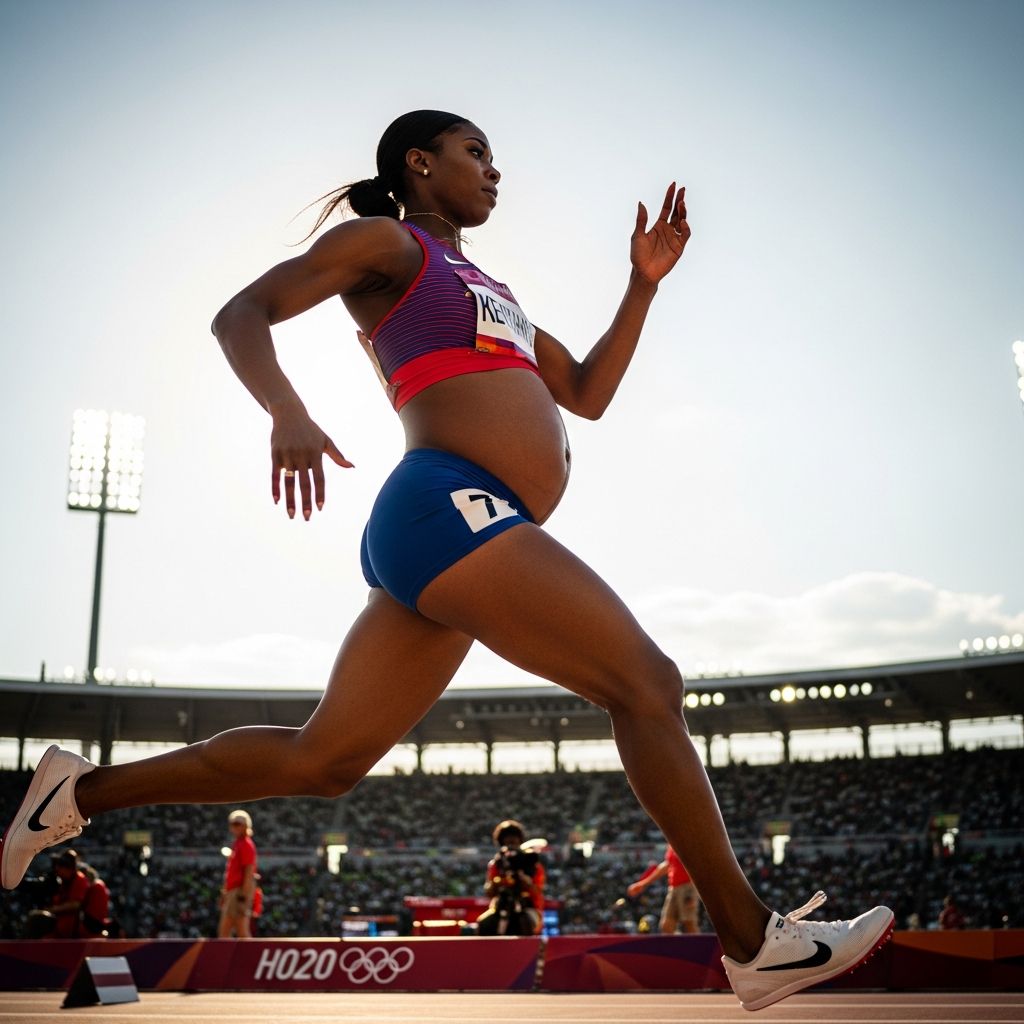
Lindsay Flach etched her name into sports history by tackling the demanding heptathlon at the 2021 U.S. Olympic Trials while 18 weeks pregnant. This remarkable feat not only showcased her elite athleticism but also challenged long-held assumptions about pregnancy and high-level competition.
The Grueling World of Heptathlon
The heptathlon stands as one of track and field’s most punishing events, testing athletes across seven disciplines over two days. Competitors face the 100-meter hurdles, high jump, shot put, 200-meter dash, long jump, javelin throw, and culminating 800-meter run. Each event demands explosive power, endurance, speed, and technical precision, making it a true measure of all-around athletic prowess.
For elite athletes like Flach, who had previously competed in the 2012 and 2016 Olympic Trials, the event represents years of relentless training. Scoring is based on performance tables where points accumulate; the highest total wins. In 2021, held in Eugene, Oregon, amid scorching heat, the trials amplified the physical toll.
Flach’s Bold Decision to Compete
At 18 weeks pregnant, Flach chose to participate, keeping her condition private initially to focus on her performance. She announced it post-event on Instagram, sharing a photo of her bump with the caption highlighting the uniqueness of her third Olympic Trials appearance. Cleared by medical professionals, she took every precaution, prioritizing safety for herself and her baby.
Flach completed six full events and ran 100 meters of the final 800-meter race before wisely stopping. She placed 15th out of 18, a respectable showing under extraordinary circumstances. Her high jump performance, captured in video, demonstrated grace and power despite her pregnancy.
Navigating Health Risks and Precautions
Competing while pregnant raises critical health considerations. Medical experts generally advise moderation, but for trained athletes, structured activity can be safe. The American College of Obstetricians and Gynecologists (ACOG) supports exercise during pregnancy for women without complications, recommending 150 minutes of moderate activity weekly. High-intensity sports require individualized assessment.
- Hydration and Heat Management: Eugene’s record heat posed dehydration risks; Flach monitored fluids closely.
- Impact Monitoring: Events like hurdles and jumps involve landing forces, but her experience minimized injury risk.
- Fetal Monitoring: Pre- and post-event checkups ensured baby’s well-being.
- Listen to Body Signals: Stopping the 800m exemplified prudent decision-making.
Flach later shared she aimed to end her career on her terms, proving women can excel while pregnant.
Breaking Barriers: Athletes Who Competed Pregnant
Flach joins an elite group of mothers in sports. Here’s a comparison of notable pregnant competitors:
| Athlete | Sport | Gestation Stage | Achievement |
|---|---|---|---|
| Lindsay Flach | Heptathlon | 18 weeks | 15th at 2021 Olympic Trials |
| Serena Williams | Tennis | ~8 weeks | Won Australian Open 2017 |
| Kristen Moore | Basketball | Early pregnancy | WNBA games while pregnant |
| Allyson Felix | Track | Postpartum return | Olympic medals after childbirth |
These stories normalize pregnancy in elite sports, shifting narratives from risk to resilience.
Training Adjustments for Expectant Athletes
Maintaining fitness during pregnancy demands smart modifications. Flach’s regimen likely included:
- Reduced volume but maintained intensity in safe zones.
- Core stability work to support growing belly.
- Cross-training like swimming to ease joint stress.
- Nutrition focus: extra calories, protein, iron for maternal-fetal health.
Experts from the U.S. Olympic & Paralympic Committee emphasize coach-athlete-medical team collaboration. Postpartum, phased return-to-training protocols aid recovery.
Psychological Strength and Public Reaction
Flach faced scrutiny but responded with poise, telling media she wanted to demonstrate capability. Her story garnered widespread acclaim, inspiring moms worldwide. Social media buzzed with support, amplifying discussions on work-life balance for female athletes.
The mental fortitude required—pushing through fatigue, doubt, and societal judgment—highlights the ‘mother athlete’ mindset. Flach’s transparency fosters a supportive community.
Long-Term Impact on Sports and Motherhood
Flach’s participation influences policy and perception. Governing bodies now scrutinize pregnancy accommodations, from flexible qualifying to parental leave. It empowers women to pursue ambitions without pausing for motherhood.
Research from the Journal of Athletic Training (2023) shows competitive moms often return stronger, with enhanced resilience. Flach’s baby, born healthy, underscores positive outcomes when managed well.
Expert Advice for Aspiring Mom Athletes
Consult specialists early. Tailor training to trimesters: focus on cardio in first, strength in second, recovery in third. Prioritize sleep, mental health. Build support networks—coaches, doulas, peers.
\”Exercise is medicine for mother and baby when done safely.\” — ACOG Guidelines
Frequently Asked Questions
Is it safe to compete in track events while pregnant?
Yes, for low-risk pregnancies with medical clearance. Avoid contact sports or extreme altitudes; monitor for warning signs like dizziness or contractions.
How did Lindsay Flach prepare for the Trials?
She continued training with adjustments, got doctor approval, and kept her pregnancy discreet initially to maintain focus.
What events did Flach complete fully?
All except the final 800m, where she ran 100m before stopping due to heat and caution.
Can pregnant women high jump?
Flach did successfully at 18 weeks; technique and experience reduce risks, but professional oversight is essential.
Has Flach competed post-pregnancy?
While specifics vary, many like her return to elite levels after maternity breaks.
Conclusion: Redefining Athletic Motherhood
Lindsay Flach’s Olympic Trials performance at 18 weeks pregnant transcends sport—it’s a testament to human potential. By competing fiercely, she paves the way for future generations, proving motherhood amplifies rather than diminishes athletic drive. Her legacy endures, inspiring balance between peak performance and life’s greatest joys.
References
- This Heptathlete Competed in the Olympic Trials at 18 Weeks Pregnant — The Bump. 2021-06-28. https://www.thebump.com/news/lindsay-flach-heptathlete-pregnant
- U.S. Trials: Heptathlete Flach high jumps while pregnant — NBC Olympics. 2021-06. https://www.nbcolympics.com/videos/us-trials-heptathlete-flach-high-jumps-while-pregnant
- Pregnant athlete dominates Olympic Trials heptathlon — YouTube. 2021. https://www.youtube.com/shorts/eILUhIVe5L4
- Physical Activity and Exercise During Pregnancy and the Postpartum Period — American College of Obstetricians and Gynecologists (ACOG). 2020-04-24. https://www.acog.org/clinical/clinical-guidance/committee-opinion/articles/2020/04/physical-activity-and-exercise-during-pregnancy-and-the-postpartum-period
- Return to Sport After Pregnancy in Elite Athletes — U.S. Olympic & Paralympic Committee. 2023-05-15. https://www.usopc.org/return-to-sport-after-pregnancy