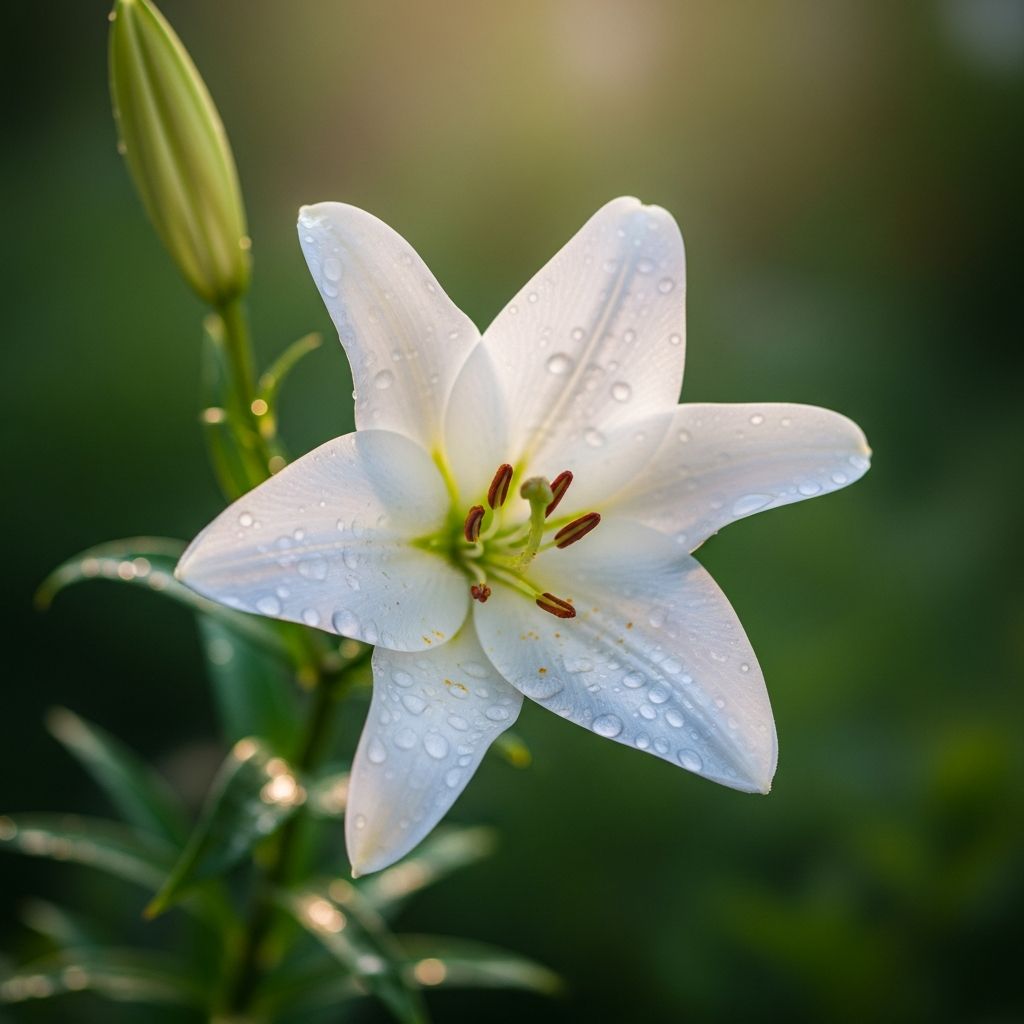
The name **Lily** evokes images of delicate white petals unfurling in a garden, representing innocence, renewal, and exquisite beauty. Derived directly from the flower renowned for its symbolic depth, Lily has captivated parents for generations as a choice that blends simplicity with profound elegance. This article delves into its linguistic roots, historical journey, international adaptations, numerological insights, and current trends, offering expectant parents a comprehensive guide to this perennial favorite.
Etymological Foundations of Lily
At its core, the name Lily stems from ancient linguistic traditions tied to botany. The term traces back to Latin lilium, the plural form lilia entering Old English as lie, specifically denoting the lily flower celebrated for its pure white blooms. This Latin root shares kinship with Greek leirion, both likely borrowed from an Eastern Mediterranean source, possibly Coptic hreri or hleli, highlighting the flower’s cross-cultural reverence.
In biblical contexts, lilies appear prominently: the Old Testament’s Hebrew shoshanna translates to lily, while the New Testament renders Greek krinon similarly, embedding the flower—and by extension the name—in spiritual symbolism of purity and divine favor. Over centuries, lilium proliferated across Europe, evolving into German lie, Dutch lelie, Swedish lilja, French lis, and others, each carrying connotations of fairness and virtue. Today, Lily as a personal name directly channels this floral heritage, positioning it as a nature-inspired gem in naming conventions.
Historical Evolution and Cultural Symbolism
Lily’s adoption as a given name blossomed in the English-speaking world during the late 19th century, amid a floral naming vogue during the Victorian era. Parents drew from nature’s palette, favoring names like Rose, Violet, and Daisy, with Lily symbolizing untainted grace amid industrialization. Its Christian associations further elevated it—lilies represent the Virgin Mary and resurrection, appearing in religious art as emblems of innocence.
By the early 20th century, Lily waned slightly but experienced revivals, particularly post-2000, as minimalist, vintage names resurged. In literature and folklore, figures like Tiger Lily from Peter Pan added whimsical allure, while real-world bearers reinforced its charm. The name’s versatility shone as a diminutive for Elizabeth, Lillian, or Lilith, allowing familial ties without full formality. Across history, Lily has transcended trends, embodying enduring qualities of beauty and resilience.
Global Variations and Nicknames
Lily’s appeal spans continents, manifesting in diverse forms that preserve its floral essence. In English contexts, elongated versions like Lillian or Liliana offer sophistication, while Lilia brings Latin romance. French influences yield Lilianne or Liliane, evoking Parisian elegance, and Hebrew echoes Lilit with mythical undertones. Germanic Lilien and Scandinavian Lilli provide crisp alternatives, demonstrating the name’s adaptability.
Nicknames add playfulness: classic Lil or Lils suit everyday use, while floral nods like Petal, Blossom, or Flower infuse creativity. Compound delights such as Lily-Rose or Lily Beth blend tradition with uniqueness, and initials like LB personalize further. These options ensure Lily fits any cultural backdrop or family dynamic, from minimalist to elaborate.
| Language/Region | Variation | Meaning/Note |
|---|---|---|
| English | Lillian, Liliana | Formal extensions with vintage charm |
| French | Liliane, Lilianne | Elegant, soft pronunciation |
| Hebrew | Lilit | Historical, mythical connotations |
| Scandinavian | Lilli | Short, modern twist |
| Germanic | Lilien | Direct floral translation |
Popularity Trends Across Decades
In recent years, Lily has flourished in popularity charts, particularly in English-speaking nations. Its steady climb reflects a preference for short, sweet names with natural ties. In the United States and United Kingdom, it ranks highly among girl names, buoyed by celebrity endorsements and media exposure. European countries like Belgium place it in the top 200 for newborns as of 2021, signaling broad appeal.
Compounds like Lilyrose (35 U.S. births in 2022) and Lillyrose (11) show innovative pairings gaining traction. While predominantly feminine, rare male uses highlight gender fluidity in modern naming. Data from naming databases confirm Lily’s top-tier status, often hovering in the top 10-20, driven by its phonetic ease and symbolic purity. This resurgence aligns with broader shifts toward botanical and heritage names.
- U.S. Trends: Consistent top 20 since early 2000s
- U.K. Appeal: Perennial favorite in top 10
- Global Rise: Strong in Australia, Canada, Europe
- Future Outlook: Likely sustained due to timeless vibe
Numerology and Personality Insights
Pythagorean numerology assigns Lily a Destiny Number of 4 (L=3, I=9, L=3, Y=7; 22→4), portraying bearers as practical builders who thrive on structure and reliability. Such individuals excel in detail-oriented fields like engineering or management, offering loyalty in relationships though sometimes rigidity. The Personality Number, also 4 (consonants sum to 13→4), projects trustworthiness and orderliness, making Lilys appear dependable and straightforward.
These interpretations, blending heart (from vowels) and discipline, suggest a balanced, grounded character. While for entertainment, they add whimsical depth to name selection, resonating with parents seeking meaningful layers.
Why Choose Lily for Your Daughter?
Lily stands out for its phonetic beauty—two syllables flowing effortlessly—and visual simplicity, ideal for signatures and monograms. Its nature link promotes positive traits like grace and growth, while versatility suits siblings named Rose or Ivy. Pronunciation universality minimizes mishaps abroad, and its gender-leaning femininity aligns with traditional yet progressive tastes.
Potential middle name pairings amplify appeal:
- Lily Grace: Enhances purity theme
- Lily Mae: Rustic, Southern charm
- Lily Sophia: Intellectual elegance
- Lily Jade: Earthy contrast
- Lily Noelle: Festive warmth
Drawbacks are few: commonality might prompt nickname preferences, and floral associations could evoke allergies humorously. Overall, Lily promises a name as resilient and lovely as the flower itself.
Frequently Asked Questions About the Name Lily
Is Lily a biblical name?
Yes, lilies symbolize purity in the Bible, referenced in Song of Solomon and Matthew as metaphors for beauty and faith.
What are unique nicknames for Lily?
Options include Lil, Lils, Petal, or creative ones like Tiger for spunky vibes.
How popular is Lily in 2026?
It remains a top contender globally, especially in English-speaking countries, with steady rises.
Can Lily be a boy’s name?
Rarely, but its floral softness allows unisex potential in progressive families.
What does Lily symbolize culturally?
Purity, renewal, and love across Christianity, Victorian lore, and Eastern traditions.
References
- Lily Baby Name Meaning, Origin, Popularity Insights — Momcozy. 2023. https://momcozy.com/blogs/baby-names/lily
- Lily – Etymology, Origin & Meaning — Etymonline. 2023-10-12. https://www.etymonline.com/word/lily
- Lily (name) — Wikipedia. 2023. https://en.wikipedia.org/wiki/Lily_(name)