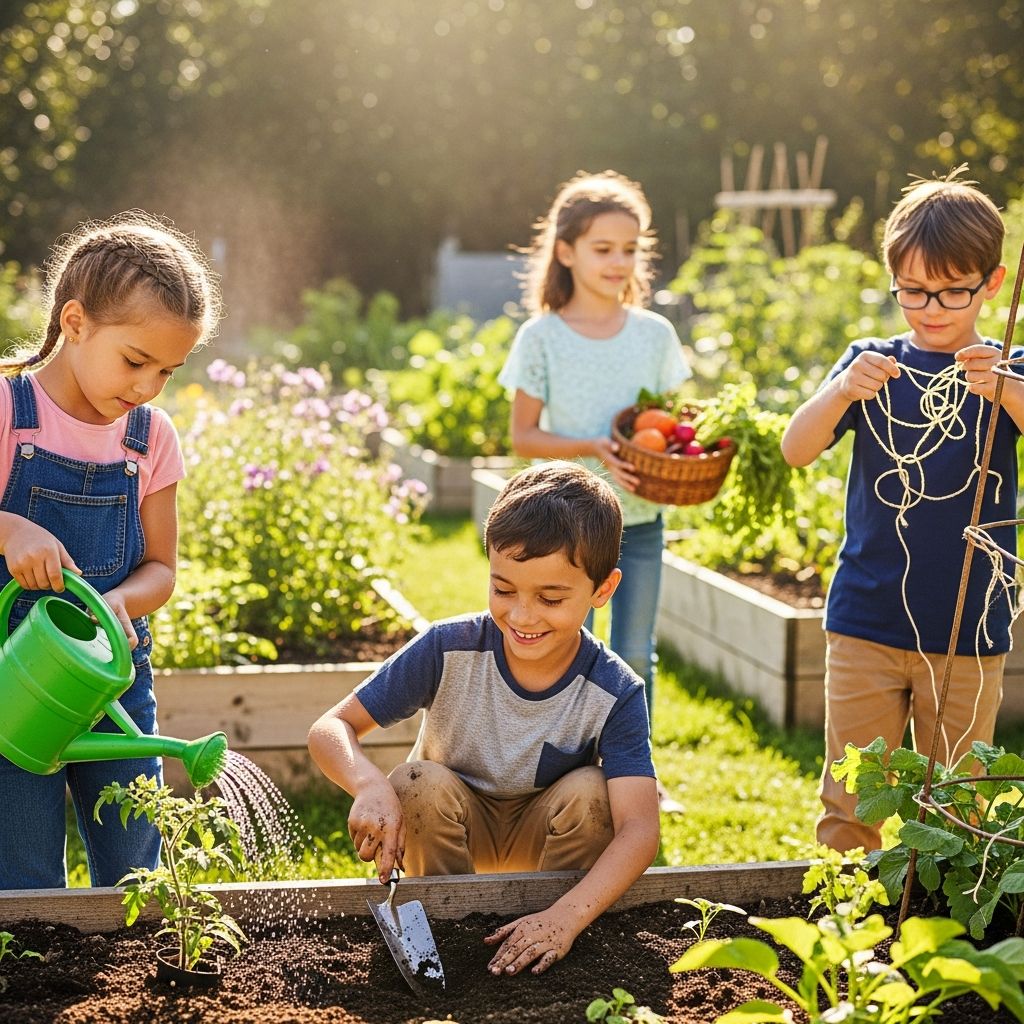
Helping children develop self-reliance is one of the most rewarding aspects of parenting. By introducing practical life skills early, parents lay the foundation for kids to thrive as independent adults. These abilities not only equip them to handle everyday challenges but also cultivate a strong sense of confidence and adaptability. This comprehensive guide explores key areas of skill-building, tailored to different developmental stages, with real-world strategies to implement at home.
Why Life Skills Matter in Early Development
From toddlerhood through adolescence, mastering life skills transforms children from dependent learners into proactive individuals. Research from child development experts highlights that early exposure to responsibilities enhances cognitive growth, emotional regulation, and social competence. For instance, the American Academy of Pediatrics emphasizes that structured skill-building activities improve executive functioning, which includes planning, focus, and self-control. Children who learn these skills early are better prepared for academic success and future career demands.
Independence isn’t about abandoning support; it’s about gradual empowerment. Parents act as guides, providing tools while stepping back to let kids experiment and learn from outcomes. This approach reduces anxiety in new situations and promotes a growth mindset, where challenges are seen as opportunities rather than threats.
Core Personal Care Skills for Daily Independence
Personal hygiene and self-care form the bedrock of autonomy. Starting with simple routines builds habits that last a lifetime, promoting health and self-respect.
- Handwashing and Grooming: Teach the 20-second scrub technique using timers or songs. Visual charts with steps—wet hands, soap, lather, rinse, dry—make it engaging for young ones. The Centers for Disease Control and Prevention (CDC) reports that proper hand hygiene reduces illness by 20-30% in children.
- Dressing and Grooming: Encourage selecting outfits and fastening buttons or zippers. For preschoolers, lay out two choices to foster decision-making without overwhelming them.
- Bathroom Independence: Guide toilet training with privacy as they age, transitioning to independent wiping and flushing by age 4-5.
These routines instill discipline and body awareness. Use play-based methods, like doll dress-up, to practice without pressure.
Mastering Household Responsibilities
Chores teach accountability and contribute to family dynamics. Assign tasks matching age and ability to ensure success and motivation.
| Age Group | Recommended Chores | Skills Developed |
|---|---|---|
| 2-4 Years | Putting toys away, setting placemats | Fine motor skills, following instructions |
| 5-7 Years | Loading dishwasher, making bed | Organization, sequencing tasks |
| 8-10 Years | Folding laundry, watering plants | Responsibility, attention to detail |
| 11+ Years | Vacuuming, preparing simple meals | Time management, safety awareness |
According to the American Academy of Pediatrics, children with regular chores show higher self-esteem and better peer relationships. Rotate tasks to prevent boredom and model enthusiasm to make chores positive.
Time Management and Organizational Strategies
Effective time use prevents overwhelm and builds discipline. Introduce clocks and planners gradually.
- Daily Schedules: Create visual timetables for school, play, and bedtime. Apps or printed charts help kids visualize their day.
- Priority Setting: Use the Eisenhower Matrix simplified for kids: urgent/important quadrants to sort homework vs. fun activities.
- Goal Tracking: Break big goals into steps, like ‘read 10 pages daily’ for a book challenge. Reward progress with stickers or privileges.
The National Association for the Education of Young Children (NAEYC) notes that structured routines enhance focus and reduce behavioral issues.
Financial Literacy from an Early Age
Money smarts prevent future pitfalls. Start with basics to demystify finances.
- Allowance Systems: Tie small weekly amounts to chores, dividing into save/spend/share jars.
- Budgeting Practice: Use play money for mock shopping trips, teaching value comparison.
- Saving Goals: Help set targets like a new toy, tracking progress on charts. The Consumer Financial Protection Bureau recommends starting financial education by age 3 with coin recognition.
These lessons curb impulse buying and promote delayed gratification, key to long-term success.
Building Problem-Solving and Critical Thinking
Resilience grows through tackling issues independently. Encourage ‘think aloud’ to model processes.
- Puzzle and Games: Board games like chess develop strategy; riddles sharpen logic.
- Real-Life Scenarios: Discuss ‘what if’ situations, like a lost toy, brainstorming solutions.
- Failure as Feedback: After mishaps, ask ‘What worked? What to change?’ to normalize setbacks.
Studies from the Harvard Graduate School of Education show problem-solvers excel in academics and adaptability.
Nurturing Social and Emotional Competence
Interactions build empathy and communication, vital for relationships.
- Active Listening: Practice turn-taking in conversations, reflecting back what was said.
- Conflict Resolution: Role-play apologies and compromises during sibling spats.
- Emotional Awareness: Use feelings charts to name and manage emotions, like deep breaths for frustration.
The Collaborative for Academic, Social, and Emotional Learning (CASEL) links these skills to improved mental health and achievement.
Nutrition and Basic Cooking Abilities
Healthy eating empowers kids to fuel themselves wisely.
- Meal Prep: Start with salads or sandwiches, progressing to stovetop safety by teens.
- Reading Labels: Compare nutrition facts to choose balanced snacks.
- Grocery Lists: Involve in planning and shopping to understand costs.
The USDA’s MyPlate guidelines support hands-on learning for lifelong healthy habits.
Age-Specific Milestones for Skill Progression
Tailor expectations to developmental readiness to avoid frustration.
- Preschool (3-5): Self-dressing, simple clean-up.
- Elementary (6-10): Homework routines, basic cooking.
- Middle School (11-13): Laundry, budgeting.
- Teens (14+): Driving prep, job applications.
Frequently Asked Questions (FAQs)
What age should I start teaching chores?
Begin around age 2 with fun, simple tasks like sorting socks to build positive associations.
How do I motivate reluctant kids?
Use timers for races, family challenges, or choice in tasks to make it engaging.
What if my child fails repeatedly?
Celebrate effort, break tasks smaller, and reassure that practice leads to mastery.
Are there risks to too much independence?
Supervise age-appropriately to ensure safety while allowing safe risks for growth.
How to balance skills with academics?
Integrate, like math in cooking or reading recipes, to reinforce school learning.
Parental Role: Guiding Without Over-Controlling
Success hinges on balance—support without hovering. Offer praise for effort (‘You kept trying!’), provide choices, and create practice zones like kid-friendly kitchens. Track progress in family meetings to celebrate wins. Occupational therapy insights from sources like the American Occupational Therapy Association suggest scaffolding: full support initially, fading as competence grows.
Consistency is key. Routines predict tasks, reducing resistance. Involve the whole family for modeling and shared accountability.
References
- Chores and Children — American Academy of Pediatrics. 2023-05-15. https://www.aap.org/en/patient-care/chores-and-children/
- Hand Hygiene for Children — Centers for Disease Control and Prevention. 2024-01-10. https://www.cdc.gov/handwashing/when-how-handwashing.html
- Routines and Rituals — National Association for the Education of Young Children. 2022-11-20. https://www.naeyc.org/resources/pubs/yc/nov2018/routines-and-rituals
- Financial Education for Young Learners — Consumer Financial Protection Bureau. 2023-09-01. https://www.consumerfinance.gov/consumer-tools/young-invincibles/financial-education/
- Teaching Problem-Solving — Harvard Graduate School of Education. 2024-03-12. https://www.gse.harvard.edu/ideas/usable-knowledge/21/03/teaching-problem-solving
- SEL Essentials — CASEL. 2024-06-05. https://casel.org/fundamentals-of-sel/
- MyPlate for Kids — United States Department of Agriculture. 2023-12-18. https://www.myplate.gov/life-stages/kids
- Occupational Therapy in Schools — American Occupational Therapy Association. 2024-02-28. https://www.aota.org/practice/practice-essentials/school