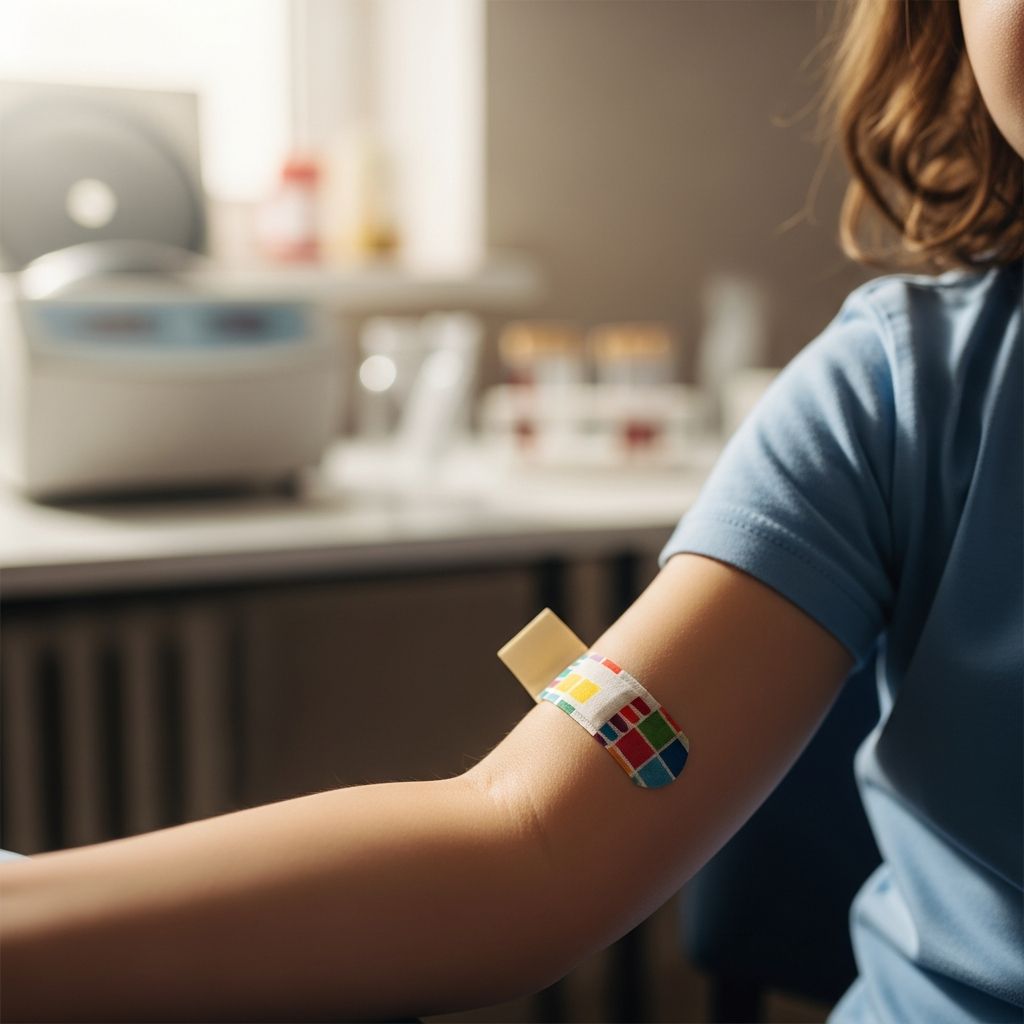
The luteinizing hormone (LH) blood test measures levels of a key hormone produced by the pituitary gland, crucial for assessing puberty development in children. This test helps diagnose conditions like precocious or delayed puberty by evaluating how LH interacts with other hormones to trigger sexual maturation.
Understanding Luteinizing Hormone’s Role in Child Development
LH, a glycoprotein hormone from the anterior pituitary, works under the influence of hypothalamic gonadotropin-releasing hormone (GnRH) and feedback from gonadal steroids. In children, low LH levels are typical during early childhood, gradually rising before puberty between ages 6-8, then surging to drive physical changes.
In girls, elevated LH signals ovaries to produce estrogen, supporting breast growth, body hair, and menstruation onset. In boys, it prompts testes to release testosterone, fostering facial hair, voice deepening, and sperm production. Monitoring LH alongside follicle-stimulating hormone (FSH) provides a complete picture of reproductive axis function.
When Doctors Recommend LH Testing for Children
Pediatricians order LH tests primarily for children showing signs of atypical puberty timing. Precocious puberty involves secondary sexual characteristics before age 8 in girls or 9 in boys, while delayed puberty lacks these by age 13 in girls or 14 in boys.
- High LH with early changes suggests central precocious puberty from pituitary overactivity.
- Normal or low LH with pubertal signs indicates peripheral precocious puberty, often due to gonadal or adrenal issues.
- Low LH in older children points to delayed puberty, possibly from hypothalamic-pituitary dysfunction.
Other triggers include brain tumors, injuries, infections like meningitis, genetic conditions such as Klinefelter syndrome, or treatments like chemotherapy.
The Science Behind LH in Puberty Stages
LH levels vary by age, sex, and Tanner stages, which classify puberty progression from I (prepubertal) to V (adult). These ranges guide clinicians in interpreting results accurately.
| Age Group | Females (IU/L) | Males (IU/L) |
|---|---|---|
| 1-8 years | <0.02-0.3 | <0.02-0.5 |
| 9-10 years | <0.02-4.8 | <0.02-3.6 |
| 11-13 years | <0.02-11.7 | 0.1-5.7 |
| 14-17 years | <0.02-16.7 | 0.8-8.7 |
For Tanner stages in females: Stage I (<0.02-0.3 IU/L), Stage II (<0.02-4.1), Stage III (0.6-7.2), Stage IV-V (0.9-13.3). Males: Stage I (<0.02-0.5), Stage II (0.03-3.7), Stage III (0.09-4.2), Stage IV-V (1.3-9.8).
Quest Diagnostics provides similar pediatric ranges, with 3-7 years ≤0.26 mIU/mL for both sexes, rising through adolescence. Variations exist between labs due to assay sensitivity; pediatric-specific tests detect down to 0.02 IU/L.
How the LH Blood Test is Performed in Children
The procedure is straightforward: a phlebotomist draws blood from a vein, typically in the arm. For young or anxious kids, numbing cream or distraction techniques ease discomfort. Fasting isn’t required, but timing may align with other hormone tests.
In complex cases, a LHRH stimulation test follows: synthetic GnRH is injected, with blood drawn at intervals (e.g., baseline, 30, 60 minutes) to measure LH/FSH response. This distinguishes central from peripheral causes. Samples must be processed quickly—spun and aliquoted within 2 hours.
Interpreting Your Child’s LH Test Results
Results context matters: elevated LH with FSH and pubertal signs confirms central precocious puberty. Prepubertal LH despite changes suggests peripheral causes like hormone exposure or tumors.
Low LH in delayed puberty may indicate hypopituitarism; stimulation tests clarify if the pituitary responds. Always discuss with a pediatric endocrinologist, as ranges vary by lab and child specifics.
Potential Causes of Abnormal LH Levels
High LH in kids signals:
- Gonadotropin-dependent precocious puberty.
- Testicular/ovarian tumors or hypofunction in adults, but analogous in pediatrics.
Low LH links to:
- Pituitary underactivity from tumors, radiation, or genetics.
- Autoimmune issues or chronic illnesses.
Preparing Your Child for the Test
Explain simply: “It’s like a quick pinch to check growing hormones.” Use books, videos, or play to demystify. Schedule mornings when cortisol is lower, avoiding stress. Post-test, comfort with treats or rest.
Treatment Options After LH Testing
For precocious puberty, GnRH analogs suppress pituitary activity, halting early changes. Delayed puberty may use hormone replacement. Address underlying issues like tumors surgically.
Regular monitoring tracks progress, with multidisciplinary care involving endocrinologists, psychologists for emotional support.
FAQs About LH Blood Tests in Children
Why is LH tested with FSH?
These hormones synergize in puberty; combined levels pinpoint central vs. peripheral issues accurately.
Does the test hurt?
A brief sting from the needle; numbing helps. Most kids recover quickly.
What if results are borderline?
Repeat testing, stimulation tests, or imaging clarifies; consult specialists.
Can medications affect LH levels?
Yes, hormone-containing meds or steroids can; inform your doctor.
How often are follow-up tests needed?
Depends on diagnosis—monthly for treatment monitoring or annually for surveillance.
Advances in Pediatric LH Testing
Highly sensitive assays improve early detection, outperforming standard tests by 10-fold. Future integrations with genetic profiling promise precise interventions.
Parents play a vital role observing changes like rapid growth or mood shifts, prompting timely testing for optimal outcomes.
References
- LHPED – Overview: Luteinizing Hormone (LH), Pediatrics, Serum — Mayo Clinic Laboratories. 2023. https://www.mayocliniclabs.com/test-catalog/overview/62999
- LH, Pediatrics | Test Detail — Quest Diagnostics. 2023. https://testdirectory.questdiagnostics.com/test/test-detail/36086/lh-pediatrics?p=r&cc=MASTER
- Luteinizing Hormone (LH) Levels Test — MedlinePlus. 2024-01-15. https://medlineplus.gov/lab-tests/luteinizing-hormone-lh-levels-test/
- LHRH Stimulation Testing — Gillette Children’s. 2023. https://www.gillettechildrens.org/your-visit/patient-education/lhrh-stimulation-testing
- Luteinizing hormone (LH) blood test — UCSF Benioff Children’s Hospitals. 2023. https://www.ucsfbenioffchildrens.org/medical-tests/luteinizing-hormone-(lh)-blood-test
- Luteinizing Hormone: Levels, Function & Testing — Cleveland Clinic. 2024-05-20. https://my.clevelandclinic.org/health/body/22255-luteinizing-hormone