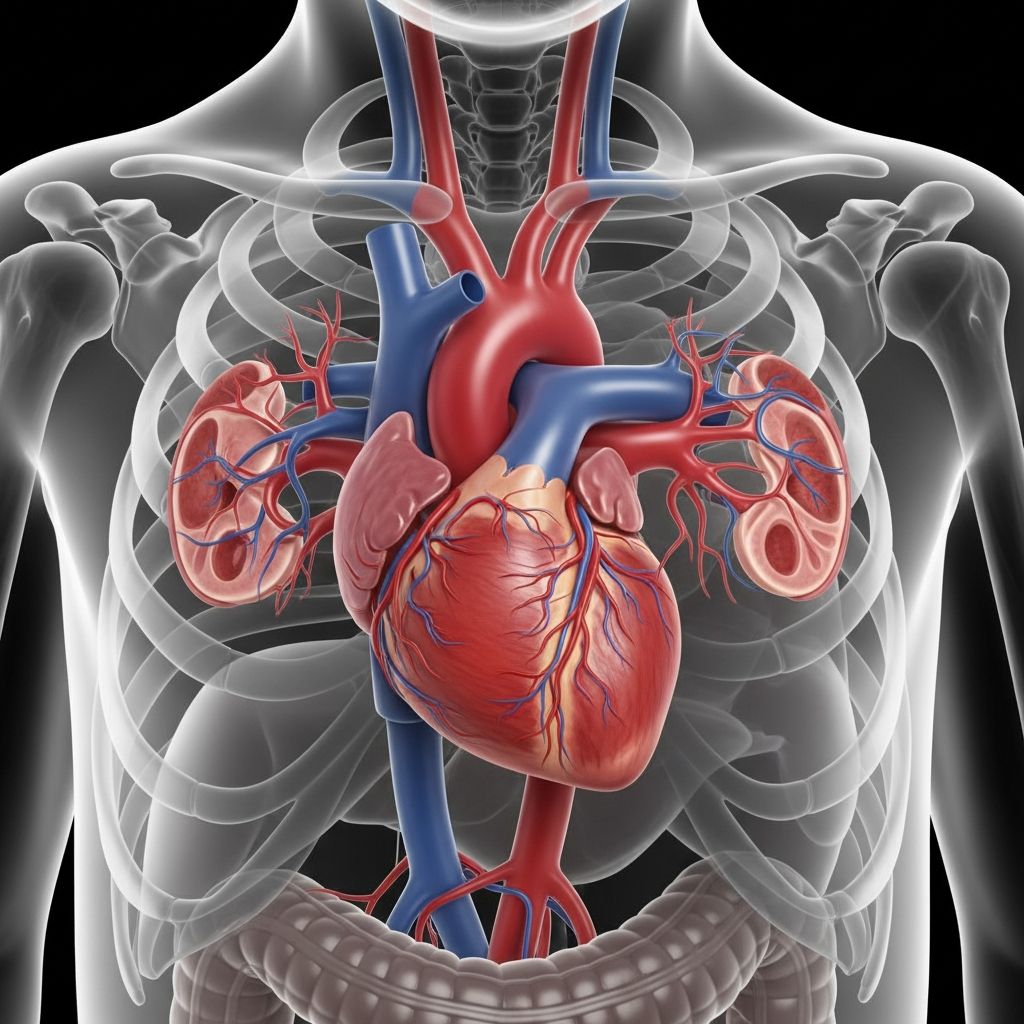
Levo-transposition of the great arteries (L-TGA) is a rare, complex heart difference present at birth that affects how blood flows through a child’s heart and to the rest of the body. It can sound frightening and confusing, especially right after diagnosis. This guide explains L-TGA in clear language so you can better understand what it means, what to expect, and how to support your child over time.
What Is L-TGA?
L-TGA is a type of congenital heart defect—a structural heart difference that develops before birth. In L-TGA, the heart’s main pumping chambers and the two large arteries that carry blood out of the heart are connected in an unusual way.
In a typical heart:
- The right ventricle pumps blood to the lungs through the pulmonary artery.
- The left ventricle pumps blood to the body through the aorta.
In L-TGA, there is a “double switch” inside the heart:
- The ventricles are reversed in position (a condition called ventricular inversion).
- The pulmonary artery and aorta are attached to the “wrong” ventricles.
Because there are two switches, blood can still travel in the correct overall direction (to the lungs and then to the body). Doctors sometimes call this a “physiologically corrected” transposition. However, the right ventricle ends up doing the long-term work of pumping blood to the body, a job it is not designed to handle over a lifetime, which may cause problems later on.
| Feature | Typical Heart | L-TGA Heart |
|---|---|---|
| Main body pump | Left ventricle | Right ventricle (systemic ventricle) |
| Artery to lungs | Pulmonary artery from right ventricle | Pulmonary artery from left ventricle |
| Artery to body | Aorta from left ventricle | Aorta from right ventricle |
| Blood flow path overall | Normal | Overall normal, but using wrong ventricle for body |
Why Does L-TGA Happen?
L-TGA develops early in pregnancy when the baby’s heart is forming. In most children, there is no clear single cause. Researchers believe it results from a combination of genetic and environmental factors that affect how the heart loops and rotates as it grows.
Possible influences include:
- Changes in genes that guide heart development (sometimes part of a genetic syndrome).
- Maternal illnesses or certain medications during pregnancy, though these links are often uncertain.
- Random developmental changes with no identifiable trigger.
For most families, nothing the parents did or did not do in pregnancy caused L-TGA. Parents are not at fault.
Other Heart Differences Often Seen With L-TGA
Many children with L-TGA have one or more additional heart differences. These can strongly influence symptoms and treatment choices.
- Ventricular septal defect (VSD): A hole between the two ventricles that lets blood pass from one side to the other.
- Pulmonary stenosis: Narrowing of the path from the ventricle to the pulmonary artery, making it harder for blood to reach the lungs.
- Tricuspid valve problems: The valve between the right atrium and right ventricle (now the main body pump) may leak (regurgitation), causing extra strain.
- Conduction system abnormalities: The wiring that controls the heartbeat can be abnormal, raising the risk of slow heart rhythms or heart block that may require a pacemaker.
How L-TGA Affects Blood Flow and the Heart
Even though blood still reaches the lungs for oxygen and then returns to the body, the heart must work differently in L-TGA. Over time, this can lead to:
- Right ventricular overload: The right ventricle, meant for low-pressure lung circulation, now manages high-pressure body circulation and can weaken or enlarge over years.
- Leaky tricuspid valve: The valve on the main pumping side can become stretched and leaky, making the ventricle’s job even harder.
- Heart rhythm problems: Abnormal electrical pathways or scarring from surgery can disturb the heartbeat, leading to slow or fast rhythms.
Because of these issues, even children who feel well when they are young need lifelong follow-up with heart specialists.
Signs and Symptoms in Babies, Children, and Teens
Symptoms depend on how the heart is structured and how well it is coping. Some children are diagnosed before birth during a routine pregnancy ultrasound, while others are not identified until later in childhood.
Possible Symptoms in Babies
- Rapid or difficult breathing
- Tires easily during feeding or needs frequent breaks
- Poor weight gain or slow growth
- Blue or gray color (cyanosis) on lips, tongue, or fingernails
- Cool hands and feet
Possible Symptoms in Older Children
- Gets tired quickly with play or exercise
- Shortness of breath or chest discomfort with activity
- Fast, pounding, or irregular heartbeat sensations
- Dizziness or fainting spells
- Exercise intolerance compared with peers
When There May Be Few or No Symptoms
Some children with milder forms of L-TGA and no major associated defects may have few symptoms in early childhood. In these cases, concerns may appear later, such as:
- Subtle decline in exercise capacity over the years
- New heart rhythm problems in adolescence or adulthood
- Signs of heart failure (fatigue, swelling of legs, or shortness of breath with less activity)
How Doctors Diagnose L-TGA
L-TGA is usually diagnosed by a pediatric cardiologist, a doctor who specializes in children’s heart conditions. Diagnosis often involves several tests:
- Physical exam: Listening for heart murmurs, checking oxygen level, breathing, and growth.
- Echocardiogram (heart ultrasound): Main test that shows heart chambers, valves, and blood flow patterns. It usually confirms L-TGA and identifies any associated defects.
- Electrocardiogram (ECG or EKG): Records the heart’s electrical activity to look for rhythm problems or conduction block.
- Chest X-ray: Assesses heart size and lung blood flow.
- Cardiac MRI or CT: Provides detailed 3-D images of heart structures and function, especially in older children.
- Cardiac catheterization: A thin tube is guided into the heart to measure pressures, oxygen levels, and sometimes to perform interventions. This is used when more detail is needed or before surgery.
Treatment Options for L-TGA
Treatment is highly individualized. The plan depends on your child’s age, symptoms, associated defects, and how well the right ventricle is handling its workload.
Monitoring Without Immediate Surgery
Some children with L-TGA and minimal associated defects may not need early surgery. Instead, cardiologists may recommend:
- Regular clinic visits and imaging to watch heart size and function
- Monitoring for new symptoms, such as fatigue, breathlessness, or palpitations
- Activity guidance, often allowing normal play unless there are specific concerns
Medications
Medicines do not “fix” L-TGA but can help control symptoms or support heart function. These might include:
- Diuretics to reduce extra fluid if heart failure symptoms develop
- Medications to support heart pumping strength, guided by pediatric cardiology standards
- Antiarrhythmic medicines to manage abnormal heart rhythms
Pacing and Rhythm Management
Because the heart’s electrical system is often abnormal in L-TGA, some children develop heart block, where the signal from the upper to the lower chambers is slowed or interrupted. In these cases, treatment may include:
- Pacemaker: A small device implanted under the skin that sends electrical signals to keep the heart beating at a safe rate.
- Careful rhythm monitoring during and after any heart surgery.
Surgical Approaches
Surgery for L-TGA is complex and must be tailored to each child. In general, operations may aim to:
- Close holes in the heart (such as VSDs).
- Relieve obstruction to blood flow to the lungs (pulmonary stenosis).
- Repair or replace a leaky tricuspid valve.
- In selected cases, reroute blood so the left ventricle becomes the main pump to the body again, often called a “double-switch” strategy in the medical literature.
The exact timing and type of surgery are based on detailed discussions between your family and the heart team, considering current evidence and your child’s unique anatomy.
Recovery and Care After Surgery
Children who undergo surgery for L-TGA are cared for in a pediatric cardiac intensive care unit immediately afterward. The recovery process typically includes:
- Close monitoring of heart rhythm, blood pressure, and oxygen levels
- Pain management and support with breathing or feeding as needed
- Gradual increase in movement, feeding, and activity
- Transition to step-down units and eventually home when stable
Before discharge, families receive detailed instructions on:
- Medication schedules and follow-up appointments
- Wound care and signs of infection
- What symptoms should prompt urgent medical attention (such as severe breathing difficulty, fainting, or rapid swelling)
Long-Term Outlook for Children With L-TGA
Many children with L-TGA grow up to be active adults. However, they usually need lifelong specialized heart care. Long-term issues that may arise include:
- Worsening right ventricular function over time, especially if the ventricle has been pumping to the body for many years.
- Tricuspid valve leakage that can progress and sometimes requires surgical repair or replacement.
- Heart rhythm disturbances, including heart block and fast arrhythmias that may require pacemakers or other treatments.
- Exercise limitations in some patients, especially if heart function declines.
Current guidelines recommend that patients with complex congenital heart disease like L-TGA transition from pediatric cardiology to an adult congenital heart disease (ACHD) program as they mature, so expertise continues throughout life.
Daily Life, Activities, and Emotional Support
Parents often wonder what everyday life will look like for a child with L-TGA. In practice, many children:
- Attend regular school and participate in many typical childhood activities.
- May play sports, though some will need restrictions on intense competitive exercise based on cardiology advice.
- Require periodic checkups, imaging tests, and possibly adjustments to medications or pacemaker settings.
Emotional well-being is also very important. Families may benefit from:
- Meeting with a social worker, psychologist, or counselor familiar with chronic childhood conditions.
- Connecting with congenital heart support groups or family networks.
- Including age-appropriate explanations for the child about their heart to reduce fear and promote self-advocacy.
Questions to Ask Your Child’s Heart Team
- Which parts of my child’s heart are different, and how do they affect blood flow?
- Does my child have any additional heart defects along with L-TGA?
- What treatments (medications, pacemaker, or surgery) are recommended now, and why?
- How often should we schedule follow-up visits and imaging?
- Are there any activity or sports restrictions for my child?
- How will this condition affect my child’s adult life, including pregnancy for future female patients?
Frequently Asked Questions (FAQs)
Is L-TGA the same as complete transposition of the great arteries (TGA)?
No. In complete TGA (also called d-TGA), the great arteries are switched but the ventricles are in their usual position, causing oxygen-poor blood to circulate to the body unless surgery is done soon after birth. In L-TGA, both the ventricles and great arteries are reversed, so blood still travels to the lungs and body in the correct order, but through the wrong pumping chamber for the body circulation.
Can a child with L-TGA live a normal life span?
Many people with L-TGA live into adulthood, especially with modern medical and surgical care. However, they are at higher risk of complications like heart failure and rhythm problems. Lifelong follow-up at a specialized congenital heart center greatly improves long-term outcomes.
Will my child always need heart medicines?
Not all children with L-TGA need long-term medicine. Some may require medications only around surgery or during specific problems, while others with decreasing heart function or rhythm issues may stay on medicines for many years. This is decided on a case-by-case basis by the cardiology team.
Does every child with L-TGA need heart surgery?
No. Some children are monitored closely without early surgery if they have good heart function and no major associated defects. Others need surgery to correct VSDs, valve problems, or outflow obstructions, or to re-route blood flow so the left ventricle becomes the main pump again. The decision depends on the heart’s structure and how well it is working.
Can L-TGA be prevented?
At this time, there is no known way to prevent L-TGA. Most cases appear to arise from complex genetic and developmental factors rather than from anything parents did or did not do during pregnancy.
References
- Stout KK, Daniels CJ, Aboulhosn JA, et al. 2018 AHA/ACC Guideline for the Management of Adults With Congenital Heart Disease — American Heart Association/American College of Cardiology. 2019-04-02. https://www.ahajournals.org/doi/10.1161/CIR.0000000000000603
- Warnes CA. Transposition of the Great Arteries — Circulation (American Heart Association). 2006-09-12. https://www.ahajournals.org/doi/10.1161/CIRCULATIONAHA.105.592352
- Congenital Heart Defects — Centers for Disease Control and Prevention (CDC). 2024-02-06. https://www.cdc.gov/heart-defects/index.html
- Levo-Transposition of the Great Arteries (ccTGA) — Boston Children’s Hospital. 2023-08-15. https://www.childrenshospital.org/conditions/levo-transposition-great-arteries
- Congenitally Corrected Transposition of the Great Arteries — Children’s Hospital of Philadelphia. 2023-05-10. https://www.chop.edu/conditions-diseases/congenitally-corrected-transposition-great-arteries