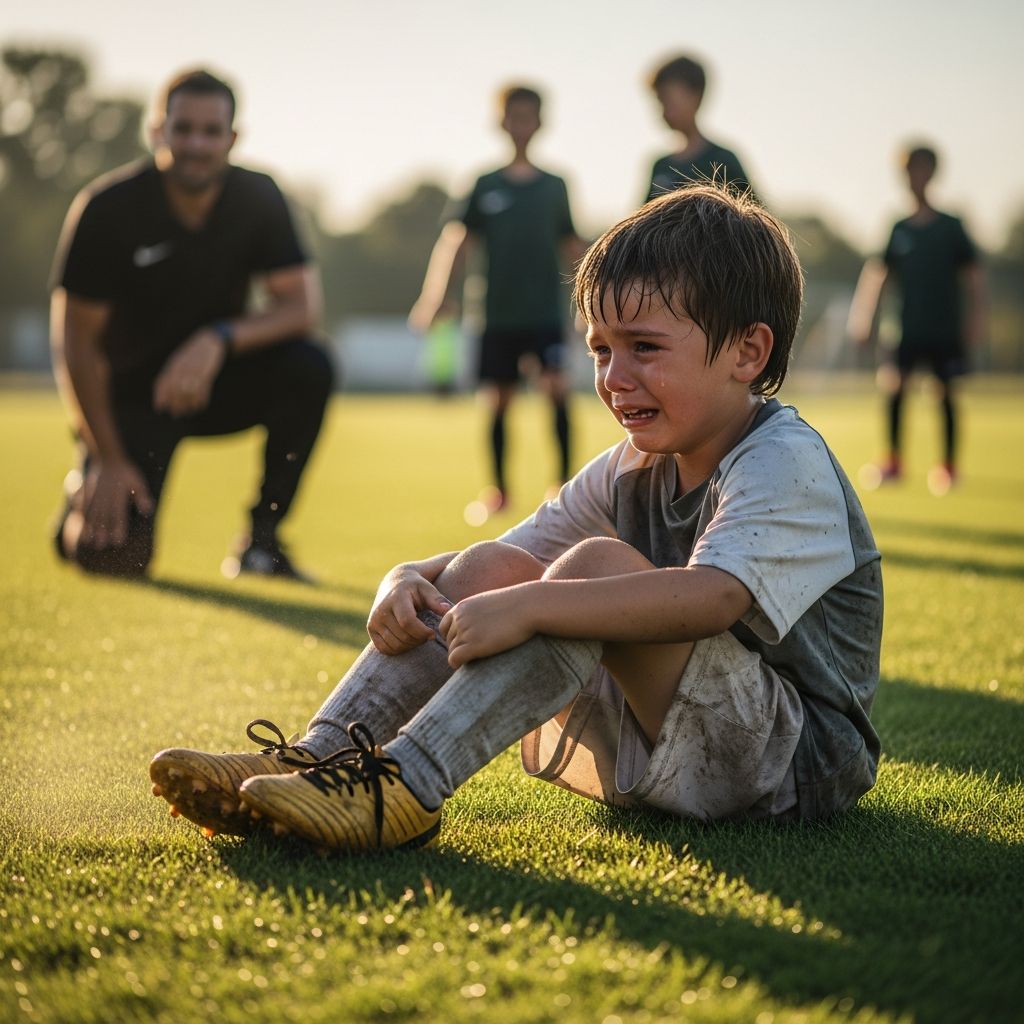
Somewhere between tee-ball and travel tournaments, many kids learn a lesson that has nothing to do with how to swing a bat: that real athletes do not cry. For a generation of parents raised on highlight reels and tough-love coaching, it can feel natural to pass that message along. But youth sports are supposed to grow children, not shrink their feelings.
This article explores how the culture of toughness took over youth sports, why it is time to let kids show real emotions on the field, and what families and leagues can do to build healthier, kinder teams without losing competitiveness.
From Sandlots to Slogans: How Toughness Took Center Stage
Modern youth sports often borrow the language and expectations of professional leagues, even though the participants are children who still sleep with stuffed animals and need reminders to brush their teeth. When uniforms, travel schedules, and tournament brackets start to look like the big leagues, emotional expectations quietly escalate too.
Many kids enter sports because they want to play with friends and feel part of something. Over time, however, they may absorb a different message: that grit means swallowing tears, ignoring fear, and pushing through discomfort at any cost. Adults rarely say this outright, but kids hear it in sideline groans, sarcastic jokes, and the subtle praise reserved for those who “tough it out” without complaint.
The Hidden Rules Kids Learn About Feelings
Even in leagues that never put their emotional expectations into writing, children quickly pick up on unspoken rules about what is acceptable to feel and show. These messages may start as small comments but grow into powerful beliefs about identity and worth.
Common Unspoken Messages
- Crying means you are weak, dramatic, or “not a real athlete”.
- Anger is acceptable if it looks like intensity, but sadness is embarrassing.
- Playing through pain earns admiration, while asking for help risks rejection.
- Boys must be stoic, and girls who cry too much risk being labeled “too sensitive”.
- Coaches and parents have limited patience for big feelings, so emotions should be hidden or rushed away.
These messages shape how kids talk to themselves far beyond the field. The child who swallows tears in the outfield may start swallowing them at school, at home, and in friendships, learning to disconnect from emotions rather than learning how to manage them.
What Actually Happens When Kids Are Told Not to Cry
On the surface, insisting that kids stop crying can look like preparation for the “real world.” Underneath, a very different process is unfolding. The child does not become tougher; the child becomes quieter. Silence gets mistaken for resilience.
When tears are shamed or mocked, several things can happen:
- Emotions go underground. Kids still feel scared, hurt, or disappointed, but those feelings come out later as stomachaches, irritability, or a sudden refusal to play.
- Shame takes root. Instead of thinking “this moment is hard,” a child may think “there is something wrong with me for feeling this way.”
- Connection breaks down. The field, which could be a place of support, becomes a space where vulnerability is dangerous.
Over time, children taught to hide their emotions sometimes either quit the sport altogether or begin to perform a version of toughness that leaves them disconnected from their own needs.
Tears as Data: What Crying Really Tells Adults
Crying is often treated as a problem to eliminate, when in reality it is valuable information. Tears tell coaches and parents something important about the child’s experience in that moment. Seen correctly, crying is a signal, not a failure.
Common meanings behind tears include:
- Overload. The rules, expectations, or social dynamics may feel like too much at once.
- Fear of letting others down. Kids can cry not because they lost, but because they believe they have disappointed a parent or coach.
- Physical discomfort. The child might be hurt or exhausted and unsure whether it is acceptable to say so.
- Confusion about fairness. A blown call, inconsistent playing time, or harsh criticism can trigger tears when kids feel powerless to fix the situation.
When adults treat crying as useful feedback, they shift from “stop crying” to “what is this telling us about how the sport feels for you right now?” That question opens the door to problem-solving instead of suppression.
How Over-Competitive Cultures Crowd Out Kindness
Youth sports are often sold as character-building, but the character being built depends on the values that adults reward. When winning, rankings, and statistics dominate every conversation, kids quickly understand that outcomes matter more than their well-being.
Some signs a league’s culture has tilted too far toward performance include:
- Star players receive leniency for poor behavior, while quieter kids are scolded for minor mistakes.
- Coaches regularly frame games as make-or-break, using fear of failure as motivation.
- Parents talk mostly about playing time, positions, and advancement to higher-level teams.
- There is little visible space for joy, experimentation, or playful silliness during practice.
In these environments, displays of emotion feel threatening because they slow the machine down. Allowing a kid to cry and recover looks like a distraction from the “real” goal, even though it is the part that most affects who that child becomes off the field.
Healthy Toughness vs. Harmful Toughness
Not all toughness is harmful. There is a crucial difference between learning to persist through challenges and being told to erase or ignore normal human emotions. Children benefit from knowing they can survive difficult moments; they do not benefit from believing those moments must always be endured in silence.
Two Very Different Versions of Toughness
| Healthy Toughness | Harmful Toughness |
|---|---|
| Acknowledges feelings, then helps kids choose a response. | Denies or mocks feelings, expecting instant control. |
| Teaches kids to ask for help when hurt or overwhelmed. | Frames asking for help as weakness or inconvenience. |
| Encourages effort, learning, and recovery after mistakes. | Focuses narrowly on outcomes, treating errors as personal flaws. |
| Uses calm guidance and clear boundaries. | Relies on yelling, sarcasm, and humiliation as motivation. |
| Helps kids see that emotions rise, peak, and fade. | Teaches kids to stuff emotions until they explode or disappear. |
When adults distinguish between these approaches, they can stay committed to teaching resilience without sacrificing emotional safety.
What Supportive Coaching Looks and Sounds Like
Coaches often sit at the center of a child’s athletic world. Their words echo in kids’ heads longer than any play-by-play commentary. Supportive coaching does not mean lowering standards or avoiding hard conversations; it means pairing those standards with respect and empathy.
Practical Coaching Shifts
- Normalize feelings in pre-season meetings. Explain to players and parents that emotions, including tears, are expected and will be handled with care.
- Create a brief “reset” routine. When a child is overwhelmed, step aside for a minute, validate the feeling, take a few breaths together, and then check whether they are ready to continue.
- Use specific, behavior-focused feedback. Replace character judgments (“you’re soft”) with observations about effort and choices (“let’s work on how you position your glove”).
- Model self-control. Coaches who manage their own frustration demonstrate the emotional skills they want players to develop.
These changes can feel small in the moment but add up over a season to create an atmosphere where kids feel safe enough to compete and make mistakes.
The Parent’s Role on the Sideline and at Home
Parents are often the emotional barometer for young athletes. A single raised eyebrow in the stands can sting more than a strikeout. Children watch how adults respond not just to wins and losses but to the moments in between: the dropped fly ball, the shaky at-bat, the tears that spring up without warning.
Ways Parents Can Support Emotional Health
- Lead with curiosity, not criticism. After games, start with open questions like “How did it feel out there?” instead of launching into a performance review.
- Disconnect love from performance. Make sure kids know that hugs, rides home, and family warmth do not depend on how they played.
- Share your own stories. Talk about times you felt nervous, cried, or messed up in your own athletic or work life and what you learned.
- Check your reactions. Notice when your own anxiety about playing time, competition, or status might be driving pressure you put on your child.
When home becomes a place where emotions are allowed, the field feels less like a battlefield and more like an extension of everyday growth.
Designing Leagues That Protect Both Hearts and Knees
Individual coaches and parents can only do so much inside a system built to prioritize winning. For real change, leagues need to send clear signals that emotional well-being is as important as physical safety and fair play.
League-Level Practices That Make a Difference
- Clear behavior standards for adults. Codes of conduct should spell out expectations around respectful communication, emotional safety, and consequences for crossing the line.
- Training on child development. Short workshops can help coaches understand age-appropriate emotional responses and how to respond constructively.
- Visible support systems. Designate a league parent liaison or board member whom families can approach with concerns about a team’s emotional climate.
- Balanced incentives. Celebrate sportsmanship awards, effort, and team support as visibly as championships and trophies.
When a league makes it clear that cruelty and humiliation are not part of the game, families feel safer advocating for their kids, and coaches gain permission to emphasize humanity alongside hustle.
Helping Kids Build Resilience Without Shutting Down
Resilience is not the absence of strong feelings; it is the capacity to feel them and still find a way forward. Youth sports can be a powerful training ground for this kind of resilience if adults are willing to trade quick fixes for longer-term growth.
Skill-Building Moments on the Field
- Label and normalize. When a child is upset, name the feeling calmly (“that looks like disappointment”) and reassure them that it makes sense in the situation.
- Guide simple regulation strategies. Teach players to take deep breaths, squeeze a glove, or step back from the baseline briefly before re-engaging.
- Reflect afterward. Later, at home or in a quieter moment, ask what helped and what did not, turning emotional storms into learning experiences.
- Reinforce effort-based identity. Praise perseverance, teamwork, and kindness as much as big hits or clutch plays, so kids know who they are is bigger than what they did that inning.
Over seasons, these repeated experiences teach kids that emotions are manageable, not dangerous, and that asking for support is compatible with seeing themselves as strong.
Frequently Asked Questions
Is it okay to tell my child to stop crying during a game?
It is understandable to want to calm your child quickly, especially in a public setting, but telling them simply to “stop” often backfires. A more helpful approach is to acknowledge the feeling (“I see you’re really upset”), give them a moment to breathe, and then ask what they need to feel ready to continue.
Won’t allowing tears make my child less competitive?
Allowing emotions does not erase competitiveness; it helps kids manage it. When children feel safe expressing big feelings, they can move through them faster and focus more clearly, which often supports rather than undermines performance.
How do I handle other parents who think kids should just “toughen up”?
Start by modeling the kind of response you want for your own child. If appropriate, share that you are working on teaching emotional skills alongside sports skills and that this is a priority for your family. You do not have to debate anyone into agreement to maintain your own boundaries.
What if my child cries after every small setback?
Frequent tears are not a reason to shut feelings down; they are a cue to build more tools. Work with your child on naming emotions, practicing coping strategies at home, and gradually stretching their tolerance for frustration with support rather than shame.
Can a single harsh coach really do long-term damage?
One season with a tough coach does not define a child’s life, especially if the adults at home provide warmth and understanding. However, repeated exposure to belittling or emotionally unsafe coaching can shape a child’s self-image, so it is worth paying attention, asking questions, and advocating for change when needed.
Building a Different Kind of Legacy
Every generation decides which lessons it wants to pass down through sports. For many adults, their childhood teams were places where they first tasted independence, friendship, and the thrill of competition. For some, those memories are braided tightly with shame, fear, or the conviction that tears must always be swallowed.
Today’s parents, coaches, and league organizers have the chance to create a different legacy: one where a kid can strike out, cry on the way back to the dugout, take a breath, and then step up again next inning knowing that nothing about their worth has changed. That is not softness; that is strength with room for a human heart.