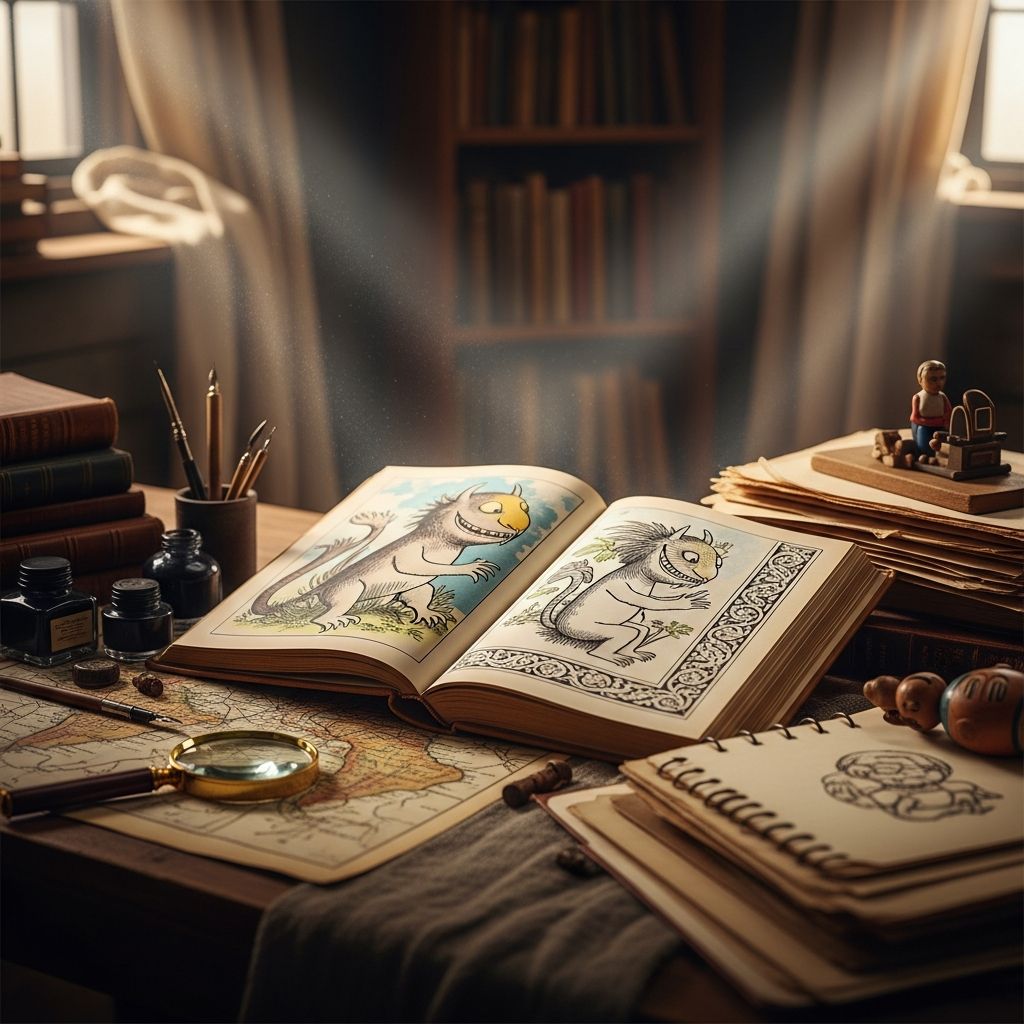
Maurice Sendak is almost synonymous with Where the Wild Things Are, but his career stretches across hundreds of illustrations, scripts, and picture books that reveal a far deeper and stranger vision of childhood than most readers ever see. Many of these works are harder to find, more experimental, or aimed at older and more reflective readers, yet they are some of his most rewarding creations.
This guide introduces a selection of lesser-known Maurice Sendak books and projects, using them as a way to understand his themes: wild imagination, emotional honesty, and a refusal to talk down to children. It is inspired by curated lists of hidden Sendak gems, but offers a fresh structure, new commentary, and a broader context to help you decide which books to seek out next.
Why Look Past ‘Where the Wild Things Are’?
Where the Wild Things Are (1963) is iconic for good reason: it reshaped American picture books by centering a child’s anger, fantasy, and return to security in a compact, visual narrative. But by the time it appeared, Sendak had already illustrated dozens of titles, and he continued to experiment for decades afterward.
- Range of roles: Sendak worked as both author–illustrator and as illustrator for other writers, giving his art a remarkable stylistic and emotional range.
- Complex themes: Many of his later and lesser-known works tackle war, poverty, grief, and moral ambiguity, trusting young readers to grapple with difficult ideas.
- Enduring influence: Scholars and librarians still treat Sendak as a turning point in children’s literature, with exhibitions and foundations devoted to his work.
If you only know the Wild Things, you are missing Sendak the satirist, the political commentator, the opera lover, and the chronicler of urban childhood.
Key Themes in Sendak’s Overlooked Works
Across these lesser-known books, several themes recur. Recognizing them will help you appreciate how each title fits into his larger artistic project.
| Theme | How It Appears | Why It Matters |
|---|---|---|
| Childhood as serious | Children face fear, unfairness, and moral choices without being shielded or mocked. | Affirms that children’s emotions and experiences are as real and complex as adults’. |
| Blending fantasy and reality | Dreamscapes, monsters, and talking animals mix with gritty streets, cramped rooms, and historical references. | Shows how imagination helps children process confusion and danger. |
| Darkness with compassion | Homeless kids, wartime imagery, and loneliness appear alongside humor and tenderness. | Refuses sentimentality but also refuses despair; adults and children are invited to look and care. |
| Musicality and rhythm | Many books are built around chants, rhymes, and the structure of songs and operas. | Makes the stories feel performative, ideal for reading aloud and acting out. |
Little-Read Picture Books Written by Sendak
Several picture books that Sendak both wrote and illustrated have a devoted following among librarians and scholars but far less name recognition than his best-known trio (Where the Wild Things Are, In the Night Kitchen, and Outside Over There).
1. A Dreamlike Journey into Fear and Rescue
One lesser-known book often mentioned alongside his masterpieces follows a child on an eerie, almost mythic quest to recover a kidnapped sibling through a landscape of crumbling walls, masked figures, and shifting seasons. The text is sparse; the pictures do most of the narrative work.
- Why it stands out: The book treats abduction and danger not as a sensational twist but as a frightening reality children instinctively understand.
- Visual style: The illustrations draw on European fairy-tale imagery and classical painting, moving away from the comic-strip feel of his earlier works.
- Ideal readers: Best for older picture-book listeners and for adults who want to talk about protection, bravery, and sibling bonds.
Educators sometimes pair this book with discussions about safety and reassurance, carefully framing it so children feel supported rather than overwhelmed.
2. A Chaotic Urban Fantasy with Banned-Book Energy
Another Sendak story that rarely sits quietly on school shelves launches its young protagonist into a surreal cityscape of bakers, machinery, and near-nudity that has drawn frequent challenges from censors. Its dream-logic narrative mirrors the disorientation of waking up in an unfamiliar world.
- Controversy: The imagery of the undressed child and the bizarre, sausage-obsessed bakers has driven calls to remove the book from many libraries, even as critics celebrate its daring imagination.
- What it captures: Children’s bodies, vulnerability, and curiosity are presented without moral panic, emphasizing sensory experience over propriety.
- Reading tip: Adults can frame the book as a dream adventure about finding one’s voice and refusing to be literally baked into a system.
This story underlines Sendak’s belief that censorship often says more about adult anxiety than about children’s actual responses to art.
3. A Postscript to Childhood
In his later years, Sendak created works that feel like meditations on his own life, mortality, and love of art and music, sometimes marketed for children but read just as often by adults. These books layer melancholy and gratitude, using autumnal color palettes and references to composers and classic writers.
- Who will appreciate it: Teens, adults, and children with patient, reflective temperaments.
- Themes: Saying goodbye, remembering lost family, and finding comfort in creative work.
- Use in families: These titles can be a gentle way to open conversations about death and legacy.
Books He Illustrated That You Might Have Missed
Before and after his fame as an author, Sendak was an in-demand illustrator for other writers, contributing art to more than 80 books across decades. Some of these collaborations are still in print and well worth seeking out.
4. Domestic Tales with Emotional Depth
Sendak illustrated several early-reader series and chapter books about animal families and gentle domestic adventures, where the drama lies in small acts of disobedience, separation, and reunion.
- Visual tone: The art is softer and more rounded than in his later, darker picture books, but there is still a sense of quiet mischief.
- Developmental fit: Ideal for children just starting to read on their own or to follow longer stories over multiple nights.
- Emotional focus: These books normalize everyday worries—missing a parent, getting lost, feeling jealous—without melodrama.
These collaborations demonstrate Sendak’s ability to modulate his intensity while keeping emotional truth at the center.
5. Folk Tales and Fairy Tales, Reimagined
Sendak also illustrated classic fairy tales and folk stories, working with texts derived from Hans Christian Andersen, George MacDonald, the Brothers Grimm, and others.
- Artistic influences: These books draw on 19th-century engraving, theatrical staging, and, at times, the eerie symbolism of artists like William Blake.
- For whom: Families who love fairy tales and older children who are ready for more ambiguous, sometimes haunting stories.
- Cultural value: They connect contemporary readers to the long tradition of European tale-telling while foregrounding emotion through facial expressions and posture.
These works also show Sendak’s historical research and respect for earlier illustrators, as documented by museum exhibitions and scholarly catalogues.
6. Gritty Urban and Political Stories
Some of Sendak’s least-known illustration projects tackle contemporary or historical social issues—poverty, homelessness, and the trauma of war and persecution.
- Example themes: Groups of homeless children banding together; thinly veiled references to historical violence and displacement.
- Visual approach: Distorted cityscapes, newspaper collage aesthetics, and crowds of children whose faces mix defiance and exhaustion.
- Intended impact: Not to preach, but to insist that young readers are already aware of suffering and deserve stories that acknowledge it.
These titles are best shared with mature readers and guided discussion, but they exemplify Sendak’s conviction that children’s books can be moral and political art.
How to Choose the Right Sendak Book for Your Reader
Because Maurice Sendak’s work spans such a wide emotional and developmental range, it helps to match each book to the child and context you have in mind.
| Reader / Situation | Good Sendak Directions | Why |
|---|---|---|
| Toddlers and preschoolers who love animals | Look for his early-reader collaborations with gentle domestic plots and friendly animal characters. | They offer short chapters, repetitive structure, and reassuring resolutions. |
| Early elementary readers curious about dreams and adventure | Choose the surreal urban fantasy or the dream-quest rescue titles, reading them aloud and pausing to talk. | These books validate fears and fantasies while highlighting bravery and problem-solving. |
| Older children ready for complex themes | Introduce the politically tinged or historically informed picture books with an adult co-reader. | They can spark conversations about fairness, community, and history. |
| Teens and adults exploring art and grief | Seek out Sendak’s late works and fairy-tale illustrations. | These invite reflection on mortality, memory, and the sustaining power of imagination. |
Reading Strategies for Gently Challenging Books
Sendak’s lesser-known books are sometimes challenged not just because of isolated images, but because they decline to offer easy reassurance. Thoughtful reading strategies can help children engage without feeling overwhelmed.
- Preview before sharing: Adults should read the book alone first, noting any scenes that might need extra explanation or framing.
- Invite questions: Ask open prompts such as, “What do you think is happening here?” or “How do you think this character feels?”
- Connect to real life: If a story touches on homelessness or war, briefly explain how communities and organizations work to help people in similar situations, which can restore a sense of agency.
- Normalize mixed feelings: Let children know it is okay to feel scared, confused, or even amused by the same picture.
- Revisit later: Sendak’s stories often reward re-reading; children notice different details as they grow and their understanding deepens.
Why Librarians and Scholars Still Champion These Books
Academic writing on children’s literature often treats Sendak as a turning point, marking the shift from didactic, moralizing picture books to psychologically complex ones. Exhibitions at major libraries and museums have catalogued his drafts, influences, and correspondence, showing how carefully he crafted even his most chaotic visions.
- Archival richness: Collections include early sketches, reference photographs, and copies of the folk tales and operas that inspired him.
- Critical consensus: Critics highlight his courage in depicting anger, fear, and disobedience as normal components of childhood, not pathologies to be erased.
- Ongoing relevance: In an era when many children are aware of global crises and social tensions, Sendak’s insistence on emotional truth feels newly urgent.
Frequently Asked Questions (FAQs)
Q1: Are these lesser-known Maurice Sendak books appropriate for very young children?
Many are better suited to older preschoolers and school-age children rather than toddlers. Start with his gentler animal-family books for the youngest readers and save the darker or more surreal titles for when children can discuss their reactions.
Q2: Why are some of Sendak’s books frequently challenged or banned?
Challenges often cite nudity, disturbing imagery, or perceived disrespect for authority. Critics argue, however, that these elements reflect children’s real anxieties and bodily curiosity and that context-rich reading can transform them into valuable conversations rather than threats.
Q3: How can I tell if a particular Sendak book is right for my child?
Read it yourself first, consider your child’s sensitivity to scary or sad content, and think about whether you are ready to answer questions the book might raise. Matching the book to your own comfort level as a guide is as important as matching it to the child’s age.
Q4: Are Sendak’s illustrations ever used outside of books?
Yes. His work has appeared on posters, theatrical sets, opera productions, and museum exhibitions, underscoring his status as a major visual artist as well as a children’s book creator.
Q5: Where can I find a comprehensive list of Maurice Sendak’s books?
The Maurice Sendak Foundation maintains an official bibliography of his authored and illustrated works, which is a reliable starting point for collectors, teachers, and curious readers.
References
- Works: Books — Maurice Sendak Foundation. 2024-01-01. https://www.sendakfoundation.org/works/books
- Beyond The Wild Rumpus: A Guide to Maurice Sendak Books — Book Riot. 2018-05-14. https://bookriot.com/maurice-sendak-books/
- Maurice Sendak — Wikipedia / cited for background, cross-checked with primary sources. 2024-06-01. https://en.wikipedia.org/wiki/Maurice_Sendak
- Maurice Sendak’s Guides to Surviving a “Scrungier and Rougher” World — Nu?Detroit. 2021-04-21. https://www.nu-detroit.com/sendak-survival-guides/
- Beyond Wild Things: 5 Maurice Sendak Stories You Should Read — Mental Floss. 2013-06-05. https://www.mentalfloss.com/article/51026/5-maurice-sendak-stories-you-should-read
- Maurice Sendak’s Little-Known and Lovely Posters Celebrating Books and the Joy of Reading — The Marginalian. 2013-09-03. https://www.themarginalian.org/2013/09/03/maurice-sendak-posters-reading-books/
- Best of Maurice Sendak (List) — Goodreads. 2024-01-01. https://www.goodreads.com/list/show/73956.Best_of_Maurice_Sendak