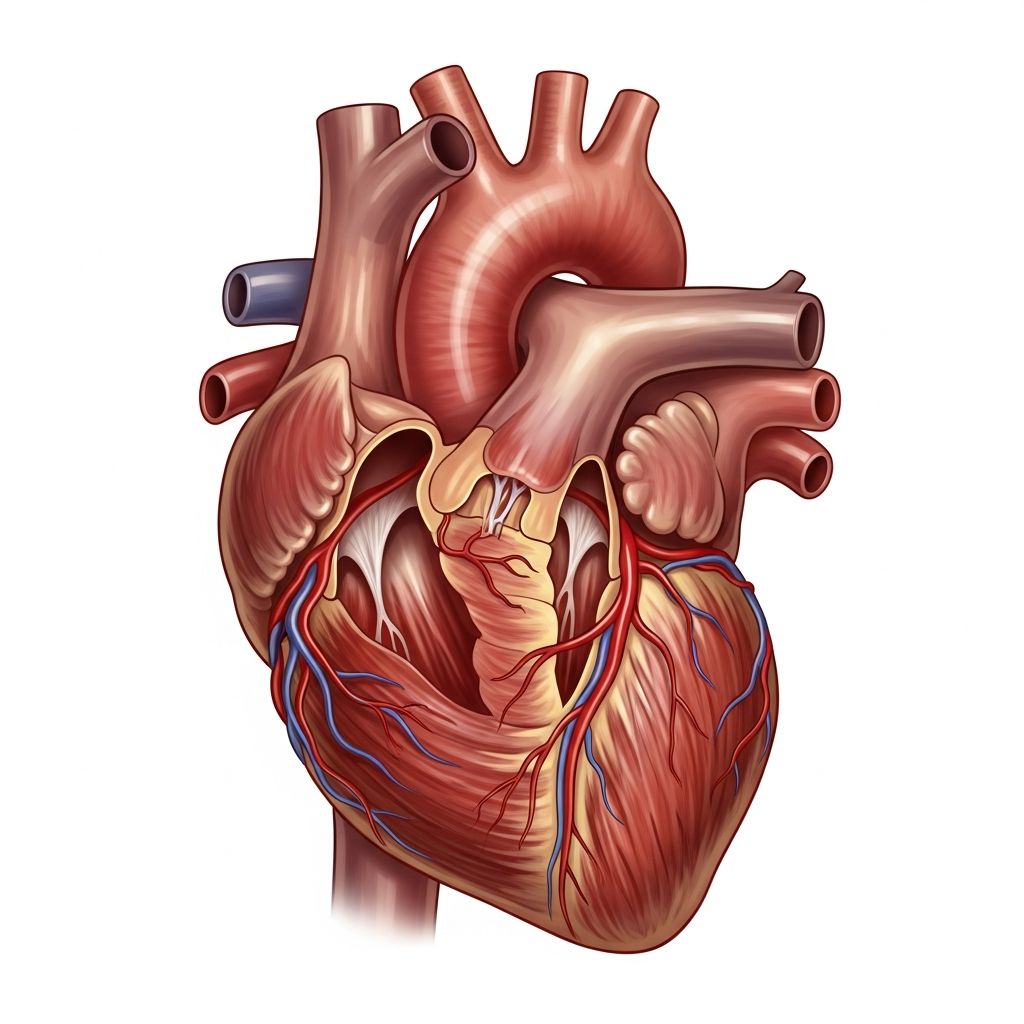
The left ventricle is the heart’s strongest chamber and is responsible for pumping oxygen-rich blood to nearly every cell in the body. It works continuously from before birth through the end of life, making it one of the most important structures in the cardiovascular system.
Where the Left Ventricle Fits in the Heart
The human heart has four chambers: two upper chambers called atria and two lower chambers called ventricles. The left ventricle sits in the lower left part of the heart and lies beneath the left atrium.
- The left atrium collects blood returning from the lungs.
- That blood passes through a valve into the left ventricle.
- The left ventricle then pumps the blood out to the rest of the body.
This arrangement allows blood to move in one direction: from the lungs, through the heart, and then to the organs and tissues that need oxygen and nutrients.
Basic Structure of the Left Ventricle
The left ventricle has a thick, muscular wall because it must generate enough force to push blood through the entire body. It is somewhat cone-shaped and tapers down toward the point of the heart, often called the apex.
- Thick muscle layer: The muscle in the left ventricle wall is thicker than in any other heart chamber.
- Inner cavity: The hollow space inside the ventricle fills with blood before each beat.
- Valves and support structures: Strong internal fibers and small muscular ridges help stabilize the valve and guide blood flow.
Because the left ventricle faces higher pressure than the right ventricle, it needs this extra muscle to do its job effectively.
The Two Key Valves Around the Left Ventricle
The left ventricle connects to the rest of the heart and the body through two main valves. These valves work like one-way doors that open and close at the right time.
- Valve between left atrium and left ventricle: This valve opens when the ventricle relaxes so blood can flow in, and closes when the ventricle squeezes to prevent blood from going backward.
- Valve between left ventricle and aorta: This valve opens when the ventricle contracts so blood can move into the body’s main artery, and closes when the ventricle relaxes to keep blood from leaking back into the heart.
Small cords and muscles inside the ventricle help hold the valve between the atrium and ventricle in place, especially when pressure is high during each heartbeat.
How the Left Ventricle Pumps Blood
Each heartbeat includes a cycle of filling and squeezing that allows the left ventricle to move blood forward efficiently. This cycle repeats countless times every day.
| Phase | What the Left Ventricle Is Doing | Valves Involved |
|---|---|---|
| Filling (relaxing) | The ventricle muscle relaxes and the chamber fills with oxygen-rich blood coming from the left atrium. | Upper valve is open, valve to the body’s main artery is closed. |
| Pumping (squeezing) | The ventricle muscle contracts and pushes blood forcefully into the main artery, sending it throughout the body. | Upper valve closes, valve to the main artery opens. |
| Resetting | The ventricle relaxes again, pressure falls, and the cycle prepares to repeat with the next beat. | Valve to the main artery closes again to prevent backflow. |
Even at rest the left ventricle moves a large volume of blood every minute. During exercise, it can dramatically increase its output to supply active muscles with more oxygen.
Why the Left Ventricle Is So Important
Because it drives blood into the large network of arteries, the left ventricle is central to nearly every system in the body. If it does not work well, organs may not receive enough oxygen and nutrients.
- The brain depends on steady flow from the left ventricle for clear thinking and consciousness.
- The kidneys need adequate blood flow to filter waste and maintain fluid balance.
- Muscles and other tissues require oxygen-rich blood to function and recover.
Weakness or damage in the left ventricle can eventually affect breathing, energy levels, and overall health.
Left Ventricle in Children and Teens
In children and teenagers, the left ventricle grows and adapts as the body increases in size and activity level. In most cases this is a healthy, normal process. Growth in height, changes in hormone levels, and increasing physical activity all influence how hard the ventricle works.
- During growth spurts, the heart may temporarily work harder to meet higher demands.
- Regular play and sports can help the ventricle become stronger and more efficient.
- Serious problems with the left ventricle in children are relatively uncommon but can be significant when they occur.
Understanding how the left ventricle functions in young people helps parents recognize when symptoms might need medical attention.
Common Left Ventricle Problems to Know
Several conditions can affect how the left ventricle fills or pumps. Some are present at birth, while others develop later in life because of lifestyle habits, infections, or other medical issues.
- Weak pumping ability: The ventricle may not contract strongly enough to send out a normal amount of blood.
- Stiffness or thickening: The walls of the ventricle can become thick or stiff, making it hard for the chamber to relax and fill.
- Valve problems: Leaky or narrowed valves around the ventricle can increase its workload or allow blood to move the wrong way.
- Rhythm disturbances: Abnormal electrical signals can cause the ventricle to beat too fast, too slow, or irregularly.
Symptoms depend on how severe the problem is and how quickly it develops. Mild issues may cause no noticeable signs for years.
Symptoms That May Relate to Left Ventricle Issues
Left ventricle problems can show up through several common signs. These symptoms are not specific to one disease but should prompt a discussion with a health professional if they appear or worsen.
- Shortness of breath, especially during activity or when lying flat.
- Unusual tiredness or reduced ability to keep up with normal play or exercise.
- Swelling in the legs, ankles, feet, or belly.
- Fast heartbeat, pounding in the chest, or irregular pulses.
- Chest discomfort, pressure, or pain in older children, teens, or adults.
In babies and young children, parents may instead notice poor feeding, slow weight gain, or sweating with feeding or mild activity.
How Doctors Check Left Ventricle Health
Health professionals use a combination of medical history, physical exam, and tests to evaluate how well the left ventricle is working. The choice of test depends on the person’s age, symptoms, and overall health.
- Physical exam: Listening to heart sounds, checking pulses, and looking for swelling or color changes.
- Heart rhythm tracing: A test with skin stickers that records the electrical activity of the heart.
- Ultrasound of the heart: A painless imaging test that shows the size, shape, and pumping motion of the left ventricle.
- Additional imaging: In some cases, scans or advanced imaging may provide more details about structure and function.
These tests help doctors estimate how well the ventricle fills, how strongly it contracts, and how the valves around it are working.
Key Measures of Left Ventricle Function
Doctors use several measurements to describe how the left ventricle is performing. While the exact numbers are for professionals to interpret, it can be helpful to understand the basic ideas behind them.
| Term | What It Refers To | What It Suggests |
|---|---|---|
| Pumping strength | How forcefully the ventricle squeezes blood out with each beat. | Lower values may indicate a weak or damaged ventricle. |
| Chamber size | How large the inner space of the ventricle is during filling and pumping. | Very enlarged or very small chambers can signal disease. |
| Wall thickness | How thick the muscle wall of the left ventricle is. | Unusual thickening or thinning can point to long-term strain or injury. |
| Valve performance | How well the valves near the ventricle open and close. | Leaks or narrowing can stress the ventricle over time. |
When these measurements are tracked over time, they allow doctors to see whether treatment is helping or a condition is progressing.
Protecting the Left Ventricle Through Healthy Habits
Many day-to-day choices affect how hard the left ventricle has to work. Healthy routines can support this vital chamber throughout childhood and adulthood.
- Healthy eating: Meals rich in fruits, vegetables, whole grains, and lean proteins help maintain good blood pressure and weight.
- Regular physical activity: Age-appropriate exercise strengthens the heart muscle and improves circulation.
- Avoiding tobacco and vaping: Smoke and nicotine products strain blood vessels and the heart.
- Managing stress: Relaxation techniques, hobbies, and social support can reduce long-term stress on the cardiovascular system.
- Routine checkups: Regular visits with a healthcare provider allow early detection of blood pressure or heart rhythm issues.
Parents can model these habits at home, making it easier for children to learn and maintain them into adulthood.
When the Left Ventricle Needs Treatment
If tests show that the left ventricle is enlarged, weak, or under strain, treatment will depend on the cause and severity of the problem. In children, specialized pediatric heart teams are often involved in planning care.
- Medications: Some medicines reduce the heart’s workload, control blood pressure, or improve how strongly the ventricle contracts.
- Procedures and surgeries: Repairs to valves, blood vessels, or structural heart defects may improve how the ventricle functions.
- Lifestyle changes: Adjustments in diet, activity, and daily routine often support medical treatment.
- Monitoring: Regular follow-up visits and repeat imaging help track changes over time.
Parents and older children are encouraged to ask questions and stay informed so they understand test results and treatment goals.
Living Well With a Left Ventricle Condition
Many people with left ventricle problems can attend school, play sports with guidance, and enjoy regular activities. Management focuses on safety, growth, and quality of life.
- Activity plans are often individualized, balancing exercise benefits against any limits set by the heart condition.
- Vaccinations, good sleep habits, and infection prevention all help protect overall health.
- Emotional support for the child and family is important, especially around hospital visits or procedures.
Teachers, coaches, and caregivers may benefit from basic information about the child’s heart condition and what to do in case of symptoms.
Frequently Asked Questions About the Left Ventricle
Is the left ventricle more important than the other heart chambers?
All four heart chambers are important, but the left ventricle has the main job of pumping oxygen-rich blood to the entire body. Without its powerful contractions, organs and tissues would not receive the blood they need to function.
Can a child have a left ventricle problem and still be active?
Many children with mild or well-controlled left ventricle conditions can be active, often with a plan tailored by their heart specialist. Activity recommendations depend on the specific diagnosis, test results, and how the child feels with exertion.
What are the earliest signs that something might be wrong with the left ventricle?
Early signs can include getting out of breath more easily than peers, tiring quickly with normal play, poor feeding in infants, or swelling in the legs or belly. Any new or worsening symptoms like these deserve a prompt discussion with a healthcare provider.
How often should heart function be checked if there is a known problem?
The frequency of checkups and heart imaging depends on the condition, its severity, and how stable the child or adult has been over time. The heart care team will usually set a schedule that may range from a few months to a year or more between visits.
Can left ventricle problems be prevented?
Some conditions present at birth cannot be prevented, but many later-life problems can be reduced or delayed with healthy habits, blood pressure control, and regular medical care. Encouraging smoke-free homes, balanced nutrition, and daily activity supports long-term heart health for children and adults.
Key Takeaways for Parents and Caregivers
- The left ventricle is the heart’s main pumping chamber for blood going to the body.
- Its strong, thick muscle wall allows it to push blood through a large network of arteries.
- Problems with the left ventricle can cause breathing difficulty, tiredness, swelling, or growth issues in children.
- Regular checkups, heart-healthy habits, and early attention to symptoms help protect this vital heart chamber.
Understanding how the left ventricle works makes it easier to appreciate the importance of everyday choices that support heart health and to recognize when professional care is needed.