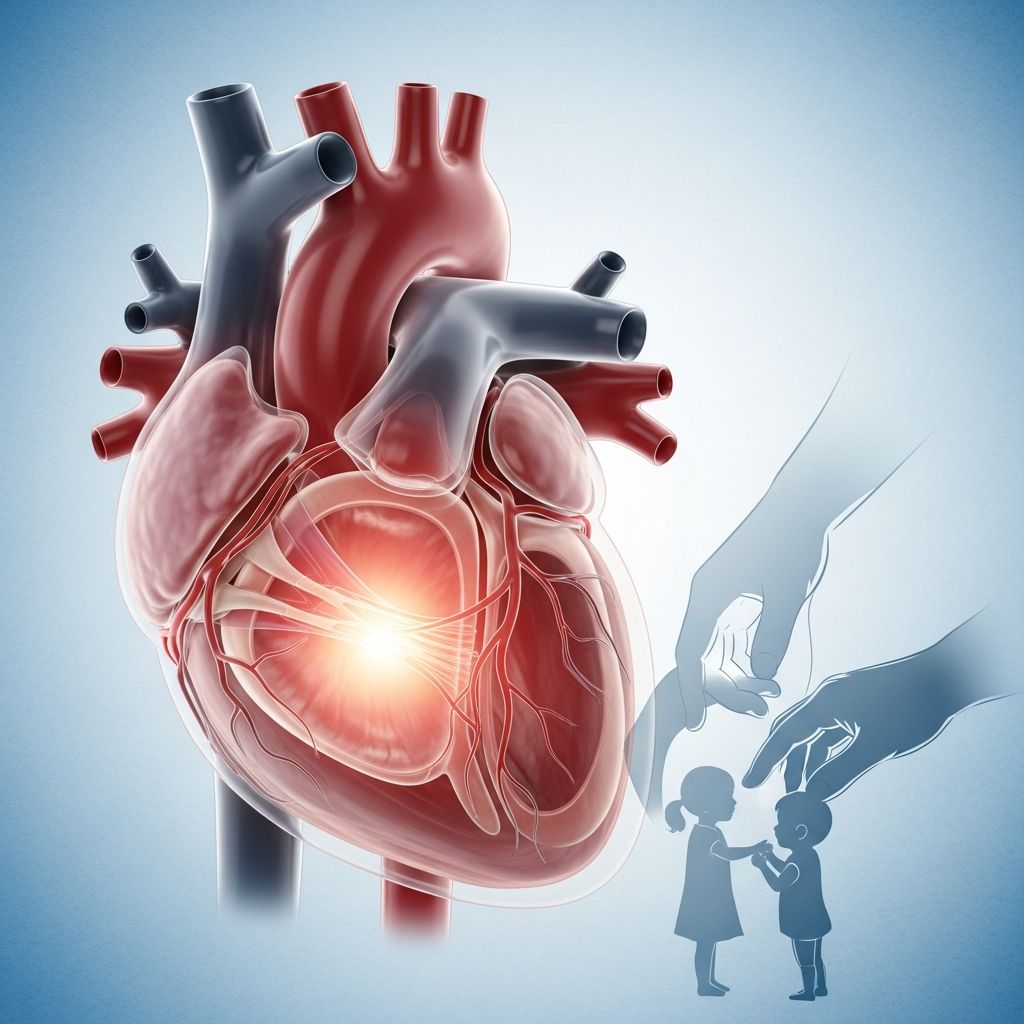
The left atrium is one of four chambers in the heart and plays a key role in moving oxygen-rich blood from the lungs to the rest of the body. When parents understand how this small chamber works, it becomes easier to follow medical explanations and make confident decisions about their child’s heart health.
Where the Left Atrium Fits in the Heart
The human heart has four main chambers: two atria at the top and two ventricles at the bottom. The left atrium sits in the upper left part of the heart, just above the left ventricle, and behind the right-sided chambers when viewed from the front of the chest. It receives blood returning from the lungs and passes it on to the powerful left ventricle, which then sends that blood out to the body.
- The left atrium is an “entry room” for oxygen-rich blood arriving from the lungs.
- It connects to the lungs through blood vessels called pulmonary veins.
- It connects to the left ventricle through a valve called the mitral valve.
How Blood Flows Through the Left Atrium
To understand the left atrium, it helps to look at the full journey of blood through the heart. Blood that has delivered oxygen to the body returns to the right side of the heart, is pumped to the lungs to pick up fresh oxygen, and then returns to the left atrium. From there, the left atrium passes it to the left ventricle, which sends it out through the main artery (the aorta) to all the organs and tissues.
- Blood leaves the lungs full of oxygen.
- It travels through the pulmonary veins.
- It enters the left atrium, which briefly stores this blood.
- The left atrium contracts and pushes blood through the mitral valve.
- Blood moves into the left ventricle and is then pumped out to the body.
The timing of this sequence is tightly controlled so blood keeps moving smoothly, even while the lower chambers are contracting.
Key Parts of the Left Atrium
Although the left atrium is small, it has distinct regions that help it do its job efficiently. Its thin muscular walls are strong enough to push blood into the left ventricle, which is under higher pressure than the right side of the heart. It also has a small pouch called the left atrial appendage and a smooth inner surface where the pulmonary veins open.
| Structure | Location | Main Role |
|---|---|---|
| Left atrial body | Central main chamber | Collects blood from the pulmonary veins and passes it to the mitral valve. |
| Pulmonary vein openings | Back wall of the left atrium | Allow oxygen-rich blood to enter the chamber from the lungs. |
| Mitral valve opening | Lower part, facing the left ventricle | Lets blood flow into the left ventricle and helps prevent backflow. |
| Left atrial appendage | Small, ear-shaped pocket on the side | Acts as a reservoir for blood and can be important in certain rhythm problems. |
| Interatrial septum | Wall between right and left atria | Separates the two upper chambers; may contain a small remnant of a fetal opening. |
The Left Atrium’s Role in Circulation
The left atrium makes sure blood from the lungs gets to the left ventricle efficiently. If this chamber is too weak, too stiff, or affected by a valve problem, the pressure in the lungs and the rest of the heart can change. Over time, this can cause symptoms like shortness of breath or poor growth in children.
- The left atrium provides a “holding space” so blood from the lungs can keep flowing even when the left ventricle is contracting.
- It adds an extra push of blood into the left ventricle just before the ventricle contracts, making each heartbeat more effective.
- Healthy left atrial function supports normal blood pressure in the lung circulation.
The Left Atrium Before Birth
In unborn babies, the lungs are not yet used for breathing. Because of this, blood flow through the atria follows a special path. There is a natural opening in the wall between the right and left atria that lets blood skip the unused lungs and flow directly to the left side of the heart and out to the body.
- This opening is called the foramen ovale and normally closes after birth.
- Before birth, the left atrium receives less blood from the lungs and more through this opening.
- After birth, as the baby starts breathing, the lungs fill with blood, and the left atrium begins to receive blood mainly from the pulmonary veins.
Sometimes, the opening in the wall between the atria does not seal completely. This can lead to a small flap-like gap that may or may not cause problems, depending on its size and the way blood flows through it.
Common Left Atrial Issues in Children
Many children never have any left atrial problems, but some heart conditions specifically involve this chamber. These conditions can be present at birth (congenital) or develop later. Early detection and treatment by a pediatric cardiologist can often help children live active, healthy lives.
1. Atrial Septal Defect (ASD)
An atrial septal defect is a hole in the wall between the right and left atria. Because pressures are usually higher on the left side, blood tends to flow from the left atrium into the right atrium through this opening. Over time, this extra blood on the right side can stretch the right chambers and increase blood flow to the lungs.
- Smaller ASDs may close on their own without surgery.
- Larger ASDs might cause frequent respiratory infections, tiredness, or poor growth.
- Some ASDs are repaired with a catheter-based device, while others require surgery.
2. Problems With the Mitral Valve
The mitral valve sits between the left atrium and left ventricle. If this valve is too narrow (mitral stenosis), blood has trouble moving out of the left atrium and pressure builds up in the lungs. If the valve leaks (mitral regurgitation), some blood flows backward into the left atrium when the ventricle squeezes.
- Mitral stenosis can cause fatigue, breathlessness, or poor exercise tolerance.
- Mitral regurgitation can enlarge the left atrium and lead to abnormal heart rhythms over time.
- Treatment can range from monitoring to medicines or surgery, depending on severity.
3. Left Atrial Enlargement
When the left atrium is under long-term strain, it can grow larger than normal. This often happens because the chamber is dealing with higher pressure or extra volume of blood, as in significant valve disease or certain heart defects. Enlargement can be a sign that the heart has been working hard for a long time.
- Enlargement itself might not cause symptoms at first.
- Later, it may be linked with irregular heartbeats, such as atrial fibrillation, especially in older patients.
- In children, careful follow-up is important to watch for changes over time.
4. Abnormal Heart Rhythms Involving the Left Atrium
The electrical signals that control each heartbeat pass through both atria, including the left atrium. When these signals become disorganized or circle around in loops, they can cause the upper chambers to beat too fast or irregularly. Some rhythm problems involve areas near the pulmonary veins where they enter the left atrium.
- Children with rhythm issues may feel palpitations, dizziness, or chest discomfort.
- Sometimes, abnormal rhythms are triggered by other heart problems, such as valve disease or an enlarged atrium.
- Treatment options include observation, medicines, or procedures to correct the rhythm.
Signs and Symptoms Parents Should Watch For
Left atrial problems can show up in many ways, and some children have no obvious symptoms at first. Parents are often the first to notice changes in their child’s energy or breathing. Any ongoing concerns should be discussed with a pediatrician, who can decide whether a heart evaluation is needed.
Possible warning signs include:
- Shortness of breath with feeding or activity.
- Rapid or labored breathing at rest.
- Poor weight gain or trouble keeping up with peers during play.
- Blue or gray color around the lips or fingernails.
- Tiredness, irritability, or sweating more than expected with routine activities.
- Complaints of chest pain, racing heart, or skipped beats (in older children).
How Doctors Examine the Left Atrium
If a doctor suspects a problem involving the left atrium, your child may be referred to a pediatric cardiologist. This specialist uses several tests to see the size, shape, and function of the heart chambers and valves. Most of these tests are noninvasive and are well tolerated by children.
Common Tests
- Physical exam: Listening to the heart for murmurs, checking pulses, and looking for signs of heart strain.
- Electrocardiogram (ECG or EKG): Measures the heart’s electrical signals to identify rhythm problems or chamber enlargement.
- Echocardiogram (heart ultrasound): Shows moving images of the atria, ventricles, valves, and blood flow patterns.
- Chest X-ray: Gives a general picture of heart size and the lungs.
- Advanced imaging (CT or MRI): Sometimes used to provide detailed views of the left atrium and nearby structures.
In some complex cases, doctors may also use a heart catheterization procedure, which involves guiding thin tubes into the heart to measure pressures and oxygen levels directly.
Treatment Approaches for Left Atrial Problems
Treatment depends on the specific condition, its severity, and how it affects your child’s daily life. Many mild issues simply require regular monitoring, while more serious problems may need medicines or procedures to protect the heart and lungs.
- Watchful waiting: Small defects or mild valve problems may be checked over time with periodic visits and ultrasounds.
- Medications: Drugs can help control blood pressure, manage rhythm problems, or reduce extra fluid in the lungs.
- Catheter procedures: Special devices can be placed through thin tubes to close certain holes or stretch narrowed valves.
- Surgery: Some defects and valve problems require open-heart surgery performed by pediatric heart surgeons.
- Lifestyle guidance: Doctors may recommend tailored activity levels, nutrition support, and routine vaccinations to keep overall health strong.
Helping Your Child Live Well With a Heart Condition
Many children with left atrial or other heart issues live active, fulfilling lives with the right care. Parents play a central role in tracking symptoms, following treatment plans, and partnering with the health care team. Emotional support and honest, age-appropriate explanations also help children cope with medical visits and procedures.
Helpful steps for families can include:
- Keeping all scheduled checkups and imaging appointments.
- Asking questions until you feel comfortable with the plan of care.
- Tracking symptoms in a notebook or app to share with the cardiologist.
- Letting teachers and coaches know about the heart condition and any specific limits.
- Connecting with support groups or other families who have children with heart conditions.
SEO-Friendly Subtopics Related to the Left Atrium
- “What does the left atrium do in the heart?”
- “Differences between left atrium and right atrium”
- “How congenital heart defects affect the left atrium”
- “Mitral valve problems and the left atrium in children”
- “Tests used to diagnose left atrial enlargement”
Frequently Asked Questions About the Left Atrium
Is the left atrium the same as the left ventricle?
No. The left atrium is the upper chamber that receives blood from the lungs, while the left ventricle is the lower, more muscular chamber that pumps that blood out to the body. They are connected by the mitral valve and work together but have different roles.
Can a child have a heart problem and still be very active?
Yes. Some heart conditions, including certain left atrial or valve issues, may be mild and allow children to participate in most normal activities. The cardiologist will give specific advice based on the diagnosis, test results, and how well the child is tolerating exercise.
What does it mean if my child’s echocardiogram shows a slightly enlarged left atrium?
A mildly enlarged left atrium can mean the chamber has been handling extra pressure or volume. The significance depends on the cause, your child’s symptoms, and whether other parts of the heart are affected. In many cases, doctors recommend close follow-up rather than immediate intervention.
Will a hole between the atria always need surgery?
Not always. Small atrial septal defects may close on their own, especially in younger children. When treatment is needed, some holes can be closed through a catheter procedure instead of open-heart surgery. Your child’s cardiologist will discuss the safest option.
How can I support my child emotionally during heart tests and procedures?
Explain what will happen in simple, reassuring language and encourage your child to ask questions. Bringing a favorite toy or comfort object, staying present during tests when allowed, and working with child life specialists can all make the experience less frightening.
Key Takeaways for Parents
- The left atrium is a vital chamber that receives oxygen-rich blood from the lungs and passes it to the left ventricle.
- Problems in this chamber may involve the heart’s walls, the mitral valve, the septum between atria, or the heart’s electrical signals.
- Early recognition of symptoms and regular follow-up with a pediatric cardiologist help protect your child’s long-term heart health.
- With modern treatments and supportive care, many children with left atrial or other heart conditions lead active, healthy lives.