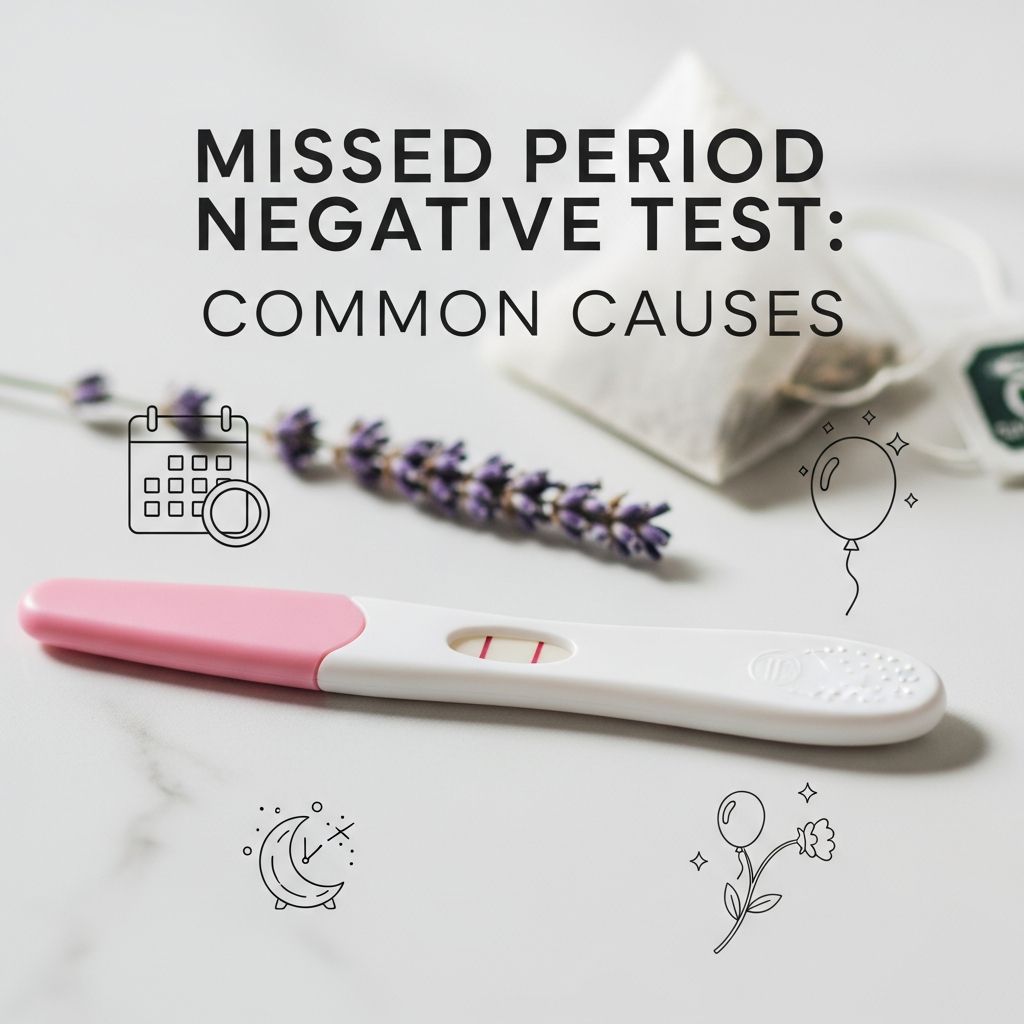
A late menstrual cycle paired with a negative pregnancy test often raises concerns, but pregnancy isn’t always the culprit. This scenario affects many women due to hormonal shifts, lifestyle influences, or underlying health conditions. Understanding these factors empowers you to take informed steps toward resolution.
Decoding the Pregnancy Test Mechanics
Home pregnancy tests detect human chorionic gonadotropin (hCG), a hormone produced post-implantation. Levels typically rise enough for detection around the expected period date, but early testing or low concentrations can yield false negatives.
- Timing matters: Ovulation variations mean hCG might not peak until days after a missed period.
- Test sensitivity: Not all kits detect low hCG; first-morning urine maximizes accuracy.
- Invalid results: Expired or mishandled tests may fail, lacking a control line.
Retest after 3-7 days if suspicion persists, as hCG doubles every 48-72 hours in viable pregnancies[10].
Hormonal Hurdles Behind Delayed Cycles
Hormones orchestrate the menstrual cycle; disruptions delay periods without conception. Low hormone levels post-late ovulation prevent hCG buildup detectable by tests.
| Factor | Impact on Cycle | Prevalence |
|---|---|---|
| Late Ovulation | Shifts expected period by 7-14 days | Common in irregular cycles (14-25% women) |
| Anovulation | No egg release, no period | Linked to stress, BMI changes |
| Low hCG | Test negative despite early pregnancy | Occurs in 10-20% early tests |
Track cycles via apps to pinpoint ovulation; basal body temperature confirms it retrospectively.
Lifestyle Triggers for Cycle Disruptions
Daily habits profoundly influence reproductive rhythms. Stress elevates cortisol, suppressing reproductive hormones and delaying ovulation. Extreme weight changes—gain or loss—disrupt estrogen balance, mimicking amenorrhea.
- Intense exercise: Marathon training or overtraining lowers body fat, halting periods.
- Nutritional deficits: Low-calorie diets or eating disorders impair ovulation.
- Caffeine excess: May exacerbate cramps but indirectly affects cycles via sleep disruption.
- Sleep deprivation: Disrupts circadian rhythms, mimicking jet lag on hormones.
Breastfeeding releases prolactin, suppressing ovulation and periods for months postpartum. Recent travel, illness, or shift work similarly throws off internal clocks.
Medications and Contraceptives’ Role
Hormonal birth control like pills or IUDs can cause post-discontinuation irregularities lasting months. Fertility drugs (e.g., Clomid) alter ovulation timing. Other meds—antipsychotics, blood pressure drugs, antidepressants—interfere via hormone modulation.
Consult pharmacists or doctors on cycle-impacting prescriptions. Gradual weaning from contraceptives aids normalization[10].
Medical Conditions Mimicking Pregnancy Symptoms
Several disorders cause amenorrhea with negative tests. Polycystic ovary syndrome (PCOS) affects 1 in 10 reproductive-age women, featuring cysts, insulin resistance, and anovulation. Symptoms: irregular periods, acne, weight gain.
Thyroid dysfunction—hypo or hyper—disrupts FSH/LH, leading to missed cycles. Primary ovarian insufficiency (POI) before 40 reduces estrogen, causing hot flashes and infertility.
- PCOS hallmarks: High androgens prevent ovulation.
- Thyroid issues: 5-10% women experience; blood tests confirm.
- POI risks: Genetic, autoimmune; affects 1% under 40.
Rarely, cryptic pregnancies evade detection due to low hCG or denial, but negative tests usually rule out. Ectopic pregnancies demand urgent care if pain/bleeding occurs.
Age-Related Cycle Changes
Perimenopause (40s-50s) brings erratic cycles from declining estrogen. Premature menopause before 40 mirrors POI. Postmenopausal, periods cease permanently.
Teens may have irregular cycles establishing patterns. Track 3+ months; persistent absence warrants evaluation[10].
Step-by-Step Action Plan
- Retest strategically: Use sensitive test with first urine after 1 week.
- Lifestyle audit: Reduce stress via yoga/meditation; balance diet/exercise.
- Monitor symptoms: Log bleeding, pain, mood for doctor visit.
- Seek blood test: Measures exact hCG/thyroid levels[10].
- Professional eval: Ultrasound for PCOS/POI if ongoing.
Consult if no period in 90 days, severe symptoms, or trying to conceive.
Frequently Asked Questions
How accurate are home pregnancy tests?
Over 99% when used correctly post-missed period; early use drops to 80-90%[10].
Can stress really delay my period?
Yes, cortisol inhibits GnRH, delaying ovulation by weeks.
Is PCOS curable?
Not curable but manageable with lifestyle, metformin, birth control.
When should I see a doctor?
After 2-3 negative tests, 90-day amenorrhea, or symptoms like pain/fatigue.
Could it be an ectopic pregnancy?
Rare with negative test; seek ER for one-sided pain/bleeding.
Preventive Strategies for Cycle Health
Maintain BMI 18.5-24.9, exercise moderately (150 min/week), prioritize sleep (7-9 hours), manage stress. Supplements like inositol aid PCOS; vitamin D supports thyroid. Annual gyn exams catch issues early.
Understanding these dynamics reduces anxiety. Most cases resolve with time or tweaks; persistent ones benefit from medical insight.
References
- Negative and false-negative pregnancy tests: Causes and what to do — Flo Health. 2023. https://flo.health/getting-pregnant/trying-to-conceive/pregnancy-tests/false-negative-pregnancy-test
- 7 Reasons for a Negative Pregnancy Test After a Missed Period — Alpha Center. 2024. https://alphacenter.org/what-to-do-if-you-missed-your-period-but-the-test-is-negative/
- What a missed period and negative pregnancy test could mean — Progyny. 2024. https://progyny.com/education/trying-to-conceive/negative-pregnancy-test-missed-period/
- Late Period, Negative Pregnancy Test: Possible Causes — MC Women’s Clinic. 2023. https://mcwomensclinic.com/late-period-negative-pregnancy-test-possible-causes/
- No Period Negative Pregnancy Test: 6 Causes — Healthline. 2024-01-15. https://www.healthline.com/health/pregnancy/causes-of-negative-test-no-period
- What does getting a negative pregnancy test result mean? — Clearblue. 2024. https://www.clearblue.com/pregnancy-tests/negative-results
- Home pregnancy tests: Can you trust the results? — Mayo Clinic. 2024-05-02. https://www.mayoclinic.org/healthy-lifestyle/getting-pregnant/in-depth/home-pregnancy-tests/art-20047940