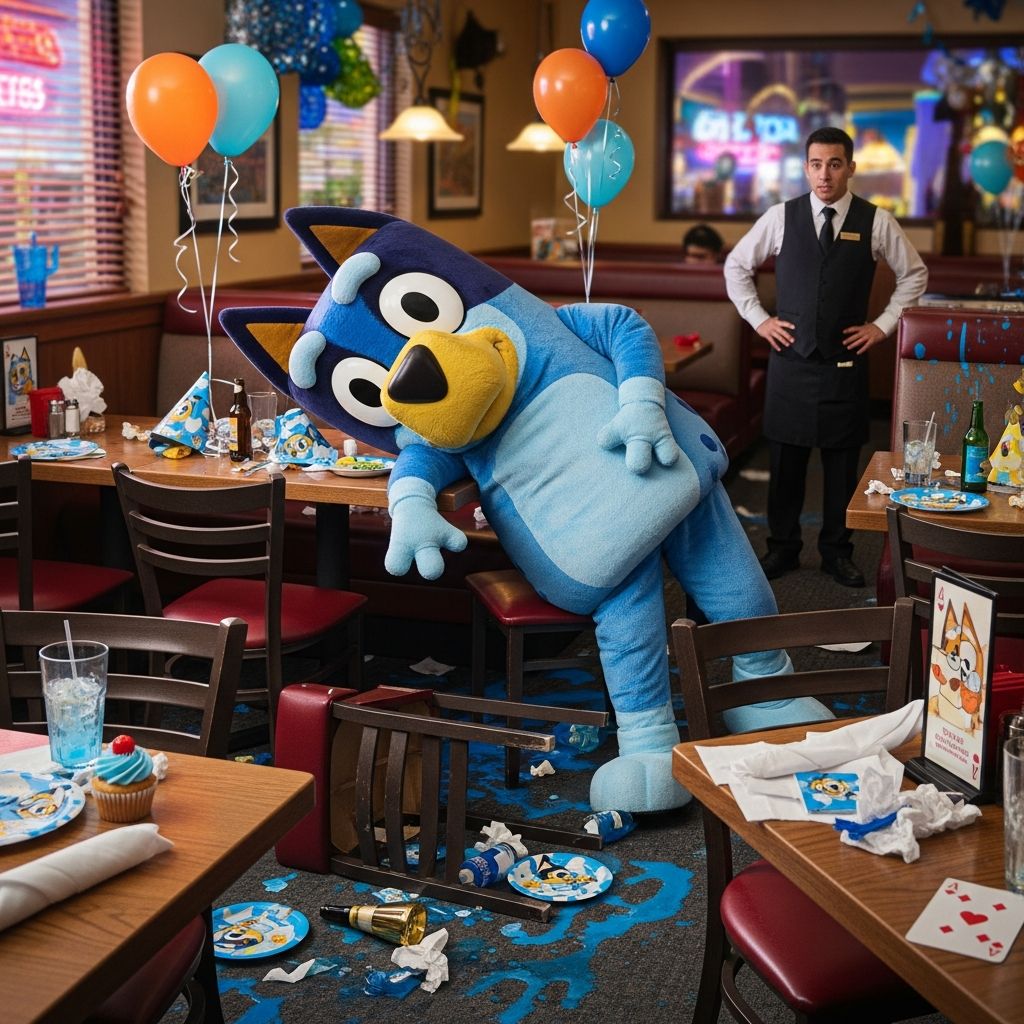
In early 2024, a Las Vegas restaurant promoted a special “Bluey Day” event promising themed fun for families, only to leave many parents furious and children in tears when the day went nothing like advertised. [web:2]
Public reports described long lines, overcrowding, confusion about what was included, and underwhelming character appearances, sparking a wave of social media backlash and forcing the restaurant to issue a public apology. [web:1][web:2]
What Was ‘Bluey Day’ Supposed To Be?
According to news coverage, the restaurant framed ‘Bluey Day’ as a family-friendly promotion tied to the massively popular preschool show Bluey, highlighting opportunities for kids to see characters, enjoy themed activities, and share a special meal. [web:2]
Marketing posts hinted at photo opportunities, festive décor, and a playful atmosphere, which understandably set high expectations for parents hoping to give their kids a memorable character experience. [web:2]
- Families anticipated a structured event with clear times for meeting characters.
- Parents expected crowd management and age-appropriate activities for young children.
- Many believed the event would feel close to an official, professional character meet-and-greet.
Why Parents Were So Excited
Bluey has become a cultural phenomenon for young kids and caregivers, which adds emotional weight to any event promising an in-person experience with characters modeled after the show. [web:2]
For many families, tickets or reservations to a themed day like this can be a rare splurge, making it especially painful when the reality falls short of what was implied in the promotion. [web:2]
How the Day Actually Unfolded
On the actual day of the promotion, parents reported arriving to large crowds, long lines, and confusion over where to go or what to do first. [web:1][web:2]
Coverage noted that the restaurant relied on staff members in homemade or non-professional costumes, and the sheer number of families who showed up quickly overwhelmed both the space and the event plan. [web:1][web:2]
Key Issues Families Reported
- Lengthy wait times: Lines stretched throughout the restaurant, and some children waited a long time just to glimpse a character or get seated. [web:1][web:2]
- Overcrowding: The space was not designed to handle the turnout, making it hard for kids to move around or participate in activities. [web:1][web:2]
- Confusing logistics: Parents described unclear directions about where to stand, when to line up, and what was actually included in the experience. [web:1][web:2]
- Limited, underwhelming character interaction: Families expected robust character meet-and-greets but often saw brief or chaotic encounters. [web:1][web:2]
Expectations vs. Reality
Many parents went into ‘Bluey Day’ imagining something close to an official, professionally run character appearance, with organized time slots and clear expectations. [web:2]
Instead, reports describe what looked more like a busy theme night at a local restaurant that had not fully anticipated viral interest or the crowd-control challenges of a popular kids’ event. [web:1][web:2]
Expectations vs. Reality at a Glance
| Aspect | What Parents Expected | What Reports Describe |
|---|---|---|
| Character quality | Professional costumes with strong resemblance to TV characters. [web:2] | Staff in amateur or homemade outfits that disappointed some kids. [web:1][web:2] |
| Crowd management | Timed entries or organized lines and seating. [web:2] | Large, unmanaged crowds and long waits that frustrated families. [web:1][web:2] |
| Activities | Clear schedule of games, photos, and themed fun. [web:2] | Scattered or unclear activities; some families only experienced a chaotic meal. [web:1][web:2] |
| Overall feel | Magical, organized character event for kids. [web:2] | Chaotic restaurant promotion that did not match hype for many attendees. [web:1][web:2] |
How Parents Reacted Online
Once the event concluded, social media quickly filled with posts from frustrated parents describing the day as chaotic, poorly organized, and disappointing for their children. [web:1][web:2]
Some parents shared videos and photos to illustrate long lines or lackluster character appearances, while others emphasized that their kids left upset after expecting to “meet Bluey” in a more meaningful way. [web:1][web:3]
- Comments often highlighted the emotional toll on kids who had been excited for days or weeks.
- Parents raised concerns about transparency in advertising and clarity on what was actually being offered.
- Several posts tagged local media outlets, prompting broader coverage of the incident. [web:1][web:2]
The Restaurant’s Response and Apology
Under mounting criticism, the restaurant issued a public apology, acknowledging that the turnout far exceeded expectations and that families did not receive the experience they hoped for. [web:1][web:2]
Management emphasized that staff members had tried to pull off the event with limited resources, including creating costumes and themed goods themselves, but ultimately admitted they should have planned more thoroughly for the crowd size. [web:1]
Reported Remedial Steps
- Public statement: The restaurant publicly expressed regret for the situation and for the disappointment felt by kids and parents. [web:1][web:2]
- Reflection on planning: Representatives indicated they would handle future events differently, particularly in areas like capacity limits and staffing. [web:1]
- Communication with regulars: Coverage suggested the restaurant reaffirmed commitment to its local customer base, noting that usual service did not resemble the chaotic event day. [web:1]
What This Incident Reveals About Family Events
The Las Vegas ‘Bluey Day’ story underscores how quickly a children’s event can unravel when expectations, marketing, and logistics are not aligned. [web:1][web:2]
It also highlights a broader trend: small businesses sometimes attempt to capitalize on beloved kids’ brands without fully appreciating the operational demands and emotional stakes involved when young children are the primary audience. [web:2]
Red Flags Parents Can Watch For
While no parent can predict every mishap, there are warning signs that a character-themed promotion may not deliver what it promises. [web:2]
Using ‘Bluey Day’ as a cautionary example, families can apply a simple checklist before reserving a table or buying tickets next time.
- Vague descriptions: If an event ad relies heavily on popular character names or images but offers few concrete details (schedule, activities, length of visit), expectations may not be grounded.
- No capacity information: Lack of clarity on how many families can attend per time slot or per day suggests crowding is possible.
- Unclear licensing or affiliation: If it is not clearly stated whether the event is officially licensed or just “inspired by” a show, be cautious about assuming a professional-level experience.
- Little or no track record: A venue with no history of hosting successful kids’ events may underestimate what is needed.
How to Vet a Kids’ Character Event
Before committing money and time, parents can go beyond the marketing flyer to gauge whether an event is likely to be organized, safe, and age-appropriate. [web:2]
These steps are not foolproof but can significantly reduce the risk of being blindsided by chaos or disappointment.
- Check reviews and local forums. Look for prior events hosted by the same business, paying attention to comments about lines, staffing, and communication.
- Ask specific questions. Call or message the venue about maximum capacity, timing of character appearances, and whether photos or autographs are guaranteed.
- Confirm costs and inclusions. Clarify whether the promotion covers only entry, or also food, activities, and meet-and-greets.
- Look for clear schedules. Well-run events typically publish a basic timetable so families know when key activities occur.
- Consider the venue layout. If the space is small and usually packed, adding a high-demand kids’ promotion may strain capacity.
Tips If an Event Starts Going Wrong
Even with careful vetting, parents can still land at an event that is slipping into the kind of chaos seen at ‘Bluey Day.’ [web:1][web:2]
Having a simple game plan can help protect your child’s experience and your own peace of mind.
- Set expectations early: Before arrival, explain to kids that they might not spend a lot of time with the character and that things could be busy.
- Establish a time limit: Decide in advance how long you are willing to wait in line before leaving, and stick to that boundary.
- Look for alternatives on site: If lines are unbearable, shift focus to coloring sheets, small games, or a special treat so the outing still feels special.
- Advocate respectfully: If safety or fairness becomes a concern, calmly ask staff for clarification; they may be able to direct you to a shorter line or different time slot.
What Businesses Can Learn from ‘Bluey Day’
The Las Vegas incident offers hard lessons for restaurants and small venues tempted to host character-inspired promotions without robust infrastructure. [web:1][web:2]
When children’s favorite shows are involved, stakes rise dramatically, and missteps can damage both brand reputation and long-term trust among local families. [web:2]
Best Practices for Future Events
- Plan for viral interest: If a character is widely beloved, assume demand will exceed normal foot traffic and set firm capacity limits.
- Invest in trained staff: Dedicated event staff, not just regular servers, should manage lines, answer questions, and coordinate character movement.
- Communicate clearly: Provide detailed descriptions of what the event includes—and does not include—to minimize misunderstandings.
- Pilot on a smaller scale: Test a limited, reservation-only event before opening to the general public.
Frequently Asked Questions (FAQs)
Was ‘Bluey Day’ in Las Vegas an official Bluey event?
Public reports describe the promotion as a themed day hosted by a local restaurant, not an official large-scale production run by the creators of the Bluey television series. [web:2]
Why did the lines and crowds get so bad?
Coverage suggests that the restaurant underestimated how many families would show up, did not impose strict capacity controls, and lacked a detailed plan for handling large numbers of small children and caregivers at once. [web:1][web:2]
Did the restaurant apologize or offer compensation?
News outlets reported that the restaurant issued a public apology acknowledging the disappointment and explaining that staff had been overwhelmed by demand, though any specific compensation policies were not widely detailed. [web:1][web:2]
How can parents tell if a character event is legitimate and well-run?
Parents can look for clear information on capacity, character schedules, costs, and whether the event is officially affiliated with the brand, then cross-check with reviews or local parenting groups for past experiences with the same venue. [web:2]
Are all small, local character events risky?
Not necessarily; many small venues run excellent kids’ events, but families should treat each promotion on a case-by-case basis, looking closely at transparency, organization, and track record before committing. [web:2]
Making the Most of Character Experiences
The Las Vegas ‘Bluey Day’ serves as a reminder that even well-intentioned family events can miss the mark when planning falls short of demand. [web:1][web:2]
By learning from this high-profile misstep, parents can make sharper decisions about where to spend their money and time, and businesses can better honor the trust families place in them when they promise a special day with a beloved character. [web:1][web:2]