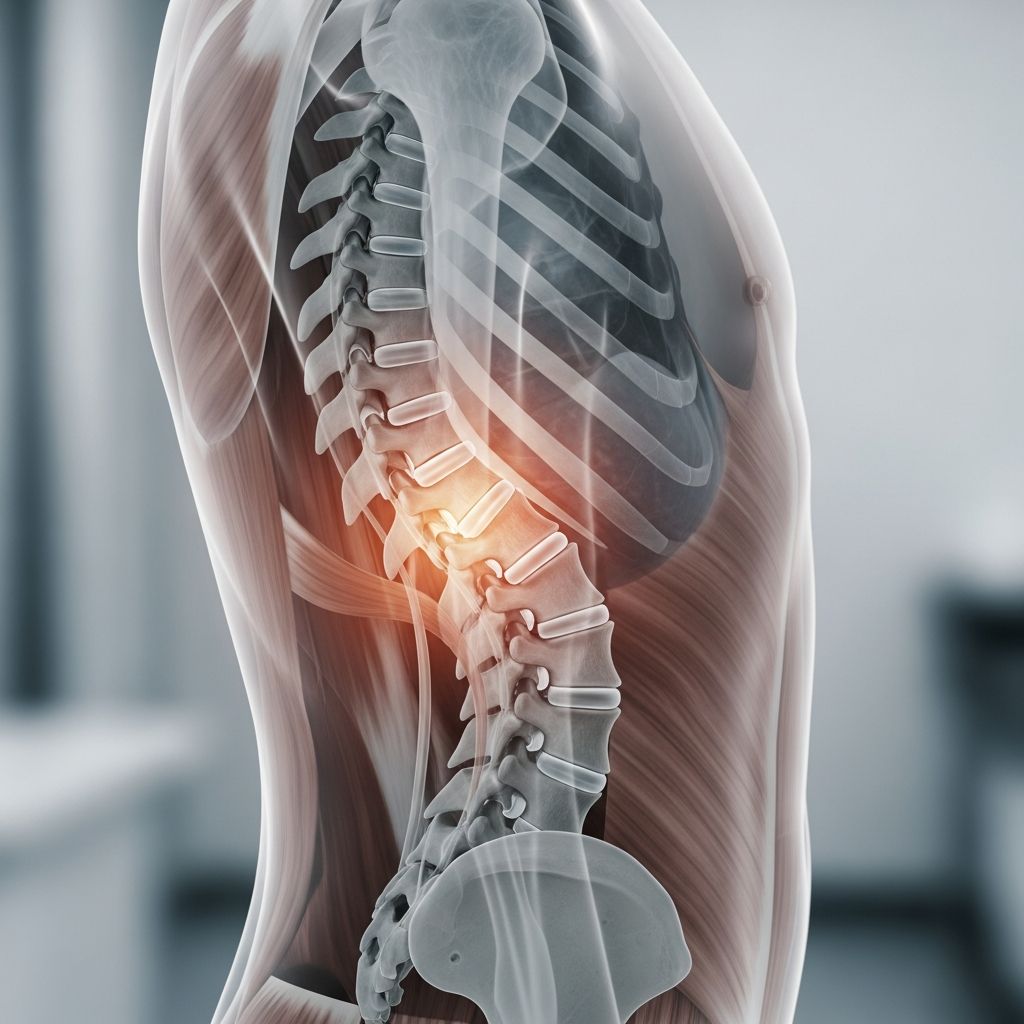
Kyphosis is a medical term for an increased forward curve of the upper spine that makes the back look more rounded or hunched than usual. Many kids have a mild curve that is completely normal, but sometimes the curve is large enough to cause pain, affect posture, or raise concerns about appearance.
This guide explains what kyphosis is, why it happens, how doctors diagnose it, and the treatment options that help kids grow and stay active.
What Is Kyphosis?
The spine naturally has gentle curves when viewed from the side. The upper back (thoracic spine) normally curves slightly forward, while the neck and lower back curve slightly backward. Kyphosis refers to an excessive forward curve in the upper back that creates a rounded or hunched appearance.
Doctors usually measure the curve on an X-ray. A normal upper-back curve is about 20–45 degrees, while kyphosis is often diagnosed when the curve is 50 degrees or more.
| Feature | Normal Thoracic Spine | Kyphosis |
|---|---|---|
| Curve size | About 20–45° forward | Usually ≥ 50° forward on X-ray |
| Appearance | Gentle roundness in upper back | More obvious rounding or hunching |
| Flexibility | Curve straightens easily with posture | May be flexible (postural) or stiff (structural) |
| Common symptoms | Usually none | Possible back pain, fatigue, self-consciousness |
Main Types of Kyphosis in Young People
Children and teens can develop kyphosis for several different reasons. Knowing the type helps guide treatment.
1. Postural Kyphosis
Postural kyphosis is the most common type in teens and is related mainly to slouching rather than a problem inside the bones.
- Develops gradually, often in early adolescence.
- Curve is usually flexible. When the child lies flat or stands up straight with effort, the back looks more normal.
- Often no structural damage to the vertebrae.
- More common in kids assigned female at birth in some studies.
Postural kyphosis rarely causes serious long-term issues and usually improves with better posture, exercises, and sometimes physical therapy.
2. Scheuermann Kyphosis
Scheuermann kyphosis (also called Scheuermann disease) is a structural problem in which some of the vertebrae become wedge-shaped instead of rectangular.
- Tends to appear during the rapid growth spurt around puberty.
- The curve is stiff and does not fully straighten when the child tries to stand tall or lies down.
- Back pain is more common than with simple postural kyphosis.
- Curves can progress during growth and sometimes become quite pronounced.
Scheuermann kyphosis may require closer monitoring, bracing, or sometimes surgery if the curve is large, painful, or affecting function.
3. Congenital and Other Causes
Less commonly, kyphosis is present at birth or develops because of another medical condition.
- Congenital kyphosis: the spinal bones did not form or separate normally before birth, which can cause a sharp curve that may worsen quickly if not treated.
- Neuromuscular conditions: disorders that affect muscle control (such as some muscular dystrophies) can pull the spine out of alignment.
- Infection, tumor, or trauma: problems that damage the vertebrae can lead to a kyphotic curve.
- Osteoporosis and fractures: more common in older adults, but can occasionally affect teens with bone-weakening conditions.
What Parents Might Notice
The earliest sign is often a change in posture. Some children are not bothered physically but may feel self-conscious about how they look.
Common Visible Signs
- Upper back appears more rounded than in other kids.
- Noticeable slouching or a “hunched” posture from the side.
- Head juts forward instead of being in line with shoulders.
- One shoulder may sit slightly higher than the other.
- Tight hamstring muscles (back of the thighs) in some kids.
Possible Symptoms
Many children with mild kyphosis have no symptoms at all. When symptoms do occur, they can include:
- Dull or aching pain in the middle or upper back, especially after long periods of sitting or standing.
- Back stiffness or reduced flexibility.
- Tiredness or muscle fatigue in the back.
- Feeling self-conscious about appearance or clothing fit.
Severe or untreated curves can sometimes cause more serious issues, such as difficulty breathing, reduced exercise capacity, or nerve problems.
When Kyphosis Needs Urgent Medical Attention
Although most cases in children are not emergencies, certain warning signs should be evaluated quickly.
- Rapidly worsening curve over weeks or months.
- Severe or constant back pain that does not improve with rest.
- Shortness of breath, trouble taking a deep breath, or chest pain.
- Numbness, tingling, or weakness in the arms or legs.
- Problems with balance or frequent falls.
- Loss of bladder or bowel control.
These symptoms may indicate compression of the spinal cord or lungs and require urgent medical evaluation, often by a spine specialist.
How Doctors Diagnose Kyphosis
Diagnosis usually begins with a visit to a pediatrician or family doctor, who may refer the child to an orthopedic surgeon or pediatric spine specialist.
Medical History and Physical Exam
- Questions about when the curve was first noticed and if it is changing.
- Review of back pain, injuries, other medical conditions, and family history of spine problems.
- Observation of the child from the side and from behind while standing and bending forward.
- Checking whether the curve straightens when the child lies flat or consciously stands tall (helps distinguish flexible postural kyphosis from structural types).
- Testing muscle strength, reflexes, and sensation to look for nerve involvement.
Imaging Tests
If the curve is significant or structural kyphosis is suspected, imaging is usually recommended.
- X-rays: Taken while standing; allow doctors to measure the degree of curvature and look for wedge-shaped vertebrae.
- MRI: Used if there are neurological symptoms or concern about the spinal cord, discs, tumors, or infection.
- CT scan: Occasionally used for detailed bone views, especially before surgery.
Treatment Options for Kyphosis
Treatment depends on the child’s age, type of kyphosis, curve size, symptoms, and how quickly the curve is changing. Many children only need monitoring and simple home measures, while others benefit from bracing or surgery.
Observation and Lifestyle Measures
Mild curves that are not progressing or causing problems may only require regular checkups.
- Scheduled visits to monitor the curve during growth.
- Education on healthy posture and spine-friendly habits.
- Encouraging regular physical activity, including core and back strengthening.
Observation is especially common for mild postural kyphosis or small Scheuermann curves in children who are nearly finished growing.
Physical Therapy and Exercise
Physical therapy can be helpful in both postural and structural kyphosis.
- Exercises to strengthen the back and core muscles that support the spine.
- Stretching tight muscles such as hamstrings, chest, and hip flexors.
- Training in posture and body mechanics for school, sports, and daily activities.
- Home exercise programs to maintain progress between therapy sessions.
While exercises alone will not fully correct a stiff structural curve, they can reduce pain, improve posture, and support overall function.
Bracing
For growing children with moderate structural kyphosis, especially Scheuermann kyphosis, a back brace may help prevent the curve from getting worse.
- Usually recommended when the curve is moderate and the child still has significant growth remaining.
- Brace is typically worn many hours per day, as directed by the specialist.
- Works best when used consistently and combined with exercise.
Bracing does not necessarily straighten the spine to normal, but it can reduce the need for surgery in some children by limiting curve progression.
Medications and Pain Management
For children with discomfort:
- Over-the-counter pain relievers may be suggested for short-term use, following a doctor’s advice.
- Heat or ice packs can ease muscle soreness after activity.
- Physical therapy techniques such as manual therapy, stretching, or guided strengthening can reduce pain over time.
Surgery
Surgery is reserved for more severe or complicated cases, such as:
- Large curves (often greater than about 70–75 degrees) that are worsening or causing major deformity.
- Kyphosis that significantly interferes with daily life, breathing, or heart function.
- Persistent, disabling pain that does not improve with non-surgical treatment.
- Neurological problems from spinal cord or nerve compression.
The most common surgery for structural kyphosis in teens is spinal fusion with metal rods and screws to straighten and stabilize the spine. Surgery carries real risks, but for carefully selected patients it can improve posture, reduce pain, and prevent further curve progression.
Daily Life, School, and Sports
Most children with kyphosis can lead active, typical lives. With proper guidance, many participate safely in school, sports, and social activities.
At Home
- Use a supportive chair and encourage sitting back fully instead of slouching on the edge.
- Take regular breaks from screens to stand, stretch, and move.
- Follow the home exercise plan recommended by the provider or therapist.
- Help your child find clothing that feels comfortable and builds confidence.
At School
- Inform teachers and school nurses if your child wears a brace or has lifting restrictions.
- Ask about locker access or lighter textbook options to reduce backpack weight.
- Allow seating adjustments or brief movement breaks if back pain develops.
Sports and Physical Activity
- Most non-contact sports and activities are safe; always follow the specialist’s advice.
- Regular exercise supports bone health, muscle strength, and overall well-being.
- Some high-impact or collision sports may be limited after spinal fusion surgery, depending on surgeon recommendations.
Supporting Your Child Emotionally
Beyond the physical curve, kyphosis can affect how a child feels about their body and their interactions with peers.
- Listen to their concerns about how they look or feel in clothes.
- Reassure them that kyphosis is a medical condition and not their fault.
- Celebrate their strengths in school, sports, arts, or friendships so that self-worth is not focused on appearance alone.
- Consider counseling if your child seems very anxious, withdrawn, or upset about their back.
Frequently Asked Questions (FAQs)
Is kyphosis the same as scoliosis?
No. Kyphosis is a forward–backward curve of the spine when viewed from the side, making the back look rounded. Scoliosis is a side-to-side curve when viewed from behind, often forming a C or S shape. A child can have both conditions at the same time, but one does not cause the other.
Can poor posture alone cause permanent kyphosis?
Poor posture can lead to postural kyphosis, which is usually flexible and does not involve permanent changes in the bones. With awareness, exercises, and growth, many teens improve their posture over time. Structural types like Scheuermann or congenital kyphosis are not caused just by slouching and usually require medical follow-up.
Will my child grow out of kyphosis?
It depends on the type and severity. Mild postural curves may improve as a child becomes stronger and more aware of posture. Scheuermann kyphosis often stabilizes once growth is complete, but the existing curve usually remains unless treated with bracing or surgery. Regular monitoring helps ensure that any progression is caught early.
Does kyphosis always need surgery?
No. Most children with kyphosis do not need surgery. Many are treated with observation, physical therapy, and sometimes bracing. Surgery is reserved for severe, progressive, or symptomatic curves that significantly affect quality of life or cause medical problems.
Which specialist should we see for kyphosis?
Initial evaluation can start with your child’s pediatrician or family doctor. For ongoing care, children are often referred to an orthopedic surgeon or pediatric spine specialist who has experience treating spinal deformities like kyphosis and scoliosis.
References
- Kyphosis — StatPearls, NCBI Bookshelf. 2023-08-07. https://www.ncbi.nlm.nih.gov/books/NBK558945/
- Kyphosis — NHS. 2023-06-28. https://www.nhs.uk/conditions/kyphosis/
- Scheuermann’s Kyphosis — Nemours KidsHealth. 2022-10-01. https://kidshealth.org/en/parents/scheuermann-kyphosis.html
- Kyphosis — Penn Medicine. 2021-05-10. https://www.pennmedicine.org/conditions/kyphosis
- Kyphosis — Phoenix Children’s Hospital. 2022-03-15. https://phoenixchildrens.org/specialties-conditions/kyphosis
- Kyphosis — Northwestern Medicine. 2022-09-01. https://www.nm.org/conditions-and-care-areas/orthopaedics/kyphosis
- Kyphosis: What It Is, Causes, Symptoms, Types & Treatment — Cleveland Clinic. 2023-04-24. https://my.clevelandclinic.org/health/diseases/17671-kyphosis