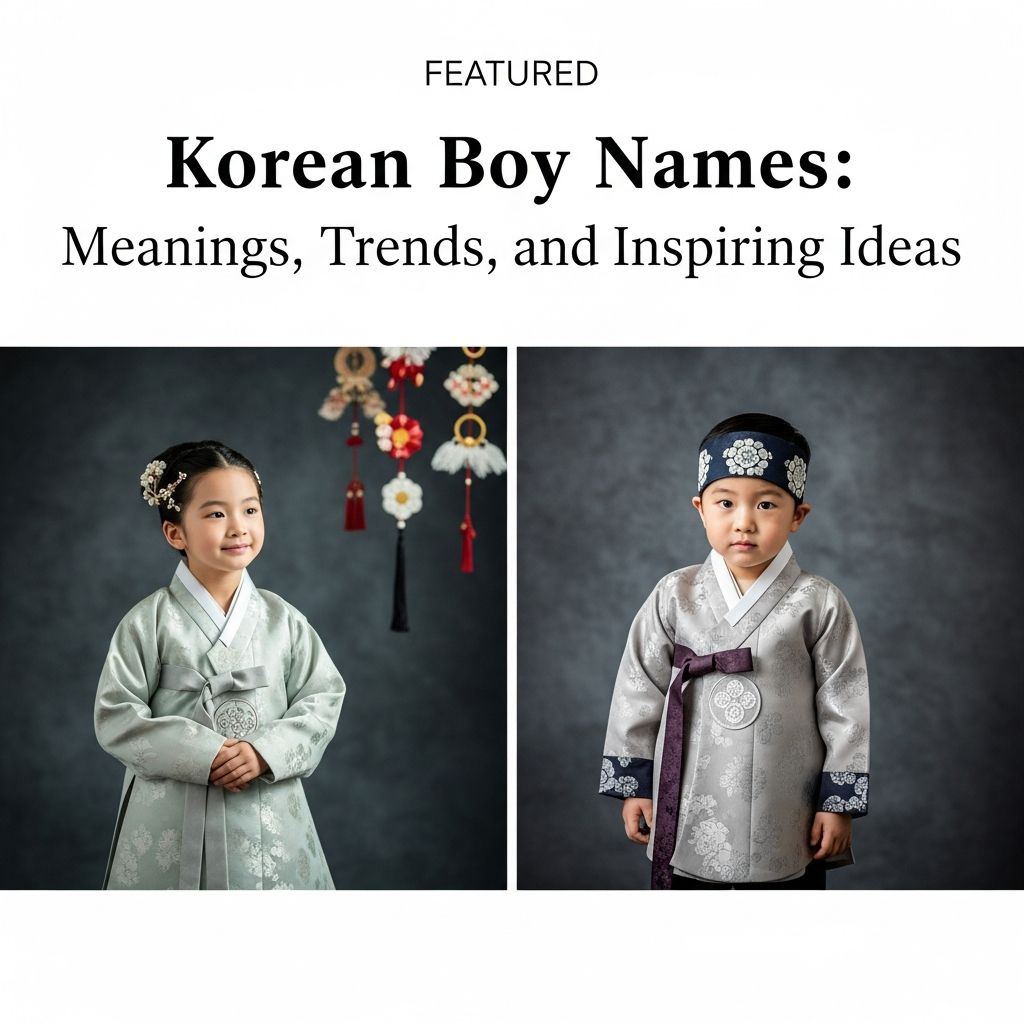
Korean boy names are rich in meaning, history, and family tradition. Parents rarely choose a name just because it sounds nice; they choose it because every syllable and character carries a blessing, a wish, or a story for their child’s future. If you are searching for a Korean name for your baby, a character, or even for yourself, understanding how these names work will help you choose something deeply meaningful and authentic.
How Korean Boy Names Are Structured
Most Korean names today follow a three-syllable pattern: a one-syllable family name (surname) followed by a two-syllable given name. The surname almost always comes first in Korean order, even if many Koreans reverse it to fit Western naming styles.
- Family name: Typically one syllable such as Kim, Lee, Park, Choi, Jung, or Han.
- Given name: Usually two syllables, each represented by one hanja (Chinese character) and written together in Hangul (Korean alphabet).
- Example structure: Kim Min Joon – Kim (family name), Min Joon (given name).
Each syllable of the given name has its own meaning, and the combination of the two is what makes the full name special. Parents often spend a long time choosing hanja that work harmoniously together, both in sound and symbolism.
Hangul, Hanja, and Meaning
Modern Korean is written in Hangul, a phonetic alphabet, but many given names are still conceptually based on hanja, the logographic Chinese characters historically used in Korea. The same name in Hangul may have many possible hanja spellings, each with a different meaning.
- Hangul: Shows how the name is pronounced.
- Hanja: Decides what the name actually means (e.g., “wisdom,” “brightness,” “bravery,” “spring”).
- Multiple meanings: A single sound like Jun can be associated with different hanja meaning “talented,” “handsome,” “truth,” or “kingly,” depending on which character is chosen.
This flexibility allows parents to create a name that reflects unique wishes for their child, even if the pronunciation is familiar or trendy.
Common Themes in Korean Boy Names
Korean boy names often express hopes for character, success, and a good life rather than just physical traits. Many names fall into a few meaningful themes that repeat across generations.
- Wisdom and intelligence: Syllables meaning “wise,” “clever,” “knowledgeable,” or “insightful.”
- Strength and courage: Names connected to power, bravery, resilience, or firmness like “rock” or “steel.”
- Virtue and goodness: Ideas such as kindness, honesty, righteousness, and moral character.
- Prosperity and success: Blessings for a bright future, achievement, honor, and abundance.
- Nature and beauty: References to sky, river, light, seasons, or brightness, often suggesting freshness or clarity.
Parents often blend two themes in one name, such as combining a character meaning “bright” with one meaning “strong,” to suggest a child who is both intelligent and resilient.
Modern vs. Traditional Boy Names
Korean names today sit at an interesting crossroads between tradition and modern style. Some families prefer timeless names that have been used for generations, while others look for softer, trendier sounds or international-friendly spellings.
| Style | Typical Features | Why Parents Choose It |
|---|---|---|
| Traditional | Strong consonants, classic syllables, often shared generational characters. | Emphasizes heritage, family continuity, and timeless values. |
| Modern | Softer sounds, trendy syllables, often chosen to sound stylish and youthful. | Feels current, fashionable, and easy for peers to recognize. |
| Global-friendly | Names or spellings that are easy to pronounce in English and other languages. | Helps children navigate international environments more easily. |
Many current names sit between these extremes: they use traditional hanja, but the combination is fresh and modern, and the Romanized spelling is chosen with global use in mind.
Popular Sounds and Syllables for Boys
Just like English names go through cycles of popularity, certain syllables in Korean boy names tend to be fashionable in specific eras. These sounds often cluster in names that parents perceive as strong, smart, or handsome.
- Common first syllables: Ji-, Jun-, Min-, Seo-, Tae-, Hyun-, Do-.
- Common second syllables: -woo, -ho, -jun, -seok, -won, -jin, -hyun.
- Soft and bright sounds: Vowel-rich combinations like -u, -a, and -eo are popular because they sound youthful and gentle yet still masculine.
Parents often start from one syllable they love and then look for a partner syllable whose meaning completes the concept they want, such as pairing a “bright” syllable with one that means “origin” or “victory.”
How Families Choose a Korean Boy Name
Choosing a Korean name is often a thoughtful and communal process. In many families, elders, relatives, or even professional naming experts may be consulted, especially if hanja and traditional fortune-telling systems are important to the family.
- Define the wish: Parents first decide what values or blessings they want to emphasize: health, kindness, intelligence, leadership, or something else.
- Select key meanings: They identify hanja characters whose meanings fit those wishes.
- Check harmony: Families consider the flow of the name with the surname, the visual balance of the characters, and sometimes birth details such as time and date.
- Consider practicality: Ease of pronunciation, Romanization options, and potential nicknames are evaluated.
Even if a professional naming expert is not involved, many parents still research hanja meanings carefully and compare several combinations before deciding.
Ideas for Strong and Gentle Name Concepts
Because every Korean name is created by combining ideas, it can be helpful to start with a concept rather than a specific spelling. Below are some popular directions parents take when naming boys, along with examples of the types of meanings they might combine.
Names Emphasizing Strength and Courage
These names highlight bravery, resilience, and firm character. They are especially popular among families who want their sons to grow into protective, trustworthy figures.
- Syllables meaning “strength,” “rock,” “victory,” or “steel.”
- Common pairings that mix power with wisdom or goodness, so strength is guided by conscience.
- Names that also hint at leadership or achievement, not just physical power.
Names Highlighting Wisdom and Learning
Names focused on intelligence and insight are widely loved in Korea, reflecting the value placed on education and thoughtful character.
- Syllables meaning “wisdom,” “knowledge,” “insight,” “clarity,” or “understanding.”
- Combinations that pair wisdom with brightness, origin, or growth, suggesting a mind that continues to develop.
- Names subtly connected to literature, study, or philosophy for book-loving families.
Names Centered on Kindness and Virtue
Names that focus on moral qualities signal a desire for a child who is not only successful but also warm-hearted and trustworthy.
- Characters meaning “goodness,” “truth,” “benevolence,” “upright,” or “pure.”
- Pairings with images of light, dawn, or brightness to suggest a positive presence.
- Names that sound gentle but carry strong ethical connotations underneath.
Names Inspired by Nature and Light
Nature-based names for boys can feel poetic yet grounded. They are often chosen to represent freshness, hope, and calm strength.
- Elements like sky, sea, river, mountain, or forest.
- Words related to light: sun, brightness, dawn, shining, or clear sky.
- Subtle references to seasons such as spring and summer to imply vitality and growth.
Tips for Non-Korean Parents or Writers
If you are not Korean but want to use a Korean boy name for a baby, character, or pen name, approaching the process with respect and curiosity is important. Names carry cultural weight, and using them thoughtfully helps avoid stereotypes or unintentional offense.
- Research meanings carefully: Avoid choosing a name only because it sounds cool; look up its meaning and cultural associations.
- Check pronunciation: Listen to native speakers pronounce the name, and practice saying it correctly.
- Consider context: If you are naming a character, think about whether the name matches his background, age, and family history.
- Be open to feedback: If you have Korean friends or readers, invite them to share honest thoughts on how the name choice feels.
With genuine respect and effort, choosing a Korean name can be a beautiful way to honor the language and culture.
Romanization and Spelling Choices
When writing Korean names in the Latin alphabet, there is more than one correct way to do it. Some families use official systems, while others choose spellings that feel intuitive in English or match existing passports and documents.
- Multiple spellings: One name may appear as Jun or Joon, Seok or Suk, depending on personal preference.
- Clarity vs. accuracy: Some spellings reflect Korean spelling more accurately; others prioritize ease for non-Korean speakers.
- Consistency: Parents often decide a spelling early so it remains consistent across official documents and online profiles.
For SEO or online use, choosing one clear Romanization and using it consistently helps search engines and readers recognize the name correctly.
Checklist for Choosing a Korean Boy Name
If you are feeling overwhelmed by the options, a simple checklist can guide you toward a name that balances meaning, style, and practicality.
- Do you clearly understand what each syllable means?
- Does the full name sound good with the family name?
- Is the name easy enough to pronounce for the communities your child will grow up in?
- Does the name reflect a value or wish you truly care about?
- Will the name still feel appropriate when your child is an adult, not just a baby?
Thinking through these questions helps ensure that the name is more than a trend; it becomes a gift your child can carry proudly at every stage of life.
Frequently Asked Questions About Korean Boy Names
Do all Korean names use hanja?
No. While many traditional names are based on hanja, some modern names use native Korean words or are created mainly for their sound in Hangul. However, hanja-based names remain very common because of their depth of meaning and longstanding cultural roots.
Can Korean boy names be unisex?
Yes. Some names are clearly masculine or feminine based on long usage, but others can be unisex, especially newer or nature-based names. In recent years, softer-sounding names with meanings like “light,” “spring,” or “joy” may be used for any gender depending on family preference.
Is it okay for non-Korean parents to choose a Korean name?
It can be appropriate if done respectfully. Understanding what the name means, pronouncing it correctly, and avoiding stereotypical or “exoticizing” choices are important steps. When in doubt, asking Korean speakers for their perspective can be very helpful.
How are Korean names handled on official documents in English?
On passports and many official forms, the family name is usually written first in all caps, followed by the given name, or sometimes switched to a Western order. The exact Romanized spelling is often chosen by the family and then stays consistent once it appears on legal documents.
Can siblings share part of a given name?
Yes. Some families use a shared generational syllable for brothers or cousins, so that one part of their given name matches. This can symbolize unity within the generation and honor a family naming plan passed down from elders.
Final Thoughts on Korean Boy Names
Korean boy names are more than labels; they are compact expressions of family dreams, cultural history, and individual identity. Whether you prefer classic strength, soft modern sound, or poetic nature imagery, the key is to understand the underlying meanings and choose with intention. With a little research and reflection, you can find a Korean name that feels timeless, respectful, and full of promise for the life it will represent.