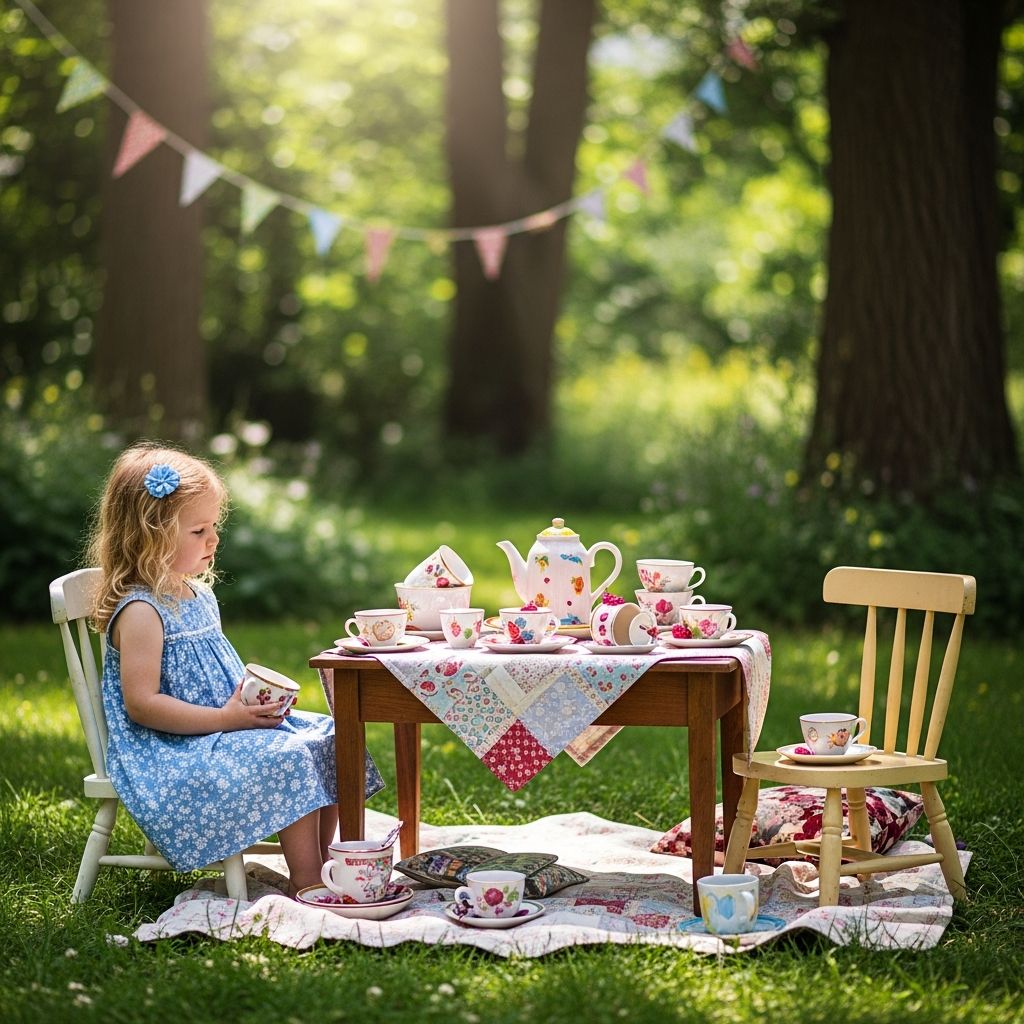
Children’s tea parties have a way of turning quiet afternoons into small theatrical productions, complete with costumes, invented accents, and elaborate negotiations over who pours the next cup. They are also a surprisingly easy way to slip in a bit of history, manners, and creativity without turning the experience into a lesson. This article explores how to use toy tea sets and simple props to create memorable, playful tea parties at home, including how to weave in a lighthearted nod to the Boston Tea Party for older kids who enjoy stories about bold ideas and big protests.
Why Tea Parties Still Captivate Kids
At first glance, a tea party is just pretend pouring and tiny snacks. Look a little closer, though, and it becomes a rich stage for social learning and imaginative play, especially when children get to take the lead in planning and hosting. The rituals of offering, serving, and saying “please” and “thank you” help kids experiment with roles—host, guest, storyteller—while still feeling safe and silly.
Because tea parties feel “grown-up” but remain low-stakes, children can practice conversation, turn-taking, and even basic hospitality. These skills show up later at birthday parties, family gatherings, and classroom events, where kids are suddenly grateful they already know how to pass a plate or greet a guest.
Choosing the Right Tea Set for Play
You do not need an elaborate set to spark a great tea party, but the pieces you choose can influence how kids play. Think first about durability and safety, then about theme and color; the most beloved sets are often the ones that can survive dramatic spills and enthusiastic pouring.
Below is a simple comparison to help decide what kind of tea set fits your family’s style and space.
| Type | Best For | Pros | Cons |
|---|---|---|---|
| Plastic | Toddlers and outdoor play | Very durable; lightweight; usually dishwasher-safe | Less “fancy” feel; can scratch or fade over time |
| Metal (tin or enamel) | Preschoolers and up | Charming designs; satisfying clink; often comes in themed sets | May dent; can be noisy on hard floors |
| Ceramic or porcelain | Older kids who handle dishes carefully | More like “real” tea service; great for special occasions | Breakable; better for supervised indoor play |
| DIY & mismatched | Creative families and mixed-age play | Inventive; inexpensive; easy to replace pieces | Less uniform look; sizes may not match |
Setting the Scene: From Living Room to “Harbor”
The environment is half the magic. With just a sheet, a scarf, and a few cushions, a regular room can become a ship’s deck, a colonial parlor, or a fairy-tale garden. Let the children help define the setting; when they name the space, they invest more deeply in the play.
Try one of these simple scene ideas:
- Indoor harbor: Lay a blue blanket or tablecloth on the floor as “water” and position the tea party on a blanket “ship” beside it. Toy boxes can stand in as crates.
- Secret attic tea room: Use a corner or under-table space, string up battery-powered lights, and drape scarves or old curtains for instant old-time coziness.
- Garden rebellion: Set up outdoors (or by a window with plants), and let kids use leaves and sticks as “quills,” sketching their “demands” on scrap paper.
A Gentle, Age-Appropriate Nod to the Boston Tea Party
If you want to fold in history, the Boston Tea Party offers an accessible story of people who felt unheard and used a dramatic gesture—dumping tea into the harbor—to say “this is not fair.” For younger kids, keep the explanation very simple: people were upset about rules and taxes they didn’t help make.
Avoid turning the tea party itself into a dark or angry reenactment; instead, invite kids to think about peaceful ways they speak up when something feels unfair at home or school. You might talk about raising hands in class, using “I feel” statements, or asking an adult for help when someone breaks a rule.
Theme Ideas That Go Beyond “Fancy”
Classic lace-and-pearls tea parties are charming, but many kids respond even more enthusiastically to themes with movement and story. Offer two or three options and let them vote; the act of choosing builds ownership and excitement.
- Harbor Heroes Tea: Kids are sailors, merchants, and messengers gathered to decide what to do about a new unfair rule. The tea table becomes “headquarters,” and each child invents a character.
- Time Travelers’ Tea: Children pretend they have stepped out of different centuries or places—one from the 1700s, one from the future, one from another country—and share what tea might look like in their world.
- Stuffed Animal Parliament: Every stuffed guest represents a group (cats, dinosaurs, astronauts) and brings one rule suggestion for “Tea Town.” Kids discuss which rules they’d adopt.
- Spy & Secret Message Tea: Tiny notes under saucers reveal secret missions, such as “Slip extra cookies to a guest” or “Compliment someone’s hat,” encouraging playful kindness.
Snack Ideas: Simple, Kid-Friendly, and Mostly Crumb-Resistant
The food at a children’s tea party does not need to be elaborate. Bite-sized and low-mess snacks keep the focus on play rather than cleanup. Focus on variety and color more than perfection; slightly crooked sandwiches taste just as good and invite children to help assemble them.
- Mini sandwiches with easy fillings like cheese, cucumber, or nut-free spreads.
- Fruit “ships” made from apple slices with toothpick paper “sails.”
- Small crackers with a dot of cream cheese and a sprinkle of herbs or shredded carrot.
- Store-bought cookies dressed up with a drizzle of melted chocolate or yogurt.
- Pitchers of herbal tea, mild juice, or flavored water served in kid-sized cups.
Fun and Sneaky Learning at the Tea Table
Between bites and refills, tea parties open natural opportunities for learning that does not feel academic. Children are already practicing turn-taking when they wait for the teapot; you can lightly name this skill to reinforce it without turning the party into a lesson.
Some subtle learning opportunities include:
- Math: Counting cups, dividing cookies evenly, or discussing halves and quarters when cutting sandwiches.
- Language: Encouraging descriptive words for snacks (“crunchy,” “sweet,” “spicy”) or inviting each child to introduce their character in a sentence.
- Social skills: Practicing phrases like “May I pour for you?” or “Would you like more?” and modeling how to decline politely.
Game Ideas: Calm Enough for China, Energetic Enough for Kids
Children rarely want to sit still for long, even at the most charming table. Plan a few short, active games that fit the tea theme but allow for movement. These can be strung between courses or reserved for before and after the snack portion.
- Balancing the Teacup: Use lightweight cups or small beanbags on heads while children walk a short “dock” (a taped line on the floor). Each round, add a gentle twist like a bow or turn.
- Who Spilled the Tea? Story Chain: One child starts a story with “We were having tea when…,” and each person adds a sentence. End the story before it gets too wild, then pour a “celebration round.”
- Message Across the Harbor: Whisper a secret tea order (“mint tea with three lemon slices”) around the circle and compare the final version to the original. Discuss how messages change when people are not careful listeners.
Costumes, Props, and Easy DIY Touches
Dressing up transforms a regular snack into an event, but there is no need for full costumes. Pulling together old hats, scarves, and costume jewelry from drawers or thrift stores often leads to more imaginative combinations than pre-packaged outfits.
- Let kids decorate paper hats or crowns with stickers and crayons before tea.
- Provide fabric scraps as “sashes,” “capes,” or “shawls,” and let children invent how to wear them.
- Offer a basket of character prompts on slips of paper—“confused captain,” “mysterious visitor,” “brave messenger”—for kids who like role-play.
Keeping It Safe, Calm, and Not-Too-Sticky
Even the most imaginative party runs more smoothly with a few gentle guardrails. Think in advance about where spills can safely happen and how hot drinks are allowed to be. Many families choose to serve lukewarm tea or skip real tea entirely in favor of water or juice, preserving the ritual while eliminating burn risk.
Other small choices also help:
- Use a tray or shallow bin under the tea set to catch drips.
- Limit very sugary options to one or two small treats to avoid post-party chaos.
- Keep a towel and a “Clean-Up Captain” badge handy so spills become part of the game, not a crisis.
Sample Timeline for a One-Hour Tea Adventure
Structure can make hosting feel less overwhelming, especially for introverted adults. Think of the schedule as a flexible framework you can stretch or shrink depending on the group’s energy.
- 0–10 minutes: Welcome, pick costumes or hats, and introduce the theme.
- 10–25 minutes: Sit down, pour first round of drinks, and serve a small snack. Encourage introductions or character descriptions.
- 25–35 minutes: Play one active game and one seated activity, such as decorating place cards.
- 35–50 minutes: Second round of snacks, story-sharing, or a short conversation about “What feels fair?” if you are including a light Boston Tea Party connection.
- 50–60 minutes: Group clean-up, final toast, and an optional photo to remember the occasion.
Making Space for Different Personalities
Not all children enjoy the same kind of make-believe. Some rush toward the costumes; others hang back near the snack table and observe. A flexible tea party leaves room for both kinds of kids and does not force anyone to speak in character or play a role they dislike.
As a host, you can:
- Offer “helper” roles such as napkin distributor or photographer for kids who prefer structure.
- Create a quiet corner where shy guests can color tea-related pictures or design their own imaginary tea labels.
- Invite but never pressure children to join group games; sometimes watching is its own form of participation.
FAQs About Kids’ Tea Parties
Do kids need to drink actual tea?
Not at all. Many families serve caffeine-free herbal tea, lightly sweetened warm water, or juice for younger kids. The ritual of pouring and pretending matters more than what is in the cup, so choose what feels safe and enjoyable for your group.
How do I talk about the Boston Tea Party without frightening children?
Focus on fairness and voices rather than violence. Explain that a group of people felt they were being told what to do and taxed without having any say, so they staged a dramatic protest to make everyone pay attention. For young kids, keep things very brief and skip graphic details; older children can handle more nuance and may enjoy comparing historical protests with modern, peaceful ways of speaking up.
What if my child just wants to dump everything out like in the real harbor story?
Turn that impulse into a game with clear boundaries. For example, create a “practice harbor” in a plastic bin with dried beans or paper scraps and let kids “dump” their pretend tea there, while keeping the actual tea set and snacks on a safe, separate surface. This offers the sensory thrill without destroying the party setup.
How do I host on a tiny budget?
Use what you already own: mismatched mugs, a plain pitcher, and a blanket on the floor can become a perfectly enchanting tea service. Ask children to help cut paper decorations, draw signs, and create invitations from scrap paper; they often care more about the chance to create than about polished supplies.
How often should we have tea parties?
There is no rule. Some families treat tea parties as an occasional celebration, perhaps for birthdays or the first day of a new season, while others adopt a weekly “tea time” as a cozy family ritual. Follow your child’s enthusiasm and your own energy level; even one well-loved tea party can become a treasured memory.
Turning Play into Tradition
Over time, what begins as a simple afternoon distraction can grow into a small family tradition. Children might remember who always wore the silliest hat, which cousin insisted on being a ship’s captain at every gathering, or how a story about a long-ago harbor protest helped them understand that even kids can speak up politely when something feels unfair.
Whether your tea set is made of plastic, porcelain, or odds and ends from the cupboard, the real magic lies in slowing down together long enough to pour, listen, laugh, and maybe raise a tiny cup to big ideas.