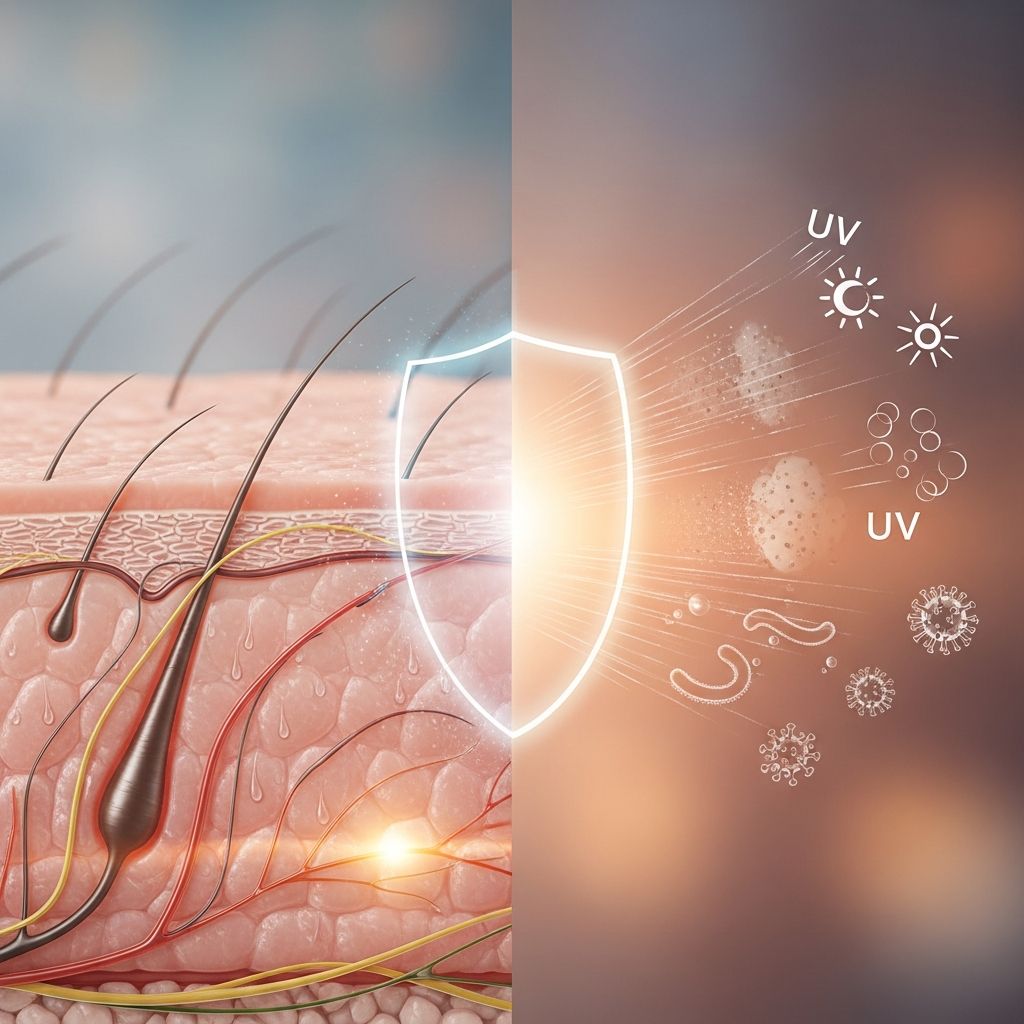
Your skin is like a superhero cape for your body. It’s the largest organ you have, covering every inch from head to toe. This tough shield keeps germs out, helps control your body temperature, and lets you feel the world around you. Without it, you’d be in big trouble! In this guide, we’ll dive into how skin works, why it’s so important for kids, common problems you might see, and smart ways to take care of it.
What Makes Up Your Skin?
Skin has three main layers, each with special jobs. Think of it like a three-layer cake that’s alive and always working.
- Outer Layer (Epidermis): This is the top shield. It’s made of dead skin cells that slough off as you wash or rub. New cells push up from below to replace them. It blocks water from getting in or out too fast and stops most germs.
- Middle Layer (Dermis): The thick, tough part full of nerves, blood vessels, sweat glands, and hair roots. It gives skin its stretch and strength.
- Inner Layer (Subcutaneous Fat): Cushiony fat that keeps you warm and pads your body like a built-in pillow.
Under a microscope, skin looks busy with tiny factories making oil to keep it soft and sweat to cool you down. Blood vessels bring oxygen and food to these workers.
Super Jobs Your Skin Does Every Day
Skin isn’t just pretty – it’s a multitasker! Here’s what it handles without you even thinking about it.
| Job | How It Works | Why It Matters for Kids |
|---|---|---|
| Protection | Blocks germs, sun rays, and injuries | Keeps cuts from getting infected during playtime |
| Sensation | Nerves feel touch, pain, heat, cold | Helps you avoid hot stoves or sharp sticks |
| Temperature Control | Sweat cools, hairs trap heat | Stays comfy running at recess or in cold wind |
| Making Vitamin D | Sun hits skin to create it | Builds strong bones for jumping and growing |
| Healing | Clots blood, grows new cells | Fixes scrapes from bike falls fast |
These jobs make skin your best friend for an active kid life.
Common Skin Issues Kids Face
Kids’ skin acts up a lot because it’s growing fast and you touch everything. Studies show infections top the list at about 25%, then itchy eczema at 22%, and pimples or bumpy follicles at 18%. Let’s break down the big ones by age.
Babies and Toddlers (0-2 Years)
Tiny skin is thin and sensitive. Watch for:
- Diaper Rash: Red, sore bottoms from wetness or poop. Air it out and use barrier creams.
- Cradle Cap: Yellow, flaky scalp like a helmet. Gently brush and wash with baby shampoo.
- Contact Dermatitis: Red patches from soaps or plants like poison ivy. Most common in this age.
About 20% of U.S. babies get atopic dermatitis here, with dry, red spots on cheeks or arms.
Preschoolers (3-5 Years)
More outdoor play means more trouble:
- Hand, Foot, and Mouth Disease: Blisters in mouth, on hands/feet from viruses. Spreads at daycare; fever comes first.
- Impetigo: Honey-crusted sores from bacteria entering cuts. Super contagious – don’t pick!.
Contact issues still lead, often from new foods or fabrics.
School-Age Kids (6-11 Years)
Warts pop up from shared gym floors:
- Warts: Rough, bumpy growths from HPV virus. 10% of kids get them; they spread by touch.
- Ringworm (Tinea): Red, ring-shaped itchy patches from fungus. Not a worm – treat with creams.
- Molluscum Contagiosum: Pearly bumps with dimples from poxvirus. 10-20 per kid, goes away alone or freezes off.
Viral infections rule this group.
Teens (12-16 Years)
Hormones kick in:
- Acne: Top issue at 18%, blackheads/pimples from oil-clogged pores.
- Pityriasis Rosea: Pink, scaly patches like a Christmas tree on back.
Summer brings more acne and hives; winter worsens dry skin. Girls often have drier skin issues.
How to Spot and Handle Skin Problems
Not sure if it’s serious? Use this checklist:
- No Big Deal: Mild itch, small dry spot – moisturize and watch.
- Doctor Time: Spreading red streaks, pus, fever, or won’t heal in a week.
- Emergency: Trouble breathing, swelling face (allergy), or big blisters peeling skin.
For eczema: Thick moisturizers twice daily, avoid triggers like wool. Infections need antibiotics or antifungals.
Daily Tips for Super Healthy Skin
Good habits keep problems away:
- Wash Gently: Mild soap, lukewarm water – not hot tubs daily.
- Moisturize: Lock in water after baths, especially if dry.
- Sun Smart: SPF 30+ lotion, hats, shade 10am-4pm.
- Don’t Pick or Share: Stop spreading germs; cover scrapes.
- Eat & Drink Well: Water, fruits for vitamin C to heal fast.
- Clean Cuts: Soap, water, bandage right away.
Seasonal smarts: Extra lotion in winter, light clothes in summer.
Fun Facts About Kids’ Skin
- You shed 30,000-40,000 dead skin cells every minute!
- Fingerprints form by 10 weeks in womb – unique forever.
- Skin makes vitamin D in 10-15 sun minutes daily.
- Blushing? Tiny blood vessels widen from shy feelings.
Adults have 20 sq ft skin; kids less but growing fast.
Frequently Asked Questions (FAQs)
Why does my skin itch after playing outside?
Could be dry air, sweat, plants, or bugs. Cool rinse and lotion help; see doc if rash spreads.
Can I pop pimples or warts?
No! Spreads infection. Let heal or get treatment.
Is baby skin different?
Yes, thinner, loses heat fast – bundle warm, no rough rubs.
What if a rash won’t go away?
Track it 3-5 days; photo changes. Doctor if worse.
Do allergies cause skin problems?
Yes, foods/nuts/pollen trigger hives or eczema. Test with allergist.
References
- Distribution of childhood skin diseases according to age and gender — PMC/NCBI. 2018-08-15. https://pmc.ncbi.nlm.nih.gov/articles/PMC6089785/
- Common Skin Rashes in Children — American Academy of Family Physicians (AAFP). 2015-08-01. https://www.aafp.org/pubs/afp/issues/2015/0801/p211.html
- Common Pediatric Skin Conditions: What Parents Should Know — ASC Docs. 2023. https://ascdocs.com/common-pediatric-skin-conditions/
- Baby and Childhood Rashes — Cleveland Clinic. 2023-11-15. https://my.clevelandclinic.org/health/diseases/6951-skin-conditions-in-children
- Pediatric Non-Infectious Skin Conditions — Children’s National Hospital. 2024. https://www.childrensnational.org/get-care/health-library/noninfectious-skin-conditions
- Pediatric Dermatology – Conditions & Treatments — Mount Sinai. 2024. https://www.mountsinai.org/care/pediatrics/services/dermatology/conditions-treatments
- Skin conditions in children — DermNet NZ. 2019-03-01. https://dermnetnz.org/topics/skin-conditions-in-children